



Talha tales: reviving Alentejo’s amphora wines
Alentejo’s vinhos de talha tradition claims to date back 2,000 years to Roman times, but what was once a locally consumed curiosity is now enjoying a renaissance as wineries reinterpret the style for today’s wine drinkers. Richard Woodard reports.
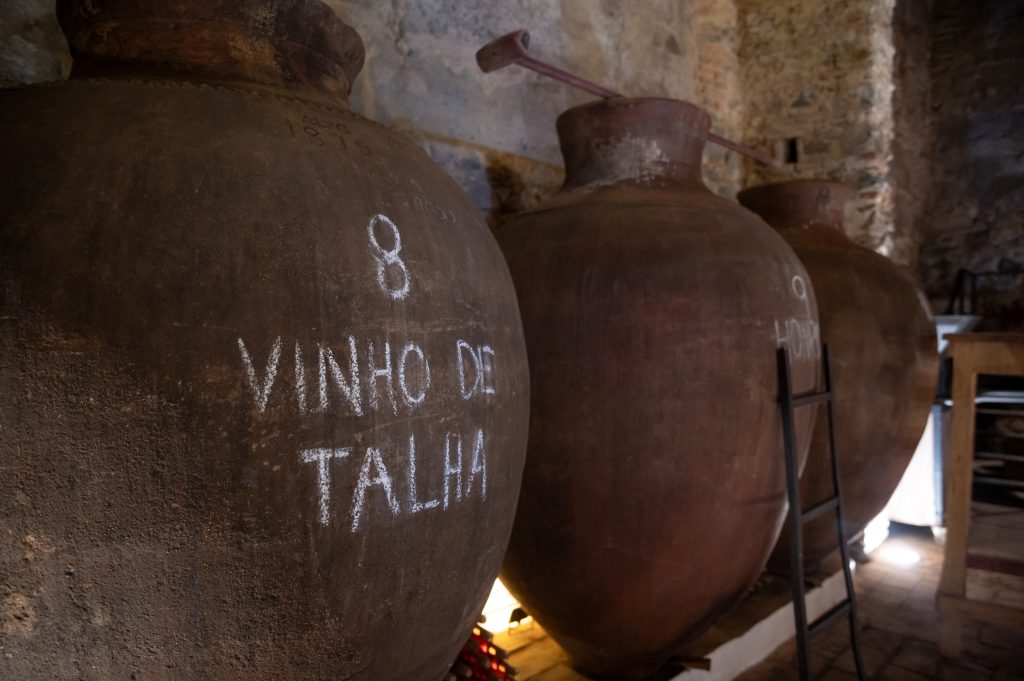
The small Alentejano town of Vila de Frades lies in the heartland of the region’s talha wine tradition. Close by are the ruins of the Roman villa of São Cucufate, where archaeologists discovered evidence of wine and olive oil production. In the town itself, you’ll find the Cella Vinaria Antiqua – a working museum of vinhos de talha production operated by Honrado Vineyards.
The facility is an offshoot of the neighbouring País das Uvas restaurant: when the Honrado family decided to expand the venue’s boutique talha wine operation, acquiring the derelict building next door, they discovered a spectacular 18th-century warehouse once used as a winery.
In the 25 talhas assembled here – 15 in the Cella and 10 in the restaurant – the wines run true to the talha tradition: grapes into the talha for spontaneous fermentation without temperature control, where they stay at least until St Martin’s Day on 11 November, before being emptied using burlap as a filter.
Honrado has four tiers of talha wines, using a range of mainly traditional Alentejano grape varieties – Antão Vaz, Arinto, Viosinho, Roupeiro, Perrum and Diagalves for the whites, Alicante Bouschet, Aragonez, Trincadeira and Touriga Nacional for the reds. The premium white weighs in at 15% ABV in the 2023 vintage, and across the board the prolonged skin contact produces wines of real character and texture that are hard to ignore.
Alentejo takes these wines seriously, creating a Talha DOC from the 2011 vintage that follows similar rules to the broader Alentejo DOC, including the classification of sub-regions such as Portalegre, Vidigueira and Reguengos. And producers also take these wines increasingly seriously too, finding new ways of reinterpreting the style for a modern audience.
At Altas Quintas in Portalegre, winemaker Diogo Vieira’s long-term aim is to have a large amphora room with 50 talhas. Here, the wines bridge the talha tradition with an energy and vivacity that is more contemporary. “We want to do talha wines, but not full-tradition talha wines,” Vieira explains. “Talha wines for everybody.”
Altas Quintas’ Talha Branco, sourced from a high-altitude (for Alentejo) 60-year-old vineyard, has plenty of body and texture, but a disarming freshness that, on the nose, resembles a high-toned and floral Austrian dessert wine (but without the sweetness). There’s also a fridge-friendly summertime red, Conversas da Talha, that blends Castelão and the white Arinto – and a red blend of Alicante Bouschet and Aragonez that takes the edge of the talha tang with six months in barrel.
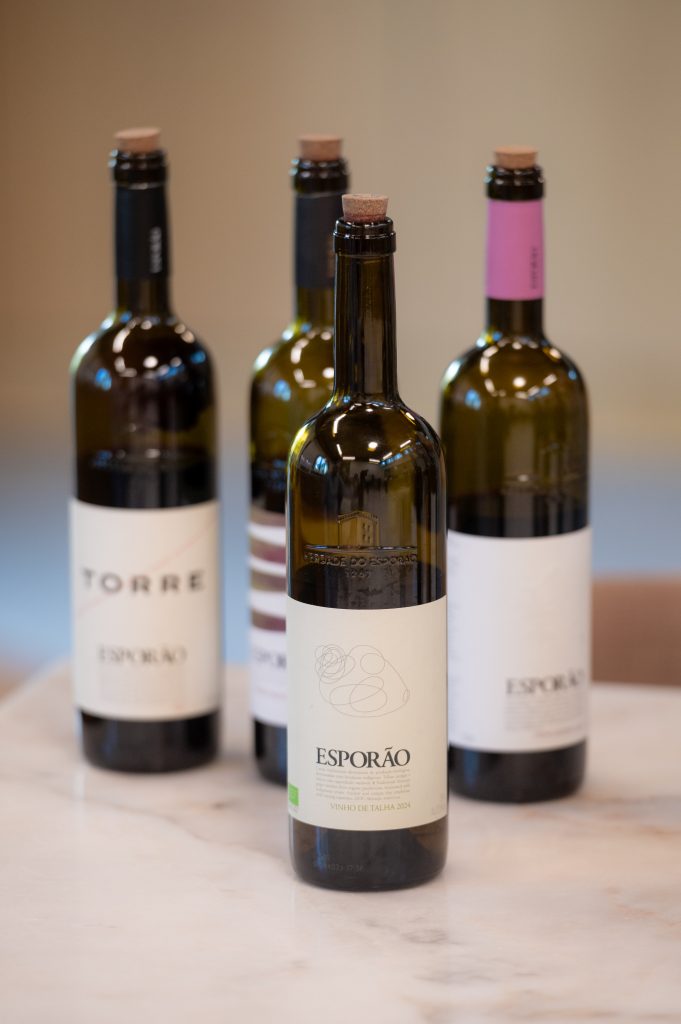
For the most part, producers are respectful of the talha tradition without being slaves to it. At Esporão, there’s no temperature control or yeast, but winemaker Ana Cruz will tweak the pH in hot summers if needed. The talha wines here, including a white blend of Roupeiro and Gouveio from the company’s organic vineyards, stay in clay until at least 11 November, but often longer. “Ten years ago, nighttime temperatures [in November] were colder, so the skins would go to the floor of the talha in November,” Cruz explains. “Now it’s often December before that happens.”
Talha wines are hard, labour-intensive work and the talhas themselves are difficult to get hold of, and expensive when you do track them down. According to Herdade do Rocim winemaker Vânia Guibarra, a talha might have cost you €600 in 2014; now it’s more likely to set you back €2,000. There’s also some doubt in the region about whether anyone alive today has the necessary skills to make new ones – just as well, then, that they can last hundreds of years (Esporão has one that may date back to the 1760s).
Partner Content

This means that talha wines are not – or at least should not be – cheap. Rocim is revamping its talha wine line-up, conscious that charging low prices for a wine of this type is not commercially realistic. Pouring the company’s white Vinho de Talha from the 2025 vintage, a mouth-coating, intense, but fresh wine with a distinctive aroma of cloves, Guibarra says: “We cannot sell this wine for €12, but we cannot just put up the price. So we have changed the profile with the ageing.”
The new wines are fermented traditionally in large, open talhas, then transferred into smaller, closed ones for three months. Guibarra believes that these smaller talhas, aided by micro-oxygenation, give the wines greater intensity.
Talha wines encourage a lot of talk about winemaking technique, but the vineyards are just as crucial. Rocim sources from field-blend vines that are 60 or 70 years old – the company has identified “20 or 30” of the grape varieties involved, but not all. “We make our traditional talha wines from here because we want to keep the traditional grapes for this,” explains Guibarra.
The white Vinho de Talha is a blend majoring on Perrum, Diagalves and Manteúdo, while the red combines Tinta Grossa, Alfrocheiro and Moureto, undergoing a similar process to the white, with a relatively short period of skin contact as Guibarra looks to avoid the harsh, earthy tones that can characterise some talha wines. “It’s too much,” she says. “It’s a profile that we don’t want.”
The talha range at Rocim spans the fun and approachable Fresh from Amphora white and red – a partnership with Dirk Niepoort – all the way up to the red Vinha da Micaela, named after the former owner of a tiny (3,600sq m), high-altitude, granite and schist vineyard that’s over 80 years old and planted with more than 30 different grape varieties.
This, says Guibarra, is “something different and not normal amphora wine”, made in talha and aged for 20 months in a combination of French and larger-format Austrian oak. It marries weight and complexity with elegance and freshness, but there’s not much of it – 2,000 to 3,000 bottles in a typical vintage – and it’s priced at about €200 a bottle.
Not everybody, however, loves talha. At JP Ramos, winemaker João Maria Portugal Ramos is “not convinced”, preferring to make his excellent skin-contact white wine – a blend of Arinto and Verdelho called Petrichor – in concrete eggs with temperature control and commercial yeast. The result has the phenolics associated with skin contact, but remains pin-sharp, with no sign of oxidation.
One tradition, but multiple interpretations of it, and new twists taking it off into new realms of flavour and style. The fascination of talha wines for visitors to Alentejo is undeniable, but who’s drinking them? Traditionally, this was a local wine for local people, with talha wines back in the day mostly consumed within the region – but not any more. “Talha wine is popular,” says Guibarra, “but not in Portugal.”
Instead, Brazil, the US and Canada are the top destinations for Rocim’s talha wines. “Brazilian people are learning to enjoy this kind of wine,” Guibarra adds. “They love history, although when they try the wine, it can be challenging. It’s a pure wine without winemakers, but not always an easy wine for people to taste and drink.”
Related news



Great article and great name for a book on the subject. Paul White here. I began covering talha wine in 2012 and have participated in St Martins Day and Amphora Day festivals in the region since. Haven’s missed one since. There is a wonderful ongoing revolution in this wine movement that has seen production rise from a handful of traditionalists making 700 litres to the millions of liters makers now by at least 3 dozen producers. This years Amphora Day on Nov. 14 is an excellent way to explore this living tradition and the visit local village wineries who have just tapped their talhas full of fresh wine from the recent vintage. It’s one of the wine world’s most magical events. Still not over run with tourists. Catch it while you can. If intrigued you can read all about it in my book that documents its modern revival: Talha Tales: Portugal’s Ancient Answer to Amphora Wine (Amazon).