



Frost and hail threaten 2026 US and French wine harvests
Severe frost and hail have already caused extensive vineyard damage across parts of the United States and France, raising concerns over another difficult harvest year. Growers are reporting losses of up to 90% in some regions, with months of weather risks still ahead.
Mother Nature is giving wine country the cold shoulder this year, slashing projected yields across the globe with frost and hail. This comes after a pattern of years of declining harvests, temporarily broken last year, but likely to resume in 2026 if the estimates of damage so far this year are any indication.
And it is only June. There are months of potential hail, drought, searing heat, floods, wildfire and smoke to contend with before the first fruit can be picked.
So far, the worst reports have been rolling in from the East Coast of the United States and France. Here is what has been confirmed, and what growers are reporting.
Frost ravages vineyards across the US East Coast
Across the East Coast of the United States, a cascading series of weather events has culminated in a calamity for many. A warmer than average winter and early spring led to accelerated budbreak, which was then followed by severe frosts and freezes that completely wiped out those tender young buds.
Spring frost and freeze events cause more economic harm than most meteorological phenomena because of the grapevine’s transition from dormant bud to expanding green tissue. That comes with increased water content in the developing vine, and it means that the vine’s ability to tolerate freezing temperatures rapidly declines.
“I conducted a survey to assess the amount of damage across the Eastern US,” says Jennifer Phillips Russo, senior extension specialist in viticulture at the Cornell Lake Erie Research and Extension Laboratory. “I am unable to share the survey results, but I can report that I had 139 total responses to the survey from 13 different states: Ohio, Pennsylvania, New York, Virginia, Texas, Maryland, Massachusetts, West Virginia, Connecticut, New Jersey, Indiana, Nebraska and Delaware. Colleagues in southeast Pennsylvania, Ohio, Virginia and Maryland mentioned getting hit particularly hard this year with reports of upward of 80% to 90% primary bud damage. Some have shared the survey results with state departments of agriculture for the disaster declaration process.”
Winemakers in Virginia and North Carolina suffered catastrophe in April, with up to 90% of the crop reportedly damaged. The USDA is extending emergency disaster loan support to Virginia and North Carolina. The USDA recently approved Maryland’s request for disaster support as well.
Growers in New York also saw widespread destruction from spring frosts, but their fate is less clear. It is, notably, three times harder for blue states like New York to get disaster funding under President Donald Trump, making it the highest rate of rejection in the 47 year history of the Federal Emergency Management Agency.
New York governor Kathy Hochul has requested a USDA disaster declaration, which would enable growers to apply for low interest emergency loans and recover from the potential impacts of crop loss.
“New York’s growers are second to none and many have taken a significant hit, with some reporting upwards of a 100% loss of their crop and millions in economic loss,” Hochul said. “I urge the USDA to take swift action to declare a disaster designation for the impacted counties and help our growers get the assistance they need to recover and move forward.”
Growers adapt to a changing climate
Many wonder if this is the new normal.
“It would appear that these ‘once a generation’ spring frosts are now becoming a more regular part of our reality,” says Kelby James Russell, co-founder of Apollo’s Praise in the Finger Lakes. “We thought it was just bad luck that we had the first spring frost in 50 years one month after we purchased Lahoma, but with another one under our belt three years later, it may be part of our new normal.”
Russell is moving forward as if that is the case, and says wind machines will be installed to help protect the vineyard. So far, Apollo’s Praise has seen roughly 30% primary bud loss across its vineyards, mainly from the 21 April event, during which temperatures dropped to 24°F.
The most frustrating thing, he says, is the unpredictability of frost damage across varieties.
“We’ll have varietals that others saw damage in that are fine for us, like Chardonnay,” he says. “Others that were fine for others took more damage on our farm, like Riesling.”
Counterintuitively, the greatest damage was seen in hybrid and native grapes, which are usually considered hardier under pest and weather pressure.
“We may be at 70% or more bud loss on those varietals, compared to 30% for Riesling and 10% for Cabernet Franc,” Russell says.
Dave Pittard, co-founder of Buttonwood Grove and Six Eight Cellars in the Finger Lakes, is seeing a similarly disparate and unpredictable pattern of damage across four vineyard sites.
Overall, he anticipates a yield loss of between 15% and 30%.
Partner Content


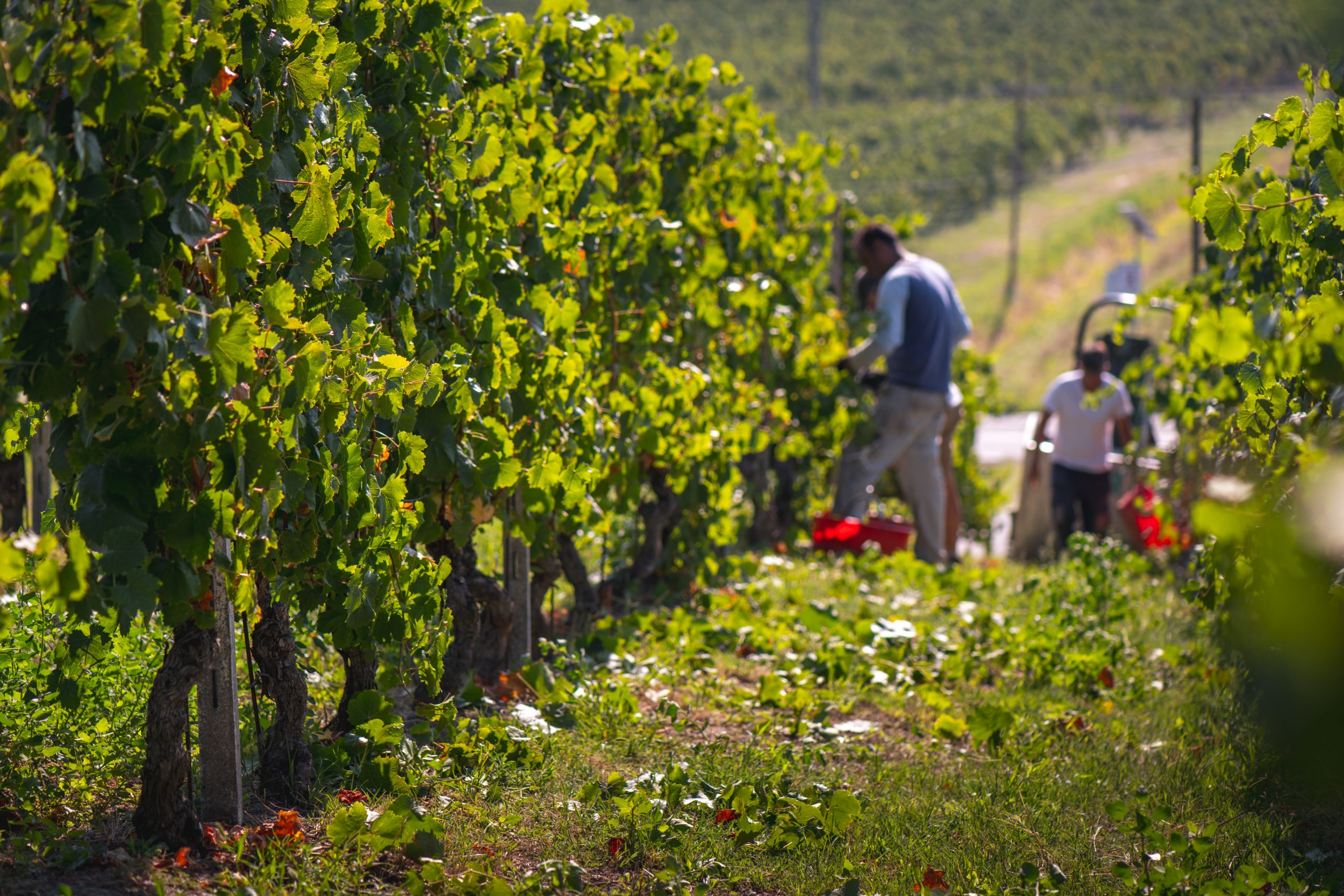
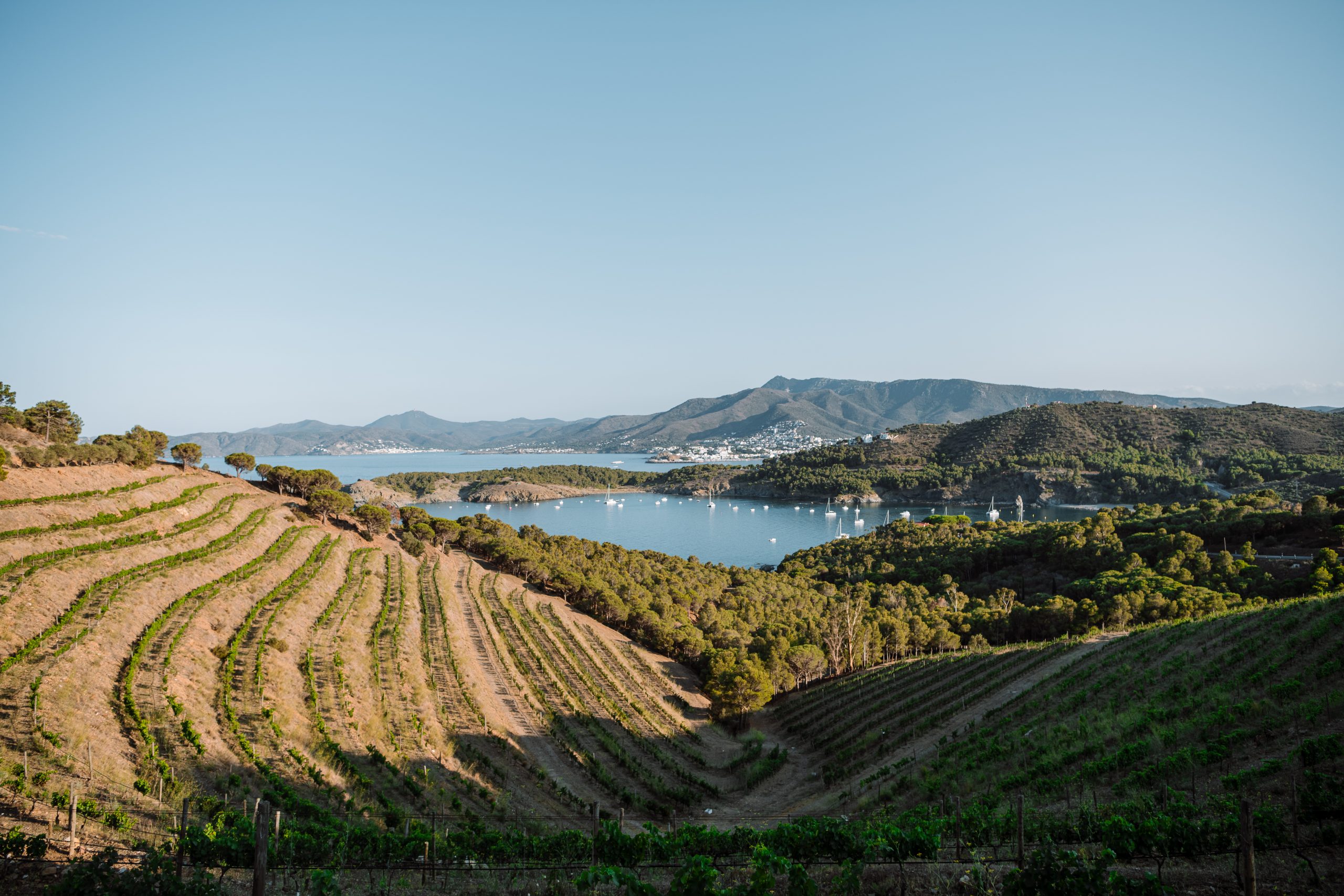
France hit by frost and hail
France has also been rocked by extreme weather this year, an increasingly familiar situation that caused the government to overhaul its national crop insurance system in 2023. Currently, the government subsidises up to 70% of crop insurance premiums, and during periods of extreme loss, the government will pay growers directly through the National Solidarity Indemnity programme.
Regions across France braced for severe frost damage in March, with warnings extending across Burgundy, Champagne and the Loire Valley. Destruction of up to 40% of buds was reported in Champagne.
In Chablis, the impact of the frost was also severe.
Domaine William Fèvre’s director Didier Séguier is used to it at this point, and in recent years the winery has installed electric warmers in the vines at a cost of roughly US$80,000 per hectare.
“It is increasingly necessary,” Séguier says. “The climate is more irregular than ever. In 2024, we produced only 10% of our typical harvest because of frost and hail. We lost 90% that year.”
This year, Séguier says they experienced 12 nights of frost in the three weeks after budbreak. He estimates that up to one third of the harvest will be affected.
Then in June, the hail arrived.
The Côte de Beaune subregion of Burgundy was hit hard, with damage of up to 80% reported in some areas.
Hail adds to growers’ concerns
Hail is always extremely localised, and at times the devastation is not immediately apparent.
“This time, we estimate that we lost around one third of our buds,” says Philippe Pascal, co-founder of Cellier aux Moines in Givry. “The hail was mixed with rain so the leaves were not mashed and kept protecting the bunches. Nothing worse than dry hail which could mash the leaves, the bunches and also hit the wood with a lasting effect on the following year.”
Vigneron Guillaume Marko estimates that the Givry hailstorm damaged 15 to 20 hectares of vines in the region, four of which belong to Cellier aux Moines. He estimates losses of up to 15%.
But in Chassagne, roughly 40 hectares were damaged, with up to 35% bud loss.
“Our plot of Les Chaumées was totally under the storm,” Marko reports. “After hail, the other big risk is to have a mildew attack because the scarred berries are an open door for fungal diseases. The day after the storm, we spread horsetail plant decoction in order to dry the leaves and berries, and valerian, to help the vines heal their scars from the hail.”
Fighting an uphill battle
While growers can take steps to protect their vineyards, the results are far from guaranteed.
In Chablis and other parts of France, electric wires are used where they have been installed at considerable expense. Elsewhere, lighting candles and small fires, and spraying water to reduce frost damage, has become a regular activity.
Russo admits that practical solutions remain limited.
“The practical challenge for growers is increasing because regional warming does not eliminate spring frost,” Russo says, adding that warm late winter and early spring conditions accelerate budbreak, making damaging cold events even more destructive when they occur.
Mitigating hail damage is even more difficult. Growers typically have only a few minutes to protect their vineyards. Hail nets can reduce damage significantly, but installation costs are high and they can restrict airflow and light exposure.
A cocktail of ancient and high tech tools are being deployed against Mother Nature. As climate change continues and weather extremes become more common, the odds of anyone truly winning the battle appear to be diminishing.
As Pascal puts it: “Fingers are crossed.”
Related news
Copa Jerez to test UK chefs and sommeliers’ pairing prowess
Saturday Kitchen launches wine club with Majestic
California wineries request US$32 million to fight vineyard pest


