



Andreola takes Prosecco expertise into the Dolomites
Valdobbiadene producer Andreola is developing traditional method sparkling and still wines from a nine-hectare vineyard in the Belluno Dolomites. During a visit to Sedico, the drinks business found a project shaped by the family’s ambition to move beyond the Prosecco label.
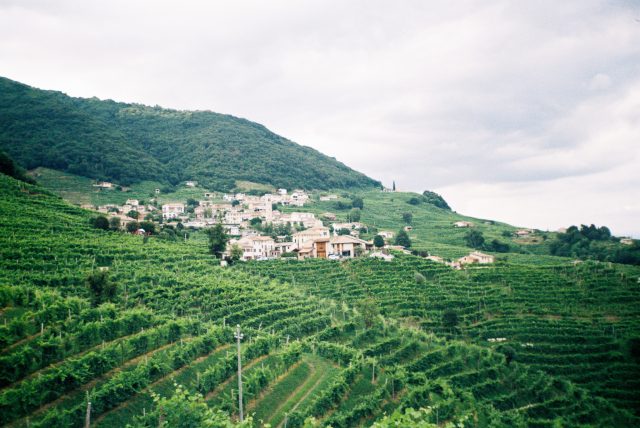
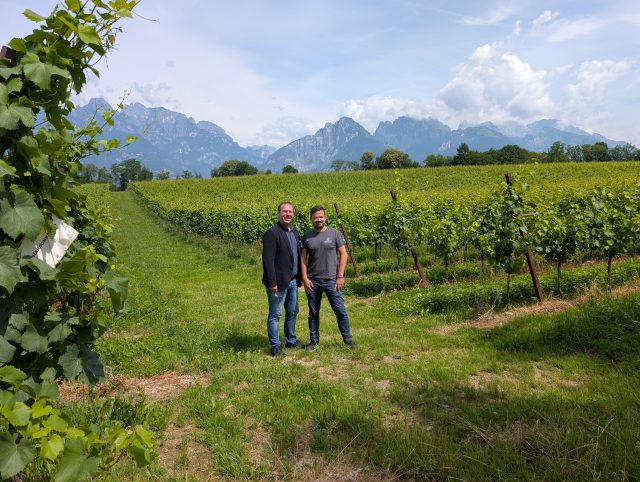
At 650 metres above sea level, Andreola’s vineyard in Sedico has the altitude, limestone and imposing backdrop expected of a Dolomite wine project. What it lacks is the vertiginous character of the producer’s home territory in Valdobbiadene.
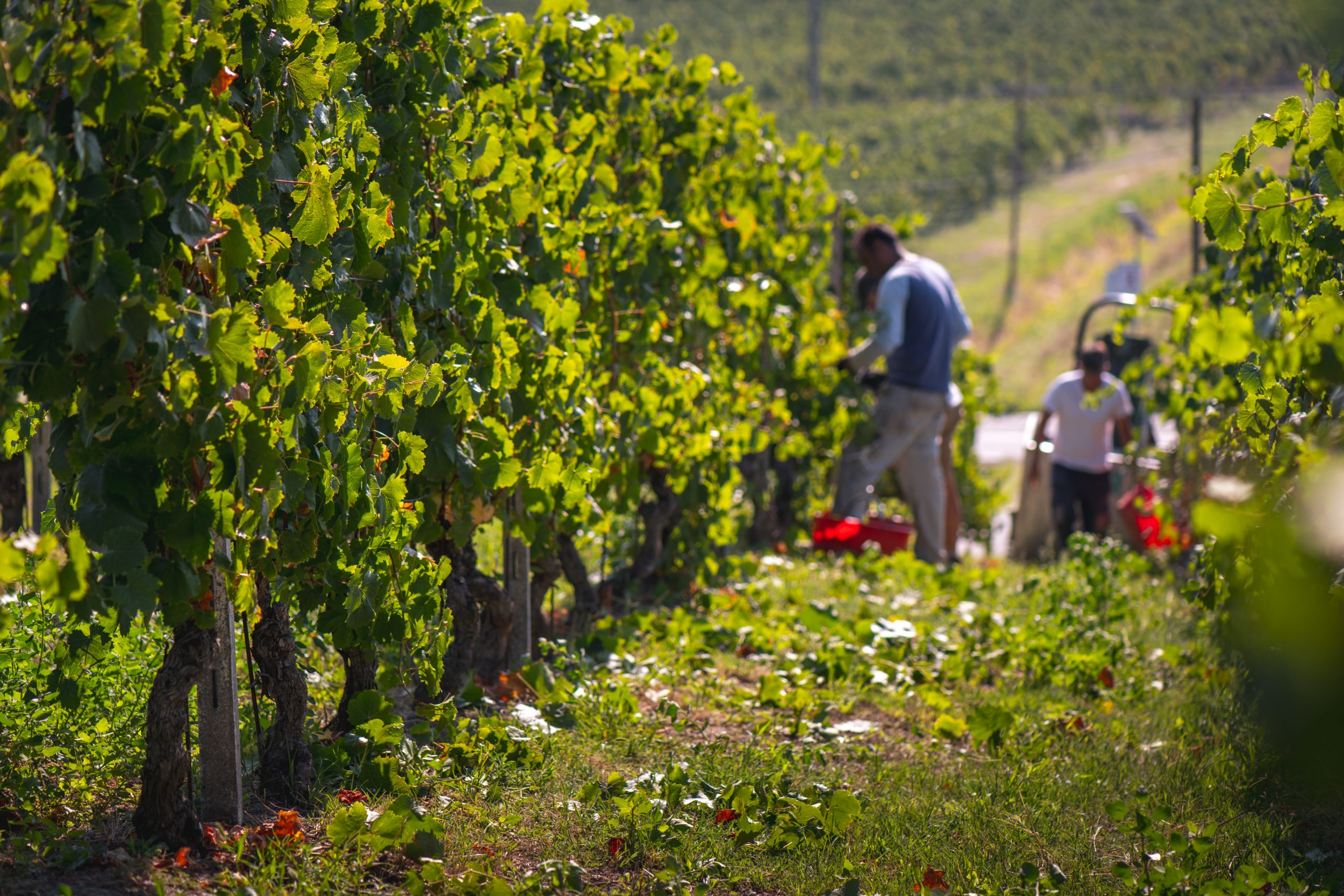
The distinction becomes clear when walking through the vineyard. Its nine hectares occupy broad, manageable slopes overlooking Valbelluna, with room for machinery and a tractor journey back to Andreola’s winery.
Valdobbiadene is another proposition, one where vineyards cling to narrow grassy terraces known as ciglioni, while gradients can approach 70%. Mechanisation is often impossible, leaving experienced local workers to carry grapes across slopes on which secure footing cannot be assumed, a form of work that local accounts suggest has proved fatal.
The Dolomites may provide the more theatrical skyline, but the physical heroism remains further south.
Andreola owner Stefano Pola began the Sedico project in 2017, planting Chardonnay, Pinot Noir, Rhine Riesling and aromatic Traminer. It was a deliberate departure for a family business founded on Glera and the steep hills of Valdobbiadene DOCG.
“We do not like to go on holiday, so we decided to make life more complicated,” winemaker Mirco Balliana joked during the visit.
Learning a different landscape
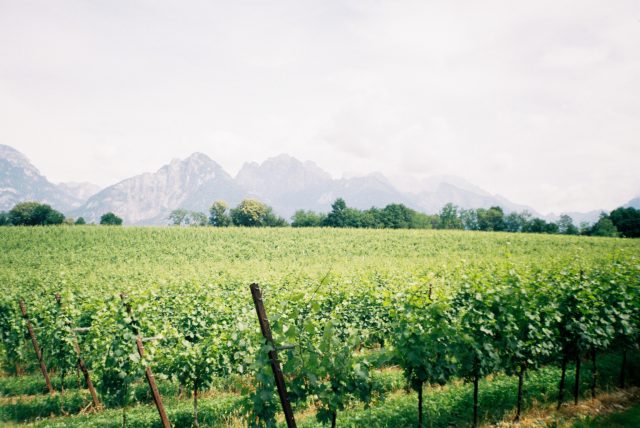
Andreola arrived in Sedico with considerable sparkling wine experience, but the cooler climate required the team to reconsider its approach in the vineyard.
“It was a completely new project for us,” Balliana said. “From the beginning, we saw temperatures around three to four degrees Celsius lower than in Valdobbiadene.”
Practices designed to protect Glera from heat proved less helpful for varieties struggling to ripen in the Dolomites. Andreola reduced yields, altered its training systems and removed leaves to give the fruit greater exposure.
“In Valdobbiadene, we are accustomed to protecting the grapes from sunburn,” Balliana said. “Here, we sometimes need to do the opposite so that the grapes can reach the ripeness we want.”
Chardonnay and Pinot Noir were directed towards traditional method sparkling wine, with the first Chardonnay base wine made in 2020. Andreola rejected its initial Pinot Noir attempt after deciding that malolactic fermentation had softened the freshness it wanted to retain.
The resulting Alture range now comprises an Extra Brut Chardonnay and a pale Pinot Noir rosé, both aged for 36 months in bottle. Riesling, Traminer and Chardonnay are also produced as still wines.
There is no attempt to imitate the richer styles found in warmer parts of north-east Italy. At Sedico, reaching 12% potential alcohol can itself be a challenge, which Balliana regards as increasingly useful when other regions are contending with wines at 14% or 15% abv.
The wines are lean, sometimes austere and not always immediately easy to place. That is part of their interest. They taste less like a polished exercise in brand extension than the results of a producer working out what an unfamiliar patch of mountain can do.
Partner Content
Escaping the Prosecco shorthand
The Sedico project also places Andreola outside the confines of the word that has brought both prosperity and frustration to its home region.
Prosecco’s international success allowed businesses across north-east Italy to expand rapidly, and Andreola was no exception. The estate grew from approximately four hectares to more than 100 hectares during the category’s boom years, investing in a new winery and increasing its workforce.
That growth came with difficulty as Prosecco became one of the world’s most recognisable wine names, but its familiarity also encouraged consumers to treat wines from very different places and price points as interchangeable.
For producers farming the steep, heroic hills of Valdobbiadene, the name can flatten precisely the distinctions they are trying to sell. A bottle from a single Rive vineyard may sit under the same broad mental heading as an inexpensive sparkling wine produced on the plains.
Pola began considering the removal of the word Prosecco from Andreola’s labels in 2007 and had completed the change by 2018. The decision was intended to put Valdobbiadene DOCG, rather than the larger category, at the centre of the estate’s identity.
It was something of a risk, after all, Prosecco is immediately understood in export markets, while Valdobbiadene still requires explanation and a reasonably confident attempt at pronunciation.
The alternative, however, was to allow the best-known word on the bottle to become the least informative.
Valdobbiadene before variety
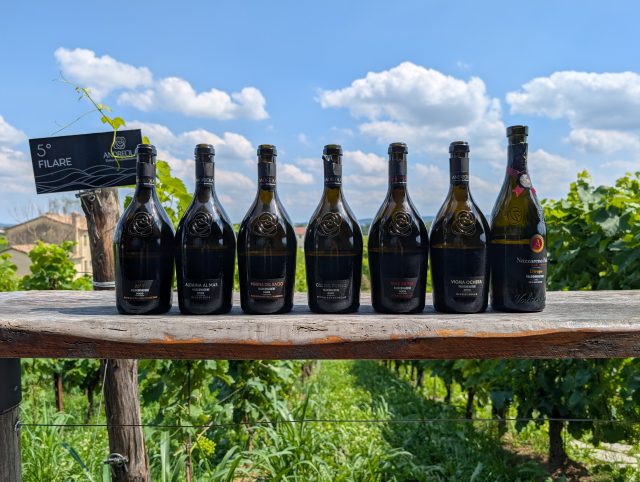
Andreola now works with 250 parcels across approximately 110 hectares and makes seven single vineyard Rive wines, each intended to show differences between the denomination’s villages, soils and exposures.
Rive is the local term for vineyards on the steep slopes, with those wines carrying the designation must come from one defined area and a single vintage, with grapes picked by hand.
The difficulty is that the word Prosecco remains far more marketable than the geographical distinctions behind it. “Premium Italian sparkling wine” may sound less cheerful, but it arguably comes closer to the position Andreola wants to occupy.
Beyond the category
Sedico gives Andreola space to explore that identity without the baggage of the Prosecco name. Chardonnay, Pinot Noir, Riesling and Traminer cannot be mistaken for extensions of its Glera range, while traditional method production removes another familiar point of comparison.
Quantities remain limited, particularly for sparkling wines that require three years of bottle ageing. Small allocations have reached the UK, the US and other European markets, although Andreola has had to build sufficient stock before pursuing wider distribution.
The project remains secondary to Valdobbiadene, but Sedico offers a different landscape, different grapes and a convenient escape from the vocabulary of Prosecco.
Related news
Prosecco name dispute reaches UK High Court
Don’t cry over spilt fizz: 20 tonnes of Prosecco smashed in lorry crash


