



What can Canadian Icewine offer the whisky category?
As Tomatin Distillery releases a single malt whisky partially aged in Icewine casks, Sarah Neish discovers why Canada’s signature style lends itself perfectly to spirits maturation, and why this “truly surprising dram” almost didn’t happen.

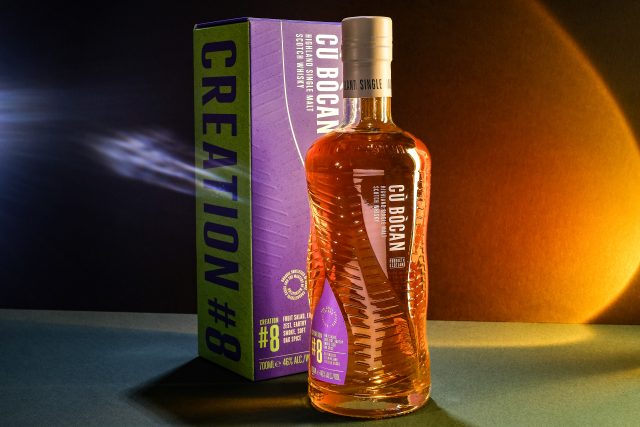
Single malt brand Cù Bòcan, owned by Tomatin Distillery in the Scottish Highlands, claims to have produced the first known peated Scotch to be matured in Icewine casks, but the project may never have happened had it not been for a random encounter at a trade fair.
Speaking to the drinks business, Tomatin’s distillery manager Jamie Muir said the kernel of the idea was formed after unexpectedly bumping into Canadian Icewine producer Pillitteri Estates Winery.
Random encounter
“Our brand ambassador and blender at the time, Scott Adamson, was at a travel retail trade fair in Singapore in 2013 and our stand happened to be next to Pillitteri’s,” Muir told db. “He was blown away by the quality of their wine but also struck by some of the similarities it had with sweet wines from Europe that we had used in maturation in the past and the cogs started turning.”
The only real challenge, Muir revealed, was getting hold of the casks in the first place.
“At the time, only one of Pillitteri’s Icewines was oak-aged and they only used ten casks a year,” he said. “When we first approached them with the idea, they told us that the casks from the most recent bottling had been deconstructed and the staves from them had been used for cladding their new tasting room.
“The idea was dead in the water before it started.”
However, a few months later Tomatin received an email “out of the blue” to say that Pillitteri was “about to bottle their next batch and the casks would be available if we still wanted them.”
Tomatin took delivery of the casks in February 2020, having had them shipped over from Pillitteri’s winery in Ontario, where winters consistently see temperatures as low as -25°C.
“We purchased 10 casks, eight of which were used in Creation #8,” Muir explained. “The casks are French Oak with a medium toast and they all arrived at the distillery with a few litres of Icewine left in them. We emptied the wine from the casks, gave samples to the distillery staff, and filled the casks immediately.”
Dream to work with
From a maturation point of view, Muir described the Icewine casks as “a dream to work with.”
“There’s a lot of similarities between the fruity flavours in our new make and the wine, so it took a bit longer than usual for the casks to make their mark but in time the sweetness and mouthfeel of the wine began to come through and it’s been a joy to sample over the last couple of years.”
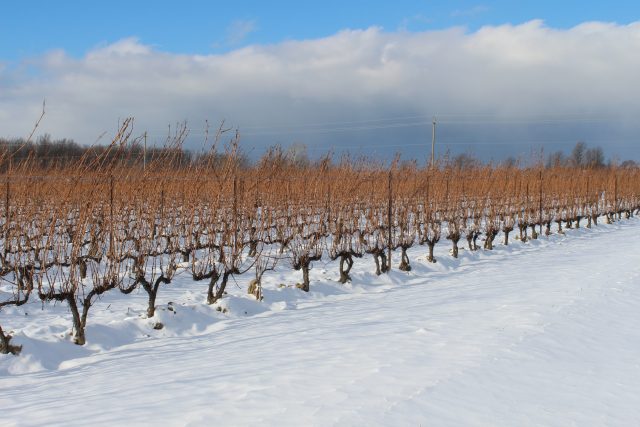
Icewine is a sweet wine made from grapes that are left to freeze on the vine before harvesting. The grapes are pressed at around –7°C, when the water inside has crystalised, leaving a small amount of highly concentrated sugary juice.
Only 3,600 bottles of Creation #8 were produced in total, with the whisky also partially aged in Spanish Verdejo casks as well as the Ice Wine barrels, a pairing which the distiller says results in a unique flavour profile of “fruit salad sweets, lime zest, earthy smoke and soft oak spice.” The Verdejo casks bring “a vibrant citrus and herbal dimension” while the Icewine barrels impart notes of apricot jam, candied peach and pineapple syrup, to the blend.
Partner Content

Canada calling
According to Jeff Letvenuk, director of marketing for Pillitteri, the winery has “always had some interest from distillers here in Canada and around the world for our red wine barrels for ageing spirits” but adds: “This will be the first ever use of an Icewine barrel and we are very excited to see the results.”
He told db that “Icewine is uniquely suited [to spirits] as it has incredibly complex and fragrant aromatics.”
Although revenue was “not the driving factor” behind Pillitteri’s decision to supply Icewine casks to Tomatin, it could end up being a secondary income stream for Canadian producers if the trend takes off. At the very least it shines a light on Canadian Icewine and brings fresh attention to the product.
“We entered this partnership to see the potential of Icewine barrels and to expand the world’s understand of our uniquely Canadian wine within the larger wine and spirits world,” said Letvenuk. “We really want to tell the world about Icewine – what it is, the flavours and how it ages beautifully in oak barrels – and hope this Scotch whisky produced by Tomatin gives the global wine and spirits world a peek into what we have been doing in Canada for years.”
“Icewine, he continued, “is often considered a specialty product. We hope the attention Tomatin’s release brings will help to showcase the diversity in the sector and drive broader awareness.”
Icewine: from whites to reds
“Icewine truly is a much more versatile wine than one would think,” said Letvenuk. “The sweetness is well balanced by the acidity and intensity of flavours. This makes the barrels used to age Icewine well-suited for ageing spirits and we look forward to seeing more developments in this market.”
Beyond the classic Icewine grape varieties like Vidal and Riesling, Pillitteri also produces Icewine from lesser-used varieties such as Merlot, Shiraz, and Cabernet Sauvignon, and launched the world’s only Corvina-based Icewine earlier this year.
“Vidal Icewine is our flagship and most popular expression. It’s also the one we age in oak barrels most often,” said Letvenuk. “It develops intense fruit flavours of pear, apple and apricot with layered honey notes, and when aged in oak barrels the wood adds a vanilla and slight caramel character to the wine, enhancing complexity.”
This contrasts with with “intense” Cabernet Sauvignon Icewine, said Letvenuk, “which tends to be rich with berry character. Strawberry, raspberry and cherry notes dominate and when barrel-aged the Cabernet Sauvignon also brings toffee and subtle dark chocolate notes to the forefront.”
Future experimentation
Cù Bòcan (which means ‘ghost dog’ in Gaelic) told db there may be more to come.
“We still have two Icewine casks with Cù Bòcan spirit from 2006 in them so they will likely be bottled at some point,” revealed Muir. “Icewine casks are so rare that a large-scale release just isn’t on the cards but there’s always room for limited editions and single casks.”
Related news
Trump hits Canada with 50% tariffs over US alcohol ban


