



Pakistan’s oldest brewery resumes alcohol exports
Pakistan’s oldest brewery, Murree Brewery, has begun alcohol exports to countries including the UK and Japan – despite the fact that it’s been banned for the country’s Muslim-majority population for almost 50 years.
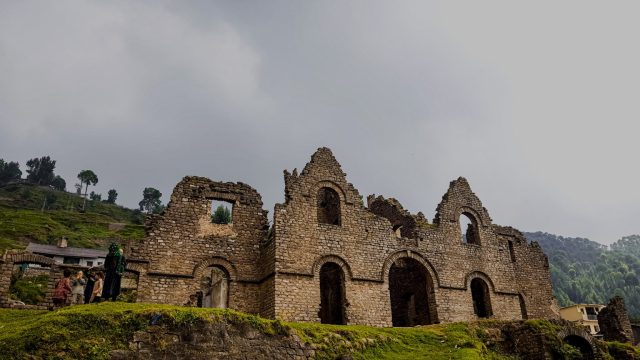
Murree Brewery, the only locally-owned beer producer in Pakistan, has begun to export its booze to countries outside of the Organisation of Islamic Cooperation – a bloc of 57 nations with significant Muslim populations.
While alcohol consumption is illegal for Pakistan’s Muslim-majority population, it is still consumed by the country’s minority groups, including Christians and Hindus, as well as by visitors from other countries, who can purchase it from government-registered shops.
Murree Brewery was founded in the 1860s by the British during their colonial rule of India, before it was acquired by a Pakistani family before the partition of British India in 1947.
The producer, which has manufacturing units in Rawalpindi, Punjab and Hattar, Khyber Pakhtunkhwa, has lobbied officials for an export license since 2021, after a Chinese-run distillery and brewery was given the go-ahead to produce alcoholic beverages in the Balochistan province to serve the thousands of Chinese workers in the area.
The company can now toast to the success of the campaign. In 2025, it finally scored approval from Pakistan’s government to export alcohol products.
Partner Content

Last month, Murree Brewery exported alcoholic drinks to countries including the UK, Japan, Thailand and Portugal, Shah added, the company’s export manager Rameez Shah told Press Trust of India (PTI).
Prohibition history
Alcohol was available to all Pakistanis until 1977 when Zulfiqar Ali Bhutto, the prime minister at the time, banned it to align with the conservative policies of Islamist parties. Prohibition laws were then tightened by Gen. Muhammad Zia-ul-Haw, who overthrew the leader, and instructed lashing as a penalty for alcohol consumption.
Before the ban, Murree Brewery shipped its alcohol worldwide, including to India, Afghanistan and the US, according to Shah. The ban, therefore, was undoubtedly a major blow to the firm, which is one of the oldest and most iconic breweries in Pakistan.
Non-Muslims and foreigners in Pakistan were exempt from the ban, but the company was not able to export alcohol as it had before the prohibition.
Over the last few years, the brewery has been exporting non-alcoholic beverages, including packaged juice, mineral water and fruit-flavoured malts.
With export permission granted, Murree Brewery is now collaborating with its distributors in other countries who were previously trading their non-alcoholic products. The purpose of this is to “first establish a network before we can crank up production”, according to Shah.
Related news
Pakistani brewery’s export return takes shape under new rules
Pakistan’s Murree Brewery starts exporting beer
Coca-Cola takes on Pepsi in Pakistan’s cricket marketing battle



I went to a Catholic Run Boarding school in Murree in the 1960s, and remember the old Murree Brewery ruins in this former Raj Hill Station, established in the then un-divided Punjab, and set up by the a British businessman to service the needs of the ‘Tommies’ stationed in the frontier towns neighbouring Afghanistan. The officers stayed with their Gin and Tonics and Scotch Whisky. In my day the brewery had closed, and the former fermenting tanks, now exposed, were used by kids as make-shift swimming pools when filled with rainwater.
The brewery had been purchased by a Parsee businessman just prior to partition in 1947, and he had the foresight to re-locate the brewery right next to the army cantonment in Abbottabad, a garrison town established by the Brits. This was a clever move as contrary to received wisdom, many officers still enjoyed their ‘booze’ following prohibition, and were thus protected. The officers that drank also enjoyed Murree Brewery’s distilled products, including Whisky, Gin and Rum.