



Inside the cooperative flying the flag for Meunier
Champagne H. Blin draws on the best of Vincelles in the Vallée de la Marne, whether that is centuries of know-how, sunny slopes or almost forgotten grape varieties.
Just as Pinot Noir has the Montagne de Reims and Chardonnay has the Cote des Blancs, Meunier – the other flagship grape of Champagne – has the Vallée de la Marne. It is in the complex soils of the valley that Champagne’s native grape finds its best expressions.
For the largest Champagne houses, that is an essential supply. Vallée de la Marne Meunier is usually featured in multivarietal Champagne, even if Chardonnay or Pinot Noir are given top billing, as it lends breadth and fruitiness to the wine.
Yet its local growers and winemakers will not let the region play second fiddle. Champagne H. Blin is a prime example; the co-operative has fine-tuned its winemaking over more than 75 years, demonstrating the potential of Meunier (and, indeed, Champagne’s other grapes from the region).
Heritage and innovation
Winemaking in the village of Vincelles dates back to the 17th century. That should be no surprise; the village is in the heart of the valley, just 25 minutes west of Champagne’s epicentre, Epernay.
In 1947, however, it took a significant step forward, with the foundation of the cooperative that is now its largest advocate. Henri Blin, himself a ninth-generation vintner, initiated the project, bringing together 29 growers to pool resources and expand the range of wines they could make. In recognition, the new brand took his name.
Today, the organisation is run by his grandson, Simon Blin. He is a passionate advocate for both Vincelles and its signature grape, helping to attain ever greater recognition for Champagne H. Blin’s growers.
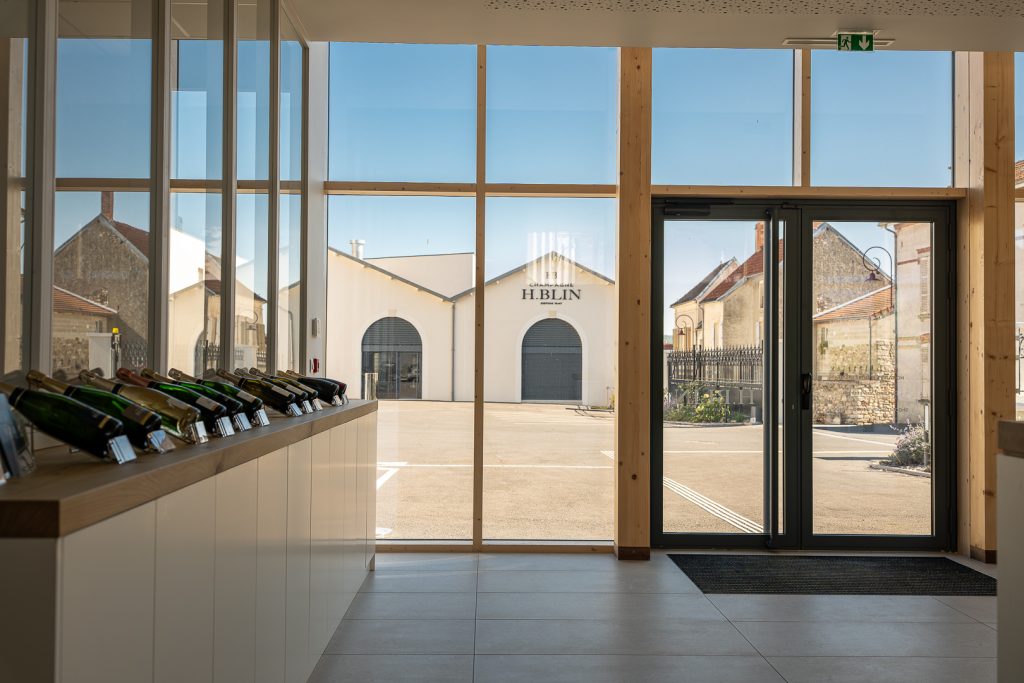
Their vineyards now span 105 hectares around the village. These are complex plots, tended by longstanding grower families, meaning that, although Champagne H. Blin can operate at a larger scale than individuals, it loses none of their expertise.
This is not a project that prioritises tradition at all costs, however. Champagne H. Blin has struck a careful balance between its rich history and the latest innovation.
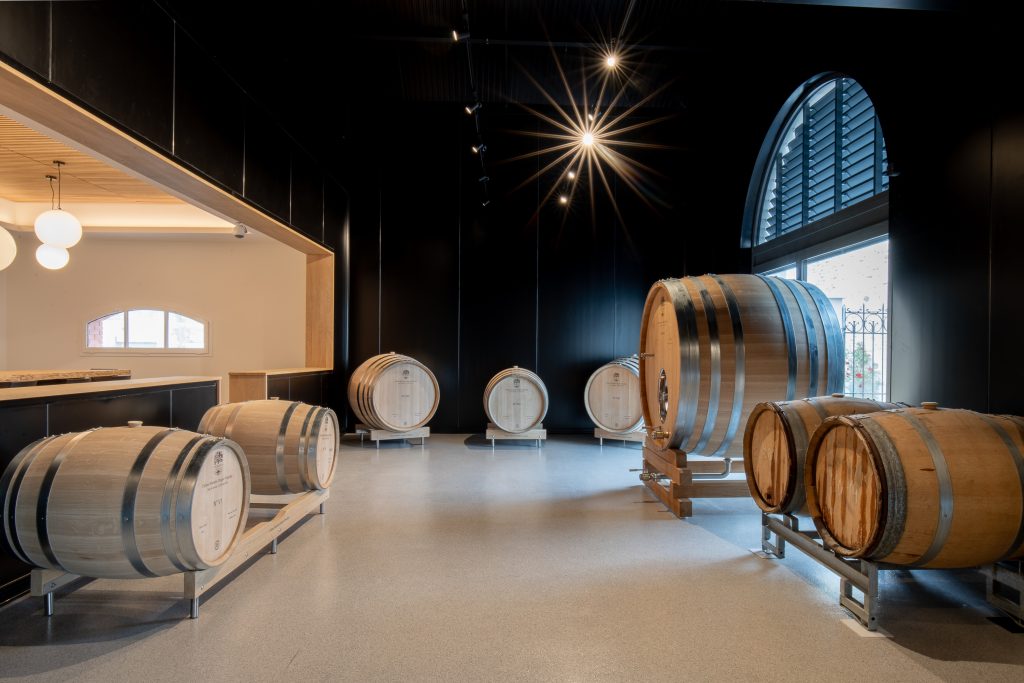
In May 2025, the cellar got a very modern refurbishment, upgrading its ability to make wine parcel by parcel. It comprises a stainless steel micro-vatting facility, able to vinify small batches according to their individual characters, and a barrel cellar to age them perfectly. With barrels, demi-muids and large casks made with local oak, it offers further nuance in developing each cuvée.
That all happens under the watchful eye of cellar master Sebastien Barbier. A Meunier specialist, he carefully, crafts all of the house’s cuvées which, thanks to the cooperative’s scale, amounts to a diverse collection.
The gifts of the land
Everything, for Champagne H. Blin, emerges from the terroir of Vincelles. The clay-limestone soils support the grapes in developing a finessed character, with good drainage encouraging deep root system. The south/southeast exposure, meanwhile, ensures good sunlight interception.
That is invaluable for Meunier. The variety’s naturally fruit-forward character benefits from sun exposure, generating fresh orchard fruit flavours and a supple mouthfeel without losing the quintessentially champenois freshness.
 70% of the vineyards are planted with the variety; it is evidently a good match. It also therefore features heavily in Champagne H. Blin’s range. The Brut Tradition, for instance, is 70% Meunier while the Blanc de Noirs is monovarietal.
Yet the other 30% means that the maison is not constrained by this speciality. It still creates a Blanc de Blancs, while its vintage expression is a 50:50 blend of Meunier and Chardonnay.
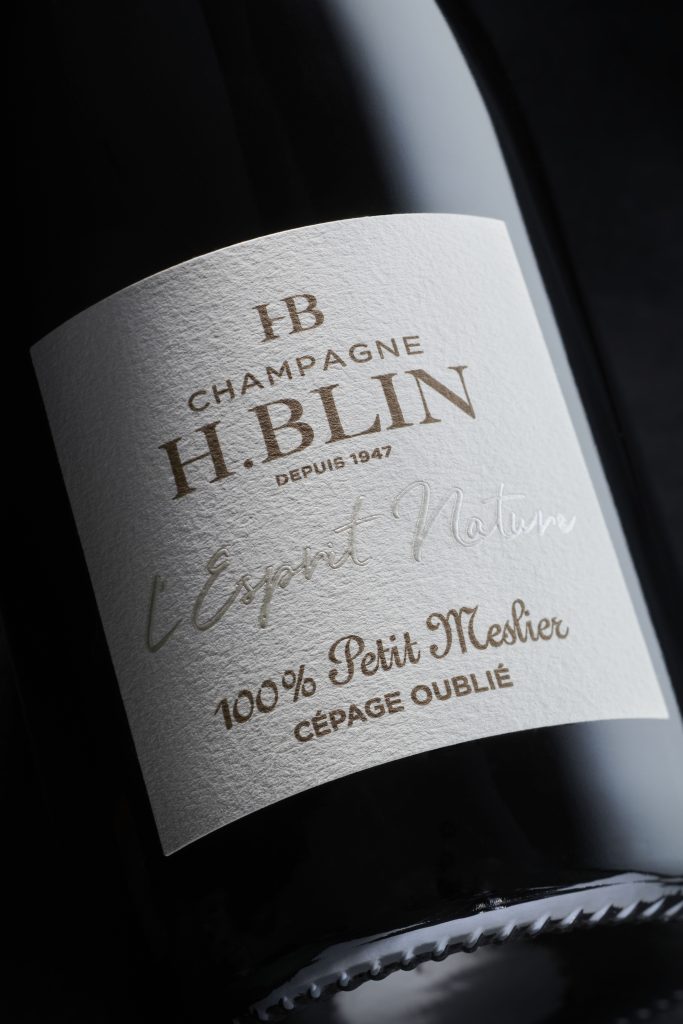
Champagne H. Blin has even embarked on truly niche winemaking. Having sourced a rare plot of less than one hectare of Petit Meslier, a forgotten variety of Champagne, it has made a monovarietal cuvée. After four years on the lees, the maison describes it as having a citrus forward profile with lemon, yuzu and grapefruit notes, as well as notable salinity.
Above all, Champagne H. Blin has emerged as a champion of its land and the vines that grow on it. You find it not only in the celebration of Vincelles, but also in the vineyard practices.
It has achieved HVE (High Environmental Value) certification and has held organic-certified vineyards for more than a decade. Indeed, its harvest is enough to make organic cuvées, an impressive feat in Champagne’s marginal climate.
Sustainability is now a high priority for consumers but, if anything, achieving new sustainability milestones is simply continuing Champagne H. Blin’s original mission. As an organisation so deeply rooted in its local town, community and landscape, how could you make wine any other way?
Related news
Château Petit-Village unveils its new relationship with La Place de Bordeaux
The Italian region selling rosé to the French
China is rebuilding its on-trade around a new kind of drinker


