



The db Wine Crime Files 2026: part 1
In this exclusive series, Sarah Neish delves into the biggest booze-related crimes across the globe this year, from poisoned wine and camel-smuggled liquor to a stolen Fabergé egg whiskey set.

The drinks trade can be rich pickings for opportunist criminals, as well as, increasingly, a theatre for organised crime. In the db Wine Crime Files 2025: part one we looked at a targeted cyber hacking incident which had a devastating impact on a Japanese beer company as well as an audacious £24,000 wine heist where the thief made off with his haul in a tuk-tuk, among other illegal activities.
The second instalment of 2025’s Wine Crime Files was no less dramatic, covering organised appellation fraud, where wines are deliberately mislabelled and blind eyes turned to producer compliance. We also touched on the rise of sophisticated operations where lorries are intercepted on their way back from ports such as Dover and relieved of their pallets. As reported by the BBC, criminal gangs are buying up haulage firms to pose as truckers and steal goods by the lorryload; worrying news for businesses waiting on the delivery of products that have already been paid for.
Four months into 2026, db is opening up the Wine Crime Files once again, exposing the dark underbelly of the drinks industry with tales of poisoning, smuggling and cartel-linked extortion. Read on for an eye-opening look at what has been keeping the courts busy so far this year.
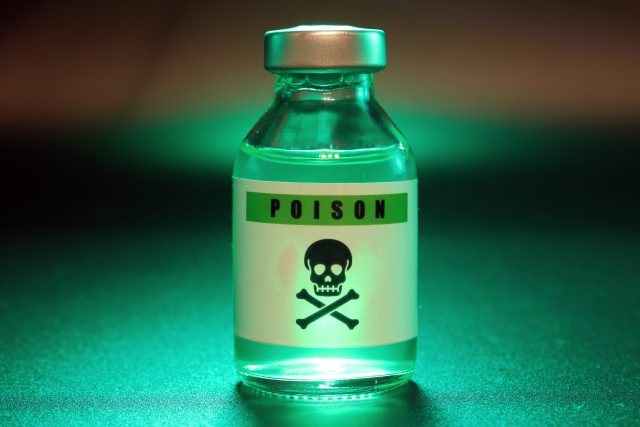
January: Mother accused of killing daughter with poisoned wine
At the start of the year, Gudrun Casper-Leinenkugel attended a bond hearing in North Carolina after being charged with first-degree murder after allegedly killing her own daughter, and making her other daughter extremely ill, using poisoned wine. The prosecution claims that during the family’s Thanksgiving dinner in November 2005, Casper-Leinenkugel served a tainted bottle of wine, which was shared between Leela Livis (the deceased), Leela’s husband and Leela’s sister.
All three victims fell ill shortly after the dinner, with Leela’s obituary revealing that she died on 1 December 2005.
Police at the Henderson County Sheriff Office determined that the wine consumed by the victims had been spiked with acetonitrile, a clear liquid commonly found in lithium batteries that converts into cyanide over time. Officers also uncovered a Google search on the accused’s computer: “what happens if I accidentally ingest acetonitrile,” according to the prosecution.
Casper-Leinenkugel is said to have opened six bars and restaurants across the US, with the latest property modelled on the brewhouses she grew up near in Germany, as well as her extended family operating the Leinenkugel Brewing Company in Wisconsin. The brewer, which has been running for 158 years, sells a wide range of German-inspired beers from shandys and IPAs to Weiss beers and Bocks.
In late February it was revealed that prosecutors will not seek the death penalty for the accused if she is convicted. Casper-Leinenkugel remains behind bars without bond.
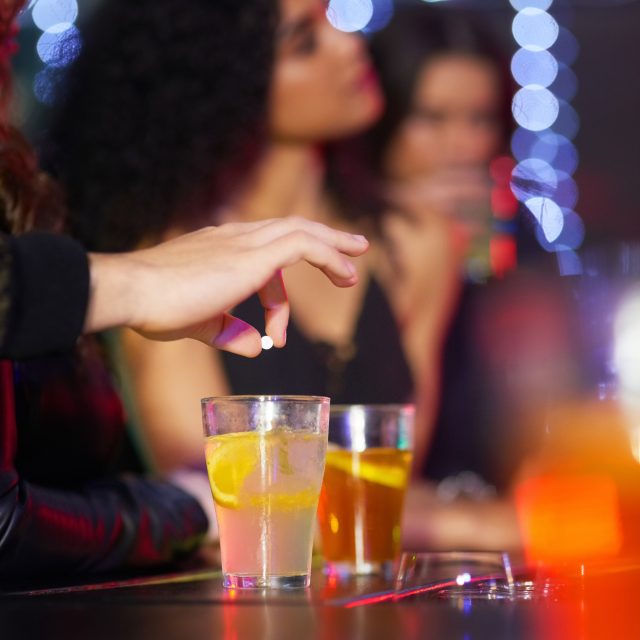
February: Mayfair restaurateur on trial for drink-spiking
Vikas Nath was arrested after staff at private members’ club Annabel’s in Mayfair, London, noticed him “dipping a straw” into a small bottle before transferring the straw into the victim’s margarita cocktail. Eagle-eyed bar staff switched the drugged drink for a fresh one before the woman drank from it, and warned her of their suspicions.
The incident, which took place on 15 January 2024, has been escalated to Southwark Crown Court, where Nath admitted to spiking the drink but said it was to “relax” the woman rather than as a plan to have sex with her. He told jurors that the woman had been “erratic”, and that he intended for her to be “less anxious and for her to calm down a little bit”.
He denies attempting to administer a substance with intent and possession of a Class B drug and claimed the mixture was cleaning fluid for his BMW i8 combined with Tequila. However, a bottle of vanilla extract containing ‘date rape’ drug gamma-butyrolactone (GBL) was found thrown into a a toilet cistern at the club.
Nath is listed at Companies House as a director of Termdeal Ltd, the firm behind high-end Indian restaurant Benares in Mayfair. He is also reported to own a portfolio of restaurants across London and Spain, including two with Michelin stars. Prior to investing and operating hospitality businesses, Nath had a career in finance spanning 25 years across companies such as UBS, Credit Suisse, Deutsche Bank and HSBC.

February: Tequila mayor arrested over alleged extortion of distillers
In February, Mexican authorities arrested Diego Rivera Navarro, the mayor of Tequila, on suspicion of running an extortion scheme targeting major agave spirit producers. Investigators allege that the operation involved collusion with the Jalisco New Generation Cartel.
Mayor Rivera was detained during federal raids, as were the town’s security director and the heads of public works and land registry; the three men are accused of heading a corruption ring that targeted Tequila and mezcal producers in the area, and using municipal resources to support the criminal activities of the cartel.
Victims allegedly include Becle, the parent company of Jose Cuervo, the world’s largest Tequila producer, with investigators saying the company had been forced to pay US$3 million to the racketeers.
According to the Governor of Jalisco, at least 10 companies had filed complaints against the local administration, with Becle alleging it was charged a property tax 20 times higher than the legal rate as well as a fine of more than 60 million pesos (US$3.45 million) by the mayor’s team. Becle claims that permits were also withheld by the local government, which Becle said had attempted to shut down one of its production plants.
As of March 2026, Rivera remains in pre-trial detention at the Altiplano maximum-security prison, located in Almoloya de Juárez, Mexico.
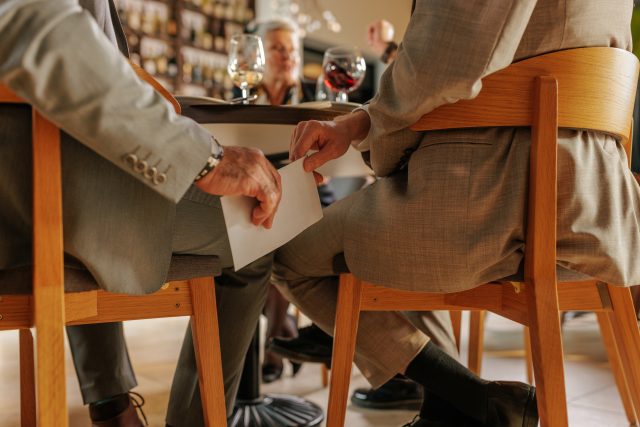
March: Southern Glazer’s bosses indicted for bribery scheme
A federal grand jury in Oakland, California indicted five senior Southern Glazer’s employees (now former employees), alleging they led an eight-year-long bribery scheme to dictate which wines made it into a number of Albertsons retail stores.
Stephen Magliocco, vice president of chains; Michael Dehdashtian, vice president of chains; Adrian Ruiz, senior vice president for California; Ryan Dow, director of sales; and Loratina Muscara, director of sales, are all accused of accepting and making bribes including offering luxury golf trips to Monterey County, Maui, Las Vegas and Florida, and lavish hotel stays worth thousands of dollars in exchange for the grocery stores putting certain wines on shelves.
A spokesperson for Albertsons told the San Francisco Chronicle that the company was cooperating with authorities, saying: “The behaviour in question was wholly inconsistent with our policies, and we do not, and will not, tolerate it.”
Additionally, a Southern Glazer’s spokesperson told db: “We understand that five former employees of Southern Glazer’s have been charged. Southern Glazer’s is committed to full compliance with all applicable laws and industry regulations, and we hold ourselves and our employees to the highest standards of ethics and integrity. We have cooperated with relevant authorities and will continue to do so.”
The five former employees are facing jail time.
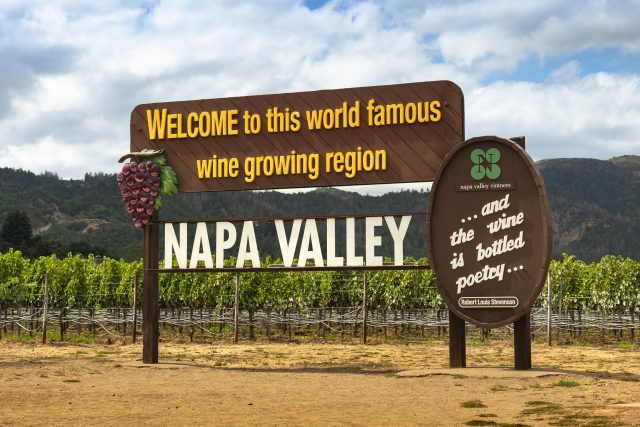
March: Napa winemaker sentenced to three years probation and US$500,000 fine for fraud
Jeffry Hill issued a public apology after being sentenced in a federal fraud case involving the mislabelling of wine and grape products on an enormous scale.
Partner Content
While operating the now-closed Hill Wine Company in St Helena, Hill labelled wines as originating from the Napa Valley AVA, altering shipping documents and falsifying records to conceal the true origin of grapes and wine used in the products which were then sold to consumers for around $1.5 million. Prosecutors said that Hill claimed the grapes used in his wines were grown at the company’s vineyard, while sourcing them elsewhere at a lower cost.
Hill had previously spent four months in jail in 2015 after stealing grapes from a competitor.
After being sentenced to three years probation and ordered to pay a minimum of $500,000 in restitution, Hill said: “I thought I was in control…I lost sight of my values. I ignored responsibilities. I allowed my ego and drinking to dictate my priorities. In that blind pursuit, I destroyed not just my own future but caused real harm to people who trusted me.”
March: Essex police sting seized 67,000 bottles of fake wine
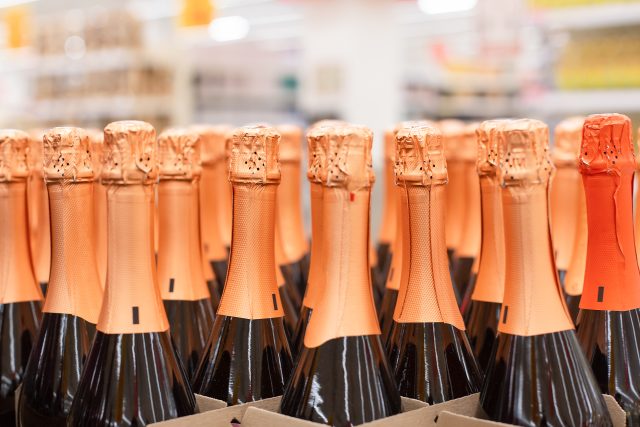
Around 90 pallets of counterfeit wine and Prosecco worth £500,000 were discovered in warehouses across Essex in a coordinated police sting in March, with the head of the National Food Crime Unit stressing this kind of fraud is “not a victimless crime”.
The coordinated effort brought together different police and governing bodies including the Metropolitan Police, the North Regional Organised Crime Unit Gangs Partnership, Essex Trading Standards and the FSA’s Wine Inspection Team, in an attempt to stop the fake bottles from reaching consumers. Enfield Local Authority and Trading Standards and Epping Forest District Council were also involved in uncovering the crime.
“Seizing over 67,000 bottles of counterfeit product and making an arrest sends a strong message to those who seek to profit from deceiving consumers – we will take action,” said Andrew Quinn, head of the National Food Crime Unit.
“Food fraud is not a victimless crime. It undermines legitimate businesses and erodes consumer trust. In this case, the concern is one of authenticity and quality – consumers deserve to know that what they are buying is exactly what it claims to be.”
Quinn further revealed on LinkedIn that the investigation had required “close collaboration with our Italian counterparts”. A spokesperson for the UK’s Food Standards Agency told db that the equivalent Italian agency were helping to “establish the traceability of the wine seized”.
One man was arrested and released on bail; the investigation is ongoing.
March: Fake fizz served by American Airlines cabin crew
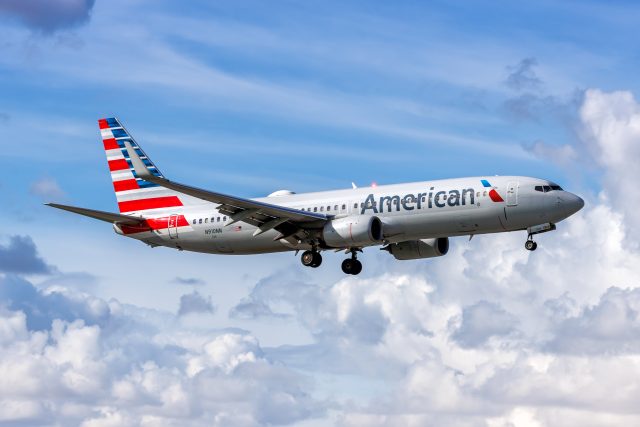
A flight attendant allegedly mixed still Chardonnay wine with carbonated water to “make” sparkling wine after the airline ran out of bottles of fizz, telling a passenger it was “company policy”.
The incident was brought to the attention of Gary Leff, founder of the View from the Wing aviation blog by a reader who travelled on American Airlines flight 3394 from Miami to Greenville-Spartanburg airport in South Carolina on Saturday 28 March.
“I had two glasses [of sparkling wine] and then I asked for the third one and the flight attendant brought something that tasted bad. It tasted terrible and she leaned over to me and she said they are told if they’re out of Champagne to mix… Chardonnay and sparkling water”, the passenger said.
According to Leff, “there’s no way this is actually company policy – that the airline tells flight attendants to mix Chardonnay and sparkling water whenever they’re out of sparkling wine. I do not even need to ask them,” he wrote. “If there were a service memo instructing flight attendants to do this, I can assume it would have been leaked to me a long time ago”.
However, he believes the incident calls for “greater staff training” by American Airlines as “flight attendants learn their procedures as much from each other (galley gossip) as from their employer… And when they don’t go through recurring service training, just get sent memos, inconsistencies develop, including ones that are as nearly inexplicable as this one.”
April: Fabergé whiskey set thief jailed
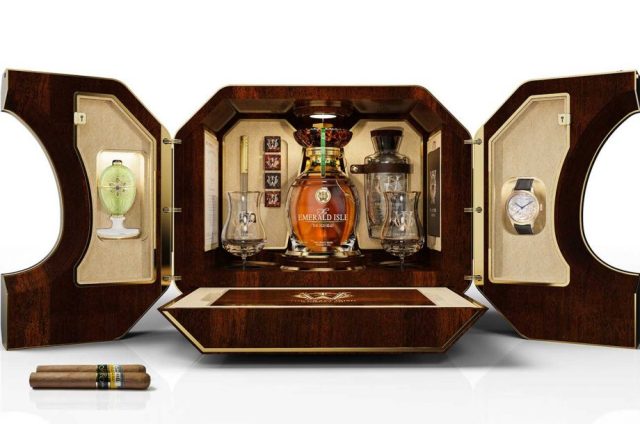
In April, Enzo Conticello was sentenced to two years and three months in prison after stealing a handbag containing a priceless Fabergé egg and watch set tied to a rare Irish whiskey collection, worth £2.2 million. Conticello pleaded guilty to theft and three counts of fraud by false representation following the crime which took place outside London pub the Dog and Duck on 7 November 2024.
CCTV footage showed Conticello removing a handbag belonging to Rosie Dawson, an employee of The Craft Irish Whiskey Co., containing the highly rare and valuable Fabergé egg and watch set, which Dawson was meant to take to a work event that evening. Only seven examples exist of the collection, which comprises an egg made from 18-carat yellow gold and set with 104 diamonds plus an uncut emerald, and a 22-carat watch presented in a rose gold case. Each set also contains two bottles of 30-year-old, triple-distilled Irish whiskey and a humidor containing two Cohiba Siglo VI Grand Reserve cigars.
Conticello was arrested after attempting to use bank cards from the stolen handbag in a nearby shop within minutes of the theft. The court heard he later handed over the bag in exchange for drugs.
During sentencing, the judge described the “inconvenience and stress” caused to Dawson and her company by the “opportunistic theft”.
“Ms Dawson described the particular shock and panic upon realising a bag containing items of such particular value owned by the company had been stolen, and the incredible stress this incident has caused her,” barrister and court recorder Kate Livesy said.
Police confirmed the Fabergé egg and watch have not been recovered.

April: Camels used to smuggle illicit liquor into Delhi
Delhi police seized a contraband load of liquor after a man was caught trying to smuggle thousands of bottles into Delhi using camels to avoid paying higher alcohol taxes.
The camels were in the process of carrying the liquor through ‘forest routes’, travelling from the neighbouring city of Faridabad in Haryana across state lines into the Indian capital, where taxes on alcohol are much higher. Authorities said the smuggler opted for the route to avoid road checkpoints and border surveillance, and revealed that 1,938 vessels of illegal alcohol were seized.
“Staff… busted an illicit liquor smuggling racket using camels for transportation,” police said in a statement after the arrest. “The contraband was seized and the camels were rescued and handed over to concerned authorities.”
It was reportedly not the camels’ first offence as the same two creatures were also stopped for carrying alcohol in 2025, according to The Hindustan Times. The smugglers responsible for the crime offload the contraband once inside the boundaries of the city, before using bicycle rickshaws to deliver the drinks to clients.
Related news


