



Menagerie Wines: ‘Rob wants the company to be profitable before the next century’
What does a ring-tailed lemur, Robert Mondavi Jr, and 67 Pall Mall all have in common? The answer is a high-end Californian wine brand with a difference that’s due to launch in the UK this summer. Sarah Neish interviews its founder.
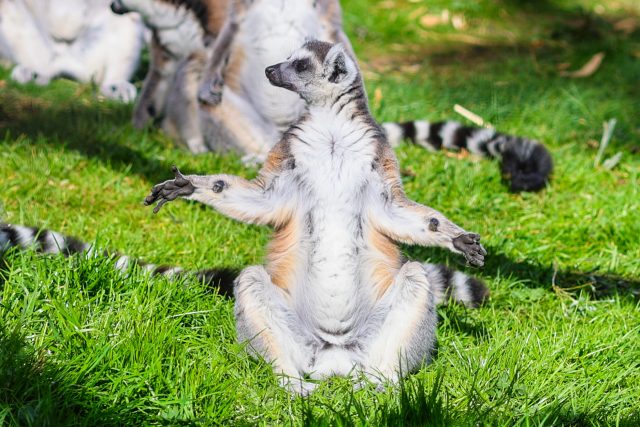
As the drinks business has reported, ‘wildlife wines’ are on the rise, with producers increasingly looking for a meaningful mission to support through their wines, and, lets’s face it, a compelling marketing story.
One such brand making animal conservation the golden thread running through its collection is Menagerie Wines, an ultra-premium operation with a team made up of California royalty. Think Robert Mondavi Jr. (grandson of Robert Mondavi) as consultant, Philippe Melka (named one of the top nine wine consultants in the world by Robert Parker) as head winemaker, and Maayan Koschitzky (formerly of Screaming Eagle), as assistant winemaker.
As Menagerie Wines gears up for its first international launch (it has been present in the US since 2019), which will see the wines enter the UK market this summer, db speaks to co-founder Ricky Novak about what makes these bottles, currently available for US$1,350 per box of three, a collector’s dream.
What was your involvement with the wine industry prior to launching Menagerie?
“Before launching Menagerie, my wife Lisa and I were involved in the wine world as collectors with a genuine passion for the craft. Over the years, that evolved into something more immersive through our membership at The Napa Valley Reserve, where we had the opportunity to spend time around some of the most respected producers in Napa and develop meaningful relationships within the industry.
“Lisa and I had talked for years about creating something of our own, something highly intentional and uncompromising in its approach while giving back to causes that matter to us. Menagerie Wines is the culmination of that.”
How long have you worked on the Menagerie concept behind the scenes before launching?
“Around 12 years ago, we began active development, which meant assembling what we felt was a world-class team and being very deliberate about every decision from the ground up. From the beginning, the goal was not simply to launch a label, but to build something distinctive and enduring. That required patience, the right people, and a willingness to take our time until every piece was exactly where it needed to be.”
Where are the wines made, and by whom?
“The wines are produced in Napa Valley, California, drawing from some of the region’s most sought-after sites, including Oakville and Pritchard Hill. A key part of our approach is blending mountain fruit from higher elevations with more expressive, riper fruit from the valley floor, which allows us to balance structure, depth, and approachability in a very intentional way.
“Our head winemaker is Philippe Melka, widely regarded as one of the most accomplished and sought-after figures in modern winemaking, and recently named among the top wine consultants in the world by Robert Parker. Alongside him is Maayan Koschitzky, who serves as assistant director of winemaking and brings experience from some of Napa’s most iconic estates, including Screaming Eagle. Together, they bring both precision and a shared commitment to producing wines at the highest level”.

How did the involvement with Tusk come about, and why did you choose it over other wildlife conservation ventures?
“Throughout my career I had helped many prominent American families conserve wildlife habitat on their ranches, farms and plantations. I worked with amazing land trusts and conservation groups. This experience taught me a good bit about being a steward of the land and allowed us to be very deliberate in choosing a wildlife conservation partner for Menagerie.
“Tusk stood out immediately because of both its scale and its track record, not to mention the cachet of being backed by HRH Prince William. Not only has it proven to be deeply effective in protecting wildlife but equally committed to supporting the local communities that coexist with it, something we see as essential to creating lasting impact.
“What sets Tusk apart is that balance. It is not conservation in isolation; it is a more holistic approach that recognizes you cannot protect wildlife without also investing in the people and environments around it. That alignment made the partnership feel both authentic and meaningful to us.”
What percentage of Menagerie profits go towards Tusk?
“We have committed 5% of gross sales to supporting Tusk’s work, and for direct events in partnership with Tusk, that contribution increases to 10% from related sales.”
Through choosing Tusk you are helping to support conservation in Africa. Why not support endangered wildlife closer to home in California?
“It is a fair question, and there are certainly important efforts closer to home that deserve support. For us, partnering with Tusk came down to where we felt we could make the most meaningful impact. Tusk’s work on the ground in Africa, both in wildlife protection and community support, is incredibly well-established and far-reaching.
“There is also a global aspect to conservation that we believe in. Wildlife preservation is not confined by geography, and supporting ecosystems abroad does not diminish the importance of protecting those at home. It is about contributing where your partnership can be most effective and authentic.”
How do you know Robert Mondavi Jr. and what has his involvement been with Menagerie?
“Rob and I met through a mutual friend at a wine dinner in Atlanta over a decade ago. We immediately hit it off and became friends. Our wives also enjoyed spending time with one another, which made the relationship even better. After several years, several bottles of wine, and a staggering amount of whiskey through many a late evening around the fire, we eventually discussed the desire that Lisa and I had for our own wine brand.
Partner Content
“We needed a sage voice to help us keep the oxcart out of the proverbial mire, and Rob was the person to guide us.
“It’s been a wonderful relationship, although Rob might tell you that we continually drive him crazy because we are so hyper-focused on creating an experiential brand whereas Rob wants the company to be profitable before the next century. As he would tell you, Menagerie ‘ain’t doing it the way his grandaddy did’”.
What makes Menagerie’s wines so unique?
“Our proprietary reds are built around Cabernet Sauvignon as the dominant variety, but we refer to them as blends because the final expression goes beyond just the grapes themselves. A key part of our process is finishing the wines in rare, carefully selected spirit casks, which adds another layer of complexity and nuance.
“While Cabernet forms the backbone, the finished wine is very much a composite of both varietal character and the influence of those unique casks. Early on, there was a fair amount of scepticism around this approach. Finishing a wine of this quality in spirit casks is not conventional, and our winemaking team felt it would either overwhelm the wine or simply not work at all. For us, it was never about following precedent, it was about exploring what was possible if done with precision and restraint.
“What was initially questioned is now often seen as a point of differentiation, and in some circles even described as a bit of a “unicorn” within the category. That evolution has been incredibly rewarding, because it reinforces the idea that innovation, when done thoughtfully, can still have a place at the very top end of the market.”
Why do you think more wine producers are starting to get behind wildlife conservation?
“There is a growing awareness within the wine world that what we do is inherently tied to the land. As that awareness deepens, many producers are looking beyond the vineyard and asking how they can have a broader, more meaningful impact. Wildlife conservation is a natural extension of that mindset, it is about stewardship, preservation, and thinking long term. For us, it aligns closely with the same values that guide how we approach winemaking.”
What do you think will resonate most with consumers and the trade about these wines and their story?
“It is the combination of authenticity and intention. On one hand, the wines themselves are extremely limited and crafted at a very high level, which naturally appeals to collectors and the trade. Beyond that, there is a deeper story, one that connects craftsmanship with a broader purpose. Consumers today are more thoughtful about what they support. When there is a genuine alignment between the product and the mission behind it, that tends to resonate in a much more lasting way than either element on its own.”
Is it a goal to have Menagerie wines served inside premium safari lodges around the world?
“It’s certainly an exciting idea, and one that feels very aligned with the spirit of the brand. We’ve always been intentional about where and how the wines are experienced and placing them in environments that reflect that sense of place and purpose is important to us.
“Premium safari lodges would be a very natural fit, there’s a shared appreciation for rarity, experience, and connection to the natural world. While we’re focused on building the brand thoughtfully, it’s absolutely something we’d love to see develop over time.”

What about the UK launch?
Menagerie Wines launches in the UK in limited quantities (only 290 cases were produced in total for the Shadow Cabernet Sauvignon), via select on-trade venues in early summer 2026, with potential listings including 67 Pall Mall, Gordon Ramsay Group, Annabel’s, The Twenty Two, Amazonico and The Roof Gardens, according to Menagerie’s comms agency Heed.
Pricing reflects “the scale and intent behind what we are doing”, said Novak. Currently, a three-bottle box of either Shadow of Jaguars 2021 Cabernet Sauvignon, or Conspiracy of Lemurs 2021 Proprietary Red Wine is priced at US$1350, while a three-bottle box of Parade of Elephants 2023 Sauvignon Blanc will set you back US$400.
The wines are also available in single magnums for about US$1,000 each.
Fundamental to the brand is a collaboration with celebrated wildlife photographer David Yarrow, which sees his photography used on the bottle of a limited release – the Yarrow x Menagerie 2021 Cabernet Sauvignon – which comes with a signed book of Yarrow’s work when six bottles are purchased.
“David Yarrow is based in London, so launching here allows that partnership to live in a place where his work, and the audience that follows it, is already deeply rooted,” noted Laura Schofield, founder of Heed. “For us, it’s not just about entering a new market, it’s about placing the wines in a context where both the product and the story behind it can be fully understood and appreciated.”
The boxes housing Menagerie’s wines are works of art in themselves, and are designed to be kept and reused; each bottle features etched or screen-printed artwork, depicting a single animal species “from the dark silhouette of a jaguar to a cobalt-blue lemur or brushed-gold elephant” courtesy of Italian artist Andrea Minini.
Related news
Glass half full: Asia offers hope for struggling California wine
California pleads with Quebec to lift trade ban
California wineries request US$32 million to fight vineyard pest


