



Master Winemaker 100: Clément Pierlot
The cellar master at Champagne Pommery & Greno features in this year’s Master Winemaker 100 guide, and won the Spring Tasting Award. He tells db about the importance of passion, pairing Pommery with sake and why Champagne does not need a special occasion.
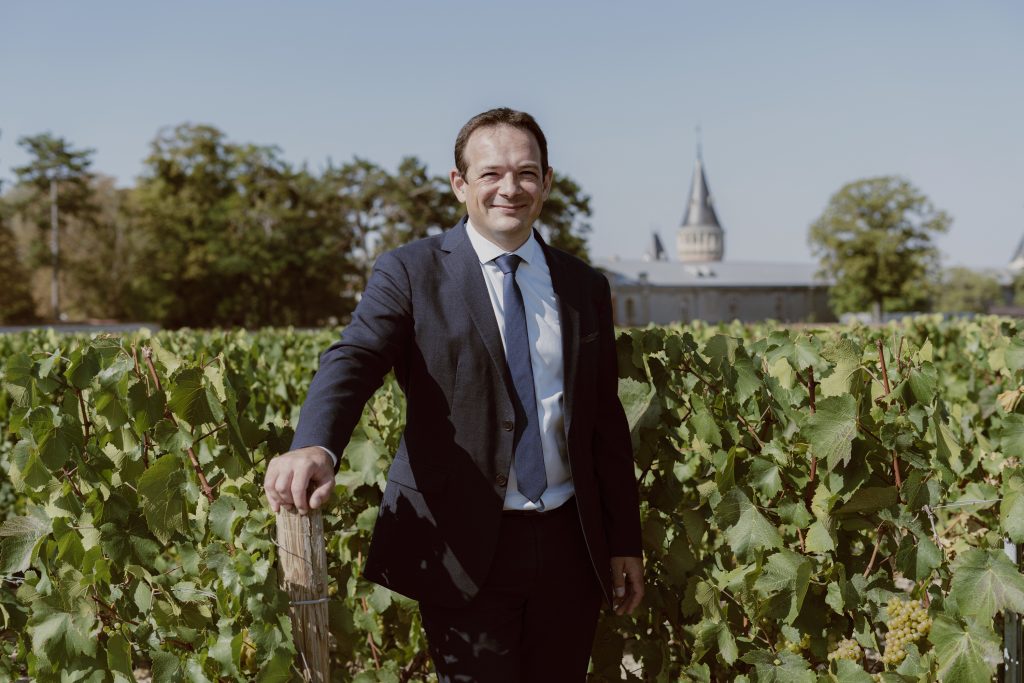
The grandson of a farmer, Clément Pierlot has always been passionate about working the land. After a foundation degree in Earth & Life Science in Reims, he studied Viticulture & Oenology at SupAgro in Montpellier, then worked in Canada’s Niagara Peninsula, as well as in Italy. After a year as a project manager working on gas exchange experiments for the Comité Champagne, Pierlot joined Vranken Pommery as vineyard director. In 2014, he planted the first 40 hectares for Pommery’s English wine venture in Hampshire. By 2017, this breadth and depth of experience made Pierlot a natural choice to become Pommery’s 10th cellar master.
A wise person once told me that time is the only true master of wine.
Ever since, I’ve tried negotiating with it, but it remains immovable. It always slips away from us – and that’s a good thing. Without it, there would be no mystery, no evolution, no emotion in a great wine.
A great wine should make you want to come back to it, to understand where it comes from, and why it has that precision that words can’t quite capture. It should speak to both heart and mind, please yet surprise, and stay true to itself, even after many years.
A great winemaker should know when to stay silent, as much as when to act. Never lose curiosity. Humility is essential in front of nature. The terroir speaks – our job is to listen. It is a craft of patience and attention, where we act as much through observation as through intervention. The role of a great winemaker is to respect nature, to accompany it, not to tame it.
Perfection is a useful mirage: we chase it, and in doing so, we progress. The perfect wine, thankfully, doesn’t exist. Every vintage escapes us a little, and it’s precisely that imperfection that makes it alive. If everything were controllable, we’d get bored very quickly.
The thing I’d most like to change about the wine world is this tendency to over-intellectualise everything. We sometimes forget that wine is first and foremost a pleasure, not a concept. It should remain a universal language, accessible, without codes or intimidation. Behind every bottle, there is a human story and passion, not an equation.
I wish I could tell the consumer who drinks my wine that Champagne doesn’t need a major event, it is the event. Each sip should be a way to celebrate life, not the calendar. It can be enjoyed any time, anywhere, for every moment that matters. Champagne Pommery is crafted with this idea in mind: simple and accessible, while guaranteeing precision, elegance and exclusivity.
The last time I asked a sommelier for advice was in Kyoto. We discussed how to pair our Champagne with different kinds of sake, from a rich, textured junmai to a delicate daiginjo. He explained how to balance purity and umami in a cocktail. It was a discussion as technical as it was poetic, between two traditions that ultimately speak the same language: time and precision.
If I couldn’t be a winemaker, I’d be a rock drummer, a travel photographer, a firefighter or a writer. Basically, all the jobs a little child can dream of. Talent doesn’t always follow curiosity, but passion never falters. I love the idea of creating, capturing a moment, telling a story, whether through music, images or words.
I wish our vineyards to be alive, sincere and sustainable, because the beauty of a terroir only matters if it endures. We are merely borrowing the land from those who will come after us. Preserving biodiversity, soils and trees also means preserving the future emotion of our wines.
My next ambition is to push the precision of the Pommery style even further, creating Champagnes that are luminous, finely sculpted and full of energy – capable of moving as much as impressing. I want to continue to explore freshness, tension and the modern elegance that defines our signature.
If I won the lottery, I’d obviously invest in Champagne, because I deeply believe in the future of this unique and timeless appellation. I’d probably take my camera and trail-running shoes to wander through the world’s greatest terroirs, meeting people who live for their land. And I would likely buy back the land and forests my grandfather worked in my native Ardennes: a way of returning to my roots.
If there were more hours in the day, I’d spend more time with my family, do more sport, learn new languages and finally read the books piling up on my bedside table. In short: I’d try to become a better version of myself, feed my curiosity and live even more intensely.
When it’s all going wrong, I go down into the Pommery cellars. The air is cooler there, the bottles wiser, there’s no mobile signal, and no-one talks to you about analytical accounting or business plans.
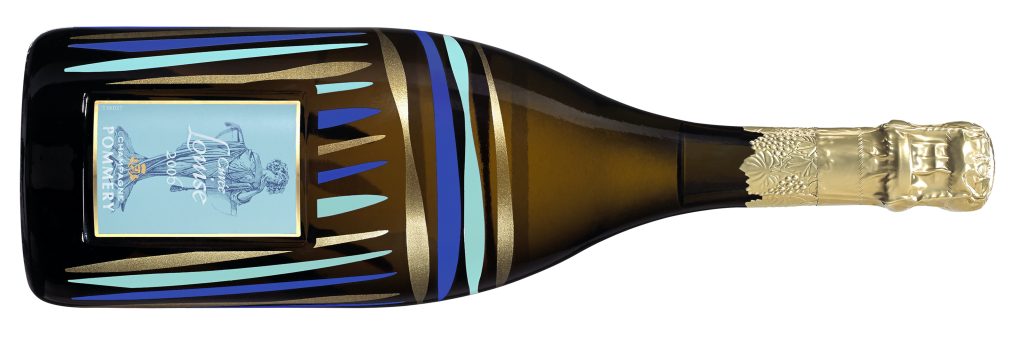
My desert island wine would be our Cuvée Louise 1985 Blanc de Blancs, the only expression of this cuvée ever created as a blanc de blancs. With its quiet grace, tension and saline purity, it would be the perfect companion to reinvent the world, even alone, facing the sea.
Master medals
Pommery Cuvée Louise Brut 2006, Grand Master at The DB Spring Tasting 2025
Related news
Cru World Wine sees huge demand for its 'community-ownership' share offer
'Fantastic time to be a whisky drinker’ as Hedonism launches own-label range


