



The big trends in cider driving sales
Apple and premium draught cider have been identified as the main trends shaping the UK hospitality sector. But what else is driving sales across the category. db looks into the opportunities.
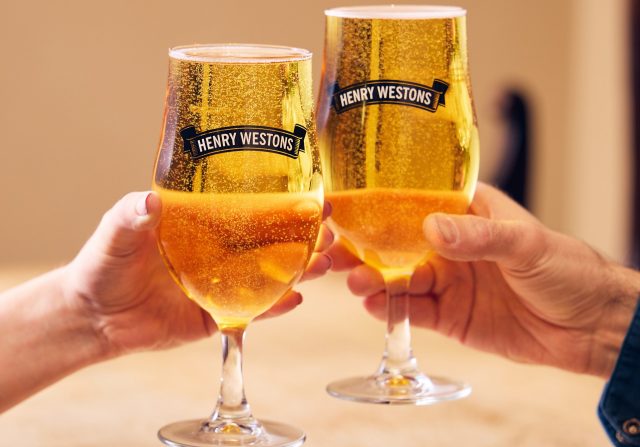
Yesterday, during a presentation of Westons Cider Report 2026, new data revealed how the on-trade cider market has grown 3.1% to £2.04bn, driven by premiumisation and rising price per pint.
Giving draught a chance
The report outlined how premium draught cider taps in venues increase 10.8%, as operators upgrade their cider range, however there are challenges with gaining tap space with many venues upping their draught offer across beer and no and low.
The report detailed how a summer of sport could also see operators taking more than three times the average daily sales, showing that there is opportunity for the category to continue to grow.
Added to this, low and no cider has grown to £52.9m, now accounting for 5.8% of category sales, according to the Westons data.
Speaking at the presentation, Sally McKinnon, head of marketing and strategy at Westons said: “Our core focus is around delivering profitable category growth through our portfolio of leading brands.”
The importance of the on-trade
The team at Westons outlined that while the number of licensed premises remains lower than pre-pandemic levels, cider continues to play a vital role behind the bar. The data also recognised that 38% of category volume and 64% of total cider value now comes from the on-trade, demonstrating the channel’s importance as a key generator of value.
With the on trade driving a third (38%) of total cider volume sales and nearly two-thirds of value (64%), the cider company pointed out that the findings signify a category in “confident health” and one that is evolving with consumer tastes.
Partner Content




Drilling down on the data, McKinnon explained: “Cider remains one of the most important drinks categories in the pub, and the on-trade continues to be a vital driver of value for the market. We’ve seen over the last few years that drinkers have been increasingly interested in more premium and crafted ciders and this has been cemented by decision-makers clearly shifting their ranging to accommodate this. As well as creating a more engaging drinking experience for consumers, it’s also delivering strong margins for operators, which we know is crucial in today’s climate.”
‘Willingness to trade up’
Numbers are significantly migrating from standard cider to premium cider, with an increase of 10.8% in the latter on draught. At the same time, drinkers are showing a growing willingness to trade up, with the average price of a pint of cider rising to £4.79.
Westons also indicated that this shift towards higher-quality cider reflects wider consumer behaviour across the on-trade since drinkers may be visiting the pub slightly less frequently, but when they do, they are spending more, creating greater opportunities for premium drinks.
Despite this, the team did highlight how the competition for draught taps is “intensifying as operators introduce more no and low alcohol beer options – a trend that is up 28.3% and looks to be on the rise.
Looking more closely at the premium end of the cider spectrum, Westons’ presentation outlined how there is “the continued opportunity for the ‘crafted’ sub-sector”. In fact, it described how the trend for craft “now makes up 12% of total UK draught cider sales, but significantly represents 14% of value share” as craft products command a much higher retail price than their mainstream counterparts.
Vintage cider, food pairings and weekend opportunities
Vintage cider was also flagged as being on trend and McKinnon suggested that “vintage ciders are increasingly becoming a trusted sign of quality, making them an attractive option on draught”. She also highlighted the benefits of “pairing crafted cider and premium world lager together” in what she noted would make for “a powerhouse duo on the front bar, keeping customers happy and delivering profit in ever pint”.
Cider thrives in social occasions. The biggest on-trade cider drinking occasion is social get-togethers, accounting for 16.9% of serves, highlighting the drink’s role as a sociable, easy-drinking choice. Additionally, the findings highlighted how “food plays a major role in cider occasions. For instance, the data showed that “nearly half (48.9%) of cider drinking occasions in the on-trade involved food”.
Saturday remains the biggest trading day for venues serving cider and “increasingly so in the on-trade” while “regional differences were also shaping the category with more than 55% of total cider volume being concentrated across four key regions, each with distinct consumer preferences: the south west – favouring draught apple ciders, central and Yorkshire – preferring draught flavoured cider, and London – where consumers were opting for packaged fruit and apple ciders.
Related news
Why the world is about to see more Canadian cider
Government asked to back UK grown and made cider and perry
Chance Clean Cider raises funds to boost next stage of expansion


