



Henkell Freixenet taps into global sparkling trends
The world’s largest producer of sparkling wines used a Wine Paris masterclass to survey the trends driving the category, with Prosecco, crémant and no and low options winning over consumers.
“This is a really good way to learn about the sparkling category,” explained Patrick Schmitt MW. “We’re seeing it through the lens of one company, but that company is the global leader.”
Among the many producer-led masterclasses taking place at Wine Paris, Henkell Freixenet’s session, subtitled ‘A Sparkling Experience’, stood out for its expansive vision. As the world’s largest producer of sparkling wine, Henkell Freixenet has its finger on the pulse of the global market, spanning its key categories.
Schmitt was on hand to introduce a man who is not only an expert in producing those styles, but also intimately understands the realities of selling them. Eberhard Benz, the chief technical officer at Henkell Freixenet and vice chairman of the executive committee, has more than 30 years of experience in the industry. As the company’s global lead for quality control, spanning countries and continents, he is better-placed than anyone to survey the global landscape for sparkling wine.
Despite a challenging economic environment, that landscape, overall, still looks quite positive. Global sales volumes have increased by an average of 2% each year since 2015, with markets such as the US and Italy growing even more quickly. Henkell Freixenet has benefitted particularly from that landscape, accounting for just shy of 10% of all global sparkling wine value (excluding Champagne, Lambrusco and Russia).
Through seven wines, Benz demonstrated the differences between key styles, the categories driving growth and where consumers can still find value. For the world’s largest gathering of wine trade professionals, it was a vital overview of a key category.
Growth drivers
No discussion of sparkling wine in 2026 could fail to mention Prosecco. Since 2010, according to IWSR data, its compound annual growth rate (CAGR) has been 10%, while there is now around twice as much Prosecco produced as Champagne. As Benz summarised: “Prosecco was hot, is still hot and will be hot in the future.”
To make the case, he presented two bottles. The first, Mionetto Prosecco DOC Brut Prestige, is the most classic and bestselling of Henkell Freixenet’s Proseccos. The wine is, as Benz commented, an encapsulation of all that has driven Prosecco’s success: fruity, easy to drink, adaptable to a range of occasions and immediately recognisable. It still relies on ripe, high-quality fruit, however – particularly as the brut style is lower in sugar than the more commonly seen extra-dry Proseccos.
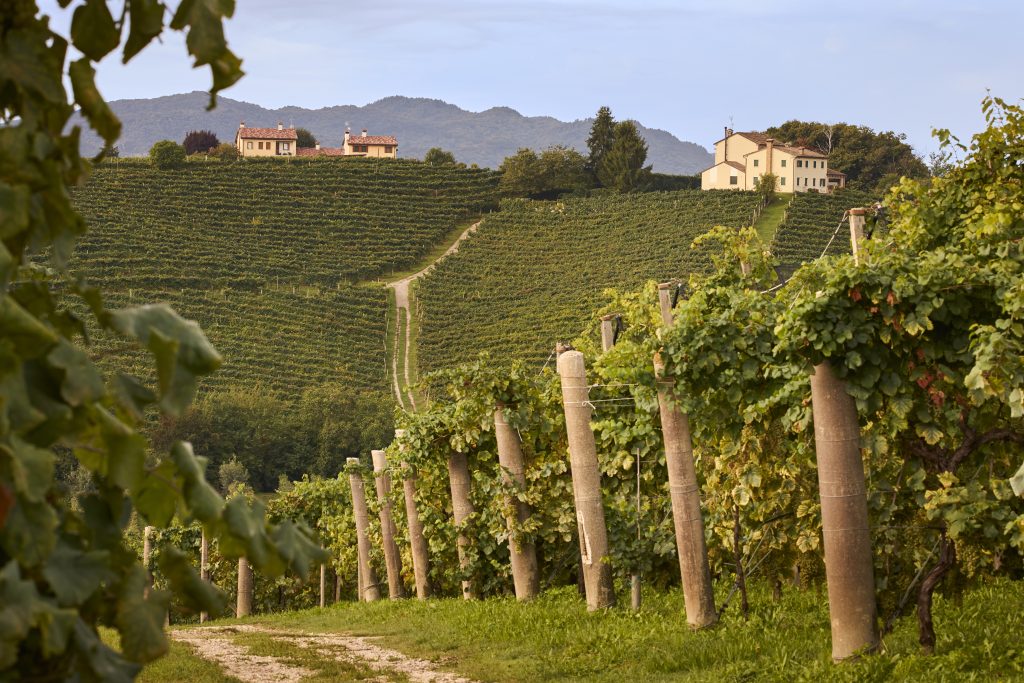
The second wine turned to more specific terroirs. Mionetto Prosecco Morona de Gastaldis Valdobbiadene Prosecco Superiore DOCG Extra Brut is produced in the Conegliano Valdobbiadene Prosecco DOCG, a hillier region that has around 8,000 hectares of vineyards (compared to more than 24,000ha in Prosecco DOC).
The premium region offers evidence that Prosecco can produce premium wines: though the apple and blossom character is common in Prosecco, here it is well-defined and complex, with an elegant texture.
The DOCG wines of Prosecco (also including Asolo Prosecco DOCG) are growing alongside the DOC, as consumers discover the region’s diversity – even within one producer’s portfolio. Benz therefore believes the region can still grow, with one billion bottles being “the thing we all dream about”.
For the third wine, Benz turned to an even more recent success story for both Henkell Freixenet and the overall sparkling wine market. Henkell Freixenet is actively shaping the global non-alcoholic sparkling wine market, led by brands Mionetto and Freixenet. This year, it has added Fürst von Metternich Riesling Alcohol-Free to the range.
The wine builds on German expertise in both sparkling winemaking and in dealcoholisation, as well as technology that is “growing every day”. A combination of vacuum distillation and aroma recovery allows the wine to retain its varietal character, even without alcohol. Producing a satisfying alcohol-free wine is a challenge, but Benz advocated that, through a combination of high-quality grapes, modern technology and winemaking know-how, it is possible.
Rediscovering classics
The next two categories that Benz presented mirrored each other in many ways: both are produced using the traditional method, both offer a compelling price-to-quality ratio, and both are from historic appellations. They do, however, differ in their current market trajectories.
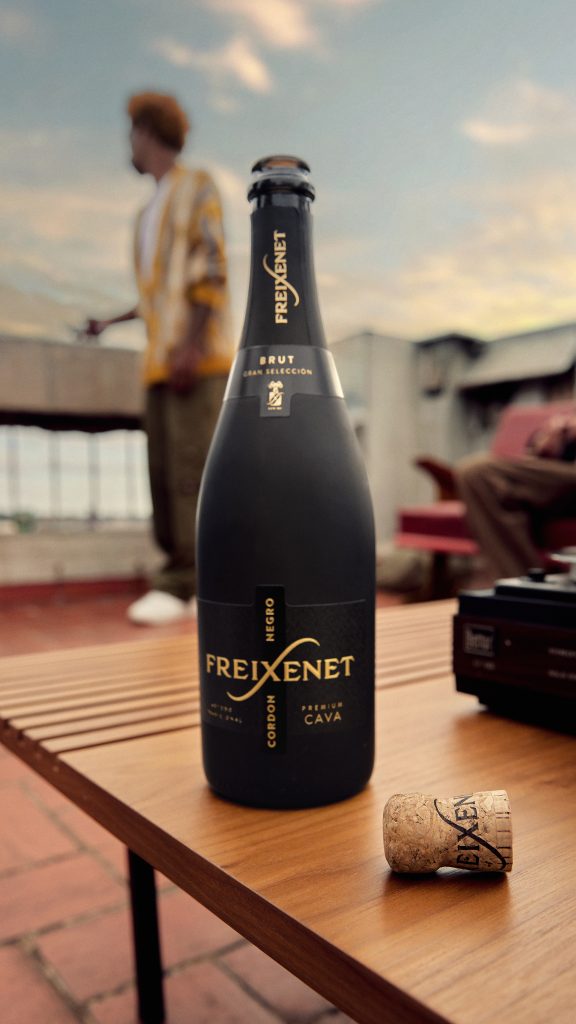 For the first wine, attendees could sample the benchmark Freixenet Cava Cordon Negro. Recognised around the world for its black bottle, it is a staple of the Henkell Freixenet portfolio. “This is a part of our soul,” acknowledged Benz.
Cava has, however, struggled in sales over the last 10 years (CAGR of -2%). That is a double-edged sword: although Benz wishes more drinkers knew about Cava, it does mean that Cava can produce quality at a good price point.
As proof of this, Benz treated Cordon Negro as if it were a fine Champagne: he served it from a magnum. This showed off the wine’s fine mousse and autolytic character, as well as its characteristic notes of apple, citrus peel and fennel. That distinctiveness, for Benz, is precisely the point. “In a world where many people are creating Champagne lookalikes,” he said, “this is truly a Spanish sparkling wine.”
Gratien Meyer Cuvée Flamme d’Or 2017, on the other hand, represents a category on the up: crémant. Since 2015, the loose collective of appellations has seen a CAGR of 5%.
In the case of Cuvée Flamme d’Or, the appellation is Crémant de Loire. Gratien Meyer has operated out of the region since 1864. The longevity is significant: for much of its history, the Loire had a reputation for sparkling wine on a par with, if not better than, Champagne.
That heritage shines through in the texture and complexity of the wine. The Chardonnay and Pinot Noir are vinified in barriques, layering in subtle oak influence, and malolactic conversion is prevented, retaining the juicy acidity. Meanwhile, the 24 months spent ageing on the lees – comparable to many Champagnes – creates a fine mousse and added complexity.
That quality and care is the driving force meaning that consumers are exploring the category. “Crémant is being discovered,” Schmitt chimed in, “or maybe rather rediscovered.”
Premium cuvées
Having explored sparkling wines with broad appeal, it was appropriate to showcase Henkell Freixenet’s work in luxury winemaking. With a portfolio that spans most of the world’s key sparkling wine regions, Benz could present truly impressive wines.
The penultimate bottle took attendees to a region often overlooked by lovers of fine fizz. As Schmitt commented: “When we look at the world of sparkling wine, we often forget how much good-quality, traditional method sparkling wine is made outside Europe.” Thus, flying the flag for the Americas, Benz presented Gloria Ferrer Carneros Cuvée 2015.
Gloria Ferrer may have been the first sparkling winery in Carneros but, in many ways, it is a tour de force of the category’s traditions. Thanks to cool breezes off the San Pablo Bay, the grapes – again, Chardonnay and Pinot Noir – can achieve ripe fruit aromas without losing their freshness. The wine then undergoes a long, slow ageing on the lees, late disgorged to build up layers of soft, toasty autolytic character.
It is a firm favourite for Benz, a wine that can be drunk young or old and on a large number of occasions. For anyone living outside California, it is also a cuvée to watch out for: with most of Gloria Ferrer’s production sold on-site at the winery, it is a rare treat for global drinkers.
To conclude, Benz turned to the most famous sparkling wine region of all. Alfred Gratien is Henkell Freixenet’s long-established Champagne house, and Benz presented one of its finest cuvées.
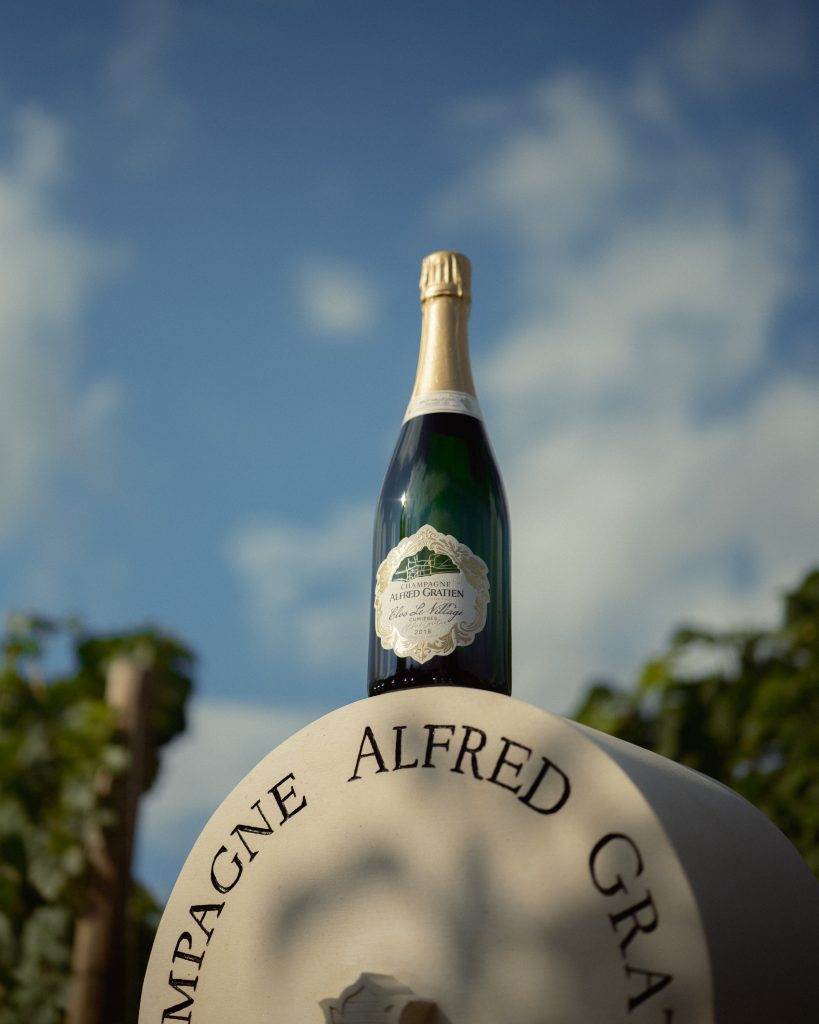
Clos le Village Premier Cru 2018 – like all of the maison’s cuvées – is rooted in historical Champenois winemaking. Its wines are always long aged, with even the youngest non-vintage brut ageing for five years. The wines are fermented in barriques, without malolactic conversion and with a low dosage. Craftsmanship is a hallmark at every stage.
Yet the wine is also a “real rarity”, according to Benz. Sourced from a single walled plot in premier cru Cumières, it comprises 100% Pinot Meunier. That is no picnic for the viticulturists – “Meunier can be a disaster as it grows like a jungle,” Benz admitted – yet its reward is in a satisfying blend of richness and elegance.
The wine therefore meets both the need for an approachable style and increased consumer interest in specific Champagne terroirs. “This is much more accessible, rounder and riper compared to ‘traditional’ Champagnes,” said Benz.
A flight of seven wines, of course, could not adequately summarise the world of sparkling wine. Indeed, it could not even summarise Henkell Freixenet’s own portfolio, with insufficient time to explore several of its estates.
Yet it was a suitable teaser for a continually successful sector. In a challenging time for the wine trade, Henkell Freixenet has the proof that growth and success are still entirely possible. And just as importantly, Benz’s masterclass demonstrated that, in facing such challenges, the sparkling wine sector is as dynamic and fascinating as it ever was.
Related news
Felix Hart turns 'visual sommelier' in Peter Stafford-Bow's new wine novel
Raising labour standard in the wine industry 'unsexy, but important'
Old Vine photography shortlist unveiled at heritage showcase


