



Casa Solís takes root in Chile
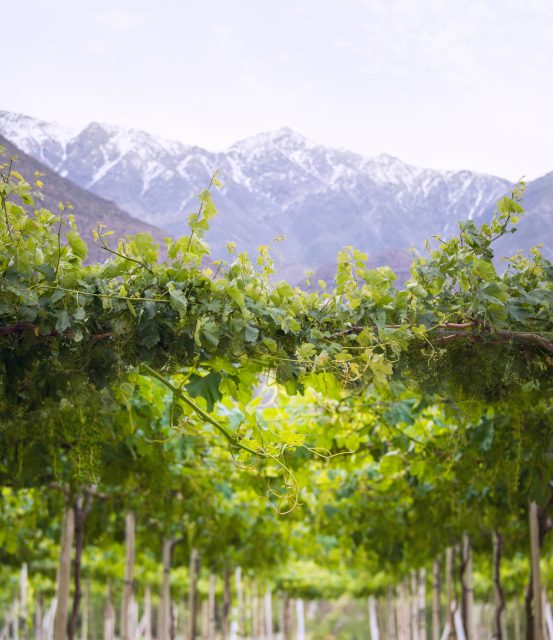
The launch of Viña Casa Solís marks a significant step for Spanish wine group Félix Solís Avantis, representing its first winery outside Spain and a long-term investment in Chile. Located in the Cachapoal Valley, the project brings together large-scale capability with a clear focus on site expression, particularly as it expands into cool-climate styles such as Chardonnay and Pinot Noir.
While the winery itself is newly operational since 2024, its ambitions are rooted in experience. Backed by decades of international production and distribution, Casa Solís has been conceived with export markets in mind, but with an emphasis on translating Chilean terroir into a consistent, clearly defined house style. Technology plays a central role in that approach, though the team is quick to stress that it is not the starting point.
“Technology is a key part of what we do, but the work always starts in the vineyard,” says Francisco Rodríguez Carballo, general manager in Chile. “The quality of the fruit and the work of our growers are fundamental. Our role in the winery is to protect that quality and express it as faithfully as possible. “By reducing unloading and processing times, we can move very quickly into clarification, avoiding oxidation and preserving the natural character of the grapes.”
For head winemaker Guillermo Sánchez Martínez, the emphasis is on using technology as a tool for precision, rather than intervention. “We work very closely with our growers on vineyard management – canopy control, picking decisions and ensuring the fruit comes in at optimal balance. If that part is right, technology becomes a tool for precision, rather than correction,” he explains. “In the winery, controlled pre-macerations, pneumatic pressing, flotation and fast, clean fermentations allow us to work with a high degree of accuracy. Our tanks are fully equipped to manage temperature, levels and racking in detail. “For Chardonnay and Pinot Noir, this translates into wines that are purer, more balanced and more consistent, with a clearer expression of both the variety and the site.”
That focus on precision is particularly evident in the winery’s push into cool-climate wines from Casablanca Valley, where Casa Solís is developing its Aires de Casablanca range. The decision to work with Chardonnay and Pinot Noir reflects both global demand and a growing confidence in Chile’s ability to produce more restrained, site-driven styles. “The starting point for these wines is Casablanca itself,” says Sánchez Martínez. “It’s a region where site and climate play a huge role, so our aim was to highlight that through purity and freshness.”
“We avoid oak intentionally, so the focus stays on the fruit and the terroir. The Chardonnay shows vibrant acidity and very clean fruit, while the Pinot Noir is centred on bright red fruit, finesse and a delicate structure. It’s about transparency and precision.” Rodríguez Carballo sees this as part of a broader shift in how the region is perceived. “There is a growing recognition of Casablanca as a source of refined, terroir-driven wines. We saw an opportunity to position ourselves in that space, with wines that are authentic to the region, but also relevant for today’s consumer,” he says. “These wines reflect not just the climate, but also the work being done in the vineyards – better management, better understanding of sites and, ultimately, higher-quality fruit.”
The challenge for Casa Solís, as with many large-scale international operators, lies in balancing that sense of origin with the demands of global markets. The backing of Félix Solís Avantis brings scale, reach and consistency, but the team is keen to emphasise that identity remains central to the project. “Our strength is being able to combine international expertise with a deep respect for Chilean terroir,” says Rodríguez Carballo. “The foundation is always the vineyard – working with the right regions, the right growers, and ensuring the fruit quality is there from the start. “From there, we can shape wines that meet global expectations in terms of style and consistency, but without losing their identity.”
For Sánchez Martínez, that balance is achieved through restraint as much as capability. “For us, expressing origin is about respecting both the vineyard and the people behind it. We collaborate closely with our growers on vineyard practices to ensure the fruit truly reflects its site,” he says. “In the winery, our job is not to overwork the wines, but to guide them carefully. That’s where precision helps – it allows us to intervene less, not more. “The result is wines that are approachable and balanced for international markets, but still clearly rooted in Chile – in the terroir, the climate and the work done in the vineyard.”
As Casa Solís establishes itself, its approach reflects a broader evolution within Chile: a move towards greater precision, clearer regional identity and a more nuanced expression of style. For a project still in its early stages, the focus is on combining scale with control, and technology with restraint.
Related news
Six new Master Sommeliers announced
Are fine-wine collectors one and the same around the world?
India tightens rules on high-alcohol oral medicines to curb misuse


