



Wetherspoon sales rise but World Cup boost fails to offset higher costs
JD Wetherspoon has warned that annual profits will fall below market expectations despite a 4% increase in like-for-like sales during the final quarter. Analysts said the World Cup probably brought more customers into its pubs, but rising food, labour and energy costs continued to outpace revenue growth.
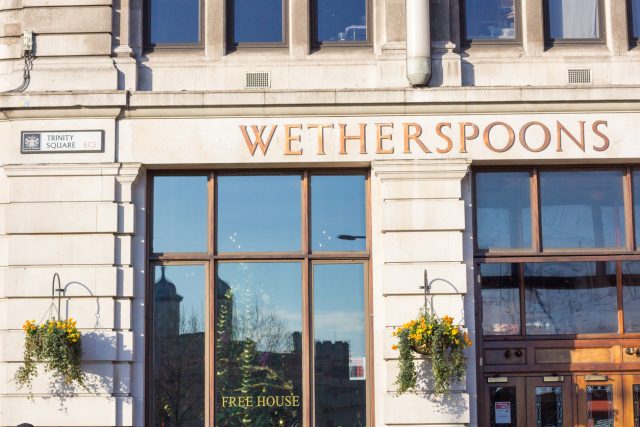
JD Wetherspoon has issued a fresh profit warning after slightly weaker than expected fourth-quarter sales combined with higher operating costs.
Like-for-like sales increased by 4% in the 12 weeks to 19 July 2026, with year-to-date growth reaching 4.2%.
However, chairman Tim Martin said: “Profits for the year are likely to be below market expectations, with marginally lower sales than anticipated in the final quarter, combined with higher costs in the areas of food, labour, repairs, energy and business rates.”
The company will publish its preliminary results on 2 October.
Football fans provide limited relief
Duncan Ferris, analyst at investment platform Freetrade, said Wetherspoon was likely to have benefited from customers watching England during the World Cup, although the additional sales were not enough to protect profitability.
“Things were short and decidedly not sweet from JD Wetherspoon this morning, with the pub chain once again warning on profits.
“Sales are higher, likely aided by punters packing out pubs to watch the Three Lions, but the real competition is between sales and costs. Like-for-like growth of 4% might be an improvement on the previous quarter, but it still represents a deceleration from the same period last year.
“Rival chains Marston’s and Fuller’s have already hailed the impact of the tournament on sales. Wetherspoon probably enjoyed its own World Cup boost, but thirsty football fans clearly were not enough to stop final-quarter sales from disappointing.”
As previously reported by the drinks business, football delivered an uneven benefit for drinks companies and hospitality operators during the tournament.
Morgan Stanley reduced its estimate of the World Cup’s contribution to annual global beer volumes from 24 basis points to 17 basis points after several major markets, including Brazil and Germany, exited earlier than expected.
Carlsberg emerged as one of the stronger beneficiaries due to the progress of teams in markets where it has significant exposure.
Costs squeeze slender margins
Ferris said Wetherspoon’s value-led model left the business particularly vulnerable to inflation across several parts of its cost base.
“This morning’s rather terse update makes things plain: rising costs are outpacing revenue growth.
Partner Content



“As a chain that prioritises affordability, Wetherspoon operates on relatively slender margins. These are being squeezed from almost every direction, with Tim Martin listing food, labour, repairs, energy, and business rates as the stressors swallowing its profits.”
The chain currently operates 793 managed pubs after opening eight and selling nine during the financial year.
It has also opened 15 franchised pubs, taking its franchised estate to 23.
Could live sport become a bigger part of the offer?
Unlike many competing pub groups, Wetherspoon has historically avoided paying for broad subscriptions to services such as Sky Sports and TNT Sports across its estate.
The World Cup, which was available through free-to-air television, gave the group an opportunity to attract football audiences without incurring the subscription costs associated with year-round domestic and European competitions.
The strength of trade during major tournaments may raise the question of whether selected Wetherspoon venues could benefit from showing more live sport outside international competitions.
Such a shift would come with considerable costs and could alter the atmosphere of pubs that currently position themselves around affordable food and drink rather than televised sport.
Ferris said the immediate issue remained converting customer demand into stronger returns.
“Wetherspoon’s busy pubs mean its value proposition is resonating with customers, but the ultimate goal is converting rising sales into rising profits.”
Debt guidance improves
Wetherspoon expects year-end net debt to stand at £720 million, in line with the end of the previous financial year and better than earlier guidance.
The company has bought 6.4 million of its own shares for cancellation during the year at an average price of £6.52, spending almost £42m.
It also spent £12.2m acquiring the freehold reversions of four pubs, bringing total expenditure on freehold reversions since 2011 to £489m.
Ferris said: “The balance sheet offers a sliver of light. Year-end net debt of £720m is better than previous guidance even after Wetherspoon spent almost £42m buying back its own shares.”
Related news
Three Acre Brewery pursues micro-pub and taproom plans
England semi-final gives pubs and bars 'biggest Wednesday in history'
Joule’s Brewery granted permission for £2 million restoration of historic pub


