



10 reasons why Moldovan wine should be on your radar
The story of Moldovan wine is one of fortitude in facing great challenges – and now this remarkable wine nation is ready to take its place on the global stage. We pick out 10 reasons why the country is worth a closer look by those in the drinks trade.
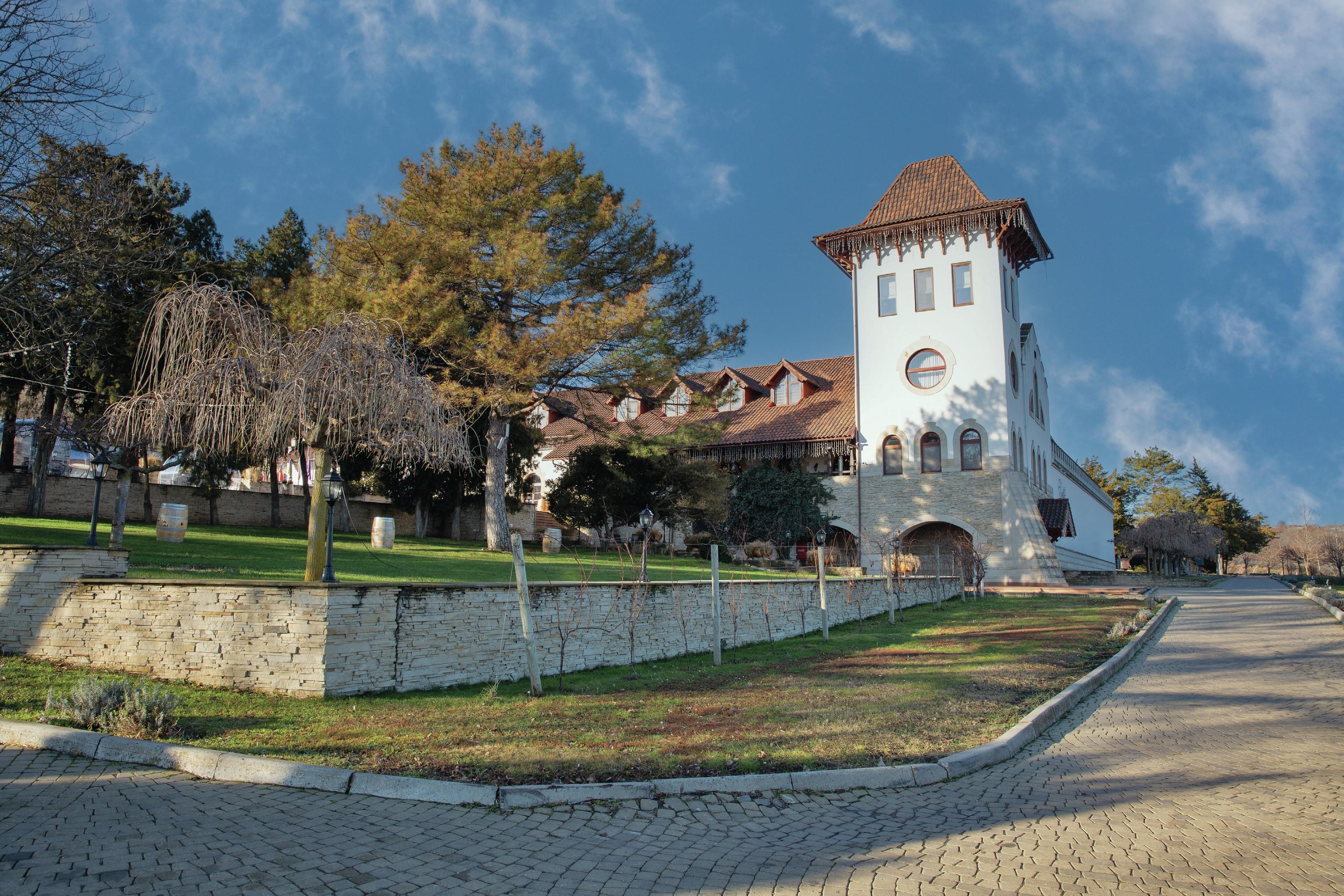
FOR A country of only 2.3 million people – a population similar to that of a small European city such as Vienna – Moldova punches with remarkable force in the world of wine. It has the highest density of vineyards on the planet. It sits on some of the world’s most fertile soils. It harbours a network of underground cellars so vast that you can drive through them. And it is home to a family of native grape varieties that have no real equivalent anywhere else on Earth. Yet Moldova remains largely absent from the conversation in UK wine retail and trade media. That may be about to change. And db has picked out 10 reasons why.
1. A STRONG NATIONAL WINE CULTURE
Moldova’s 114,000 hectares of vineyards – including those used for home production and table grapes – represent a huge proportion of its total land area for a country this size. At its production peak during the Soviet era, that figure reached 350,000ha. Even now, reduced to roughly one-third of its former extent, Moldova ranks first globally in terms of vineyard density. With grape vines covering roughly 7% of the country’s agricultural land, there are 4ha of vineyards for every 100 people.
The wine industry accounts for approximately 3% of Moldova’s GDP and more than 8% of the country’s exports, with around 4% of the economically-active population being directly or indirectly involved in the sector.
The country is sometimes described as being shaped like a bunch of grapes, which is apt considering that viticulture is not merely a means of income in Moldova, but a defining feature of national identity. Stefan Iamandi, director of the National Office of Vine and Wine, puts it succinctly: “For us, wine is not an industry – it is all around us; it is part of our culture.”
2. IDEAL GRAPE GROWING CONDITIONS
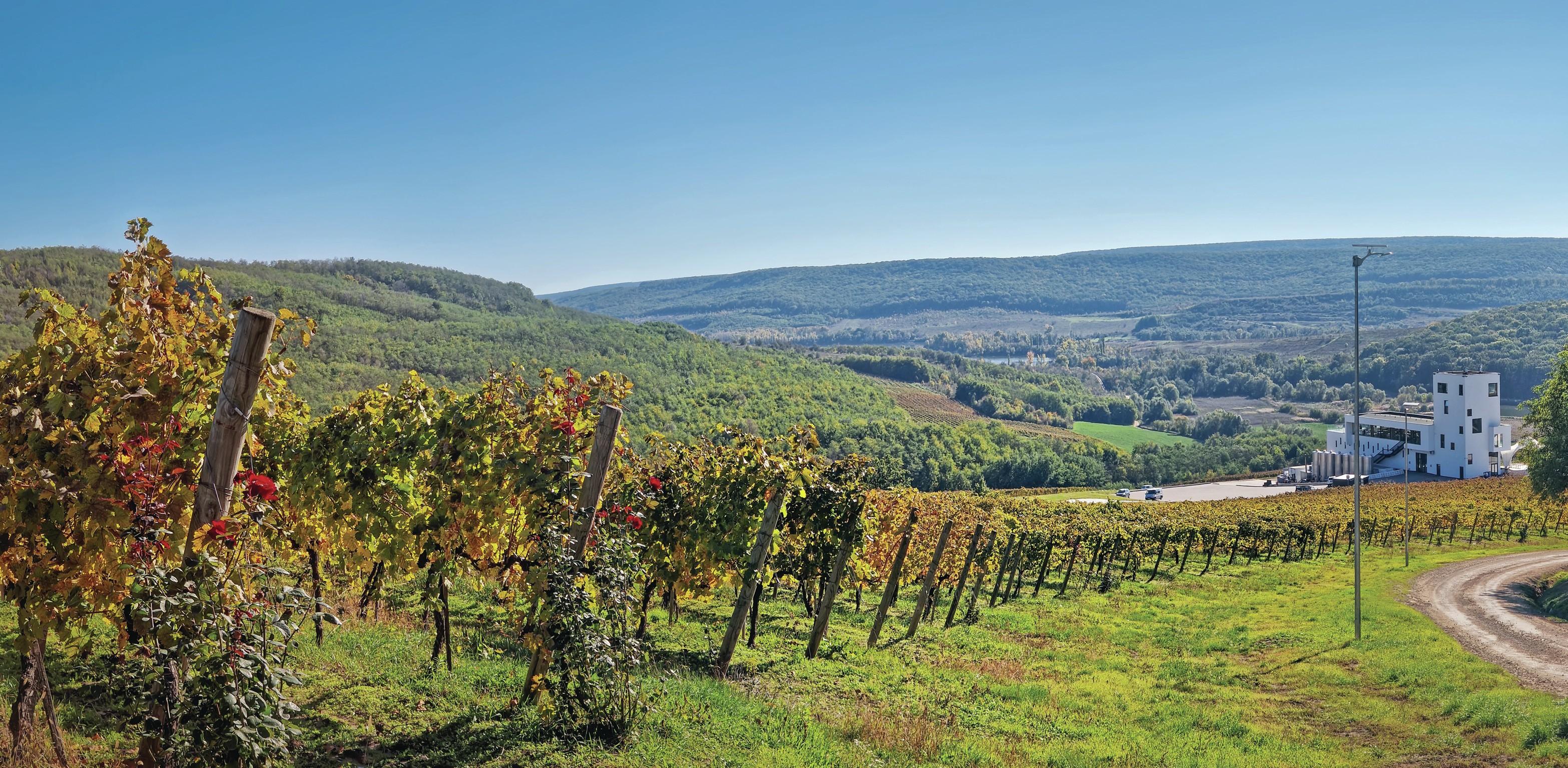
Beneath Moldova’s vineyards lies chernozem – the famously rich black soil that covers only 1.8% of the Earth’s surface, and which is concentrated almost entirely in Moldova and Ukraine. The agricultural productivity this enables is remarkable: Moldova is the largest exporter of walnuts in the European Union and produces outstanding fruit and vegetables. For viticulture, yields of 8–12 tonnes per hectare are achievable with relative ease – requiring discipline in the vineyard, but also testament to the extraordinary natural fertility of the land. Couple this with a continental climate offering diurnal temperature shifts of up to 20o C, warm summers and river valley sites along the Nistru, Prut and Raut, and the conditions for quality winemaking are clearly present. Furthermore, a mixture of forests, grasslands and riparian ecosystems enhance biodiversity in the wine estates, while a limestone subsoil regulates water availability for the vines, and sloping landscapes improve airflow and reduce frost risk.
3. RECORD-BREAKING WINE COLLECTIONS
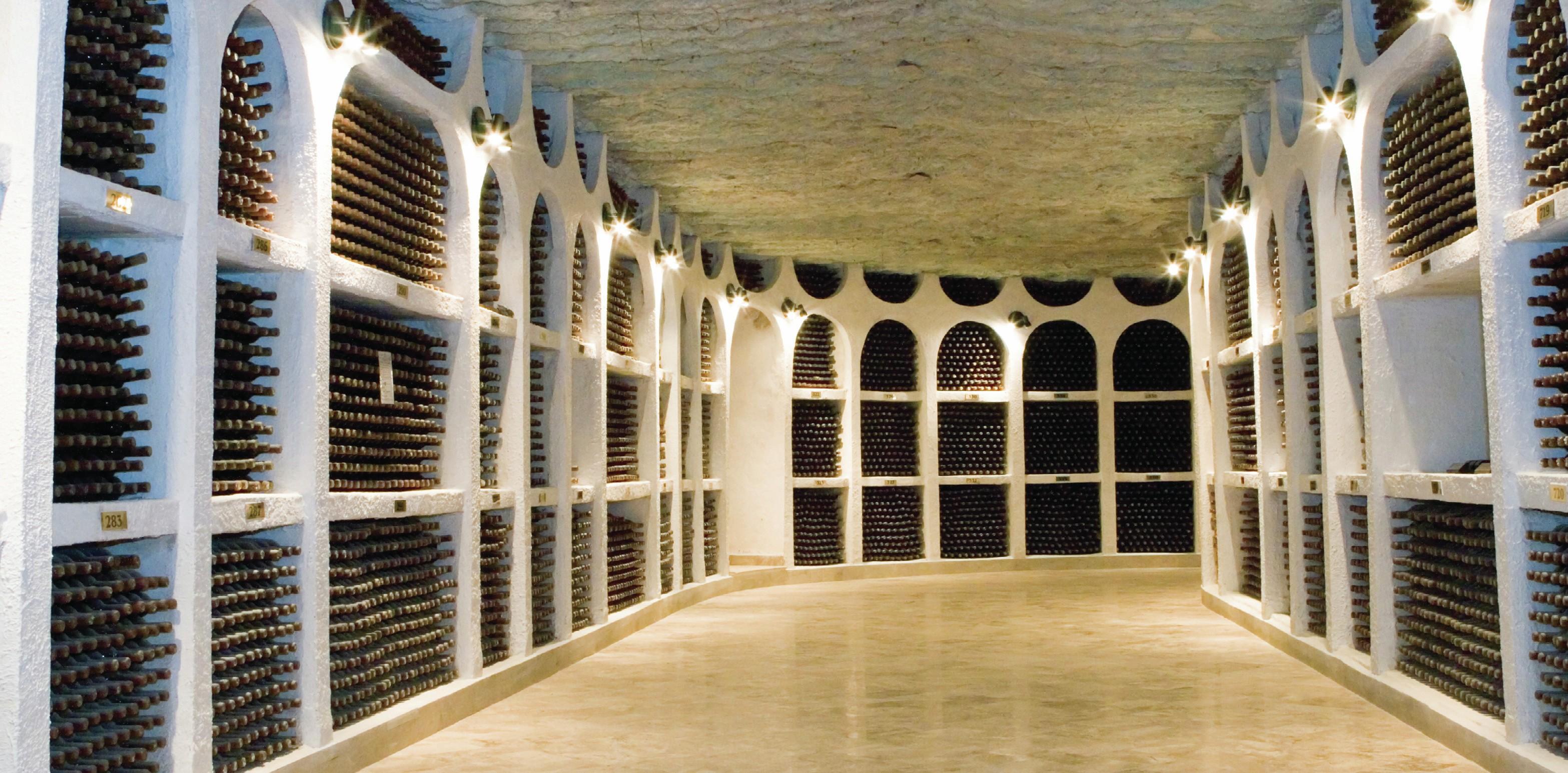
Forget climate-controlled warehouses. Moldova’s flagship cellars are former limestone quarries that stretch for tens of kilometres underground – and you can drive through them. Cricova, founded in 1952 and Moldova’s largest sparkling wine producer, has 70km of galleries. Mileștii Mici, just 10km from the capital Chișinău, holds the Guinness World Record for the largest wine collection, with more than 1.5 million bottles stored in over 200km of driveable tunnels.
Among them is a bottle of Jerusalem Easter wine from 1902 – reportedly the only one in existence. Both cellars are state-owned and have become significant wine tourism destinations in their own right. Furthermore, they provide the perfect conditions for the slow maturation of Moldova’s fine and affordable traditional method sparkling wines.
4. A ‘GIRLISH’ NATIVE GRAPE FAMILY
Perhaps Moldova’s most intriguing viticultural asset is the Fetească family – a group of indigenous varieties whose name translates, roughly, as “girlish” or “for girls”, following a regional tradition of naming grape varieties with feminine associations. There are three main members: Fetească Albă (white), Fetească Regală (royal), and Fetească Neagră (black). Together they function rather like the Pinot family – related, distinctive, each with its own personality, and all requiring careful handling in the vineyard and winery. Fetească Albă is the gentlest of the three: floral, citrusy and easy-drinking, often compared to Pinot Grigio in its aromatic lightness and bright acidity. Fetească Regală, the youngest of the group, leans toward elderflower and is increasingly being explored in barrel-aged expressions. Fetească Neagră, the red member – sometimes referred to as the ‘black maiden’ – produces wines of impressive depth: black fruit, dried plum, dark chocolate and firm but fine tannin. At its best, there is a Malbec-like intensity to it, though with a distinctly Eastern European character. At Salcuța in the Stefan Vodă region, marketing director Dina Pislaru is experimenting with Fetească Albă in new French oak; at Purcari, there is a Fetească Albă varietal traditional method sparkling wine. The potential of this family is still being explored.
5. AN ANCIENT AND RARE VARIETY
Rară Neagră – meaning ‘rare black’ – is believed by some specialists to be among the oldest cultivated grape varieties in the world, with traces of viticulture in the region dating to around 3,000 BC or earlier.
Though related varieties are also found in Romania (where it is known as Băbească Neagră), it is in Moldova – and particularly in the southeastern Stefan Vodă PGI – that the grape has found its most compelling modern expression. Like Pinot Noir, which it loosely resembles in weight and character, Rară Neagră is difficult and expensive to grow, with uneven ripening across the same cluster requiring multiple passes through the vineyard. Purcari, which has done most to rescue and promote the variety, has established a nursery to study all available clones. In the glass, Rară Neagră typically offers ruby colour, a medium to light body, fine tannins and a sour cherry note alongside redcurrant, wild blackberry and varying degrees of barrel influence, depending on the winemaking. It’s a fresh, gently fruity, food-friendly wine that’s on-trend for those seeking lighter reds and good-value alternatives to Pinot Noir.
6. A WHITE GRAPE FROM TWO REDS
Viorica – named after both an Alpine flower (Scilla bifolia) and, reportedly, the wife of the Soviet-era scientist who created it – is a crossing of two red varieties that produces a distinctive white wine. It combines Seibel 13-666 (a French hybrid used for its resilience) and Aleatico (an aromatic Italian red Muscat).
Developed at Moldova’s wine research institute in 1969, during a period of experimentation aimed at producing frost-resistant varieties, it is now one of Moldova’s key white grapes. The paradox of its parentage is matched by the character of the wine: intensely floral and aromatic, with notes of white flowers, grapey-Muscaty richness and a dry, fresh finish underpinned by fine phenolics. Purcari’s Remus Turcan describes it as one of Moldova’s “signature grapes”. Whether its pronounced aromatic profile has broad mainstream appeal is debated – it pairs particularly well with Asian cuisine – but as a talking point and a genuine expression of place, it has few rivals in the category.
7. ALIGOTÉ AND MOLDOVA’S ANSWER TO COGNAC
Divin – Moldova’s aged grape brandy – has been produced in the country since 1896, when the first distillery was established: Calarasi Divin. Today, it holds a protected geographical indication that is one of the strictest in the world, with rigorous regulations similar to famous appellations such as Cognac and Armagnac. Produced throughout Moldova and aged in oak, Divin ranges from youthful three-year expressions, with their fiery, floral character, to magnificent 25-year-old bottlings of extraordinary complexity, with flavours of dark chocolate, molasses, prunes, white pepper and an appealing smoothness. Protected as a geographical indication (GI) since 2012, Divin – which means ‘divine’, as well as ‘from the vine’ – is produced from varieties chosen specifically for distillation, in particular Aligoté, which explains why this is Moldova’s most planted white grape. Other widely employed grapes for Divin include Georgia’s Rkatsiteli, and Moldova’s native Fetească Albă. One of the top three producers is Bardar, where the distillery produces a five-year-old expression that sells in its home market for around €6 for a 500ml bottle, which highlights the value-for-money proposition of this crowd-pleasing brandy.
8. A MODERN VINOUS REINVENTION
In 2006, Russia – then the destination for nearly 90% of Moldovan wine exports – imposed a total ban on Moldovan wine imports, ostensibly on phytosanitary grounds, but widely interpreted as political pressure connected to Russia’s ambitions to “federalise” Moldova. Overnight, 60 million bottles became zero. Purcari alone lost the equivalent of around €2m-worth of stock, some of which was reportedly bulldozed. Dozens of companies went under. It was, paradoxically, the catalyst the Moldovan wine industry needed.
Forced to modernise, diversify and compete on quality rather than volume, producers invested in new equipment, planted higher-density vineyards and began to explore international markets in earnest. The National Office of Vine and Wine was established in 2013, creating a system of protected geographical indications modelled on the EU framework – with guarantees on tracibility, along with controls on yields and rules on grape varieties, as well as independent quality controls. Codru, Stefan Vodă and Valul lui Traian are the main wine regions, with Divin as the brandy GI. A public-private partnership, funded by a levy of around one cent per litre on wine production (generating roughly €4m annually), now manages a marketing and quality programme that has made Moldova the most award-winning wine country in Eastern Europe by some measures, with around 60% gold medal rates at international competitions. From near-total dependence on Russia, exports to Europe are now 60% of total volume; Russia accounts for just 3%.
9. A STRONG FAITH IN SWEET WINES
Among Moldova’s more singular wine traditions is a sweet, iron-rich red wine – containing 16% ABV and 160g/l residual sugar (16%), explaining why it is made to a rule known as just ‘16-16’. Called Pastoral, it is made from Cabernet Sauvignon, Malbec and other varieties, and traditionally blessed in church at Easter before being taken home for family consumption. Historically it has been considered health-giving, and has been associated with use by Soviet-era cosmonauts, even though drinking alcohol in orbit was officially forbidden. It pairs, apparently, with babaneagra – ‘black old lady’ – a traditional baked pudding made with milk, eggs, sugar and baking soda. This fortified style is just one example of a wine culture that is genuinely, unselfconsciously rooted in daily life in a way that is rare, even in a European wine-producing nation. And it’s not the country’s only richly sweet drink: such is the severity of Moldova’s winters, the country is able to craft icewine too, using aromatic local grapes like Viorica, as well as international varieties like Riesling – and even red grape Cabernet Sauvignon.
10. A GLOBAL SUCCESS STORY
The story of modern Moldovan wine is, at its core, a story of reinvention under pressure. The Soviet anti-alcohol campaign of 1987 saw tens of thousands of hectares of vineyards grubbed up – including a disproportionate amount of the oldest indigenous varieties, which were far from the source of the drinking problem. The Russian embargo of 2006 to 2012 destroyed the export model overnight. The war in Ukraine closed the port of Odessa, adding 330 kilometres and around 30 cents per litre to bulk shipping costs from Stefan Vodă, with wine now having to go via the alternative port of Constanța in Romania. And yet, Moldova now exports to 70 countries. Japan has tripled its imports in three years. Nigeria and Ghana are emerging markets with real momentum. Romania – historically and culturally close – takes US$40m-worth of Moldovan wine annually, making it the top export destination. A younger generation of winemakers is returning to indigenous varieties, launching boutique labels and telling a story that is finding receptive ears in trade markets. There are now 250 wineries in Moldova, compared to around 60 in Romania, a country many times its size. Thirty new producers opened in the past two years alone. The stork, which nests in Moldova in large numbers, features on the official seal of the national wine body. As a bird that signifies new beginnings, it seems an especially appropriate symbol for an emergent wine industry that has survived empire, occupation, embargo and war.
Moldova: key facts
• Ranked number one in the world by vineyard density
• Total surface area of vineyards: 114,000 hectares
• Commercial wine-growing vineyards: 67,400ha
• White wine grapes: 34,100ha
• Red grapes: 33,300ha
Most planted whites:
Aligoté Sauvignon Blanc Chardonnay
Muscat Ottonel Pinot Gris/Blanc Fetească Albă/Regală
Most planted reds:
Cabernet Sauvignon Merlot
Pinot Noir
Saperavi
Rară Neagră Fetească Neagră
Three wine regions:
Codru
Stefan Vodă
Valul lui Traian
GI for brandy production:
Divin
Exports & wine production:
Approx. 200 million litres Exports to 75 countries, with 60% of production going to the EU
Related news
Moldova’s National Wine Day turns 25
Moldova bets on indigenous grape varieties to carve out a global identity


