



Beer Hour: Tim Clay
Asahi UK’s managing director talks to Jessica Mason about his philosophical approach to business, his love of the right beer at the right time and the valuable perspective of always looking forward towards the future.
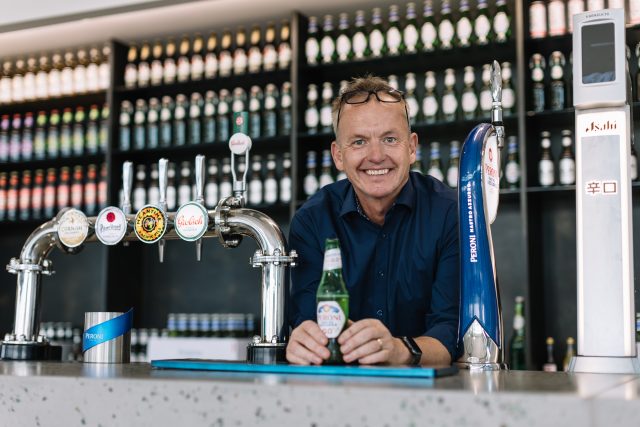
With a career in beer that stretches back more than three decades, Clay joined Whitbread as a tactical salesman in 1991. Over time, as that business evolved into Interbrew, then InBev and ultimately AB InBev, he had the opportunity to lead much of the UK sales arm of the organisation, across the on-trade and offer it a route-to-market that paved the way for its future.
Growth-mindset
In 2013, Clay was approached to become sales director at Miller Brands UK, part of SABMiller, and later, in January 2018, he stepped into the role of managing director at Asahi UK – a role he still holds today.
“What still excites me today is growth,” says Clay, admitting that “it sounds simple, but when you wake up and the business is a little bigger than it was yesterday, it genuinely gives you a spring in your step”.
The beer styles Clay will often gravitate towards adapt depending upon his surroundings, the occasion and the weather. “Right now, after a long week, there’s nothing better than sitting in the sun at my local Woking & Horsell cricket club with a perfectly poured, crisp Asahi Super Dry,” he says.
On brand, as ever. But, he says that he also recognises that, “in contrast, winter calls for something completely different – a Sunday roast in a cosy pub with a roaring fire, paired with a well-kept pint of cask ale like London Pride”. Then, he adds those hallowed words: “When cask is served properly, it’s an unbeatable pint”. And there it is, the unity that agreeing about good, well-kept beer, can create between two strangers.
Betterment and kindness
Clay believes in the philosophy of constant improvement. In fact, even though he wouldn’t describe himself as religious, he does say he reflects on a quote attributed to St Jerome that has always stuck with him: “Good, better, best – never let it rest until your good is better and your better is best,” he cites and explains that “it speaks to the idea that every day is a school day. The moment I think there’s nothing left to improve is the day I know I need to stop”.
With this kind of perspective, it would be wrong to predict that Clay does not also give a lot of heart and earnest thought to the matter of getting better. This comes across when he talks about his love of his job, the industry and the people within it with whom he gets to work among. He admits here that he does “genuinely love what I do” and reflects for a moment to think: “Do I love every minute? No – but I always care, and that makes all the
difference.”
Revealing more, Clay remembers that “someone once said to me to be a good leader you need to be strong” and yet he also then shows his humility when he observes “to be qualified to lead you also need to be kind” and adds: “I try and hold myself to that.”
Asking Clay for his insight into where the beer world finds itself right now, he insists that there is a bigger picture to be seen from some of the headwinds and says he believes that “many of the sector’s biggest challenges, with clarity, can be reframed as opportunities”.
Unafraid
But, acquiesces that there are issues to navigate and notes that these include things like “increases in regulation and taxation, such as Extended Producer Responsibility (EPR)” which he agrees “undoubtedly add complexity and cost”. But still shows his shrewd perspective on learning when he adds: “They also sharpen our focus on operational efficiency and ensure we’re building more resilient, future-proof businesses.”
Another example of his views on challenges becoming opportunities is reflected directly in the way shifting consumer attitudes toward moderation have been met by Asahi. Here, Clay asserts that “rather than seeing this as a threat, we’ve leaned into it — investing heavily in 0.0% and low-alcohol, where we’re proud to be at the forefront of innovation and quality”.
Despite his cheeriness, we touch on the topic of the very real pressures facing the on-trade, including pub closures and here he agrees that these situations are “a real concern”. Regarding it all with Clay’s shift in perspective though and he still makes a convincing point about how things like this “also reinforce the need to champion the cultural importance of the British pub” and reiterates that this is “something we feel strongly about supporting alongside our customers”.
Partner Content


Looking more closely about how consumption patterns are evolving, Clay believes that there are still opportunities to be grasped from assessing how people still want to trade-up towards drinks that have all of the hallmarks of quality.
Here, he highlights that “while people may be drinking less beer overall, they are increasingly choosing to drink better”. This, he says “plays directly to our strengths in premium and super-premium beer, giving us a clear
opportunity to drive value, grow market share, and deliver stronger outcomes for both our business and our customers”.
Taking a broad view
Looking at the broader elements shaping the sector right now, Clay notes that one of the key trends that plays to the strengths of Asahi’s portfolio continues to be premiumisation. He insists: “Our portfolio is heavily weighted towards premium and super-premium beers, and that’s been a long-term positive.”
According to Clay: “Cultural relevance in how brands show up is more important than ever” and he says that he reckons that, as a company, Asahi is “at our best when delivering stand-out brand experiences and working collaboratively with customers on campaigns that resonate” and gives examples like the “sponsorship of the Women’s Rugby World Cup last year”.
Clay believes that “relevance starts with listening – really understanding what your customers and consumers are telling you about their preferences and how drinking occasions are evolving”. Here, he shows how pragmatic he is and explains that “from there, it’s about responding with the right product and format innovation, whilst ensuring that your brands show up in the right places in the right way”. But, he points out “that isn’t a one-size-fits-all approach, particularly across a diverse portfolio” and adds that “it requires tailoring your response brand by brand. Can he give any examples? In fact, he can. “The answer could even be investing in a showcase brand home like The Dial – Home of Meantime, which opened last year and has an on-site brewery creating Meantime brews only available at the venue,” says Clay, grinning.
Authenticity
Then, he shows why he has those examples ready on the tip of his tongue – he lives and breathes these observations and each move the company makes, he knows what it is setting out to achieve and why. Clay describes “authenticity” as “crucial” and observes that “in a crowded market, consumers are drawn to brands with a genuine story and a clear sense of identity”.
For Asahi, its Peroni Nastro Azzurro’s Only Peroni campaign is a strong example. Clay assesses that showing Peroni “celebrating its true Italian heritage and provenance by placing it alongside other globally recognised icons of Italian style and craftsmanship” and showcasing its “sense of authenticity, when done well, creates a deeper emotional connection and helps a brand stand apart”.
Across the industry more broadly, Clay reveals that “the breweries I admire most are those that strike this balance – staying true to who they are while continuing to evolve in line with their consumers”. Still, he refrains from naming which ones, possibly to stay on-brand.
There are other areas where he leans in with transparency. Such as the lessons he feels he has learned over the years. On this topic, he brings out the idioms and says: “One that always resonates with me is: ‘the best time to fix your roof is when the sun is shining’” and explains: “It’s much harder to drive change when you’re already facing headwinds – yet that’s often when it happens”.
People, culture and capability
Clay says that these small shifts in his perspective have assisted him, both personally and professionally. He adds: “I’ve also learned that difficult periods are when you discover the most about yourself and your team. It may sound like a cliché, but success ultimately comes down to people, culture, and capability. You can have the best strategy in the world, but without the right environment for people to thrive, it simply won’t deliver.”
There is no lack in showing he can stay motivated. After all, as Clay says: “Beer is a fundamentally social industry, which makes it great fun” and, because of this, “there are so many reasons to feel positive about what we do – connecting people, creating experiences, and being part of everyday moments. I also love seeing people and teams develop and realise their full potential”.
Clay clearly loves what he does and is extremely connected to his team and adds that he likes helping move people forwards to achieve their ambitions. “I take pride, if I can be a small part of helping in that journey”. This rings true with his perspective on giving back to the sector. “I do truly believe that the strength of our industry lies in the wellbeing and development of our people”.
Sharing the experience
This is also echoed by his admittance that he feels passionate about being on the board of Trustees for The Drinks Trust Charity. “The Drinks Trust provides financial assistance, emotional support and opportunities for development and growth to drinks industry colleagues past and present,” he reveals. Other than that, his passions aside from work are his family, friends and his love of socialising with them and he says: “All those things make me happy. I don’t compartmentalise so ‘work life balance’ is simply ‘life’ for me”.
Is there anything still left on his personal bucket list? Clay thinks for a moment and muses: “I’ve never been to the Melbourne Cup, and I’d love to go. With our involvement in rugby, including sponsorship of the Men’s Rugby World Cup in Australia next year, with a fair wind I’m hopeful I might get the opportunity to share the experience with some valued customers and colleagues.”
Let’s hope this happens.
Related news
Garage Beer makes another ‘culturally relevant’ move
Heineken loses latest appeal in Greek beer competition battle
Crosley jukebox that also serves beer becomes available on eBay


