



Will Bordeaux feel the heat over irrigation rules?
Lafleur, which withdrew from both Pomerol AOC and the Bordeaux designation last year partly over irrigation, has already started to irrigate its vines this year. With temperature soaring into the 40s in Bordeaux two weeks ago, will the appellations relax its irrigation rules?
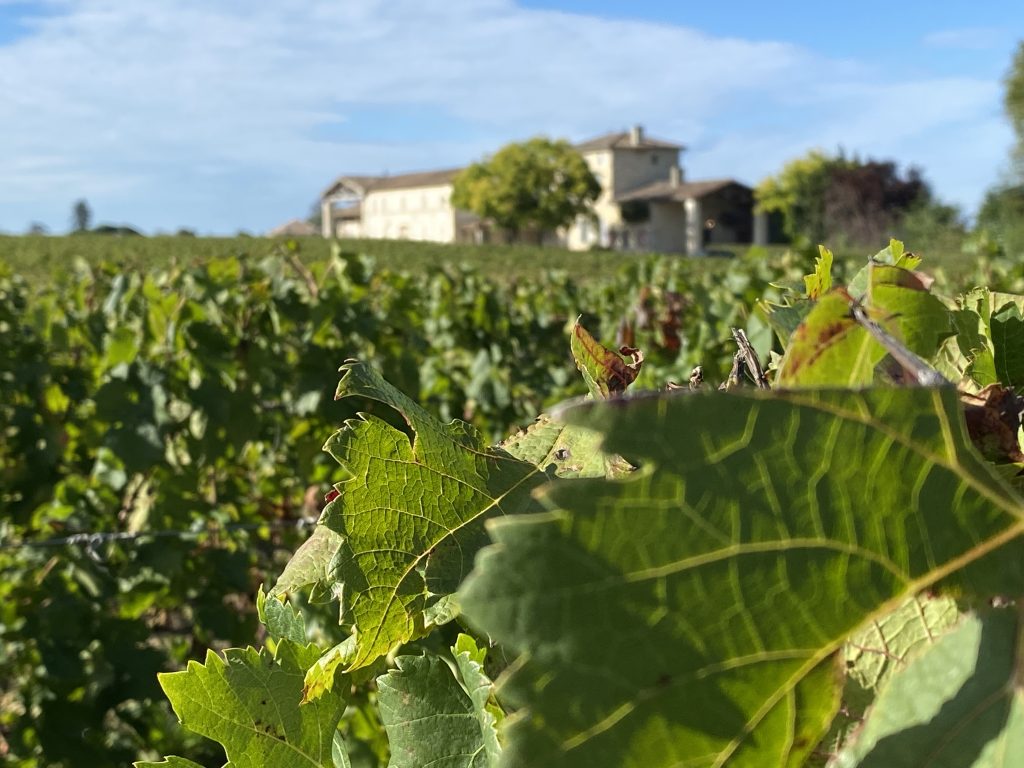
It comes just over a year after Lafleur (formerly Château Lafleur) announced it was withdrawing from both the Pomerol AOC and wider Bordeaux designation from the 2025 vintage, citing the need to face “the reality of climate change with precision and efficiency”, something that was “not possible” under the current Appellation of Origine system.
There was speculation in Bordeaux at the time that this was connected to the difficulty estates have in triggering a dispensation to use irrigation – and that the estate has been doing so for the last few weeks suggests this was the case.
According to Miles Davis of Vinum Fine Wines, which represents Lafleur, irrigation since early June, Lafleur has injected a ” small and scientifically measured amount of water three times”, from its own water supply, collected from a Dordogne overflow reservoir.
Last year the Pomerol AOC allowed watering on 22 July, “by which time a lot of damage had been done”, Davis pointed out, adding that although the authorities “will probably make the same allowance sometime soon, in light of the extreme conditions… it may prove to be too little, too late.”
“Last year was a very hot year, but 2026 is easily outstripping it, and all others since records began – and there are already signs of burnt leaves in parts of the appellation,” he said. “It is more usually around thirty degrees at this time of year, a good 10 degrees lower.”
Rationale
The rationale behind the irrigation at this stage is to pre-empt hydric stress in the vines and stop them from shutting down. This not only causes the plants to not be able to take up water but also prevents them from being able to cool down, leading to the leaves (and later the fruit) getting burnt.
“The worst-case scenario is that the vines die,” Davis said.
In watering now, Lafleur aims to mimic natural summer rainfall as closely as possible so that the vines don’t become “lazy dependants” on human intervention.
“The water is injected far from the roots, in the middle between the rows, to avoid giving the vines easy access, which would be irrigation. The real objective is to first revive the soil, and its flora and fauna. Only then do the vines and the soil negotiate how much water is the vines’ share” he said.
Lafleur, which is in “regular conversation” with growers in New World regions such as Adelaide, Napa and Swartland, where irrigation is less heavily restricted. is also experimenting with a ‘misting’ procedure. (“Think lettuces in French supermarkets” Davis says).
“Within five rows of their vines, a thin plastic cable emits a light cloud of watery mist that descends and refreshes the vines, taking the temperature between the rows down by a whopping ten degrees.
Eleven research sensors are dotted around the vineyards to measure the water content in the soil, supplemented by additional scientific readings to determine that the plants are healthy “around the clock”.
As Omri Ram, cellar master at Château Lafleur and head of vineyards at Château Grand Village explained “this is our specialty at Lafleur. We are not on some sort of a crusade; we just want to make decisions based on viticulture.”
Partner Content


Is there a move for greater irrigation?
db believes that a number of other properties in Pomerol are actively working on proposals that would revise the conditions under which irrigation (and other measures) can be used. But while there may be a lot of pressure to irrigate, there is likely to also be pressure NOT to irrigate.
Gavin Quinney, the respected Bordeaux commentator and owner of Château Bauduc on the border of the Entre Deux Mers, pointed out that while it’s not too early to think about it, even without thinking about the appellation rules, you have to be realistic about how, what and when one can irrigate, as “it’s not that easy in practice.”
For example vines in Marlborough, New Zealand, received around 4 or more litres per day throughout the summer on average and while the requirement would be identical, “that’s a lot of water to find when you’ve got 6,500-8,000 vines per hectare, as in Saint-Émilion or Pomerol.”
“Where would the water come from and how would it be used for irrigation?” he asks
Meanwhile db’s Bordeaux correspondent Colin Hay noted that the water table had been replenished well over the winter and early spring and appellations have not only not authorised any irrigation at this stage, but to do so “would be unprecedented”.
He argued that in most cases ‘there’s no need to irrigate at this point in the year”, with the real problem at the moment “more likely to be temperature stress rather than water stress – although that will surely come later.”
So far, there seems to be no official progress on irrigation – db approached the Syndicat des AOC Bordeaux et Bordeaux for comment following its general assembly (Friday 26 June) which discussed a list of changes but Vitisphere reported that irrigation “remains too sensitive to be finalized”.
French vigneron have been able to request a derogation to irrigate since 2006. Pessac-Léognan was allowed to do so in 2022 and 2025, with Pomerol also allowing irrigation a period of irrigation from 20 July- 15 August to “deal with extreme situations” that could be used “only when absolutely necessary”.
In tasting the 2025 vintage ahead of this year’s Bordeaux en primeur, Hay argued that Pomerol suffered “a lot more than any other of the leading appellations – with yields lower even than in 2013 and nearly a third lower than the rapidly declining 10-year average” even though the resulting wines indicated “nothing of the hydric stress conditions out of which they were forged”.
“Just how close we came to a ‘plateau-of-Pomerol-free’ vintage is an intriguing question and one likely to remain a matter of opinion”, he said, adding that “the rain came just in time.”
Will the appellation be as fortunate again this summer, or is Lafleur’s decision a sensible one that will put pressure on the appellation to make more timely concessions?
Related news
French heatwave to cut Champagne yields by 10%
Jeremy Clarkson issues warning at his pub during heatwave
France bans alcohol at festivals as heatwave grips wine regions


