



Sake Fair builds bridge with younger drinkers
The world’s largest celebration of sake looked to its future growth last month, with efforts to boost promising markets and introduce a new generation to sake.
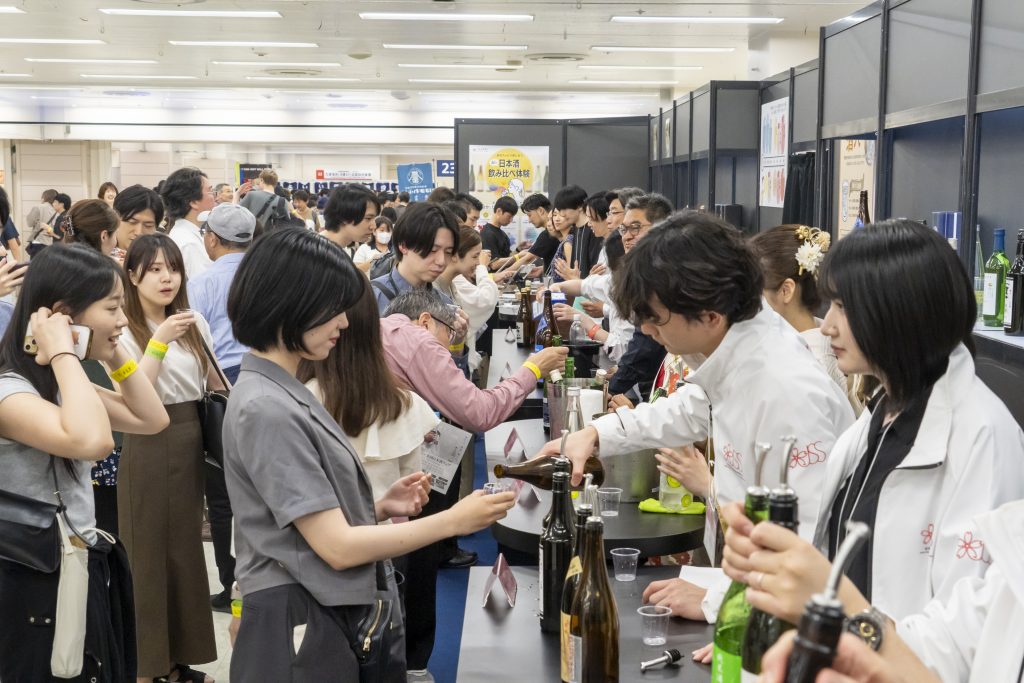
On 19 and 20 June, Tokyo played host to Sake Fair, the world’s biggest showcase of Japan’s national drink. After last year’s event was incorporated into The Kokushu Fair 2025 in Osaka (marking the city’s hosting of Expo 2025) Sake Fair made a triumphant return this year to its home turf, with organising body the Japan Sake and Shochu Makers Association (JSS) reporting around 5,600 visitors in attendance.
The show comprised two parts. With around 1,200 sakes on show from 45 prefectures, the All Japan Sake Fair provided a comprehensive survey of sake’s diversity. The Public Tasting Event featured a smaller selection – approximately 400 award-winning sakes from Japan’s most prestigious competitions, the Annual Japan Sake Awards 2026.
For breweries, the opportunity to present their products to such an audience was invaluable. The JSS, moreover, spearheaded several initiatives this year to secure the long-term sustainability of the historic industry.
Demographic shifts
It is a story heard around the world – younger generations are not drinking as much as their forebears, and traditional drinks are particularly the ones to suffer. So it is in Japan; domestic demand for sake has declined as fewer young people adopt it as part of their lifestyle.
Sake Fair 2026 therefore created several initiatives to attract a younger demographic. As the primary consumer-facing event for sake in Japan, it could lead by example in broadening its appeal.
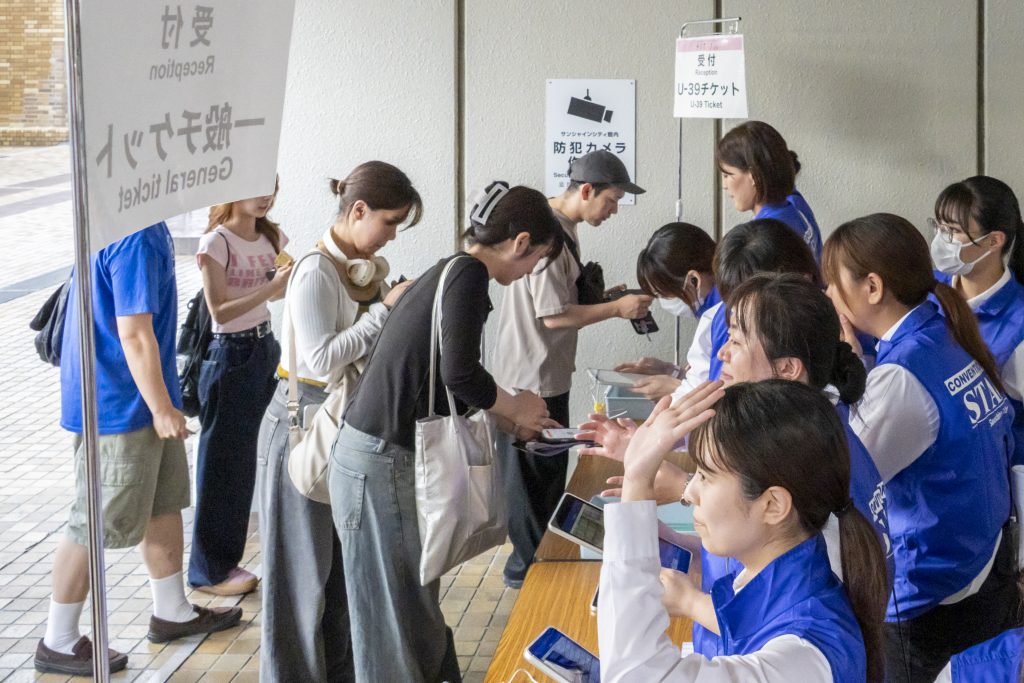
The first challenge was to rebalance attendance, which Sake Fair achieved with a new ticketing structure. For the first time, it introduced a lower-priced ticket for those aged 20 to 40, incentivising younger people to discover sake. While people under 40 account for 25% of Japan’s drinking-age population, they bought more than half of the fair’s tickets, showing that efforts to increase the younger generation’s participation were not wasted.
The scheme was not, however, simply a giveaway. In fact, it had a strong social component.
“Since the Covid-19 pandemic, opportunities for intergenerational drinking gatherings in companies and local communities – which traditionally existed in Japanese society – have declined, and we felt that younger generations, in particular, had fewer opportunities to come into contact with sake,” says Hitoshi Utsunomiya, director of the JSS. “The true purpose of issuing these tickets was to create opportunities for this generation to encounter attractive sake through the Sake Fair.”
Once at the show, organisers and producers made sure that they met the trends that are defining new drinking habits. Though some young people are abstaining from alcohol entirely, many are simply lowering their intake, and may therefore turn away from sake which, although brewed rather than distilled, is higher in alcohol than most wine or beer.
Sake Fair therefore played host to a Sake High serving counter. Much like the ubiquitous highball, a Sake High mixes in soda water (an equal amount to the sake) to lower the drink’s alcohol content. The end result is usually around 7% ABV.
The Sake Highs were launched as a cross-industry initiative in 2024 and is now available in more than 10,000 venues. Some producers are even now making sake specifically for the serve, in a sign of increased collaboration across the industry.
“This is an initiative started by the three layers of sake makers, wholesalers, and retailers as a way to create demand for sake,” explains Kensuke Shichida, chairperson of the demand development committee of the JSS, which has since lent its support to the idea. “It began with the idea that, by lowering the alcohol content, sake would become easier to enjoy, especially during Japan’s summers, which have been becoming increasingly hot.”
Playing to sake’s strengths
The majority of sake that Japan produces is bound for the domestic market, so such initiatives to reverse its decline are key to long-term success. However, exports should not be ignored, as international markets are a bright spot for the category.
In 2025, exports increased by 6% year on year to hit ¥45.9 billion in value. Volume likewise grew by 8% to reach 33.55 million litres. On both metrics, this was the second best year that the Japanese sake industry has ever had.
Wooing international consumers is therefore high on the agenda. To capitalise on this, the JSS invited eight participants from two key markets to attend Sake Fair. Thailand and Vietnam were selected for their strong growth among Asian markets (the region which, overall, accounted for 63% of export value in 2025).
Not only did this programme allow them to taste extensively, but it also provided key insights to bring back to export markets.
Ratthapon Doungthip, who is involved in sake education and events in Thailand as a Sake Culture Advocate, comments: “What I found most interesting was the Japanese consumer trends that could be seen from it. As soon as the venue opened, I saw many visitors heading straight toward specific booths. From that sight, I could clearly understand which regions and labels Japan’s sake fans themselves are strongly attracted to.”
Lincoln Vû, head sommelier at importer Da Loc Co., Ltd., used the opportunity to uncover more about the category, ready to bring it back to his contacts and partners.
“Sake is still a small presence within Vietnam’s overall alcoholic beverage market. However, it is also a category that continues to grow,” he says. “By more actively proposing and promoting sake and food pairings at the restaurants and establishments I am currently involved with, I would like to communicate the potential and appeal of sake to more people.”
Protecting the brand
As they seek to augment sake’s reputation, both at home and abroad, producers and the JSS are taking pains to protect what makes sake unique. At Sake Fair 2026, that meant accurately communicating the characteristics of Japanese sake.
Central to that is Nihonshu, a geographical indication (GI) for alcoholic beverages. Only sake made in Japan with rice grown in Japan may bear that label, tying sake to the unique climate, techniques and history of the nation.
That is only the starting point, however. With 45 prefectures producing sake, regionality is an aspect that is increasingly important in talking about sake. Indeed, there are 23 GIs for sake (including Nihonshu) and 13 of these are named after prefectures.
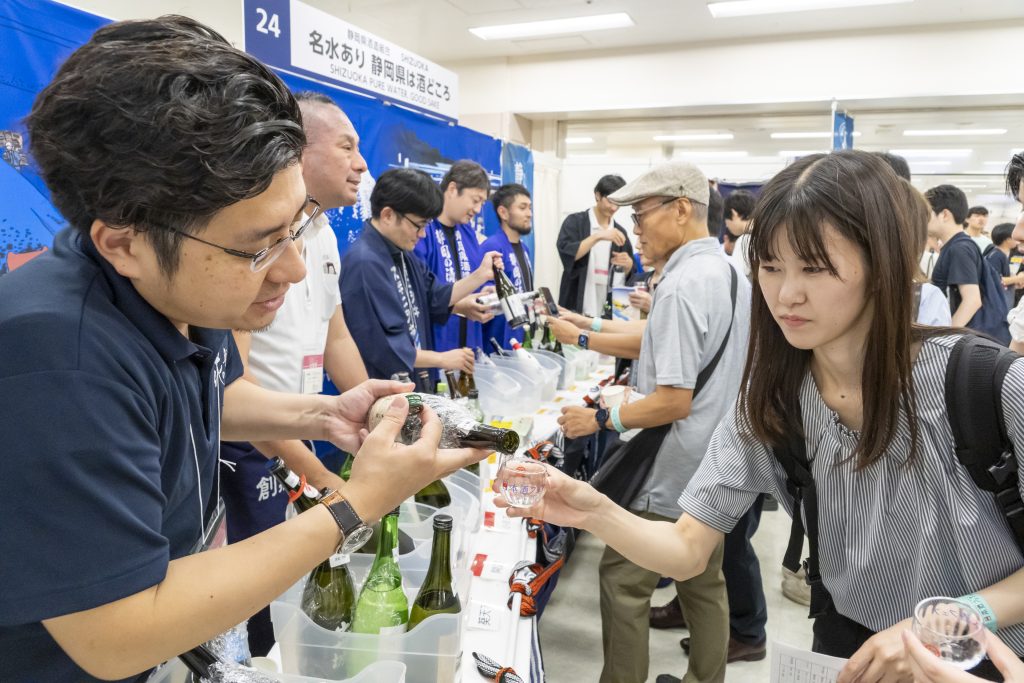
While the notion of terroir is now widely understood by wine lovers, there is not such strong recognition among sake drinkers. Yet each prefecture will have differences in its water, rice, climate, and brewing methods. At Sake Fair 2026, booths representing the 45 prefectures made sure that visitors understood the geographical diversity of sake production.
Indeed, sake producers are even rolling out this approach overseas. Yamagata Prefecture runs a scheme in which sake breweries and rice farmers promote their products together. It allows rice producers to see the end destination of their labour, while sake importers can understand the regionality of sake from those who work the land.
Masumi Nakano, president of Dewazakura Sake Brewery and one of the advisors to the Yamagata Prefectural Sake Brewers Association, is one of those taking the international approach.
“Most recently, we carried out this initiative in Hong Kong,” he says. “As we continue to develop new initiatives like this and exports increase, working in the sake industry is becoming more attractive to young people in regional areas.”
Though it is a domestic event, such ideas are part of Sake Fair’s appeal. Its approach to marketing is relevant not just to the home market, but also as a springboard for international initiatives. As the JSS and sake breweries safeguard the drinks future, such joined-up thinking will be a huge asset.
Related news
Are rare spirits back in favour in Hong Kong's secondary market?
Do global awards actually drive Japanese wine sales?
Osaka scientists develop wild yeast that boosts ornithine in craft beer


