



Do global awards actually drive Japanese wine sales?
Japanese wines have long been recognised by the likes of DWWA and IWSC, but for a country whose majority of wineries are mom-and-pop shops, do these accolades actually matter to producers looking to grow exports? Joyce Yip finds out.
When Kenneth Lee – Japanese wine importer in Hong Kong – first approached Hokkaido winery Takahiko back in 2019 to discuss distribution, he received a meagre 12 bottles. Today, six years since the family’s Nana-Tsu-Mori 2017 pinot noir made it onto Michelin-Three starred Noma’s wine list in 2020, Lee gets up to 180 bottles.
Of the 400-plus wineries that dot Japan, Lee says around 70 percent are family-owned, often operated by a husband-wife duo who is “too busy tending the land and daily operations to care about exports”.
“Some Hokkaido wineries enjoy such high-demand within its own prefecture that only a fraction of its annual production even makes it to big cities like Tokyo,” he says. “When supply is so scarce, why would they go through the fuss and cost of export taxes, air freight, customs, lab tests and even submissions to global awards?”
Who wins, who benefits?
Since 2010, Japanese wines have been snatching up recognitions at Decanter World Wide Awards (DWWA), and soon, International Wine & Spirit Competition (IWSC) and Decanter Asia Wine Award (DAWA), propelling the nation’s tipples both made from Japanese local grapes – the white Koshu and red Muscat Bailey-A – as well as international varietals onto the global stage. In 2024, the Suntory From Farm Tomi Koshu 2022 even won “Best in Show” – the highest accolade at DWWA.
The names that show up in these international awards are rarely the likes of Takahiko and other mom-and-pop ran wineries that barely produce enough for its own country. Instead, repeat winners are often sizable producers like Château Mercian – which is owned by Kirin Group, Grace Wine and Katsunuma Jyozo, to name a few.
Chizuko Oda of the Yamanashi-based Katsunuma Jyozo – which has won awards from both IWSC and DWWA – says these awards provide “essential commercial credibility”. She cites that the 2003 and 2004 silver medals at Vinalies Internationales resulted in an export agreement with French wine magnate Bernard Magrez Group, who soon placed Oda’s bottles on European shelves despite Japanese wines’ nascency on the global market more than two decades ago.
Branching out: export expectations
“We are definitely not satisfied with just domestic consumption. Given the declining alcohol consumption among Japan’s younger generation and our relatively low per-capita wine consumption (around 3.5 litres annually), expanding overseas is an absolute necessity for our long-term growth,” Oda says.
Partner Content
Takunori Kusagai, who handles marketing at Château Mercian, on the other hand, believes exposure, rather than awards, drives success. Being listed in top restaurants’ wine lists is one way, and so are pours at the G7 Ise-Shima Summit in 2016, when Château Mercian’s Omnis was served to world leaders.
“Until then, imported wines had typically been used on such occasions, so the inclusion of a Japanese wine in this setting carried significant meaning,” Kusagai says, adding that price remains the biggest hurdle for overseas uptake.
Driving awareness is key
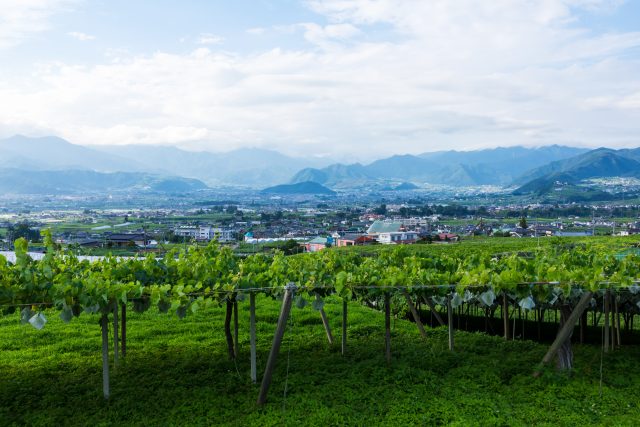
Though most of Japan lies within the wine belt, the country’s mountainous terrain is prone to humidity, volcanic eruptions, typhoons and monsoons, meaning that most harvest must be handpicked and requires special trellis systems to maintain air circulation.
In Hong Kong, Lee – whose Japanese wines grace the likes of Michelin-One starred Andō and Michelin-Three starred Forum – says the country’s pricey tipples are not deterrents for curious drinkers in his city.
“These are people who’d normally drink Burgundy and are excited about pinots from Japan,” he says. “Restaurants, too, want to offer interesting by-the-glass pours or even on a pairing menu, and Japanese wines are a great talking point.”
Awards, he adds, might have had a bigger impact a decade ago before the ubiquity of wine critics and competitions worldwide. Today, he relies mostly on tastings to spread his gospel.
“Awards definitely drive awareness, but too much information – whether on a wine list or on supermarket shelves – could cause consumer fatigue: so, do awards really drive sales? I can’t say for sure.”
Related news


