



Roc des Anges: ‘There are easier places to make wine’
Cult winery Domaine Le Roc des Anges’ new owner Thibault Ponthier was in London recently, setting out his plans for the Roussillon estate, the draw of the terroir, and how to address the wider problems facing Northern Catalunya. Arabella Mileham reports.
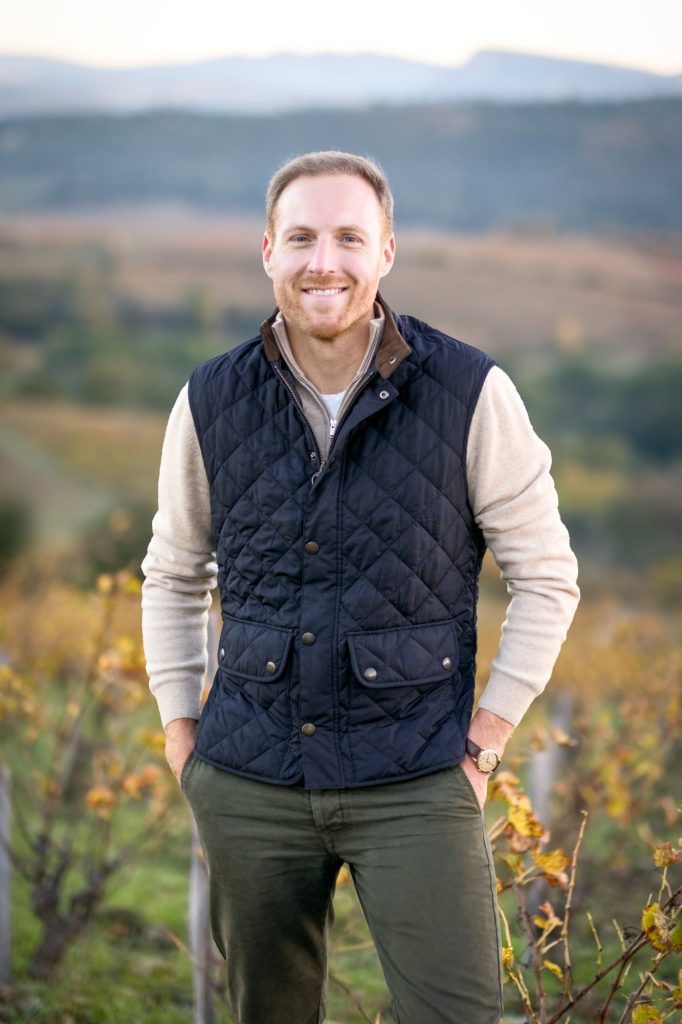
There are, according to Thibault Ponthier (and fellow winemakers in the region), far easier regions to make wine than his chosen spot in Northern Catalunya, tucked between the Pyrenees and the Mediterranean. However Ponthier acquired the 50ha Le Roc des Anges estate in April 2024 from Marjorie and Stéphane Gallet, who founded the estate in 2001 and established its reputation, because he fell in love with it.
“I talked with many winemakers there who told me we should not come here. It is a very dry climate at the forefront of climate change. Our soils are extremely poor and our yields are close to 20hL per ha in the best years – over the last two years, we did 10hL per ha,” he shrugs. “But my heart had already made the decision.”
Ponthier’s family background lies in fruit growing, but after working with fruit he turned to winemaking, studying at the Beaune viticultural school, followed by apprenticeships at Domaine Mugneret-Gibourg, Domaine Trapet and Maison Philippe Pacalet. This was supplemented by a WSET diploma.
When he first tasted Roc des Anges, Ponthier says he was expecting “something Mediterranean style, very rich, very solar but I ended up with this wine that was very fresh, very full of energy, very mineral driven, so I decided to go and check it out for myself.”
For three years Ponthier worked closely with the Gallets, learning about each parcel to ensure a smooth handover, before taking over the stewardship of the estate last year. The 2023 was the Gallets’ last solo vintage, with the ’24 and ‘25 a collaboration between the three of them. He now works closely with a small team, comprising an operations manager and vineyard manager.
Crazy mosaic
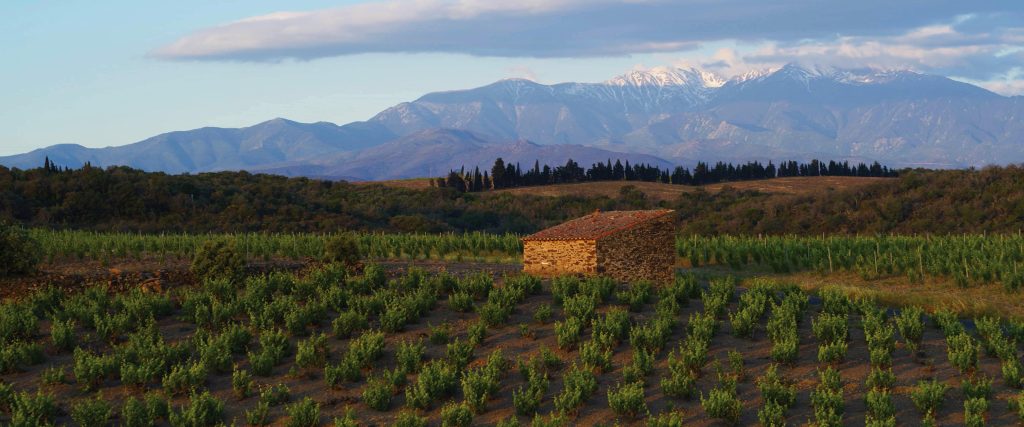
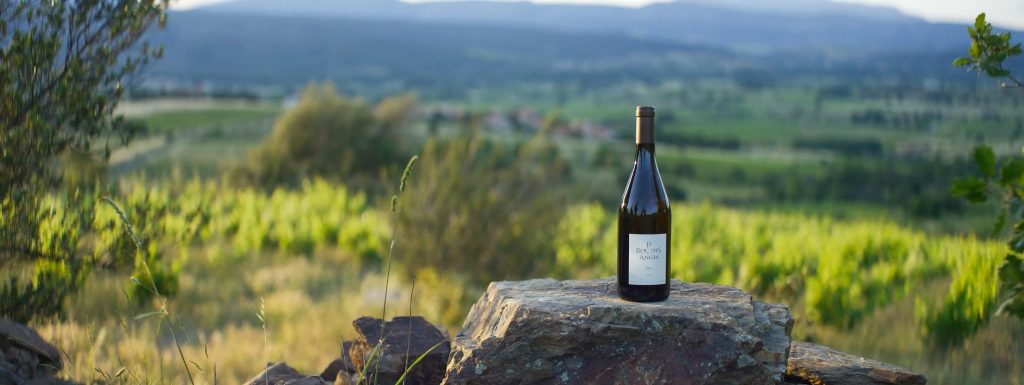
The estate lies in Latour-de-France in the Roussillon, in the foothills of the Pyrenees, which gives a dual influence of both ocean and mountains that is pretty unusual. (“You can’t get more south in France!” Ponthier grins)
The result is that temperatures easily get to 40 degrees in the day, with a wide swing at night as the cooling air blows in from the Pyrenees, sending temperatures down to 16 degrees or lower. This high diurnal range “makes all the difference,” Ponthier says, along with the “unique… raw” light.
“Something in the light and in the wildness of the land resonated with me. Roc des Anges feels alive – a living expression of its place,” he says. There is also a more practical level too. “You get the ripeness [in the gapes] during the day, but then you get to keep all the freshness at night, and you have this natural acidity that you can taste in the wines.”
Partner Content
In addition to the location, there is also great diversity in the soils, “a crazy, amazing mosaic of terroir”, he says, which include sandy-schists, a shaly marl (Marne Schisteuses), ochre clay-limestone (Argilo Calcaire) from the Aigly River and a small amount of granite. “To my knowledge there is no equivalent in France that has so much diversity in one tiny place than Northern Catalunya, except maybe Alsace,” he says.
As a result, the estate is divided into 80 tiny parcels surrounded by garrigue and forest “that gives a sense of energy that I’ve never experienced in any other area”.
The range comprises Ilum a blend of both grapes (Grenache Gris, Grenache Blanc, Macabeo and the lesser known Carignan Gris – of which there are only 20ha left in France, he says – Carignan Blanc and Malvoisie de Roussillon) and terroir (sandy schist at Montner which lends verticality, and ochre-clay and limestone pebbles from the Aigly River) along with two single parcel wines, Grenache Gris on sandy schist and a Carignan Gris on granite soil. There are also a range of red wines.
What’s next
Continuity is the order of the day, Ponthier says. “I decided to go there as I was a big fan, of theirs and you don’t want to change you love – but even if you don’t want to change, sometime you have to change.”
It’s not about following a “recipe”, he says.
For example, the 2023 saw a harvest start on 4 August for the Illum (blend), “it was supposed to be an exception, but I think we will this year too, and I wouldn’t be surprised if we were to pick in late July [in future],” he said.
But there are more pressing concerns in the wider region. Northern Catalunya faces significant challenges, Ponthier explains, with cooperatives collapsing and production shifting from organic to conventional grape growing due to the price parity between the two.
Related news
“The only way to build a wine is by making fewer bottles than the market needs”
This is what fine wine cost in Gleneagles Hotel 60 years ago
Louis Roederer enters Burgundy with Domaine Pierre Damoy acquisition


