



From innovation to gastronomy: why Hungary is having a moment
Wines of Hungary undertook a UK-wide tour this year to show the wine trade just how much the Central European nation can offer. db spoke to those in attendance to understand how Hungary could be the next big thing.
Some countries are widely understood to be winemaking all-rounders. Others have built their reputations on an emblematic grape variety, or a region with a global following. It is very rare, however, to find a nation with a reputation that has been determined by just one very specific, highly local style.
For many years, that was Hungary. The delectable, luscious sweet wines of Tokaj have all the hallmarks of iconic fine winemaking: a long-standing system of classification, a unique terroir and a transcendent quality both in youth and with substantial age. Often, the entire national reputation rested on the single Tokaj style.
Times have changed, however. Tokaj has lost none of its lustre – it is still a winemaking powerhouse – but producers and Wines of Hungary, the sector’s marketing agency, are reminding the world that the rest of Hungary demands attention too. The very same qualities that commend Tokaj, such as its wealth of local varieties or its volcanic terroir, also apply to many other regions and styles.
In fact, Wines of Hungary has been in full campaigning mode in the UK. Having hosted hit events in London, Birmingham and Bristol last year, it headed north to Edinburgh, Manchester and Leeds this spring. The roadshow of events brought a clear message: Hungary’s wines, no matter the style, are a perfect fit for the UK.
A packed programme
Given the diversity on offer in Hungary’s winemaking scene, summarising it in a single format would prove too much of a challenge. Instead, each of the stops on the roadshow provided a hub of information, producers and experiences.
Central to each day was a masterclass led by Patrick Schmitt MW. Based on his own experiences visiting Hungary, and presenting a selection of his favourite wines, it was a whistle-stop tour of the country’s production. Indeed, as he noted, one of the core structuring features of his sessions was the need to cram in as much winemaking brilliance as a 90-minute slot would allow.
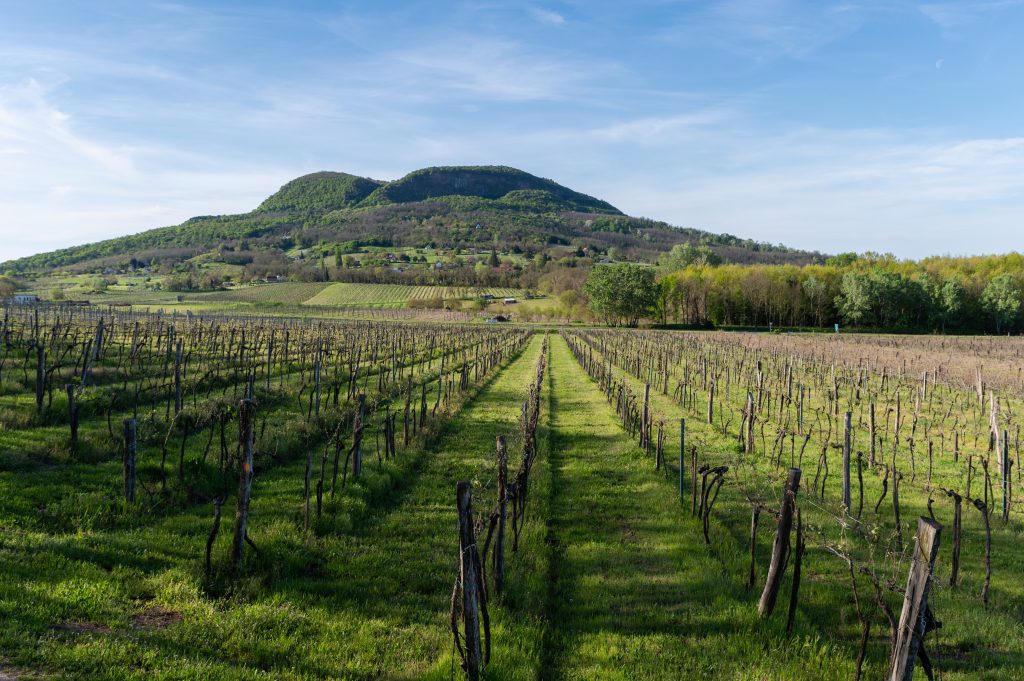
A couple of core threads did emerge, however. With volcanic terroir, you are dealing with one of the wine world’s current favourite buzzwords. Yet Hungary, as a land of extinct volcanoes, sees it have a quantifiable effect on the wines. Moreover, volcanic geology is not a rare quirk of a particular winemaking region: it is a feature that defines the entire country.
Schmitt also praised the “famously brilliant” Hungarians, a people responsible for the ballpoint pen, synthesising vitamin C and even the Rubik’s cube. That innovation is reflected in the winemaking. From the precision required in making botrytised sweet wines to the demands of traditional method sparkling winemaking, to matching current styles for fresh whites, Hungary is a nation well suited to adaptation.
That adaptation also suggests something of Hungary’s diversity. The country is divided into six winemaking regions and, between them, 22 winemaking districts. Although most are defined by hills and extinct volcanoes, they vary hugely, with different centres for red and white winemaking, and a range of mesoclimates.
You find diversity too in the grape varieties present: it is a mix of local stars like Furmint, Hárslevelű and Irsai Olivér; Central European stalwarts such as Kékfrankos (also known as Blaufränkisch) and Kadarka; and Hungarian spins on international varieties such as Cabernet Franc.
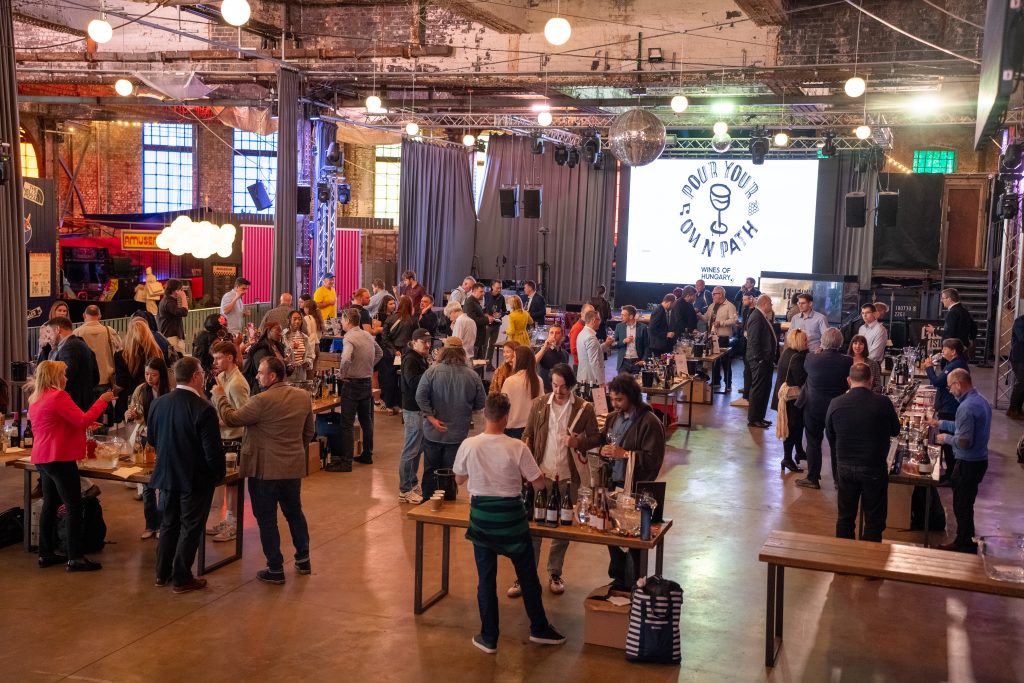
The diversity was on full show in the walk-around tasting. With up to 36 wineries presenting each day, attendees had access to the breadth of Hungarian wine. Though Tokaj, the most familiar region, would be a draw for many, that was the beginning of the conversation, not the end.
All this sampling took place in an environment that encouraged such discussions. The casual format ensured that relationships could be built rather than it being a sterile, academic tasting exercise.
Food on the day – think steak pastries and mango cake – ensured that the convivial atmosphere continued, and that visitors could see the wines’ pairing potential. For both exhibitors and attendees, it proved an invaluable chance to grow Hungary’s presence in the UK.
Ongoing conversations
For Hungarian producers, developing markets and connecting with new partners is essential to long-term growth. What made these events really stand out, however, was a sense of dialogue far beyond commercial transaction.
With the multi-faceted approach – masterclasses, food pairing, walk-around tastings and influencer-friendly moments – producers could dive into the UK’s wine ecosystem. For many, it provided a fascinating insight into the UK’s growth potential, and the niches where Hungarian wines can succeed.
“What stood out to me most was how genuinely curious and engaged people were throughout the tour. The UK market is particularly exciting because consumers are open to discovering something new,” says Csilla Sebestyen of producer Sebestyén Pince Szekszárd. “I believe the UK offers excellent opportunities for Hungarian wines, as there is growing interest in lesser-known wine regions and indigenous grape varieties.”
In particular, there was real excitement for the commercial opportunity provided by the UK’s food and wine scene. Though London is often considered the epicentre of the country’s gastronomic scene, the North of England and Scotland have real diversity in the on-trade, opening the door to exciting pairings and diversifying the wine list.
“The cultural and gastronomic diversity in the UK is always surprising,” says Tamás Fröhlich, export manager at Gere Attila Pincészete. “If you enjoy good food, it’s only natural that you’ll want to pair it with high-quality drinks. During this trip, I experienced a real openness in the UK, especially in this segment. Following the basic principles of supply and demand, the only missing piece is the link that connects the two.”
Thanks to the range of events and attendees, different producers could meet their needs in different ways. For Sebestyen, a particular highlight was the tasting in Edinburgh, where existing knowledge of Hungarian wines in Scotland’s capital meant that the audience was already invested. For Fröhlich, on the other hand, an influencer event stood out, where the wines could be presented “without preconceived ideas, just pure curiosity, genuine interest”.
For all the attendees, however, it proved an opportunity to deepen ties with the UK. Although highly successful taken in isolation, the clearest benefits are as part of an ongoing programme of connection.
“We are committed to investing in the development of our presence in the UK by visiting regularly and actively promoting our wines,” explains Sebestyen. “We also invite sommeliers and wine professionals to Hungary each year to discover our wines first-hand and learn more about our wine regions, traditions and winemaking philosophy. Our goal is to help more people experience the authenticity and diversity of Hungarian wine culture.”
This sense of connection resonated for Fröhlich as well. “We hope this open and dynamic market will continue to deepen its interest in the diverse wines of Central Europe,” he comments. “The beauty of the Old World lies in its rich heritage, remarkable diversity and endless capacity to surprise. Our task is to remain present, foster meaningful relationships and continue connecting these exceptional wines with the right people.”
Made for the trade
Of course, what also matters with such events is bringing the wine to the end consumers. Although a day of discovery is a fantastic experience for the trade, the roadshow of events most proved its value by introducing buyers to wines and creating long-term ambassadors for Hungarian wine.
That is essential in the UK market. Without local production dominating the shelves, the UK offers a global selection of wines. Thus, while the most famous wine nations will always fill shelves, there is plenty of space for other regions to find their niche. In settings such as restaurants and independent retailers, where consumers are often wine-literate, Hungary can even trade on its niche reputation.
For many who attended Wines of Hungary’s UK events, they were discovering new things about the country. Even among the wine cognoscenti, there was evidence of room for Hungary’s profile to grow.
“I discovered that Hungary produces a wide range of wines that are stylistically on-trend,” says Abi McCreath, product marketing manager at distributor Boutinot – “light, ‘Pinot-style’ reds, beautifully fresh and aromatic whites, exciting sparkling wine – or ‘buborek’, as it’s known in Hungarian – that could rival most crémants being produced, plus the infamous (and rightly so, in my opinion) sweet wines”.
It was a chance to explore not only styles, but also the many stories behind the wines. Matilda Tsappis, owner of Michelin-starred restaurant Killiecrankie House, comments: “I hadn’t realised the breadth of grape varieties and wine styles produced – vibrant, traditional method sparkling Furmint, a grape variety called Juhfark drunk by the Hungarian nobility of old on their wedding night to guarantee a male heir… Who knew?”

Certainly, by educating the trade, there is a trickle-down effect that reaches the consumer, but it is not just increased recognition that will commend Hungarian wines. With lighter styles, off-the-beaten track appeal and a compelling price-to-quality ratio, the wines are hitting the marks that consumers value.
At Killiecrankie House, for instance, a saline, dry Furmint is a common fixture on the by-the-glass list. With the menu drawing on both Japanese inspiration and Scottish produce, seafood usually features heavily, with Furmint acting as a perfect foil.
The fact that Hungarian wines offer good value helps immensely. Customers can opt for an option they may not know without having to buy an entire bottle. “Gastronomic, good-value wines will always go down well with guests,” explains Tsappis, “and the current trend for volcanic wines won’t hurt either.”
It is an advantage that struck McCreath too. “Consumers are drinking lighter and fresher styles of wine, and I’d say both the Hungarian dry red and white wines I tasted at the event, and those within the Boutinot portfolio, are exactly that,” she says.
“Consumers are enjoying discovering new regions and new grape varieties, and that’s precisely what Hungarian wine offers. Not only are they delicious and the quality extremely high, but the price point is excellent for wines that often go under the radar.”
Indeed, this year’s events offered a strong sense of the opportunities open to Hungarian wine. The quality that Hungary offers has been evident for centuries, but the UK market is only just waking up to the range of wines on offer. With this concerted effort to tell the nation’s stories to the UK trade, Wines of Hungary is ensuring that the message reaches the everyday drinker.
Related news
“The only way to build a wine is by making fewer bottles than the market needs”
Is Canadian fizz nearing its 'Nirvana' moment?
Louis Roederer enters Burgundy with Domaine Pierre Damoy acquisition


