



Why ‘latitude’ has exited the conversation
Fifty years ago, latitude functioned as a useful approximation of climate. Today, the lines are increasingly blurred as equivalent latitudes yield wildly contrasting wine styles, writes James Lawrence.

The relationship between latitude and viticulture is these days analogous to judging a book by its cover: a superficially convincing benchmark that can, in fact, reveal relatively little.
In southern Patagonia, growers endure relentless winds, dramatic diurnal swings and summer days that deliver up to 17 hours of sunlight. But more than 12,000km away, vineyards on a similar latitude in the Northern Hemisphere in Ireland experience high rainfall, humidity, and the temperate moderation of a maritime climate.
Both regions can produce wines with bracing acidity and freshness – yet the forces shaping them could hardly be more different.
“Factors such as daylight hours, maritime influence and seasonal temperature variation are absolutely decisive in shaping grape ripening and wine style,” says Sven Moesgaard, CEO of Skærsøgaard Vin in Denmark. “For many years, people believed quality wine production in Denmark was impossible simply because of our northern latitude. But latitude alone tells only a very small part of the story.”
Redrawing the viticultural map
Meanwhile, that story is becoming even more complicated as climate change redraws the world’s viticultural map. Commercial (albeit niche) industries are emerging in nations such as Poland, while experimental vineyards have even appeared in Scotland.
In the 21st century, latitude remains a useful starting point. But as a defining guide to climate conditions and viticultural suitability, it is becoming increasingly obsolete.
Historically, latitude was believed to be the kingmaker when deciding where to plant vines. The closer a vineyard sat to the “ideal” temperate band that lies roughly between 30 and 50 degrees north or south – Marlborough (about 41º south), Rioja (about 42º north) and Bordeaux (about 45º north) are classic examples – the greater its chances of producing balanced, high-quality wines.
Entire wine maps have been built around the assumption that distance from the quator determines style. Yet developing industries, particularly in South and Southeast Asia, continue to challenge assumptions about what is possible on our planet – and why.
India calling
A product of 20th-century investment that saw the potential to switch from table grape production to bottled wine, Nashik in India lies at the same latitude as Sudan – the latter wholly unsuitable for viticulture due to water scarcity, excessive heat and political instability. Nashik, too, is positioned well outside the temperate latitudinal bands, and it experiences a tropical climate with heavy monsoon rains between June and September. This creates significant challenges, including faster vine growth, multiple growth cycles per year and greater disease pressure from humidity.
Nevertheless, producers such as Grover Zampa have demonstrated that altitude and adaptive vineyard management are powerful forces in redefining what is climatically possible. “Our vineyards in the Nandi Hills are located at elevations of around 900–1,000 metres, providing cooler temperatures, significant day-night variation and slower grape ripening, all of which help preserve acidity and develop complex flavours,” explains Manjunath VG, vice president – vineyards at Grover Zampa.
“One of the most common misconceptions internationally is that India is simply too hot and tropical to produce serious, quality-driven wines, and that Indian wine is more of a novelty than a true expression of terroir.”
But Manjunath repudiates such claims, insisting that India has “vineyard regions with conditions suitable for premium viticulture”. However, what is essential, he adds, is not to adopt standardised vineyard practices used by producers in Europe or the US.
Monsoon humidity
“Instead of relying on natural seasonal dormancy, growers employ a double-pruning, single-harvest system to control vine growth,” he explains. “To manage monsoon humidity and excessive vine vigour, we time grape ripening during the dry season to reduce disease pressure and improve fruit concentration. Careful canopy management improves airflow and limits fungal issues, while controlled irrigation helps regulate vine stress and maintain balance in the fruit.”
The development of a distinct viticultural philosophy – a necessity thanks to Nashik’s tropical climate – may ironically prove increasingly relevant to winegrowers further afield. As traditional regions face rising temperatures, drought and erratic weather patterns, producers accustomed to the kind of conditions found in Nashik may offer a partial blueprint for adaptation.
“Indian viticulture has long operated under conditions that many established regions are only now beginning to experience,” notes Manjunath. “As climate change forces traditional wine regions to confront a new reality, countries like India may offer valuable lessons in climate resilience.”
Such an inversion – emerging wine regions offering climate management expertise, rather than novelty – may prove to be one of the most dramatic paradigm shifts in the 21stcentury wine industry.
Maritime influence
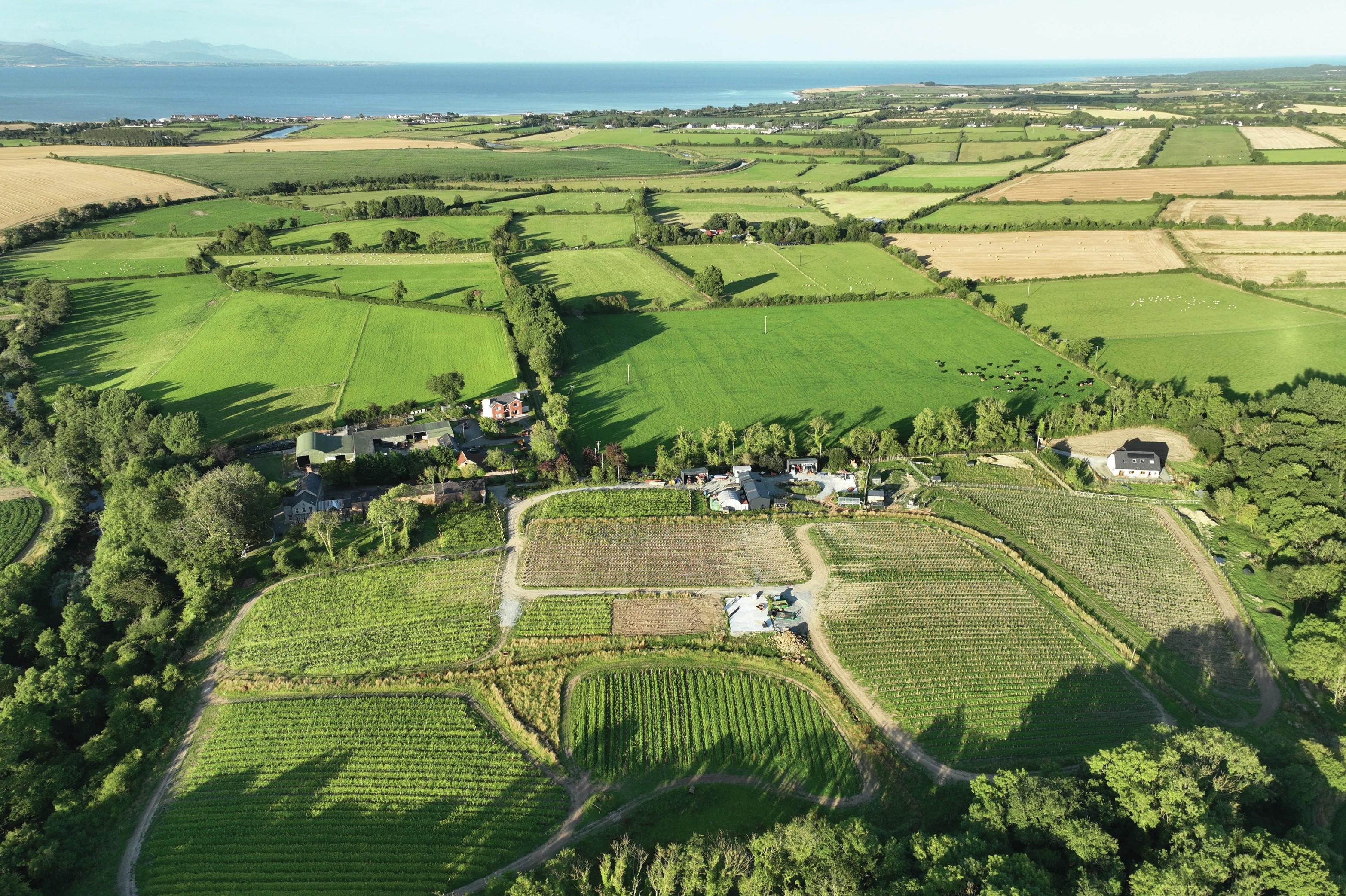
Fairy Trees Winery, situated between Dundalk and Drogheda on Ireland’s east coast at a latitude of approximately 53º north, was founded in 2020 by the Laclie family. A pioneer in cool-climate viticulture, it is part of a growing collection of wineries redefining the viticultural map in Northern Europe.
At 55° north is Skærsøgaard Vin in Denmark, created by winemaker Sven Moesgaard. Both vineyards sit at latitudes traditionally considered too extreme for quality viticulture. Yet they are thriving, producing elegant wines with moderate alcohol levels. So, what’s their secret?
“What matters in viticulture is the complete local climate – temperature patterns, sunlight during the growing season, soil, wind protection, water influence and the length of the ripening period,” observes Moesgaard.
“Denmark is not a cold continental climate like many people imagine. In some respects, our growing conditions can resemble other cool maritime wine regions that already produce internationally respected wines.”
Moesgaard identifies many natural advantages: a unique microclimate in the Dons wine region near Kolding Fjord; a sheltered position that reduces wind exposure and frost risk; and very long daylight hours during the summer, “which gives the vines extended photosynthetic activity and helps grape development even when temperatures are moderate”, he explains.
However, it is the Skærsøgaard vineyard’s proximity to the Baltic Sea, he adds, that makes all the difference. “Denmark is surrounded by water, and this moderates temperature extremes,” Moesgaard explains. “Winters are milder than many people expect at our latitude, while summers avoid the intense heat spikes seen in more continental regions. This creates a long, relatively gentle growing season.”
Similarly, Fairy Trees winemaker Bertrand Laclie describes maritime influence as defining almost every aspect of local viticulture. “Our vines are shaped by the Atlantic, the Irish Sea, rainfall, wind, humidity, and the drainage and character of our soils,” he says. “It is this maritime climate that gives our wines their identity. The Atlantic moderates temperature, so we do not see the same extremes as inland regions at similar latitudes: winters are generally milder, summers are cooler, and ripening is slow and gradual.”
Laclie adds that, compared with many inland cool-climate regions, Fairy Trees’ wines tend to be “less about power and more about tension, brightness and delicacy. They carry a distinctly maritime Irish character”.
Yet, while both regions enjoy maritime climates, there are key differences as well. Denmark experiences lower rainfall than coastal Ireland due to a more stable continental influence, while Fairy Trees faces significantly greater disease pressure as a result of persistent humidity and wetter growing seasons. The contrasts illustrate how two vineyards positioned at broadly similar latitudes can nonetheless confront different viticultural realities.
Poles apart
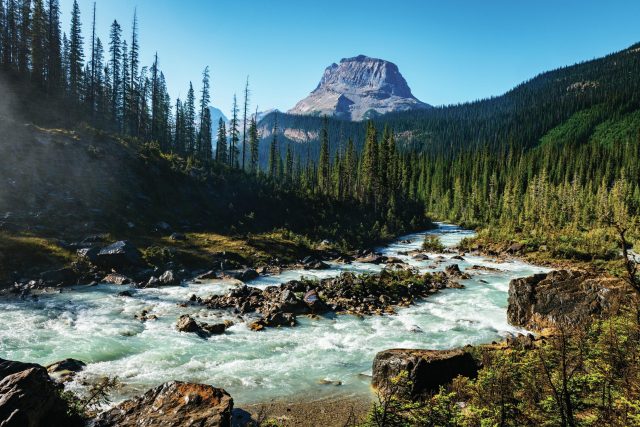
Many of British Columbia’s commercial vineyards – especially those in the Okanagan Valley – are found at a latitude of around 50° north. In Europe, regions on a similar latitude would include parts of Champagne. This is perhaps the most dramatic example of the inability of latitude to accurately predict wine style: Champagne’s maritime-continental hybrid climate almost exclusively produces low-alcohol base wine for sparkling, while British Columbia enjoys hot summers and very cold winters, yielding red wines of weight and concentration.
One region is humid and disease-prone, the other semi-arid and drought-sensitive. The question is: why?
The explanation is a series of powerful climate modifiers, not least solar radiation, elevation, topography and diurnal variation. Rain shadow plays a vital role – the Okanagan Valley sits east of major mountain ranges, which block moist air currents, much as the Vosges mountains do for Alsace. The result is low rainfall combined with dry air, strong solar radiation and intense sunlight – ideal conditions to ripen Bordeaux varieties, even the late-ripening Cabernet Sauvignon, which would be extremely difficult in Champagne.
At the same time, cool nights help to preserve acidity, delivering an enviable combination of ripeness, freshness and precision. Austria’s Wachau Valley, Germany’s Baden and the Mosel all sit on similar latitudes. But it is highly unlikely, despite the impact of climate change, that any of those could routinely produce Cabernet/Merlot blends of equivalent ripeness and alcohol.
Extreme aridity
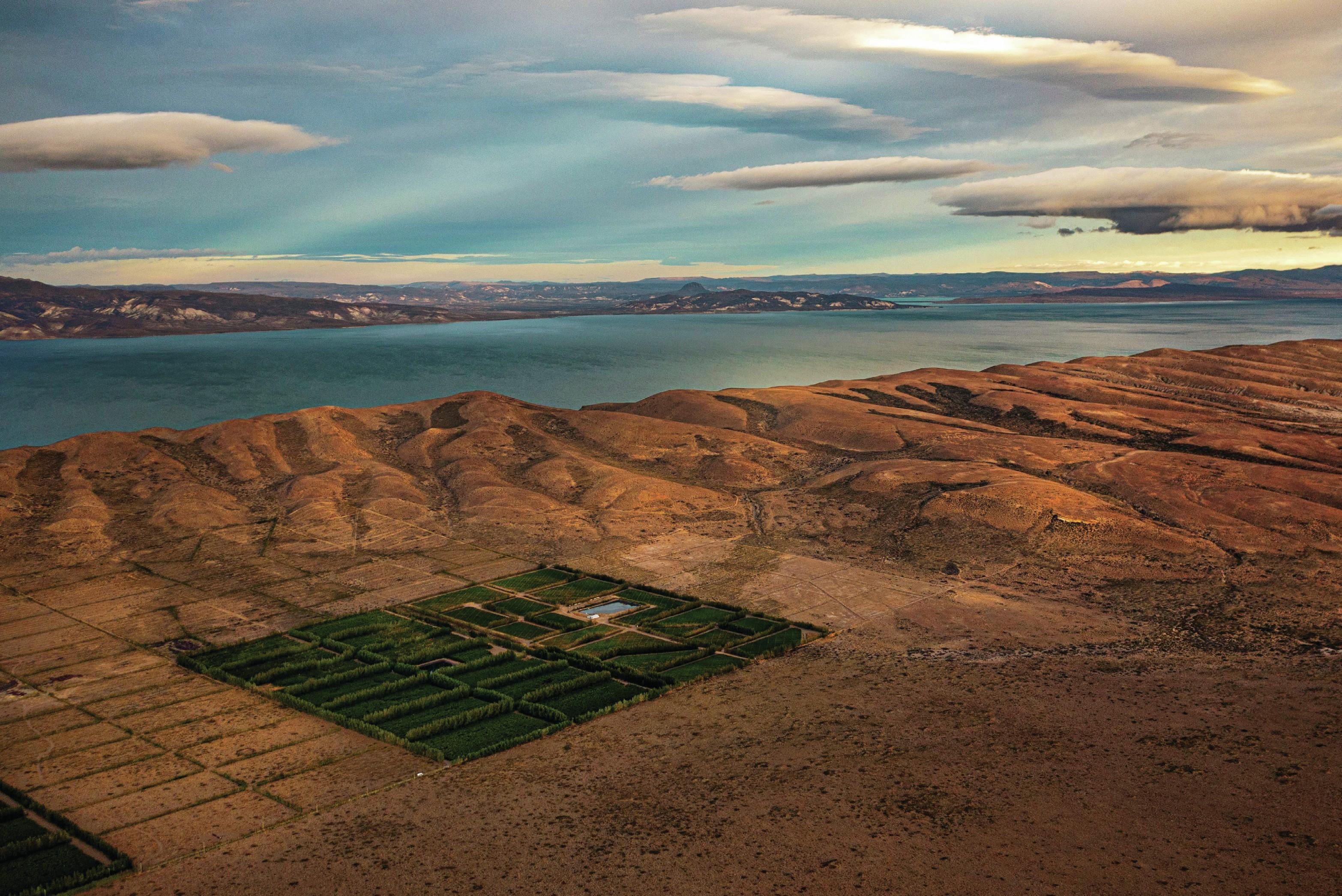
Another fascinating case study is Patagonia. Despite sharing a broad latitudinal position with Ireland (52°–53° north/south), there are dramatic differences in climate: Patagonia’s extreme aridity, intense solar radiation and significant diurnal swings contrast sharply with the high rainfall, humidity and cool summers of north-eastern Ireland.
One region struggles with fungal pressure and rainfall at harvest time, while the other battles water scarcity.
In practical terms, they occupy opposite ends of the viticultural spectrum, despite sitting on near-equivalent latitudes. Indeed, at Bodega Otronia in southern Patagonia, its significant distance from the Equator suggests a marginal climate defined primarily by cold. But the reality is considerably more complex.
“I think the biggest misconception is underestimating our ability to achieve full ripeness – both sugar and phenolic maturity – and to successfully develop aromatic varieties like Torrontés,” says Guido Malacalza, winemaker at Bodega Otronia. “Another widely overlooked issue is water availability. There’s a common assumption that water is not a concern in Patagonia, but that’s a serious mistake. We depend on water just as much as any region in Cuyo.”
Hydric stress
The environmental contrasts between this nascent region and long-established European vineyards on similar latitudes – Bordeaux and Piedmont, for example – could not be more profound. In Patagonia, the growing season is inherently slow and late, driven by the constant presence of wind, high evapotranspiration – a product of extreme aridity – and summer days with up to 17 hours of sunlight.
According to Malacalza: “The style of our wines is largely defined by the natural acidity the berry retains throughout its entire cycle, underpinned by diurnal temperature swings that can reach 20°C.”
He describes severe environmental pressures, including relentless winds that “cause grape skins to develop greater thickness than in other wine regions – an adaptive response to mechanical stress and radiation that results in higher concentrations of aromatic precursors in white varieties and polyphenols in reds.”
Paradoxically, Patagonia’s challenges now resemble those faced in parts of Spain, California or Australia at lower latitudes – water shortages and the battle against hydric stress. Traditional notions of cool-climate viticulture have strong connotations of rain and marginal ripening conditions – but Patagonia demonstrates that latitude is sometimes a poor guide to wine style.
Crude shorthand
In 2026, latitude’s relevance to global viticulture and the viability of planting has not completely evaporated – it remains a crude shorthand for understanding broad climatic tendencies and potential growing conditions. And yet climate change is forcing a dramatic reassessment of where it is – and where it isn’t – viable to plant.
While once marginal regions such as Bordeaux have experienced Mediterranean-style heat in vintages including 2018 and 2019, delivering levels of ripeness that are comparable to Napa Valley, many European vineyards are confronting earlier harvests, water stress and extreme weather events – while Syrah now ripens on Irish soil.
In Denmark, Moesgaard points to historical data showing the date of the latest spring frost steadily advancing over the past several decades – from early June in the mid-20th century to early May in recent years. The implications for the future of Danish viticulture are profound.
“The longer green growth season made first corn, and then the vine, possible,” he says. “Without climate change, commercial-quality viticulture in Denmark would have been far more difficult. Warmer growing seasons have clearly expanded the possibilities for ripening and wine quality. In that sense, Denmark has benefitted.”
Blurred lines
Fifty years ago, latitude functioned as a useful approximation of climate. Today, however, the lines are being blurred as equivalent latitudes yield wildly contrasting wine styles, with diurnal variation, maritime influence and human intervention playing a major and deciding role in what can grow – and where.
“In the future, I believe we will speak less about whether a vineyard lies north or south, and more about balance – whether a site can produce wines with freshness, complexity, structure and identity,” prophesies Moesgaard.
“Ultimately, wine quality comes from the interaction between place, climate and human understanding – not from latitude alone.”
This may prove to be the defining viticultural lesson of this century. Viability will not be determined by distance from the Equator, but by how successfully producers adapt to an increasingly complex climatic reality. The dynamic regions of tomorrow will demonstrate the greatest capacity for innovation and resilience, and not just the good fortune of being located in a temperate latitudinal band.
Related news
Old Vine photography shortlist unveiled at heritage showcase


