Why diversity is Grüner Veltliner’s ace in the hole
Grüner Veltliner first won attention as a characterful indigenous grape, flying the flag for Austria on the international stage, but its real strengths are its diverse styles and versatility.
If you think of Austrian wine, chances are you think of Grüner Veltiner. Although it cannot alone represent the richness of Austrian wine production,it certainly is totemic. As an indigenous grape that has broken into international markets, Grüner Veltliner is the perfect ambassador.
You could chalk that up to quantity; it accounts for around a third of vineyard plantings in Austria. Its distinctiveness has also been a huge asset: in its local origin, its name (pronounceable, yet reassuringly Germanic) and its ubiquitous tasting note of white pepper and crisp fresh fruits.
There is a risk, however, that its role as standard bearer makes it seem homogenous. However, that would be a mistake. With its plantings spread across the country, and with ever more quality-minded producers pushing its horizons, Grüner Veltliner in Austria is more diverse than ever.
In the relatively flat Weinviertel to Austria’s northeast, for instance, the vineyards are open to cooling breezes from the north. This means the region has a reputation for lightness and delicacy: its Grüner Veltliners show the most pronounced pepperiness, with bright aromas of citrus fruits.
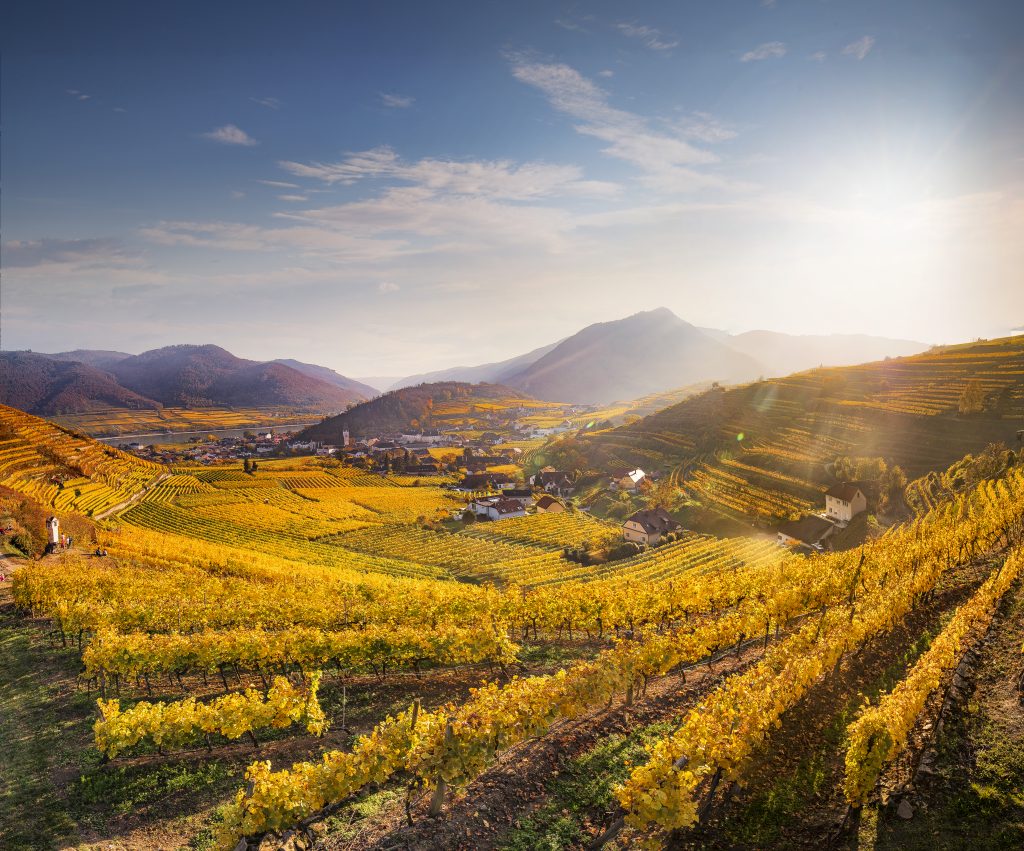
Head westward along the Danube to the Wachau, however, and you find a very different story. Sheltered by hills to the north and the Alps to the south, its terraced, south-facing vineyards enjoy relative warmth and abundant sunshine. Cool air descending over the vines at night, however, ensures that the grapes retain lively acidity.
Partner Content


For the best wines – particularly the richest ones, labelled as Smaragd – this means a beguiling mix of citrus, stone and tropical fruit flavours, subtle minerality and a firm texture. Even though oak is uncommon, they are wines that can age impressively; comparisons with white Burgundy are frequent among wine lovers.
Of course, these two regions are far from the complete picture and each area that grows Grüner Veltliner will have its own style. Moreover, thanks to Austrian Wine’s efforts to map and classify every vineyard in the nation, drinkers can easily explore hyper-specific nuances of sites.
This diversity is without even considering winemaking. While neutral, protective winemaking in stainless steel is most common, producers may use large old oak for a richer texture through gentle oxygen contact, while batonnage can add a creamy depth to the wines. New oak aged and skin contact wines, meanwhile, demonstrate the grape’s versatility and ability to meet consumer trends.
The grape’s ambassador status is beyond doubt: the central proposition of crispness, complexity and distinctive flavours has earned it a place on wine shelves and menus around the world. Its ability to deliver at a competitive price cannot hurt either.
Yet there is not just one Grüner Veltliner in Austria. You see it in experimental winemaking, regional specialities and – increasingly – top restaurants stocking several bottles to show off its diversity. Grüner Veltliner may no longer be an unknown entity, but the world is still waking up to its diversity and potential.