



Prestige Champagne sees surprising silver lining
IndThe drop-off in sales of prestige Champagnes has brought unexpected benefits for restaurants’ by-the-glass programmes – and, possibly, for the quality of the wines, reports Anthony Rose.

For much of the past decade, bottles in the prestige cuvée segment of the Champagne market were often bought not primarily to be drunk, but to be held, traded and, if all went well, sold at a profit.
Dom Pérignon, Cristal, Krug, Salon – the usual suspects – were discussed in the same breath as investment-grade Bordeaux and Burgundy. Driven by pandemic-era spending and surging demand from emerging markets, the bull run was going to go on for ever, wasn’t it? Actually, no.
Since late 2022, the prestige cuvée market has been contracting. According to the Comité Champagne, prestige cuvée shipments to export markets fell by 17% to seven million bottles in 2025, 1m bottles below the 10-year average, representing 4.6% of the total market, down from 5.5%.
In the UK specifically, prestige cuvées reached only 480,000 bottles in 2025 – an unprecedented low over the last decade, against a 10-year average of 820,000 bottles per year.
On Liv-ex, the fine wine exchange, the Champagne 50 index fell 4.2% in 2025.
Three shifts
Three distinct shifts are currently in motion: a move of the finest bottles away from private cellars and into restaurants and, in particular, by-the-glass programmes; an extension of lees ageing and post-disgorgement rest before release; and, potentially, a quiet improvement in the quality of non-vintage blends if top quality fruit is diverted there.
Weakening Chinese demand, rising interest rates, inflation eroding purchasing power and a proliferation of competing alternative investments have all contributed to a broad fine wine retrenchment from which Champagne has not been immune.
As Nick Baker, founder and MD of online specialist retailer The Finest Bubble, observes: “I used to say a lot of collectors would buy five cases of prestige cuvée, leave them in bond for five years, and historically could drink two and the three left would pay for the ones you drank. From 2022, that started changing.”
The Liv-ex data, assembled by head of market intelligence Tom Burchfield, makes the repricing dynamics explicit. “For the most recent vintages released by Bollinger Grande Année, Cristal, Dom Pérignon, Krug Vintage, Pol Roger Sir Winston Churchill, Salon and Taittinger Comtes de Champagne, the average release price was 16.2% down on the previous release,” he says.
“The individual declines are striking: Salon down 39%, Pol Roger Sir Winston Churchill down 23.1%, Cristal down 23.8%, Dom Pérignon down 14.3%. The contrast with the previous cycle, in which those same houses raised release prices by an average of 16.2%, illustrates the scale of the reversal.”
Significant slowdown
According to Corney & Barrow head of monopole Joe Muller: “I think it is correct to say there has been a significant slowdown on prestige Champagnes and the more renowned grower Champagnes, but I believe the Champagne fever feels more obvious and compounded due to the huge surge in demand and sales during the bull market run. They were not only too late initially, but they have been greedy in the release prices over the last two years, in line with the market nose-diving. In essence, I think the slowdown is release price-driven predominantly.”
Not every house has experienced the same degree of pain. Corney & Barrow head of fine wine Will Hargrove notes that Salon retains unusual immunity. Laurent-Perrier’s UK MD Adam Guy reports that UK sales of both Grand Siècle and Alexandra Rosé grew, crediting the house’s long-standing focus on the on-trade drinking market rather than fine wine investors.
Julien Lonneux, deputy CEO of Maison Pommery & Associés, echoes the point: “Our prestige cuvée sales have not gone down since 2022 – probably because our sales are mainly in the on-trade and consumption market, rather than the investment side of the wine market.”
At the London launch in May of Drappier’s new prestige cuvée, Éclose 2012, manager Michel Drappier said he was surprised to see that the first disgorgement immediately sold out.
Insulated by breadth of distribution?
Krug director Olivier Krug pushes back gently on the investment-led narrative, arguing that the leading prestige cuvées have always been insulated from it by the breadth of their distribution, with the speculative investor a marginal figure relative to the diner, the collector-drinker and the occasional celebrant treating themselves to a single exceptional bottle.
The broader market, meanwhile, may be stabilising.
Burchfield notes that across all Champagne on Liv-ex, 2025 trade value was up 2.6%. James Simpson, UK MD of Pol Roger, also detects early green shoots in the secondary market: “Dom Pérignon 2015 has gone short in the secondary market, so its price has gone up,” he says. “DP 2015 was released to customers at £750 per case of six. If you look on Wine Searcher, it’s now at £840. That’s not been seen since the end of 2022. It’s a sign.”
Big name: wine preservation systems have opened up prestige on-trade opportunities
On-trade and Coravin
If the investment market has cooled, the on-trade has stepped in to absorb at least some of the available stock and, with it, Coravin, the technology that has transformed the economics of fine wine consumption.
Its sparkling wine preservation system, launched in 2021, works by charging a stopper with CO2 to just over four bars of pressure, maintaining the gas level and preventing oxidation. The company’s headline claim that opened bottles can be kept in drinkable condition for at least four weeks has been validated by extensive blind tastings at maison and sommelier level.
According to Coravin founder Greg Lambrecht: “It’s my dream to have more and better Champagne by the glass. There’s no doubt we are benefitting from a downturn in wine consumption generally – we can track it with a steep upturn in our sales, which is also reflected in the prestige cuvée Champagne market.”
Richard Yeomans, chief commercial officer of Coravin UK, describes the inflection point: “When we first launched, everyone said: ‘Brilliant, now we can do prestige cuvée by the glass,’ but the maisons weren’t pushing very hard at the time. In 2024 and 2025, we have seen sales teams doing more sampling and putting in place by-the-glass programmes.”
Commercial logic
The commercial logic is straightforward. A bottle of Pol Roger Sir Winston Churchill retails for upwards of £200; at £55 for a 125ml pour, a restaurant offering six glasses recovers the bottle cost and turns a margin, without the wastage risk.
Pol Roger’s Simpson says: “We are doing more by the glass in restaurants because more is available, they are up for it, and Coravin is brilliant.”
Indeed, Pol Roger has seeded Coravin systems with a cluster of what Simpson calls “posh urban” restaurants, among them Simpsons in the Strand, Gymkhana, Tommy Banks, Lalique and Chancery Rosewood.
“Terrific opportunity”
Charles Heidsieck MD Stephen Leroux articulates why this channel matters: “At Charles, we have been focusing on many small by-the-glass programmes around the world, and/or first class airline limited allocations,” he says. “Coravin and similar devices bring a terrific opportunity to taste those wines in a more relaxed way – or a less worrying way, cost-wise, for the food and beverage community. I find it great.”
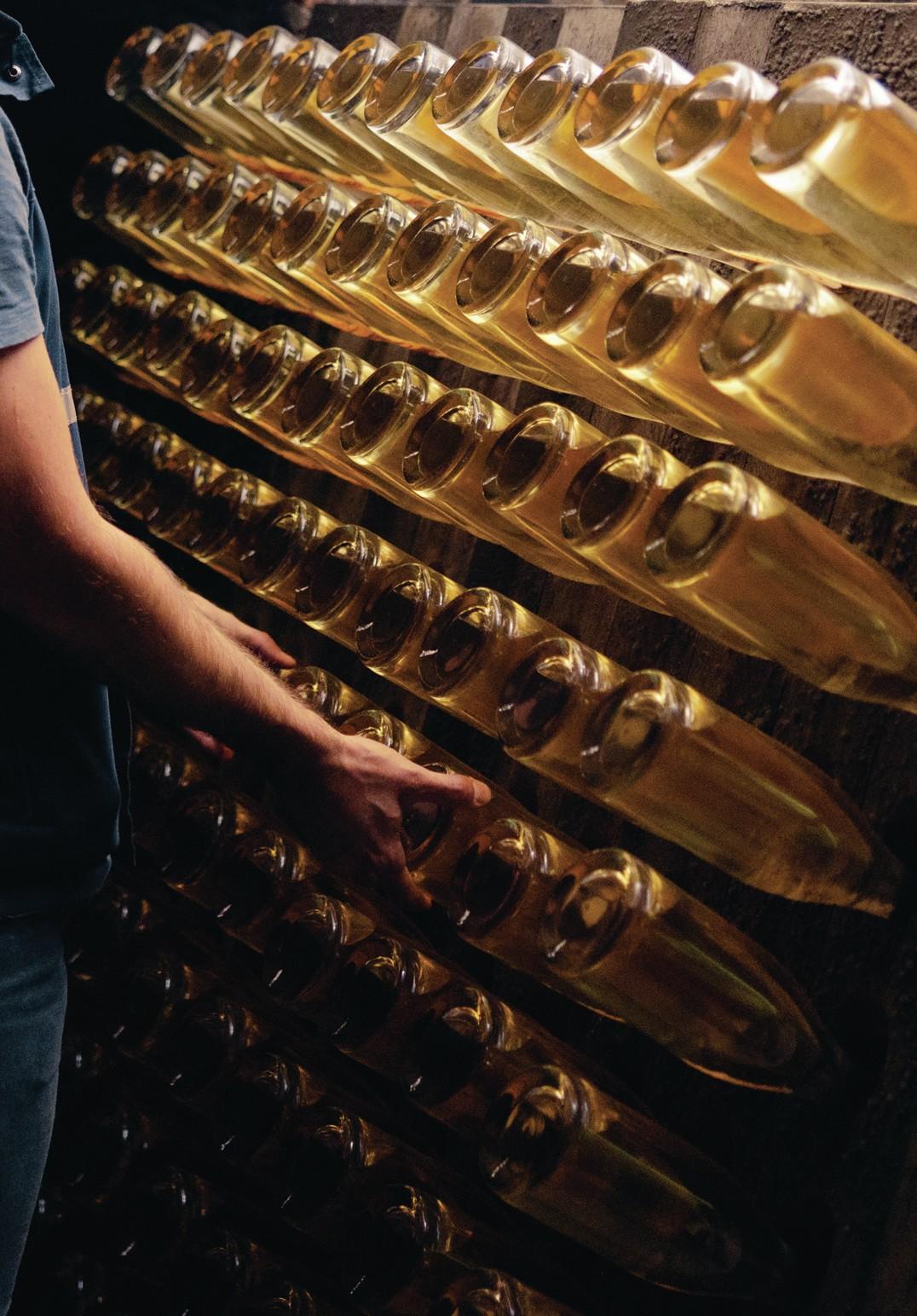
Riddle me this: prestige cuvée Champagnes require extended ageing
By-the-glass drawbacks
The by-the-glass opportunity does, however, come with caveats. Sommelier Jiachen Lu, who has worked at Dinings and 10 Cases and is now at Cord, notes that customer habits have shifted.
“When I started at Dinings in 2022, there were more high rollers,” she says. “Nowadays I see less. When people ask for Champagne, it tends to be generic rather than asking to see the by-the-glass list.”
Lu is also cautious about the reliability of preservation systems in busy cellar conditions, where an accidental bump of the stopper can spoil an expensive bottle. And according to Baker: “Any preservation system is only so good; very few places can serve a glass at £60–£70 and have the throughput to make it work. It has to be pristine.”
His scepticism is echoed by The Dorchester’s head of wines Matteo Furlan, who says: “Champagnes which have been good value for money have now become 30%–50% more expensive – and consumers are not willing to pay the price any more.”
Comité Champagne UK bureau director Victoria Henson is more glass half-full, saying: “Coravin has proved a good solution for sommeliers to open higher-value bottles and offer them by the glass. Especially in members’ clubs and hotel bars, these systems have provided an opportunity to expand wine lists by the glass, enabling guests to taste a Champagne that goes beyond the traditional offering of an NV brut or rosé.”
Extended ageing
A less immediately visible but potentially more significant consequence of the market slowdown is what happens to bottles when a house’s prestige cuvée is not moving through the trade at the expected velocity. The default response is not necessarily to discount or divert the fruit, but simply to hold on.
According to Corney & Barrow fine wine buyer Marc Ditcham: “The most likely outcome of the slowdown over the past couple of years is that more extended lees ageing en tirage will follow. Houses may well be letting their base wines stay on the lees for greater improvement, or we may well see a glut of late-disgorged releases in the coming years.”
He adds, with a note of scepticism, that some general managers may be “offloading shiners – unlabelled bottles – via certain discount channels to improve cash flow. I have no hard evidence, but it has to be going somewhere.”
Baker feels that “a Champagne’s readiness for disgorgement is very much linked to the specific harvest. With warmer summers, there is less benefit from longer lees ageing. Hotter summers massively reduce malic acid, creating a softer base wine before lees ageing”.
He cites the contrast between 2008 and 2009: the cooler, higher-acidity 2008 harvest required longer lees time; the solar 2009 – a year with naturally soft acids – was released first by a number of houses, adding: “Since 2013, there hasn’t been a cooler year where brighter acidities might otherwise require longer lees ageing.”
Habitual patience
Pol Roger’s Simpson frames the extended ageing of Sir Winston Churchill 2019 not as a commercial response to soft demand, but as consistent with the house’s habitual patience: “We released the 2018 last year. If you look back at sales post-pandemic, we would have run through the 2018 thinking about 2019, but the next release is lying undisgorged, so we are looking at a launch next year or the year after. Business has slowed across Champagne, so at least NV is getting a bit more bottle age pre-disgorgement, and we can guarantee six months post-disgorgement ageing.”
Laurent-Perrier’s Guy points out that Grand Siècle, the house’s prestige multi-vintage blend first released in 1959, has had only 27 releases in nearly 70 years. Iteration No. 25 in 75cl was released in 2022, No. 26 in 2024, and No. 27 in 2026, each separated by roughly two years. Guy is clear that this cadence reflects quality, rather than market conditions: “Laurent-Perrier continues to launch new premium Champagnes when they are ready from a qualitative point of view, which is always after a long period of lees ageing.”

On ice: will houses extend their ageing periods because of the slowdown?
Lonneux’s clear-eyed view from Pommery is simple: “Maisons will keep cuvées longer if they are not selling them. It’s fundamentally a question of supply and demand. If they sell, they’ll release them as they do today; if they don’t, they’ll keep them longer.”
Noting, however, that not all houses regard the current vintage as one requiring extended ageing, he observes: “Most maisons are currently releasing their 2018 prestige cuvées, which seems relatively young for prestige cuvées and is not a demonstration of a slowdown in release.”
Deliberate strategy
For Cristal, Maisons Marques et Domaines MD Richard Billett describes a deliberate programme of extended ageing that predates the current market cycle.
“We have been doing Cristal Vinothèque, released at various points after disgorgement, for 20 years or so,” he points out. “It’s not a response to fluctuations in the prestige cuvée market, but reflects an interest and desire to see how longer ageing and post-disgorgement rest influence the character of the wine.”
The 2016 vintage of Cristal was released in late 2024, with the cycle continuing into 2025. Billett expects 2018 to transition towards the end of 2026.
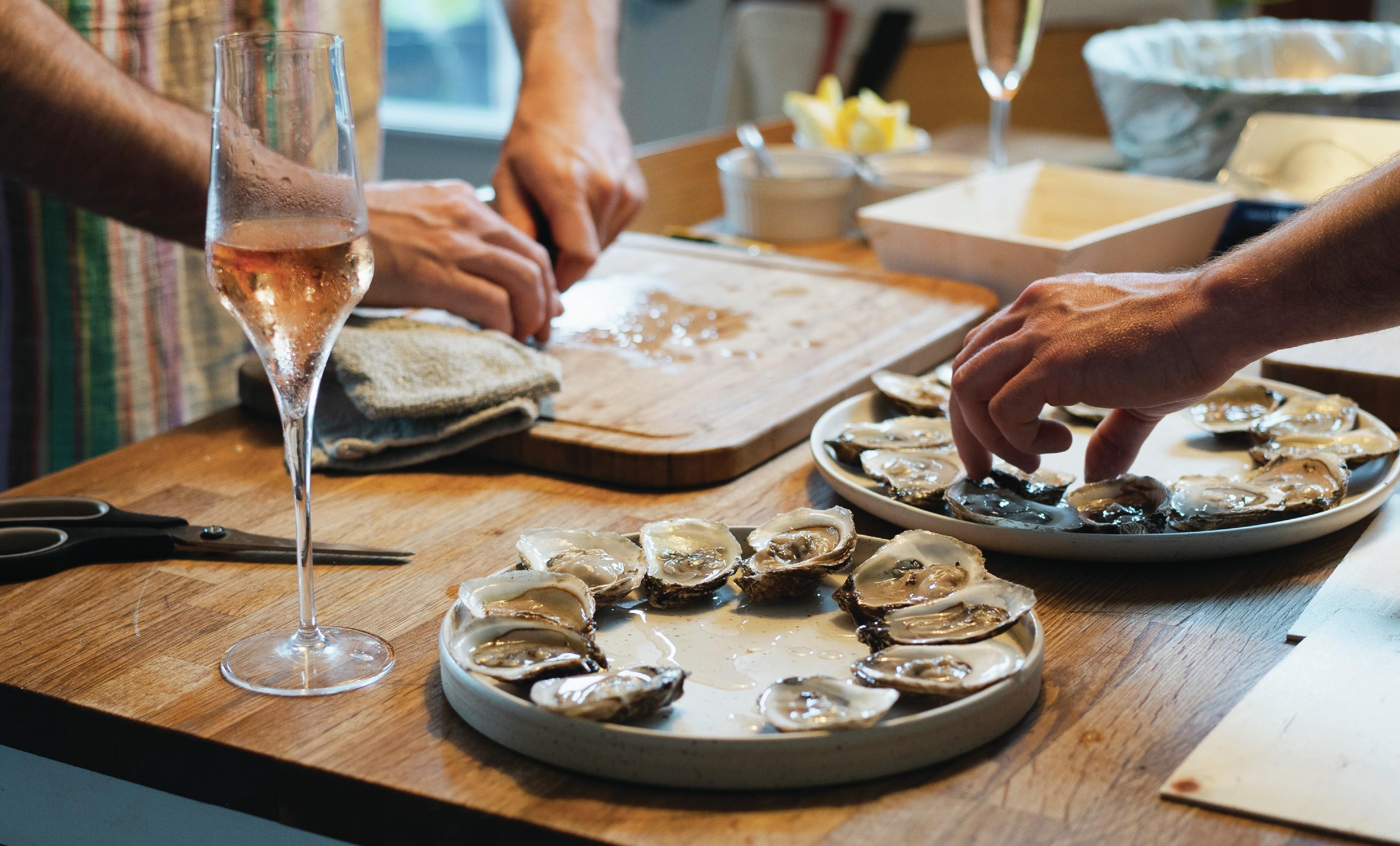
In the glass: the correction may see more Champagne being drunk, rather than kept
Economic cycles
Leroux at Charles Heidsieck situates the current moment within a longer historical arc of economic cycles.
“Champagne as an investment asset is fairly recent,” he says. “I’ve seen the mid-1990s economic slowdown, then the artificial rise towards the millennium, then 9/11, then SARS and Iraq in 2003, then subprime and Lehmann – then Covid. At all times, we all said: ‘Consumption will never be the same again.’ Champagne takes the hit when things get rough, but once we are on the up again it may bounce back bigger.”
Perhaps the least discussed effect of the slowdown is what happens to the grapes that would otherwise have gone into a prestige bottling.
If a house reduces its prestige cuvée production, or simply fails to sell what it has produced, does the fruit make its way into the non-vintage and, if so, does that raise its quality? There is some evidence for this, although in a more constrained way than the question implies.
Grapes going to NV
According to Simpson: “Since all the houses have been making a bit less prestige cuvée, it’s likely that the grapes are going to NV.” He adds that, at Pol Roger, the long-term view determines production decisions, rather than short-term market conditions: “If it’s a great year, we will make a lot of Winston Churchill and vintage – but not if it isn’t. In 2016, we didn’t think the Pinot Noir was up to scratch, so we jumped straight from 2015 to 2018.”
Leroux describes a reserve wine programme in which “the top-quality fruit from every single harvest goes to the reserve wine programme – some ageing 25 years before being blended – and our NV is made of up to, if not over, 50% reserve wines. So we tend to think that, from a pure quality aspect, Charles Brut Réserve might be worthy of prestige cuvées”.
Reserve wine pool deepens
This, then is not a response to the current slowdown, but a commitment that the slowdown now amplifies: if less fruit is committed to prestige releases in a given cycle, the reserve wine pool deepens further.
Pommery’s Lonneux explains: “The quantity of possible fruit available for Cuvée Louise is already so limited that we are not going to reduce production, because we are talking about fruit from only three grands crus – Aÿ, Avize and Cramant – and even specific parcels and rows of vines within those grands crus.”
Billett makes a similar point with reference to Cristal, explaining: “Because the plots for Cristal and vintage expressions are specific, they are not generally interchangeable.”
A market recalibrating
Far from being a crisis for Champagne, the prestige cuvée correction is, rather, an overdue rebalancing away from speculation. The signs of adjustment are visible on multiple fronts: release prices have largely come down across most of the major prestige houses; bottles that once went into cellars are now appearing on restaurant lists at accessible by-the-glass prices; and the extended ageing that follows from slower sales velocity may, in several important cases, produce better wine.
The by-the-glass revolution, enabled by Coravin and similar systems, may be the most visible near-term change. From the Savoy Grill to Noble Rot, from Gymkhana to Gleneagles, bottles that would previously have sat untouched in a collector’s bonded warehouse are now being poured to diners prepared to splash £55–£85 on a single glass of something exceptional.
The deeper question, as Simpson puts it, is one of positioning.
“Champagne is ‘just because’,” he says. “It’s expensive, but there is some good value out there, and in terms of affordable luxuries it is a pretty good bet. We have taken it away from those formal occasions.”
So, if the correction achieves anything long-lasting, it may be to accelerate the shift from Champagne as a financial asset to Champagne as a luxury to be drunk and enjoyed.
Related news
How Champagne mastered the art of the collaboration
How Yvonne Seier Christensen forged her own path in Champagne



A fine piece Anthony and lets hope your last sentence proves to be correct, Giles Fallowfield