



10 things to look for when drinking rosé wine
So, what makes a good rosé? Such is the diversity of the category today, there’s no simple, single answer. Nevertheless, Patrick Schmitt MW has listed 10 things to consider when drinking pink wine – including his views on sweetness and ice in your rosé.
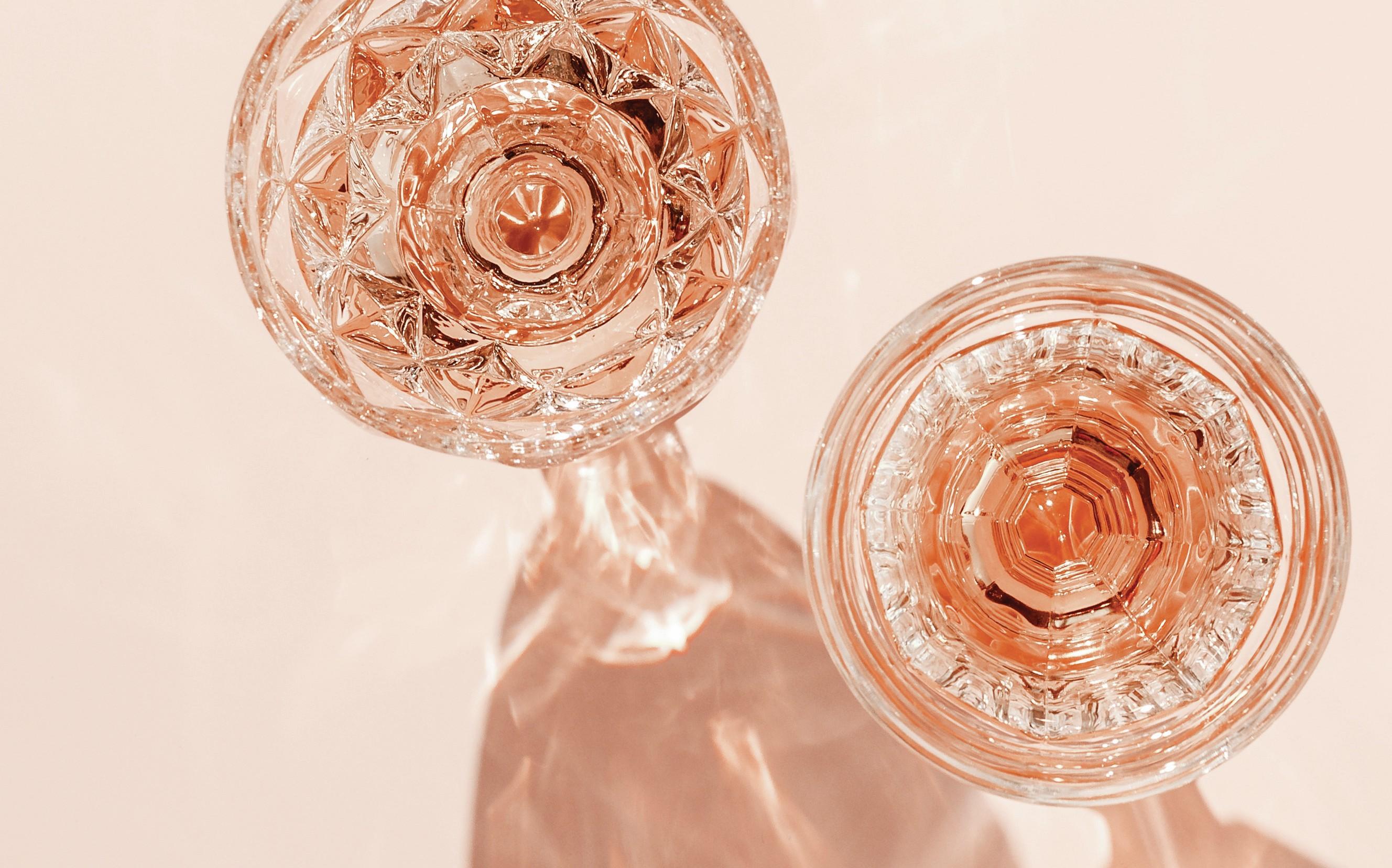
SPEND A day tasting scores of rosé wines from around the world in a professional blind tasting setting and you can’t help but form opinions on what makes a good rosé. Doing this year after year and supplementing it with regular sampling of new releases tends to enrich such views.
The problem is that there is no simple answer to the question of what makes a good rosé. It depends on your mood, the occasion, your tastes, your budget, the company you share it with – and much more besides.
Thankfully, there is now a rosé for pretty much every person and every setting. What follows is my attempt – based primarily on this year’s Global Rosé Masters – to encapsulate what makes, in my view, a palatable rosé across different styles; as well as, equally importantly, what doesn’t.
1: BONE-DRY IS BEST
At the cheaper end of the spectrum, a touch of residual sugar can usefully add weight and roundness – particularly where vines are young, yields are high and fruit has been picked early. But, beyond that device, rosé is generally at its most refreshing and delicious when bone-dry.
2: LEES CONTACT WORKS
Dryness alone, however, is not enough. Real richness comes from extended lees contact – time in tank with stirring – and, at the more ambitious end, from the influence of oak. Low-yielding vineyards and ripe (but not overripe) grapes are equally important, as is that essential balance between juicy fruit and fresh acidity.
3: DIVERSITY SHOULD BE CELEBRATED
One of the great pleasures of rosé is its range. Wouldn’t it be monotonous if every bottle tasted like a pale Provençal example? Think of the wines you’d miss: for example, the deep-coloured, generously fruited Spanish rosados, which are lovely alongside grilled meats, Ibérico pork, or simply on their own on a warm evening. As such, diversity should be celebrated, not flattened in pursuit of a single aesthetic ideal.
4: DON’T FORGET SPARKLING
At the pinnacle of both price and quality sits pink Champagne. Fine, refreshing and astonishingly ageworthy, a prestige rosé cuvée or vintage release offers the full complexity of coffee and nuttiness alongside still lively citrus freshness and fine bubbles that keep cleansing the palate. But Champagne is not the only source of excellent pink fizz. England is also producing increasingly impressive examples, and Crémant, Cava, Italian (both tank and traditional method) sparkling wines, as well as the Cap Classiques of South Africa, all merit serious attention.
5: COMPLEXITY COMES IN MANY FORMS
What elevates a rosé to something genuinely fine? It might be a particular terroir expression – old vines, painstaking viticulture, organic farming. The Cabrières plots of Gerard Bertrand’s Clos du Temple are an example; so are the historic plants used for La Chapelle Gordonne from Château La Gordonne. Or it might be a rosé made in the manner of a great white Burgundy: barrel-fermented and aged, with new French oak lending structure and complexity. These wines can be remarkable – creamy, with a touch of viscosity, refreshing, finely phenolic, age-worthy, yet still prettily pink. Professionals may call the barrel-aged, range-topping Garrus by Château d’Esclans divisive, but I have never encountered an amateur who doesn’t love its combination of peaches and cream, toasted marshmallow and soft, orangey acidity.
6: EMPHASISE PAIRING POTENTIAL
Sommeliers, I am pleased to report, are increasingly setting aside any snobbery towards rosé as a food wine. These wines sell, and they pair brilliantly with a wide range of dishes – particularly the lighter foods of the moment: grilled white meats and fish, salads, seafood. Rosé is also one of the few wines that works with more challenging vegetables, such as artichokes.
Partner Content


7: ICE IN YOUR ROSÉ?
Yes, you can drop a cube of ice in your glass and, actually, the pricier examples may handle it better – their more powerful flavours are less likely to be lost through mild dilution. That said, I would still recommend chilling the bottle properly rather than relying on ice, unless you can reliably drink the wine before it melts. On temperature more broadly: do not over-chill – it strips the wine of character.
8: BEWARE OF SKINNY ROSÉ
I am noticing a drift towards excessively lean rosé, and I think the reasons are worth examining. There is a belief in parts of the trade that this is what the consumer wants. I don’t think it is. Consumers fell in love with the softness of dry Provençal rosé – not with austere, stripped-back acidity. The drive to achieve the palest possible colour is partly to blame. So is the push to reduce alcohol – whether for duty reasons (in the UK, wine is taxed according to ABV), to align with the moderation trend, or simply because the trade desires lower-ABV products. All of this tends to push harvest dates earlier than may be ideal. In 2025, some Provence producers picked earlier than they might otherwise have done, wary of late August rain – and some wines may show an excessive degree of herbaceousness as a result.
9: AVOID SULPHUR-LIKE ODOURS
Sulphur-like odours appear to be a recurring flaw: perhaps from too much sulphur dioxide (Sulphites) at bottling, or problematic fermentations producing Hydrogen sulphide – particularly in low-nutrient, dry vintages – and the ever-present risk of cabbage-like aromas (Dimethyl disulfide) from light-strike in the clear glass bottles that most pale rosés use.
10: TEXTURE IS KEY
Much of the pleasure from drinking rosé comes down to palate texture. Creaminess offset by zestiness. Some red berry flavours and white-fleshed fruit – peach, nectarine – with a subtle citrus or even redcurrant crunch and sour cherry bite. Ripeness coupled with fine phenolics: a chalkiness that is more a feeling than flavour. A rosé should not finish firm, nor excessively bitter. And not too taut either. It should be, in my view, soft and ripe, but not jammy. As part of this, there should be layers of complementary fruit, and creaminess from lees-contact. At the finer end, I am happy to taste toast and vanilla from oak. What I don’t want: bruised, oxidised notes or varnish-like characters from poor handling or premature ageing. Higher alcohol is not a problem if it is in balance – it adds texture and weight without tipping into spirits territory. And the wine must refresh – although that does not mean producing acidic water.
A FINAL WORD
I am excited by the diversity of sourcing and style in rosé today, and I think anyone who loves wine should be too. Discovering new expressions brings added pleasure to drinking. Why should colour be a restriction? Rosé can be fun and affordable, or fine and extraordinary. Pale or deeply coloured, dry or gently sweet, still or sparkling, tank-made or traditional method – and, depending on the style, entirely well-suited to the toasty complexity that comes from ageing in new oak barrels. Such is the variation in style that there has never been a better time to drink rosé. Meanwhile, let the results of our annual pink wine competition – The Global Rosé Masters – be a guide to quality.

…AND THE BEST GRAPES FOR ROSÉ?
I’m constantly surprised by the array grapes that can yield delicious pink wines. Best-known for delivering reliably-delicious, soft-yet-fresh red-berry scented roses, be they pale poached salmon or translucent ruby in colour, is Grenache (Noir) – or Garnacha to use the synonym from its native source of Spain.
Cinsault is another great grape for making rosé, particularly the pale sort, as is Mourvèdre (or Monastrell), for more structured types, above all in Bandol and Eastern Spain around Valencia. And all these grapes in a blend provide complementary flavours and textures, often boosted by Syrah to bring more spice and colour, and white grape Rolle (otherwise known as Vermentino), to add some bitter-citrus refreshment. In Provence, Rolle is sometimes successfully co-fermented with red varieties to help stabilise the wines.
Then there’s Pinot Noir, of course used to great effect in Champagne – usually by blending it in with white wine as a finished red wine – but also in still rosés, particularly in the great examples from parts of the Loire – Sancerre especially – and increasingly the UK.
Many other grapes are suitable for making rosés, with excellence achieved from Tempranillo in Rioja; Cabernet and Merlot in Bordeaux; Sangiovese and Negroamaro, along with Primitivo in Italy (Tuscany, Puglia, Sicily), and – representing an exciting discovery from Greece – Xinomavro, meaning ‘acid black’. This latter variety seems to be a red grape well-suited to making light fresh rosés, such as those from Alpha Estate, as well as serious, barrel-aged examples, such as Kir-Yianni Agathoto Single Block Xinomavro Rosé.
Related news
8 trends that will define rosé this summer
The medal-winning wines from The Global Rosé Masters 2026
Pierpaolo Petrassi MW stepping down from BWS role at Waitrose


