



Why is rosé dominating the no and low category?
Alcohol-free rosé sits at the intersection of two of the most exciting trends in today’s wine market – and quality is on the up, reports Lucy Shaw. Here’s why you should consider adding one to your portfolio.
“ROSÉ ISN’T just a colour here; it’s an attitude,” says Victor Verhoef, global marketing director of Provence powerhouse Maison Saint Aix. Perhaps more than any other wine, rosé is symbolic of an aspirational lifestyle: one of long lunches in the sunshine, sand between the toes, the scent of lavender in the air and a view of the glittering Med.
In a struggling wine sector, rosé has emerged as a bright spot, with UK off-trade sales rising by 5% to £882 million in 2025 (NIQ). Brits glugged their way through 129m bottles of pink wine last year, proving its status as a year-round favourite: retailer M&S sold nearly double the amount of rosé over Christmas compared to the hottest week of July.
Keen to ride the wave of the fast-growing no/low movement, some of Provence’s top producers have been busy developing alcohol-free expressions to broaden their appeal, while new booze-free start-ups have included rosé variants within their ranges to capitalise on the pink wine boom. Having once been viewed as an afterthought, winemakers are taking the no- and low-alcohol sector increasingly seriously due to shifting consumer drinking habits. According to NIQ, the non-alcoholic drinks category is now a US$1 billion industry.
Crucially, the movement isn’t being driven by abstinence – more than 90% of non-alc consumers also buy alcohol – but is more about moderation and having the freedom to switch between alcoholic and non-alcoholic drinks over the course of an evening: a trend known as ‘zebra striping’.
“Drinking culture is becoming more fluid, and people are no longer sitting neatly in one camp,” says Luke Hemsley, founder of no/low wine brand Wednesday’s Domaine, which includes a 0% rosé and sparkling rosé. “The way people approach drinking has evolved, and the wine category should reflect that. We’ve built our range to meet people wherever they are. It’s about offering flexibility without compromise on quality, ritual or experience.”
Gen X are spearheading the trend
Aix’s Verhoef thinks Provence rosé lends itself perfectly to alcohol-free expressions. “It’s the ideal foundation for a non-alcoholic wine because its hallmarks of delicacy, freshness and fruit-driven aromatics are the qualities that translate most gracefully through the dealcoholisation process,” he says. “The drinking occasions for Provence rosé are also perfectly suited to a non-alcoholic option. People reach for rosé in moments of conviviality and celebration, and those moments don’t disappear when someone chooses not to drink.”
Alcohol-free rosé is having a moment in the UK: year-on-year sales at Waitrose are up by 86%, led by big hitters Codorníu, Nozeco and Torres Viña Sol. And, while Gen Z’s drinking habits have hogged the headlines, Waitrose’s BWS trading executive Susanne McInnes says Gen X women (aged 46-61) are spearheading the trend.
At Ocado, sales of alcohol-free still rosé have outperformed those of standard rosé, rising by 28% year-on-year compared to 21% – a trend that low and no buyer Helena Copeland believes will continue to play out this summer. Helping to legitimise the low/no category is the rise in quality of non-alcoholic wine across the board.
“The quality of alcohol-free wine has come on in leaps and bounds in the last five years, and especially in the last two,” says Laura Willoughby MBE, co-founder of mindful drinking movement Club Soda, who believes improvements in dealcoholisation and aroma recovery technology, and a starting point of higher-quality base wines, have tipped the balance. “You’re now getting wines with structure, texture and a sense of place, not just something vaguely wine-adjacent,” she says.
Quality signposts
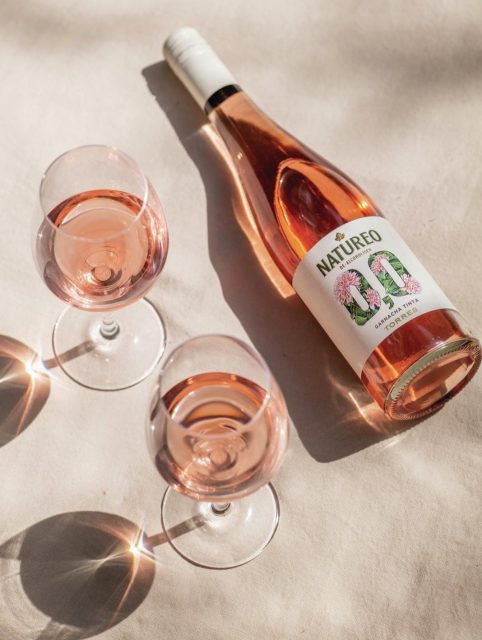
Spanish wine titan Torres was among the first to back alcohol-free wine in a big way, and its foresight has paid off. In March, its Natureo Rosé 2025 was named Spain’s best alcohol-free rosé at the 2026 Mundus Vini Non-Alcoholic Awards. Having founded the brand back in 2008, wins such as these are important quality signposts.
“Awards are a powerful tool that help non-alcoholic wines to be taken seriously and accelerate the acceptance of the category globally,” says Mireia Torres, director of innovation and sustainability at Familia Torres. It’s worth noting that entries for db’s The Global Low & No Alcohol Wine Masters 2027 close on 15 November 2026, and are open to any wine with an ABV of 11% or lower, with winners earning medals.
Torres reveals that the family-run firm is so serious about its alcohol-free wines that it’s building a dedicated winery for them, which will be fully operational next year. In terms of which grape varieties work best for alcohol-free rosé, Grenache/Garnacha has emerged as a front runner. In Spain, Torres recently switched from a blend of Syrah and Cabernet Sauvignon to 100% Garnacha for its Natureo Rosé in order to create “a pale rosé with bright red fruit aromas, greater freshness and a more convincing ‘real wine’ expression”, Torres explains.
As for category-leading non-alc brand Noughty, founded by entrepreneur Amanda Thomson, organic Tempranillo from La Mancha is the grape of choice for its 0% sparkling rosé. “The region offers incredible sunlight, which allows us to achieve the ripeness and structure needed before dealcoholisation,” says Thomson. “Tempranillo also gives us that beautiful balance of red fruit character, personality and subtle tannin, which translates well into a sparkling format.”
In Provence, after years of trials, Château Léoube has settled upon a blend of Grenache and Cinsault that undergoes vacuum distillation for its Forever Love 0% Rosé and 0% Sparkling Rosé. “We’ve learnt that starting with a high-quality wine is essential,” says managing director Jérôme Pernot. “We initially worked with more basic wines to optimise costs, but the results didn’t meet our standards, which led us to rethink our approach.”
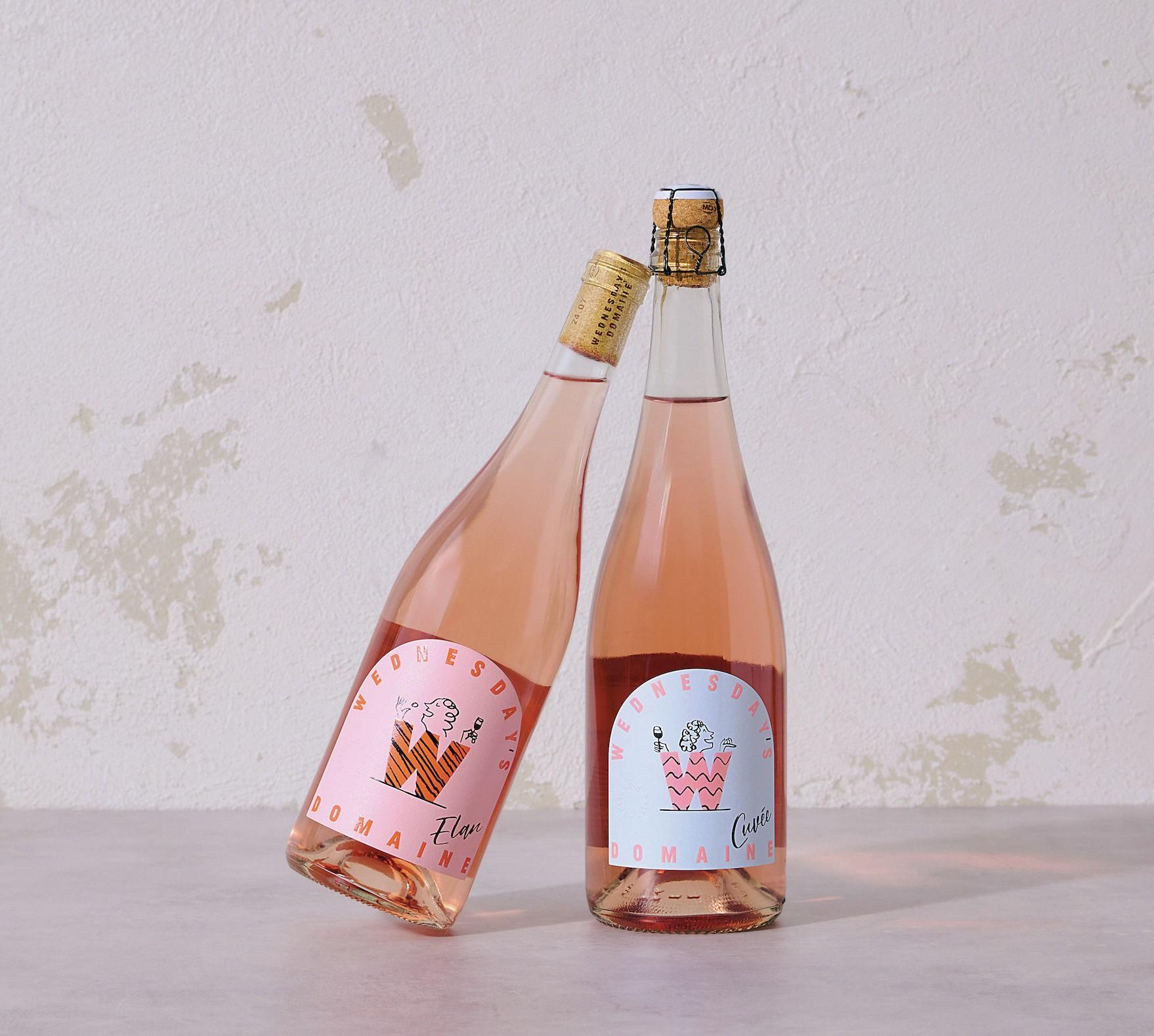
Lifestyle appeal: Wednesday’s Domaine aims to meet consumers’ shifting attitudes
Authentic provenance
With consumers now expecting high quality without compromise when it comes to alcohol-free wine, creating 0% expressions rooted to a specific region and the grapes native to it is becoming increasingly important.
“Non-alcoholic wines perform best when aligned with their authentic provenance,” says Pernot. “Provence lends itself to rosé expressions, and respecting a wine’s regional identity helps to reinforce its credibility and enhance its appeal.”
Taking the terroir concept to new heights, last November high-end non-alcoholic sparkling wine brand French Bloom, headed up by Rodolphe Frerejean-Taittinger and his wife Maggie, acquired a 25-hectare estate in Limoux, which will be entirely dedicated to the production of 0% wines, including a rosé made from a blend of organic Chardonnay and Pinot Noir, once it’s up and running in October.
“The domaine allows us to push the boundaries of what’s possible within the non-alcoholic space,” says Frerejean-Taittinger. “We believe that Limoux is the best place in the world to make complex alcohol-free sparkling wines, as it gives us a remarkable combination of freshness, tension and depth. During our three step cold-vacuum distillation process, terroir is not erased, it’s translated. This is why single-vineyard expressions are such an exciting frontier for us. We’re not just removing alcohol; we’re rebuilding fine wine without it.”
With sparkling wine representing 60% of the non-alcoholic wine category, still rosé stalwarts including Aix and Amie have chosen to go down the sparkling route for their alcohol-free releases. “We chose a sparkling style for Beau Viva because sparkling means Champagne and Champagne means celebration,” says Verhoef of Aix.
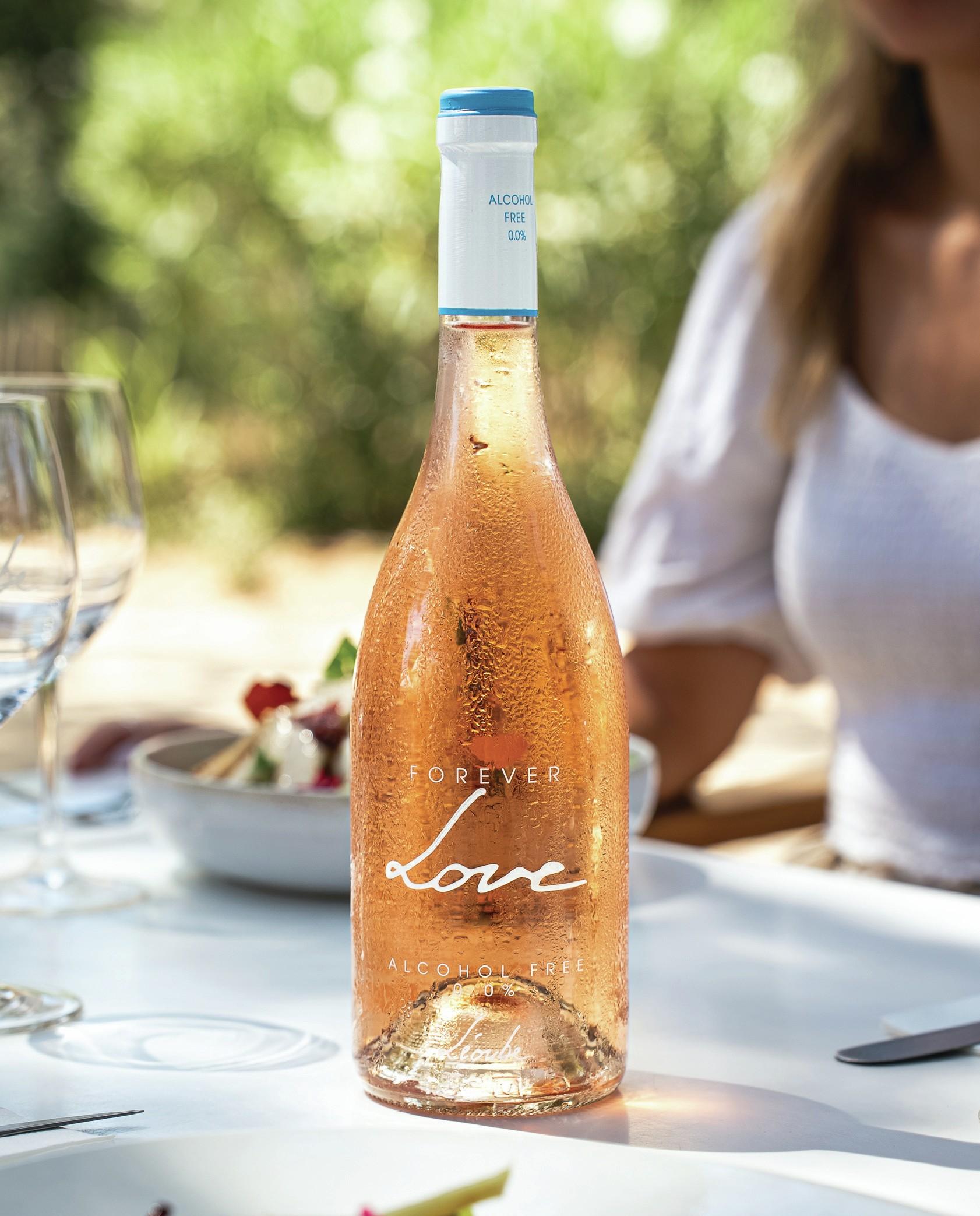
Raw materials: Léoube believes high-quality base wine is vital for no-alc success
Sparkling Vs still
Owning Champagne moments is a marketing move that will win brands new fans.
“The decision by newcomers like Wild Idol, French Bloom and Bolle to package and market their non-alcoholic sparkling rosés as Champagne-adjacent alternatives is very clever,” says Tom Khan-Lavin, founder of drinks marketing agency YesMore. “Champagne moments are the highest-value occasions in the industry, and if you own the toast, you own the room.”
He thinks there’s more to it than marketing, though. “From a technical standpoint, bubbles are a genius ‘mask’ for the palate,” he says. “Effervescence provides the bite that alcohol usually would, so by going sparkling these producers can deliver a premium experience that tastes like a sophisticated drink much more easily, while avoiding direct like-for-like comparisons with alcoholic still rosés.”
Willoughby of Club Soda agrees that the preference for sparkling alcohol-free rosés is a practical one. “Sparkling wine is easier to get right. The carbonation gives you body and mouthfeel, and can help balance sweetness, which is where alcohol-free wines have traditionally fallen down. So, from a production point of view, it makes sense,” she says. “But it also works because it fits a clear occasion. People still want something to celebrate with that feels special in the glass, and sparkling delivers that.”
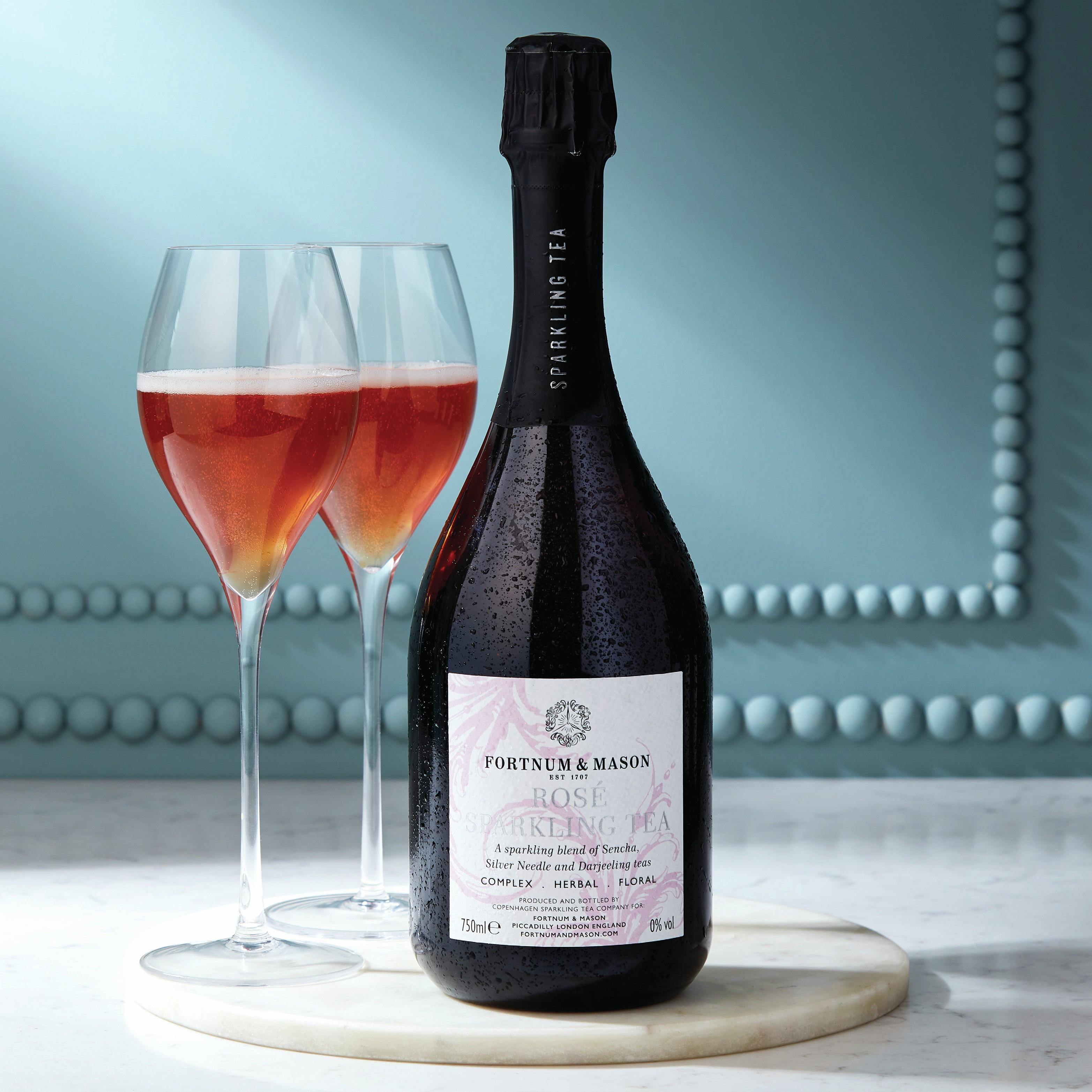
Sparkling pink tea gains ground
For those seeking a sophisticated alcohol-free alternative to rosé Champagne, sparkling tea is proving a crowd-pleaser, and is owning the afternoon tea cork-popping moment. Pioneering the trend is upmarket retailer Fortnum & Mason, which produces a pair of own-label rosé sparkling teas in collaboration with the Copenhagen Sparkling Tea Company. Its flagship rosé is made from a blend of Darjeeling, Silver Needle and Japanese Sencha, and gets its pink hue from the addition of hibiscus, while its Rosé Pouchong Sparkling Tea is made from a blend of black tea and rose petals.
“More people are moderating their alcohol consumption, but they still want a drink that feels elevated, celebratory and adult,” says Fortnum’s wine buyer Edwina Watson. “Sparkling tea’s dry profile, layered flavours and refined mouthfeel resonates with wine drinkers. It feels appropriate for Champagne moments, while allowing everyone at the table to take part.”
At Angela Hartnett’s Michelin-starred restaurant Murano in London’s Mayfair, head sommelier Ladislav Edr finds the tannic grip of Saicho’s sparkling teas make them a fantastic partner for food. “Sparkling tea has gained traction because it offers a credible, complex alternative for those moving away from alcohol,” he says. “At Murano, we lean into the earthier, more textural qualities of sparkling teas, pairing them with dishes that benefit from a subtle tannin presence, rather than just looking for an acid-driven match.”
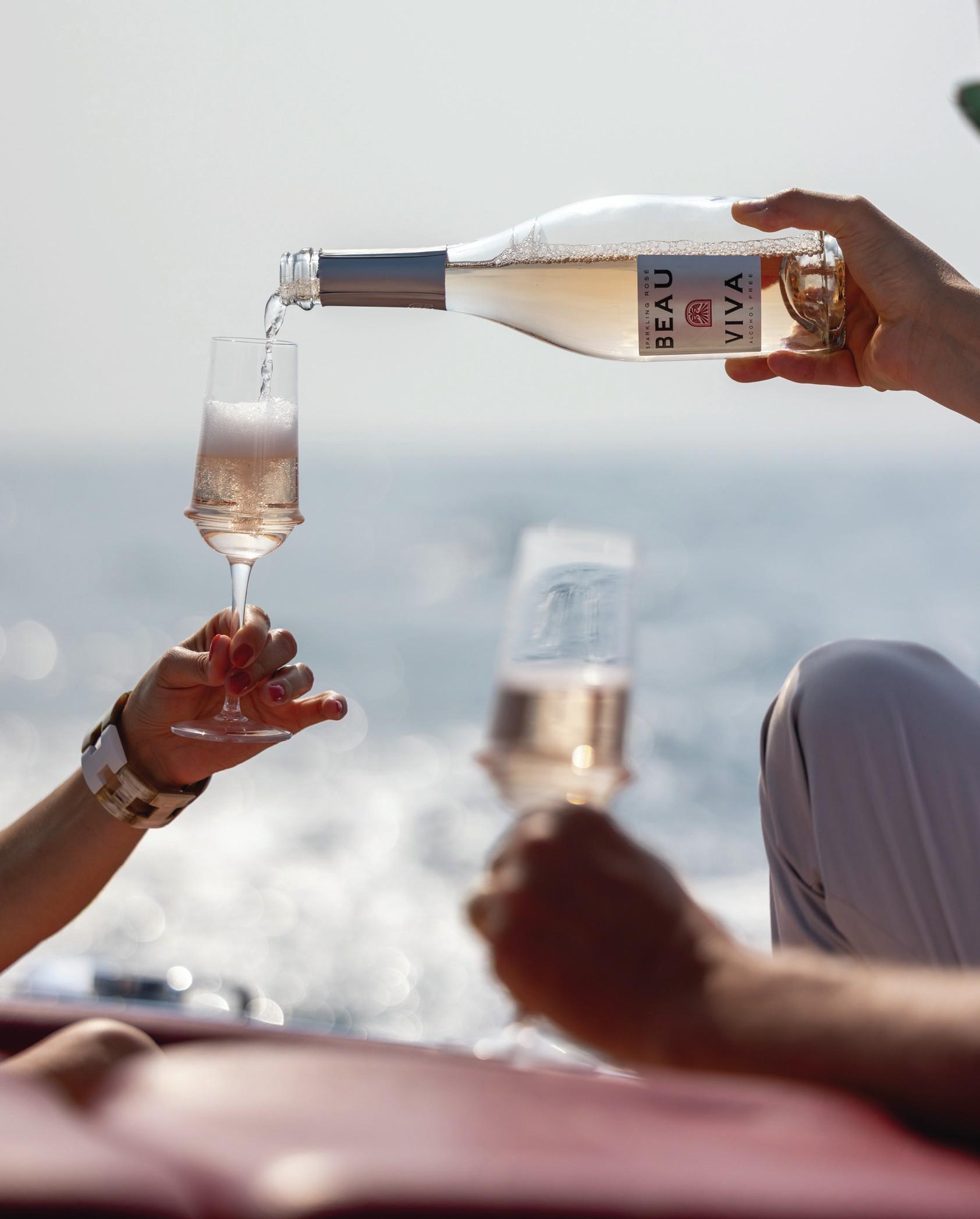
Champagne moment: Aix chose fizz for Beau Viva to target celebratory occasions
Sommelier success
For Wild Idol, the premium alcohol-free fizz headed up by former Lanson UK managing director Paul Beavis, getting big-name sommeliers and restaurants on board has been hugely important to its success. “Collaboration with chefs and sommeliers has been key to establishing Wild Idol within serious gastronomic environments,” says Beavis. “This isn’t about offering an alternative; it’s about delivering a naturally alcohol-free sparkling with the structure and elegance required for fine dining.”
Among the sommeliers championing Wild Idol is Matteo Furlan, head of wines at The Dorchester, who sold nearly 4,000 bottles of the fizz last year. “The rosé is very versatile. It works well with our afternoon tea pastries, but also pairs with fish and vegetarian dishes,” says Furlan, who is currently on the look-out for a non-alc still rosé of the same calibre to add to his list.
Bolle, the only sparkling alcohol-free brand that undergoes a secondary fermentation, has won listings at Heston Blumenthal’s The Fat Duck in Bray and the two-Michelin-starred A Wong in London’s Pimlico. “Restaurants are increasingly focused on offering thoughtful non-alcoholic pairings, and having our rosé served in leading restaurants shows that it can absolutely sit alongside traditional wines,” says CEO Gary Read. “People still want to celebrate and enjoy the ritual of opening a bottle, even if they’re not drinking alcohol. Moderation should never mean compromising on quality or the overall wine experience.”
Having been trained by the late, great Gérard Basset, getting sommeliers to back the brand was “essential” for Thomson of Noughty. “When you see Noughty Rosé on a by-the-glass wine list at Raffles or across the Pig hotels, it sends a strong message: this is not a compromise; it belongs in the same conversation as alcoholic wine,” she says.
While sparkling rosés may have led the way, Laura Willoughby believes the focus is shifting. “Producers are moving beyond just the ‘celebration drink’ and are building a much broader, more everyday rosé offer,” she says.
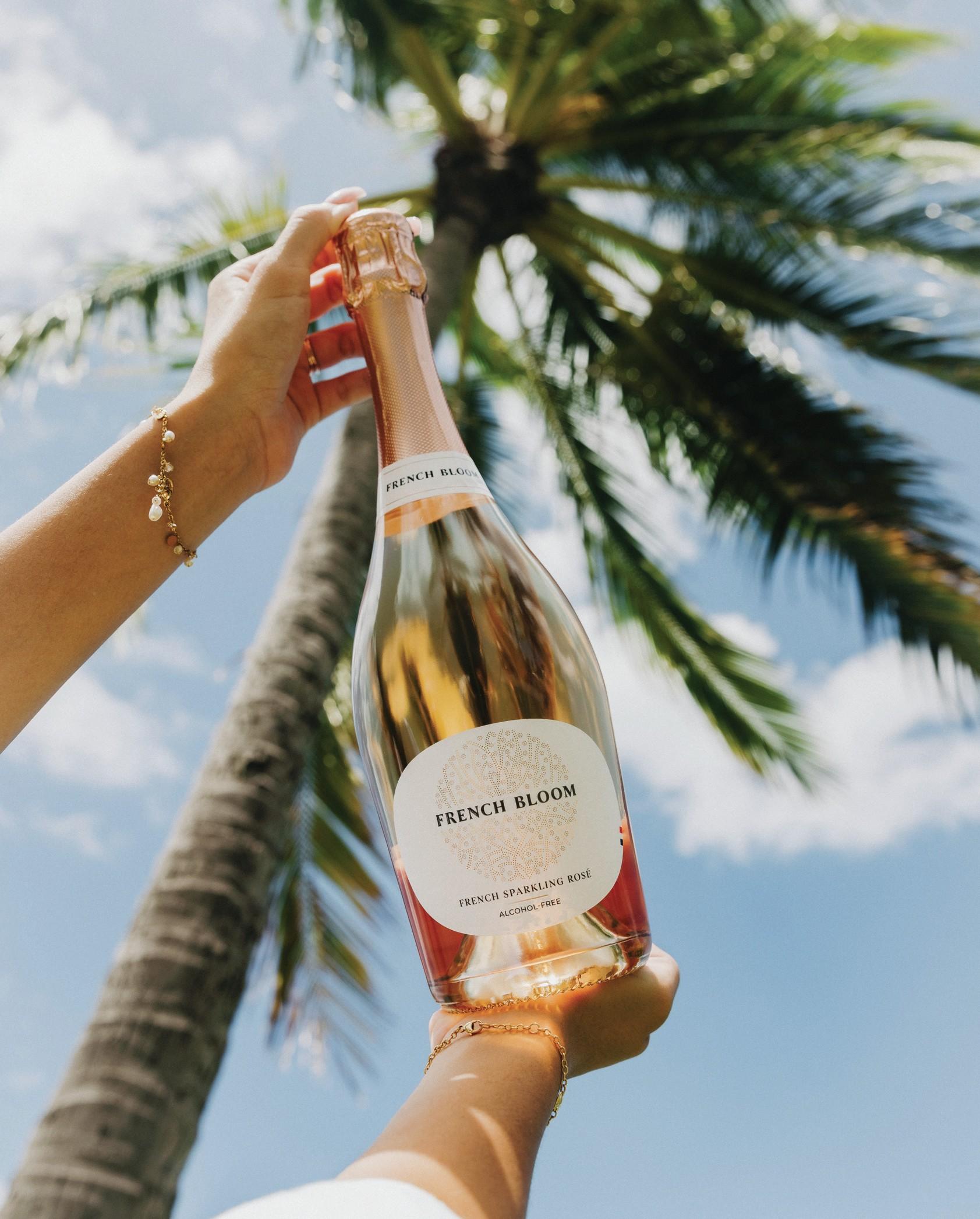
Sense of place: French Bloom aims to translate terroir, not erase it
Brand insurance
With the no and low movement growing at a dynamic pace, producers who aren’t entering the non-alcoholic rosé space are in danger of missing out. “Winemakers shouldn’t be worried about the rise of non-alcoholic rosé, but they certainly need to wake up to it,” says Khan-Lavin. “The smartest move for established producers is to add a non-alc rosé to their ranges so they can reap the benefits. It’s brand insurance, and if you don’t offer a premium non-alc option, you’re effectively handing your customers to your competitors on a silver platter.”
For Willoughby, entering the non-alc rosé space is a no-brainer, but winemakers shouldn’t cut corners if they want to succeed. “The smart move is to lean in and show the same skill and craft in alcohol-free as you do in your core range,” she says. “Because, if you don’t, someone else will, and they’ll take your customers with them.”
Related news
Sam Neill honoured as New Zealand wine Fellow shortly before death
Low and no drinks fuel food and beverage dealmaking as Asia Pacific leads global M&A market


