



The Big Interview: Honore Comfort
The vice president of international marketing at the Wine Institute in California takes the temperature of the Golden State’s offering, from cool-climate wines to fire safety. By Sarah Neish.
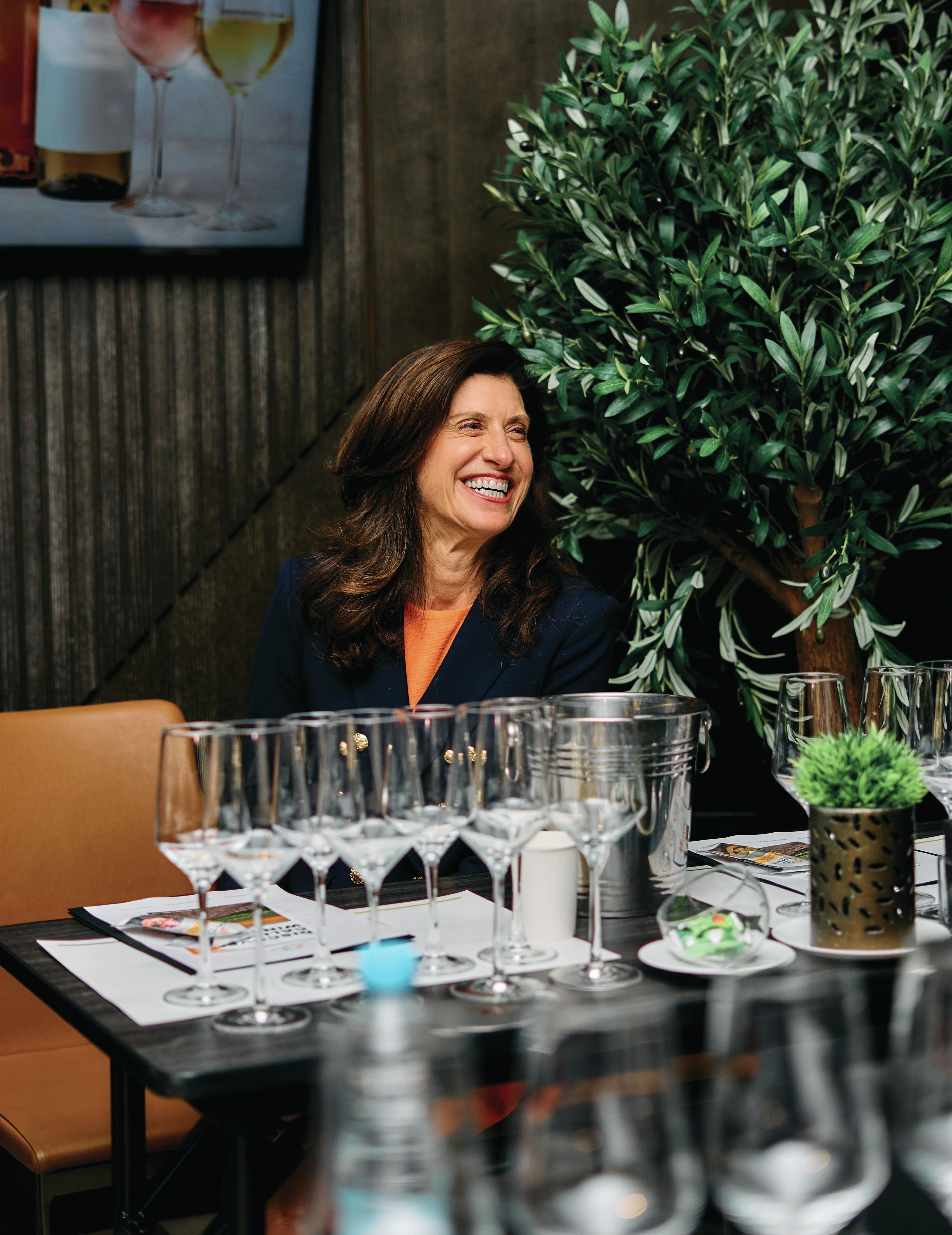
“Wine doesn’t have an awareness problem. It has a relevance problem,” says Honore Comfort, a leading marketing strategist at the Wine Institute in California.
If we were doing this interview 10 years ago, Comfort would have been pushing the idea that the Golden State is capable of making serious, terroir-driven wine from regions beyond Napa Valley. However, “that ground has been won”, she says, and California’s biggest marketing challenge is now something quite different: getting its wines in front of younger consumers.
“Globally, the wine sector is undergoing a generational shift and recalibration,” she says, pointing to “a rising generation of wine drinkers who are looking to consume less, but step up in price and quality when they do”. Despite the core values of wine – “authenticity, sustainability, discovery” – already resonating with many 25- to 45-year-olds, “wine just isn’’t showing up in their everyday lives”.
Agriculture in her blood
As a fourth-generation Californian who has lived in the state her entire life and was raised in a family of farmers, Comfort has a deep-rooted interest in the fate of the region’s winegrowers.
“Agriculture is genuinely in my blood,” she tells db.
It’s why she is such a cheerleader for the Share Wine Co-Lab, an online learning hub launched last year by the Wine Institute, which helps wineries explore “what drives today’s consumers”, as well as test new approaches, share what’s working and, presumably, what isn’t.
According to Comfort: “If we do our job well, the next decade of California wine marketing will be less about telling the world we make great wine – and more about making sure the people who would like our wines can actually find them.”
Lingering preconceptions
Despite the considerable progress made in communicating the diversity of wines from California, there are still a few lingering preconceptions to dance around. “We still bump into the assumption that California wines are big, rich and concentrated, and predominantly Cabernet Sauvignon,” she says. People are often surprised to realise, Comfort adds, that California’s signature style is actually “marked by freshness and crisp acidity”, and that white grape varieties are almost as prevalent as red ones.
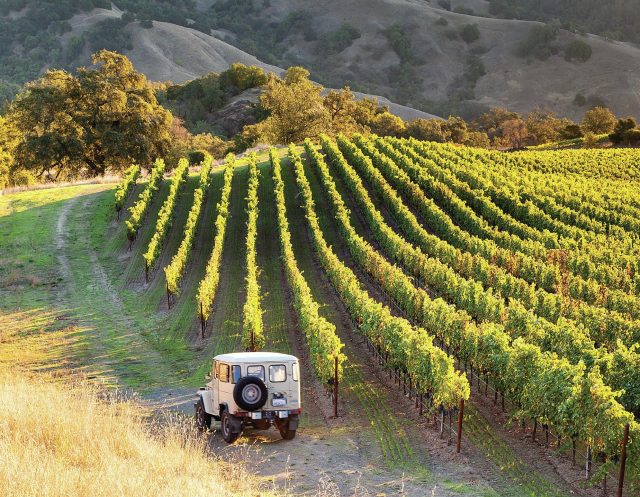
Consumers, too, are often unaware of the sheer size and scale of the state. “California would be the world’s fourth-largest wine-producing region if it were an independent country,” says Comfort, with the current winescape made up of “more than 6,200 producers and almost 500,000 acres (202,000 hectares) of grapes”. Within California alone, there are a mindblowing 154 American Viticultural Areas (AVAs) and, according to Comfort, “more than 120 of those are directly influenced by the cold Pacific Ocean”. The combination of wind, fog and cool ocean temperatures, she argues, puts California in plum position to make lighter-style red, white and rosé wines to complement those gutsy Cabs.
“You can argue with a preconception for ever; it’s much harder to argue with a glass of cool-climate Sonoma County Pinot Noir or a Lodi old-vine Cinsault in front of you,” she says.
Additionally, more than 70% of the state’s winegrowing acres are now certified sustainable, organic, biodynamic or regenerative organic, meaning that these lighter wines are also meeting the green standards increasingly desired by modern consumers.
Reverse halo effect
However, while the trade is wising up to California’s wine offering beyond the globally acclaimed Napa Valley, Napa’s prices can have a reverse-halo effect on the wider state.
“Yes, California produces world-class luxury wine, but that tier is a small share of actual volume – just 10% of California’s total,” Comfort explains. “The vast majority of California wine is in the everyday and premium tiers, and in wine shops around the world you can find excellent California Chardonnay, Zinfandel, Pinot Noir and Sauvignon Blanc, from serious producers at prices competitive to wines of similar quality from other regions.”
Indeed, Napa’s hallowed reputation can be alienating to those looking to drink wine rather than collect it, which is why events such as the music, food and wine festival BottleRock Napa Valley, taking place this month (22-24 May), is so important.
“It’s a reminder that Napa is a working wine community, not a museum,” Comfort insists. Emphasising that Napa is the exception, rather than the rule, she explains: “We have producers making headline-grabbing wines that sell for hundreds of dollars a bottle, but California’s sweet spot is producing excellent US$10–US$25 bottles from serious winemakers.”
Pricing struggle
In reality, those producers, she says, are struggling to keep prices as low as they are, as geopolitical tensions continue to see winery bills inch skywards. Comfort points out that “glass, closures, barrels and packaging are all largely imported” into the state, and that the cost of these materials has shot up.
“In California, labour, insurance and compliance costs have all also risen,” she says.
So, while most wineries work to “absorb as much of the increase as they can”, the margins are thin.
Exacerbating this is the conflict between the US and Israel on one side and Iran on the other.
“Our wineries are feeling it through increased costs and market disruption,” Comfort reveals. “Higher fuel prices flow through the business, affecting grower operations, harvest logistics, transportation and moving finished goods to different markets. Crop material costs have come under pressure too, which hits growers directly.”
On the export side of things, restricted shipping routes such as the Strait of Hormuz also “mean California wines take longer and cost more to reach retail shelves and restaurant wine lists abroad”. All of a sudden, that US$25 bottle of Californian wine doesn’t seem so steep.
California and fire safety
One thorny issue at the heart of the imminent Los Angeles mayoral election, due to be held on 2 June, is fire safety. It has been well documented that California has experienced some of the worst wildfires in the US, with more than half of the state’s 20 largest fires occurring in the last eight years, according to calmatters.org. The scale of the damage is unthinkable; one set of blazes caused by lightning strikes in August 2020 burned more than 4.3 million acres to the ground, and blanketed California with smoke for weeks.
Mayoral candidate Spencer Pratt (former star of reality TV show The Hills), is basing almost his entire campaign around fire safety, having lost his own home in the Pacific Palisades fires of 2025. But what kind of positive changes might a new Mayor be able to implement for California’s wine community?
While the Wine Institute “doesn’t take positions on individual candidate races at any level”, Comfort suggests that fire safety is not exactly top of the list.
“Fire makes headlines and the imagery is dramatic, but it’s not what keeps most California winemakers up at night,” she says. “The fires that we’ve seen across wine country over the past decade have had real local impact, but the industry as a whole has come through them in better shape than the media coverage might suggest. Producers have adapted, vintages have come through and insurance and planning have evolved.”
The real issues shaping decisions at most wineries, Comfort continues, “are longer-running and quieter”, with water and climate challenges to the fore.
“California has finite water resources, a variable climate and groundwater compliance under SGMA (the Sustainable Groundwater Management Act) still being worked through,” Comfort reveals. “How we grow grapes – where, with what irrigation, on what rootstocks, with what canopy management – is evolving quickly.”
Vital advocacy work
The conversations surrounding them involve “multi-decade” decisions. In the meantime, the Wine Institute will keep advocating for California wineries at state, federal and international level, focusing on a number of important subjects. For instance, the Institute has been working on opening up states to direct-to-consumer (DTC) shipping since the Supreme Court approved the move in 2005.
Progress has been slow, sometimes painfully so, with the change rolling out on a state-by-state basis depending on local legislature.
“The most recent market to open up was Mississippi with a new law taking effect in July 2025,” Comfort says. But the advantages shine through any frustration. “Wineries can now ship to consumers in 48 states, reaching roughly 95% of US adults”, she adds.
Another big ‘win’ was helping to get Assembly Bill 720 – which allows wineries to host events at their properties – over the line in September 2025.
“There are restrictions on the size and frequency, and wineries must operate with their existing event permits (which can be quite restrictive). But it is a significant step forward, ultimately leading to increased revenue,” she says.
Internationally, the Institute’s number one focus “is lifting the ban on US wine in Canada”, with Comfort vowing to “work with government agencies and on both sides of the border until the ban is lifted.”
Slam dunk marketing
The bread and butter of any marketeer is getting people talking about their product, and this year Californian wine is set to steal the show at a number of high-profile events. “This is a big focus for us – and something I care about a lot,” says Comfort, who wants people to recognise that “wine complements so many of the things they already love in life”.
It’s why she can’t speak highly enough of the deal struck between Sonoma producer Jackson Family Wines (JFW) and the Women’s National Basketball Association (WNBA). Calling it “one of the most interesting wine sponsorships anywhere right now”, Comfort explains that the agreement, signed in 2024, sees JFW’s La Crema brand poured at women’s basketball games across the US. With “women’s sport the fastest-growing area of all US sport”, Comfort hints that the exposure will be worth its weight in gold.
Beyond the basketball court, California wine will also join the glitz and glamour of the Cannes Film Festival (12-23 May), as part of a drive to show that
“California’s cultural footprint goes well beyond our own borders”, says Comfort. These kinds of placements, she adds, are strategic and intentional. “We need to meet consumers in the cultural spaces they already inhabit, and let wine be part of the joy of those moments, rather than a stand-alone formality. That’s the California approach, and it’s how we intend to build the next generation of wine drinkers.”
Honore Comfort at a glance
In 2019, Honore Comfort joined California’s Wine Institute as vice president of international marketing. Before this, she worked in “most sides of the wine sector”, including brand marketing and development, global strategy and leading a regional winery association.
The Wine Institute advocates for a sector that generates around US$73 billion in annual economic activity across California and supports approximately 422,000 people, according to the Institute’s most recent economic impact study.
The organisation also advocates for winegrowers and producers at state, federal and international levels. Comfort lives in Sonoma County, and her family owns a wine brand and vineyard – so, as she puts it: “I still have dirt on my boots when I need it.”
Related news
Glass half full: Asia offers hope for struggling California wine
California pleads with Quebec to lift trade ban
California wineries request US$32 million to fight vineyard pest


