



Opus One shows off ‘monumental’ redesign with a hidden twist
This week Napa Valley’s Opus One unveiled a “dramatic aesthetic change”, which it said would “redefine” the estate and make it more of a “thriving habitat”. CEO Chris Lynch tells Sarah Neish why the pristine lawns simply had to go.
Last month, Robert Mondavi Winery, owned by Constellation Brands, unveiled a US$200 million facelift of its estate, including new plantings, pathways, and terraces designed to reflect “the tectonic shifts, volcanic activity, and sedimentary deposits” that formed the famous To Kalon Vineyard and have helped shape the producer’s wines.
Now an equally iconic Napa producer has followed suit with a major redesign of its own.
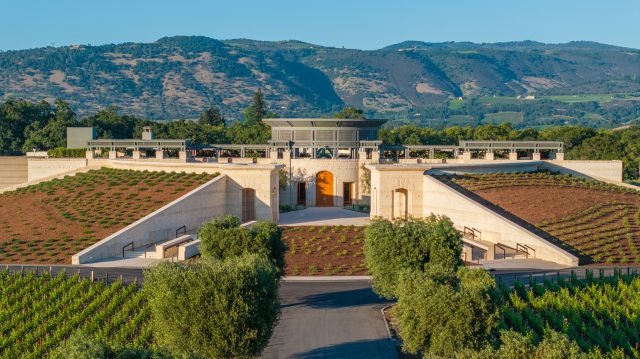
Opus One revealed its radical new look on 11 May following a five-year design process aimed at emphasising “the profound connection” to its natural surroundings.
“It is only by coincidence that we are reopening our guest spaces within weeks of each other,” CEO Chris Lynch told db, referring to the earlier cutting of the ribbon at Robert Mondavi Winery. However, it wouldn’t be the first synergy between the two properties given that Opus One was founded in the 1970s as a joint venture between Robert Mondavi Winery and Baron Philippe de Rothschild of Château Mouton Rothschild.
Sending a message
What does Opus One hope its “dramatic new aesthetic” will signal to the global wine community?
“This redesign serves a multitude of needs,” said Lynch. “Most importantly it fulfils part of our 2030 mission to be globally responsible and will conserve up to 40% of the water previously used for irrigation.”
This point is an important one. Perhaps the most immediate visual change is that Opus One has removed its beautifully manicured grass lawns and grass-adorned winery roof, once a beacon of luxury and finesse. Anyone who has ever had to maintain a back yard, municipal park or golf course over any period of time will be well-acquainted with the level of work involved in ensuring grass stays looking lush and verdant, especially in ever-rising temperatures.
But luxury has taken on a different meaning in today’s water-poor climate.
“With water usage and conservation becoming a critical topic of consideration, we were obliged to reconsider the use of ‘lawns’ as an architectural element,” Lynch told db. “While graceful for decades, we could no longer avoid the conversation, and in 2021 the winery created a vision for change that led to the replacement of these pastoral berms.”
Partner Content

Flower power
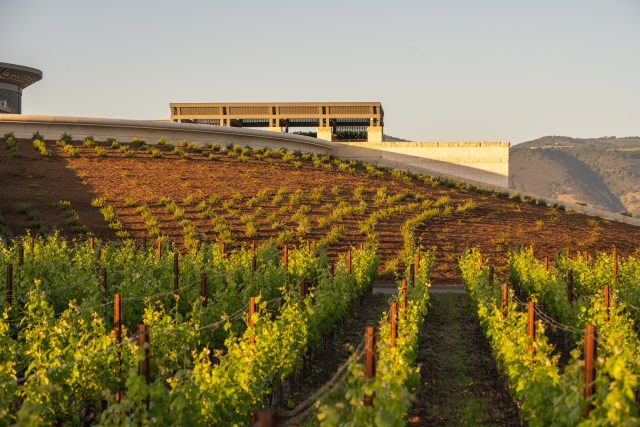
In place of the grass turf, a carpet of thousands of native, drought-tolerant and pollinator-friendly plants has been laid on the winery’s roof, including Ceanothus thyrsiflorus var. griseus ‘Yankee Point’ and Westringia fruticosa ‘Mundi.’
“This carefully selected palette of low-growing, shrubby textures mirrors the rugged beauty of the Vaca Mountains, visually drawing the surrounding terrain into the winery experience,” Opus One said in a release.
What’s more, the hardy plants significantly reduce Opus One’s irrigation needs, almost halving its water useage.
Spanning more than an acre, the new rooftop “demonstrates our commitment to the estate for years to come,” said Lynch. “For our guests, it shows a sensitivity to our collective moment today where we must respect our limited resources, reduce waste, and ultimately, it will create a very beautiful and welcoming moment for everyone visiting.”
The installation of a biodiverse rooftop follows the winery earning the prestigious Butterfly Mark last year, a sustainability certification created specifically for super-premium brands by London-based consultancy firm Positive Luxury. Designed to hold top-end companies to “higher standards” so that they can “lead” from the front, maintaining the Butterfly Mark can require annual fees stretching to £50,000 for a company earning a turnover of £100 million or more. Other global companies to hold the Mark span the luxury arc to include jeweller Monica Vinader, fashion label Erdem, lingerie brand Coco de Mer and Marbella Club Hotel, among others.
Tranquil setting
In addition to retiring its lawn, Opus One has incorporated a series of “meandering limestone pathways”, and “sculpted earth forms” in the property’s central courtyard, which Lynch said creates “a tranquil setting for open-air tastings and bespoke events.”
The new water-conscious environment was created by East Coast landscape architects Reed Hilderbrand, who came up with the idea of introducing “living architecture”. Reed Hilderbrand takes the baton from original Opus One architect, the Los Angeles-based Johnson Fain, who completed the property’s construction in 1991.
“We are thrilled to announce the completion of this monumental project that has touched all elements of the winery’s landscape,” he concluded. Above all, he added, “our primary commitment was to the community, to our team and to our fellow vintners.”
Related news
Glass half full: Asia offers hope for struggling California wine
California pleads with Quebec to lift trade ban
California wineries request US$32 million to fight vineyard pest


