



Market spotlight: how to conquer the Nordics
From navigating the complex monopoly system to winning over consumers, Tom Bruce-Gardyne explores how to conquer the Nordics.

“It may seem paradoxical,” says Vinmonopolet on its website, “that a business dedicated to reducing the harmful effects of alcohol has one of the world’s largest and widest product ranges.”
Norway’s state-run drinks monopoly was born in 1922 after a period of prohibition, and it remains a key instrument of alcohol control in the Scandinavian country. Despite its earnest intent to protect Norwegians from themselves, Sebastian Bredal MW, founder of one of the country’s leading importers, Symposium Wines, says: “Vinmonopolet stores are really attractive, and the staff are extremely helpful.”
Some of the 330-plus outlets “are like visiting Hedonism”, he claims, referring to that famed temple of wine indulgence in London’s Mayfair.
The Swedish version is called Systembolaget with around 450 stores, while Finland has Alko with 360 shops.
Monopolies reign
Throughout the Nordics, the on-trade remains a free market, but in retail – which accounts for around 90% of all the wine sold – the monopolies reign supreme. To the world’s producers, it can all feel rather impenetrable.
“It is designed to be a very honest, transparent system, but in reality, there is influence involved,” says Paul-Edgar Bredar, who looks after the Nordics for Champagne Joseph Perrier. “For sure, the buyers have producers they like and their own networks. Sometimes it feels like the dice are loaded.”
The three monopolies are constantly refreshing their ranges through a rolling programme of tenders conducted throughout the year.
“They are really well regulated,” says Andreas Kubach MW, co-founder and CEO of winery and vineyard management company Penínsular Vinicultores, which is based in Madrid. “You decide whether or not to participate in a tender, and if you win it’s great. It’s reliable and it’s paid correctly. But there is a grey zone I guess, on how it’s decided which wines end up on a tasting, and how much influence the individual agents have.”
Market dynamics
Every producer requires an agent or importer in the Nordics, although technically Alko is able to buy direct. Their importance is hard to exaggerate. “I think it’s crucial in all the monopolies to have a good importer who understands the market dynamics and price points,” says Heidi Mäkinen MW, portfolio manager and partner of Finnish importer Viinitie. “I think the successful ones understand what you need to do to keep the wines fresh in the minds of consumers,” she adds.
This clearly matters if you want to hang onto your listing for the long term. In Sweden, for example, there are around 2,500 wine SKUs in the so-called ‘permanent assortment’, which “you can find in the top 40 shops”, says Jonas Röjerman MW, founder of importer DNA Wines and previously Systembolaget’s head of quality control. He claims the assortment accounts for 94% of sales, “though it’s not necessarily permanent. You get evaluated every third month, and if you do well, they increase the distribution, and if you do less well, they decrease it”.
After nine to 12 months, if you have failed to generate sufficient demand, your wine will be spat out and replaced.
Courting the press
Generating demand involves courting the Press, especially in Norway, where “wine journalists are uniquely powerful”, says Gustavo Devesas, who has been handling the Nordics for Portugal’s Symington Family Estates since 2011. Journalists’ power is slightly less in Sweden and Finland, where you can advertise on television, radio and social media, unlike in Norway.
In store, throughout the region, “consumers are not triggered by impulse buying”, says Devesas. “There is no promotion, no shelf talkers and no discounting, and staff are not allowed to make suggestions.” Unlike supermarket shoppers in the UK, who have been trained to flip from one offer to the next, in the Nordic nations there is more incentive to be better-informed about wine.
And there is plenty to choose from. “The quality of selection in Sweden makes it arguably the most knowledgeable wine market in the world,” says Jean-Frédéric Hugel of the famous Alsace producer. Yet in terms of supplying it, he finds the system very bureaucratic and stiff, and says: “It’s not the most heart-warming or human way to deal with things.”
Time sensitivity
It can also be agonisingly slow from the time of pitching to hearing the results of a tender. “We like to do it when we have wines in bottle, or at least in the cellar,” says Hugel. “But the time frame is very long, and not necessarily adapted to the pace of a vintage.”
Producers have to commit to whatever volume is demanded, but there is no guarantee of sales. “If I win a tender for 300,000 litres of a Rhône blend from South Africa, there is a huge risk for me and the producer,” says Jonas Röjerman MW about Systembolaget. “It might flop, or not sell at all.”
He also questions the buyers’ endless declarations on their commitment to sustainability while completely ignoring the economic implications. “Discussions on that just don’t exist,” he says. “They are tracking where wine is cheapest at the moment, and tenders very much reflect that.”
Andreas Kubach MW agrees, and says: “They’ll insist on an organic Rioja, and then buy as cheap as they can, and you know the area, and that it’s not really sustainable at all.”
Seen to be green
That said, being seen to be green is crucial for success in the Nordics, especially when it comes to packaging.
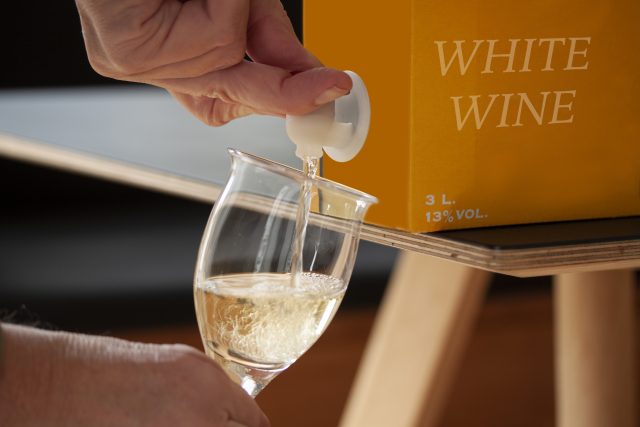
“You need to adapt to the market to stay in the game,” says Tuomas Meriluoto MW, head of the Winestate Group, one of Finland’s top importers. “I think some of the regions are maybe too strict on certain formats. For example, Rioja doesn’t allow bag-in-box, even if they are filled in Rioja.”
The Nordic love of this packaging, together with Tetra Paks, is something to behold. “The volumes in bag-in-box are absolutely staggering to a Frenchman,” says Hugel.
According to Meriluoto, they account for around 40% of the Nordic market, which implies a pretty hefty sacrifice on the part of Rioja. The ubiquitous bag-in-box offers Nordic consumers a squirt of white wine or rosé whenever they open the fridge. So much for alcohol concerns, but the format certainly favours importers shipping in bulk to create their own brands.
However, in Finland “maybe 60% [of the format] are producer brands”, says Meriluoto, who has shipped bag-in-box wines from Miguel Torres and François Lurton, among others. The producer-owned brands, dubbed “Mickey Mouse wines” by Sebastian Bredal MW, account for a big chunk of the market. There are plenty of unfamiliar names like The Bomb, a three-litre “fruity and flavourful” bag of joy from Italy, or The Bitch, a German sekt, both sold by Systembolaget. For the Swedish consultant Madeleine Stenwreth MW, these price-driven “project wines” dominate the so-called “standard assortment” that all Swedes have access to.
Quick on the draw
There is a wealth of much more interesting wines but, unless you are quick on the draw, they are often unavailable online, having disappeared into the top stores in Stockholm, Malmö and Gothenburg, which will no longer forward them on to outlying stores as they once did.
In Finland, you can order wines for free delivery to your local store if unavailable. The country charges the highest duty on wine at around €5 a bottle, which has encouraged thirsty Finns to hop on a ferry and stock up in cheaper Estonia. But it is also the region’s most liberal market, with Alko losing its monopoly on wines below 8% ABV in 2024, causing its sales to shrink by 15%–20%, according to Paul-Edgar Bredar.
“I do know that not every supermarket has been successful with wine, but I’m sure certain big brands have made their way there,” says Mäkinen, while Meriluoto fears that affordable wines may become simpler and more homogenous.
“To succeed in Finland today, we often encourage producers to think more actively about innovation and product development,” he says. “This allows us to bring new and interesting wines to consumers, offering genuine alternatives to locally bottled bulk products, while still maintaining a sense of origin, identity and story, even at more accessible price points.”
Tapered taxes
Sweden levies the lowest tax in the region, which encourages Norwegians to buy at duty free stores along the border, while the Swedes head for Denmark and Germany. When the border with Norway was closed during the Covid-19 pandemic, Vinmonopolet sales jumped by 20%. But both countries have a tapered system of tax, which makes more expensive wines increasingly better value.
If you are a British wine lover and regularly paying over £20 a bottle, you would be better off living in Norway, reckons Sebastian Bredal, “or in Sweden”, adds Jonas Röjerman.
“Yes, with premium and super-premium wines you can get really good value, and it’s not uncommon to have people searching for fine wines in the Nordics,” says Gustavo Devesas. Of the three countries, he prefers dealing with Norway, and says: “Their tender system is more flexible, and they are able to choose more than one offer, whereas in Sweden and Finland you have one tender and one winner.”
Detailed brief
The brief can be very detailed about the region, the precise blend of grapes, the volume and price, and it will include a description. “You might get ‘needs berries, and a hint of eucalyptus’,” Devesas explains. “Essentially, there’s a benchmark with every tender, and I think one of the keys to success is to get a share of voice the buyers and somehow inspire them. From reading the tender you can sometimes know which wine they’re thinking of, and have to admit you’ve got no chance to adapt one of your wines to fit.”
With his producers, Meriluoto says: “We taste potential tender samples together in advance, discussing different options and how well they match the brief. We also regularly benchmark successful wines in each category, including past tender winners, to build a shared understanding of what works.”
The competition is invariably stiff, and not always entirely fair. In one Swedish tender for a very specific Sicilian blend, a local cooperative reportedly bought up all the grapes to make themselves the only contender.
Small door
However, not all wines listed by the monopolies have won tenders to get there. “There is a small door they call TSV in Sweden, where the buyer has the power to add diversity to the assortment if they like a specific wine,” says Devesas. But driving demand to get the wine onto the hallowed permanent assortment can take deep pockets. “I’ve heard it can cost something like €800,000 in advertising to get there,” says Röjerman. “So it’s basically only for the big players.”
For all the frustrations from a producer’s perspective, the monopolies still seem popular with the punters. When Sweden joined the EU in 1995, Systembolaget could have been vulnerable. Thirty years on, it enjoys a two-thirds approval rating, according to recent surveys, though some say that’s due to the slick PR campaign run by the monopoly. Finland appears the most likely to liberalise, but it will depend on the politicians – and right now, as Heidi Mäkinen says: “They’re quite busy with all the geopolitical turmoil.”


