



White wine gets off the ground in Vietnam
Wine accounts for less than 1% of alcohol consumption in Vietnam, but within that sliver, a shift is taking place, as drinkers develop a taste for white wine. Nimmi Malhotra reports.
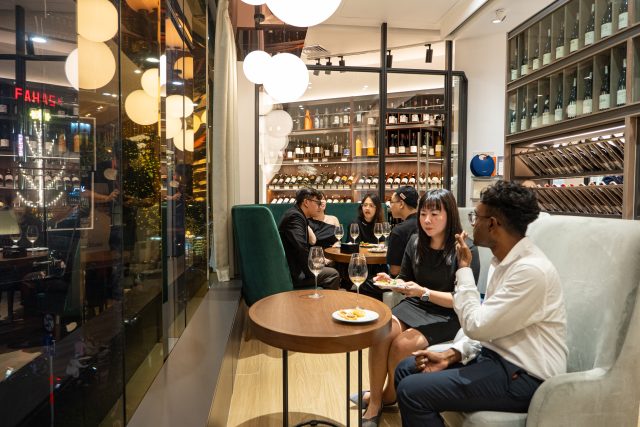
“I believe the future of the country is white wine, and it’s been growing at a tremendous pace,” says William Richard Gallet, general manager at Enoteca Vietnam, the latest Asian outpost of Asahi-owned Enoteca Co. Ltd.
Vietnam is, overwhelmingly, a beer and brown spirit market. Wine accounts for just 0.34% of total alcohol consumption, but it’s growing. IWSR projects a compound annual growth (CAGR) of 2.5% between 2024 and 2029, making Vietnam one of the few markets in Asia-Pacific poised for expansion rather than decline.
The driving force is the country’s burgeoning middle class, which makes up 15% of its 100 million population, alongside international residents and returning Viêt Kiêu – a growing demographic of nonresident Vietnamese.
The growth, notably, is concentrated in white wine. Between 2023 and 2024, white wine claimed 8.6% greater share of the total wine consumption, a jump that industry observers say reflects a marked evolution in consumer taste.
From spirits to red
To understand the shift from red to white, it’s important to understand how alcohol consumption evolved in Vietnam. In the decades following the 1970’s, as the country’s traditional brown spirit market began to open up to imported wine, the first converts –older government officials, businessmen and urban professional class –gravitated towards big, powerful reds.
“They wanted to find a spirit- like experience in wine and opted for concentration and high alcohol level,” says Gallet. This explains the sudden trend for heavy bottled Puglia reds in the capital city of Hanoi. Red wine has since become the default choice for wine drinkers, claiming 79% of total wine consumption.
Tastes are slowly evolving. Gallet, a long-time resident of Ho Chi Minh City (HCMC), offers an unexpected anecdote that points to this evolution. “Last week, I was surprised to see two men in Hanoi drinking Corton Charlemagne. I’ve never seen that before,” he says.
The two cities
Wine consumption in Vietnam is concentrated in two cities: Hanoi and Ho Chi Minh City. Hanoi is the only capital in Southeast Asia with a sub-tropical climate, comprising four seasons, and a more traditional outlook. It is a red-wine dominant city.
HCMC, on the other hand, is Vietnam’s economic powerhouse – modern, progressive, rich and year-round tropical. The consistent heat and humidity pair naturally with cooler white wines, even though reds dominate.
Partner Content



Fine dining reshapes wine choices
Vietnam’s evolving palate has fuelled a fine dining boom. HCMC is home to six Michelin star restaurant; Hanoi has five.
“White wine is clearly gaining traction, especially in Ho Chi Minh City, driven by the growth of sophisticated restaurant concepts,” says Le Hoang Khanh Vi, beverage director of Nén Restaurant (with locations in HCMC, Danang and Tokyo). “Wine pairing menus are becoming more common, and in many cases, white wines are simply a better fit.”
According to Le, Fine dining in Vietnam is increasingly focused on refined, ingredient-driven, and delicate cuisine. “With that style of food, wines like sparkling, whites, skin-contact (orange) wines, and lighter reds tend to perform much better. They don’t overpower the dish; they lift and enhance the overall experience.”
At Nén Danang and Nén Light Saigon, a fine dining Vietnamese restaurant, sparkling, white, and orange wines make up about 70% of Nén’s alcohol pairings. “Around 10% comes from local products, 15% from Japanese sake, and only about 5% from lighter red wines,” Le says.
The shift is also a marker of status. “To know your white wine options: appellations, grape varietal and producers, is a mark of genuine wine connoisseurship,” says Gallet. In elite circles, it’s a subtle flex of an evolved palate.
What’s in the glass
Demand in Vietnam is driven much more by style and taste than by brand recognition. “The market is developing very quickly, and with that, we’re seeing a much wider range of wines becoming available,” says Le. “This gives sommeliers and consumers more flexibility to explore different styles rather than focusing on well-known labels.”
The styles gaining ground are not the obvious ones. Enoteca sales are concentrated in White Burgundies, Pinot Gris, and Riesling “Our growth is in the non- Sauvignon Blanc varieties,” Gallet says. While Le points to approachable, aromatic styles for everyday drinking.
Access is improving as well. “Importers are bringing in more diverse selections from classic regions to more experimental producers, so overall, we have good access, especially in major cities like Ho Chi Minh City and Hanoi,” adds Le.
Not everyone is convinced
Not everyone is betting on the white switch. Gregoire Debre, CEO of wine marketing agency Terroir and Spice, who has done extensive work in Vietnam, believes it’s too early to talk about a switch, but acknowledged a growing interest.
At Lua, a contemporary European and Japanese restaurant and bar, head sommelier Yu Yamamoto doesn’t believe white wine is on the rise. “At Lua, red wine accounts for 50% of our sales, while the remaining 50% is made up of all other types combined (sparkling, white, orange, and rosé).” He is not immune to the cooling power of white, though. “Right now, we are nearing the end of the dry season here in HCMC, and it’s extremely hot. I would also like to start with a chilled glass of white wine,” he says.
Related news
Alcohol spending in South Korea posts sharpest drop in seven years
Low and no drinks fuel food and beverage dealmaking as Asia Pacific leads global M&A market
Beyond the guest shift: Singapore’s cocktail community is ready for a new chapter


