



Why Japanese gin is thriving amid the global spirits slump
Consumers went wild for gin during Covid – craving a tonic for tough times. Six years later, global sales have tailed off, but premium Japanese gin is bucking the downturn. Amelie Maurice-Jones speaks to Ryan McFarland of distributor Drinksology Kirker Greer to find out why.

Spirits sales slowed in 2025, and gin was no exception. But, at the same time, there was cause for celebration in Japan, where gin exports more than doubled – soaring 104% in value to ¥8.2 billion (approximately £42 million) last year, according to data from the Japan Spirits & Liqueurs Makers Association.
“Japanese gin provides a cultural bridge,” according to Ryan McFarland, chief commercial and strategy officer at Drinksology Kirker Greer. The distributor Kirker Greer owns premium Japanese spirits company Ukiyo, which produces gin in Chiba, east of Tokyo, blending a rice spirit base with traditional botanicals. The brand’s sales statistics reflect the category’s broader success, with 40% CAGR from FY23 to FY25 and a further 35% growth forecasted for FY26.
The UK and Ireland are Ukiyo’s main markets, with listings across retail hubs like M&S, Sainsbury’s, Waitrose and Tesco, as well as in on-trade chain restaurants like Ivy Asia and Sticks & Sushi. But the spirits maker is also looking to boost its global footprint: a new deal will see its gin range stocked across the network of Gebr. Heinemann – one of the world’s largest travel retail operators.
“Japan is something which for people in European markets is aspirational. It gives immediate quality cues, and Japanese gin is almost a passport to that,” McFarland continues.
‘Accessible premium’
Speaking specifically of Ukiyo’s spirited sales, he adds: “We try to play in an accessible premium. In a challenging environment, particularly one where costs are an issue, the combination of being able to have an accessible trade up point on an everyday luxury that doesn’t stretch the purse strings too far, presents a sweet spot”.
Looking to the future, McFarland shares his predictions for what’s next when it comes to Japanese gin: “I see it stopping being a sub category to gin.” He’s noticing an uptick in bartenders eager to experiment with Japanese products and flavours, increasingly using gin outside of the G&T boundaries with longer serves and cocktails. “It’s going to become a staple of the back bar for any serious outlet”.
While it’s true that gin is underperforming globally, retailers are still scouting for brands that will “bring energy and something new”, McFarland reckons. This is supported by Maximise Market Research’s recent findings that, when consumers do opt for gin, they opt for “small-batch, locally sourced and uniquely flavoured brands”.
Battling challenges
But even the smallest-batched and most uniquely-flavoured of the lot still suffer the well-publicised woes facing the drinks trade in 2026: economic instability, global political volatility and the fact that people are, simply, drinking less. According to McFarland, Ukiyo’s biggest obstacle is high churn – meaning consumers discard products quickly.
“The way we’re dealing with consolidation in the category it is being very visually appealing, which therefore gives excitement on the shelf or on the back bar, and so gives us more of an opportunity with the retailer,” he adds.
Partner Content


Asia market
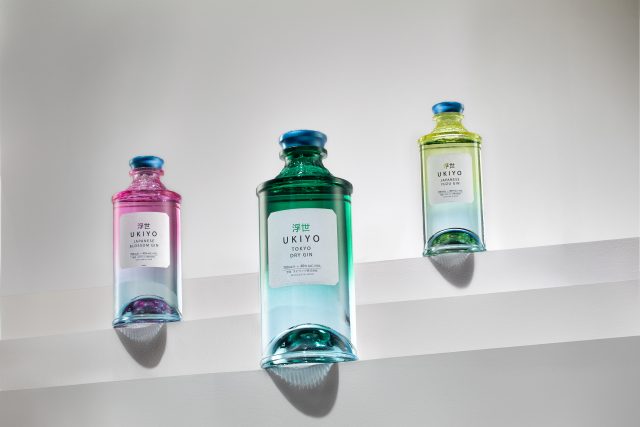
This is particularly a problem in the Asian market. As a Japanese gin, one might think Ukiyo’s spirits, which include Ukiyo Blossom Gin, Ukiyo Tokyo Dry Gin and Ukiyo Yuzu Gin, would resonate in the continent.
But, while Asia caught the tailwinds of Europe’s 2020 gin craze, there’s been a drop in interest since.
“The reality is, if you look at a lot of the Asian markets, gin is not a significant scale category, so it makes it a bit harder to find opportunity for distribution in those markets,” admits McFarland. And while he does flag South Korea, Indonesia and Malaysia as “next stage markets”, as a general rule of thumb, drinkers still tend to pick dark spirits over gin.
But there is one expectation: Singapore. McFarland praises the island as a “lighthouse” for the rest of Southeast Asia, with the gin brand seeking to lock in partnerships with premium bars in what he calls the “cocktail Mecca”.
Growth strategy
Plenty of markets represent pockets of real chances for growth, McFarland goes on to say – from the Netherlands, to Germany to Switzerland to France. These are areas with “immediate, organic opportunity” where Ukiyo can play a part in the “growing up” of gin. By this, McFarland is referring to the maturation of the gin category from the rapid pandemic boom, into a steadier growth.
And Ukiyo’s piqued to spear the market with a three-tonged growth strategy: “Get pricing right, be consistent globally, then find and invest in multi-channel markets”.
Firstly, this looks like striving for a “pricing sweet spot” where products prioritise quality but are also not the most expensive on the shelf. It also means the brand should focus on “global consistency with local nuance”, creating a toolkit at Drinksology to roll out across different markets, and also building visibility in the on-trade, the off-trade and through travel retail hubs in travel honeypots like Dubai, Dublin and Frankfurt.
“It’s really quite simple,” McFarland grins.
Related news
Pirates loved rum: fact or yo ho hoax?


