



Nothing wasted: Taiwan’s circular wine revolution
Taiwan’s young wine industry is turning waste into opportunity, as a new wave of winemakers transform leftover lees and pomace into everything from chocolate to fermented tofu. Leona De Pasquale reports.
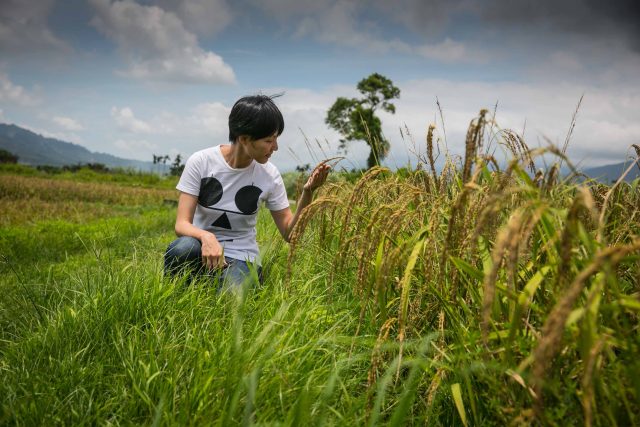
Two things typically happen to winery leftovers: pomace is sent for distillation or composting, while lees, though sometimes turned into tartaric acid, are often rinsed down the drain. For many producers, that is where the process ends.
Taiwan’s emerging wine industry decided it can do far more than that.
In a tribal village in the mountains of northeast Taiwan, an Atayal indigenous community called Bulau Bulau has been quietly reviving its millet wine tradition. What’s more, the leftover millet wine lees are upcycled and added to tanks of Taiwanese raw coffee beans during fermentation. The coffee carries a subtle boozy note, with rice and red-fruit character. It sells at a premium. Everything is local, and nothing is wasted.
Upcycling is nothing new. But in Taiwan, where one might still be told off by their grandparents for leaving food on the plate, putting leftovers to use comes naturally.
Before the island developed into a semiconductor superpower in the 1980s, life was not easy. For decades, people learnt to make the most of whatever the land produced — nothing was thrown away because nothing could be.
That instinct runs deep, and it turns out to be an unlikely advantage for a wine industry that only re-emerged in 2002, when an eighty-year alcohol monopoly was lifted.
Waste not
Vivian Yang, director at Weightstone, one of Taiwan’s most established wineries, is candid about where things began. “Initially we just threw things down the drain, but we hated it. It felt like such a waste.”
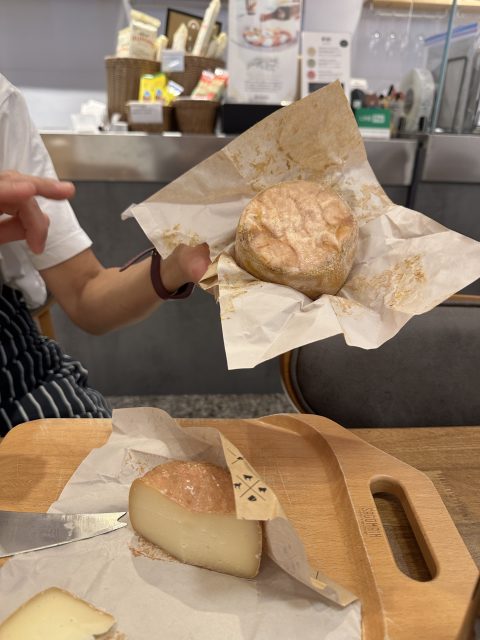
So they began to look for solutions. Weightstone now diverts its fine lees to Dida Creamery, a local cheesemaker that uses them to produce a distinctive washed-rind cheese. Surplus goes into cold storage for local chefs who have learnt to ask for it. The pomace, once destined entirely for compost, now takes a different route. Some of it ends up with Wilma Ku.
Ku is the founder of COFE, a premium Taiwanese artisan chocolate brand. She is also the project manager of Rewine, a collaborative initiative that has grown out of Buvons Nature, Taiwan’s annual natural wine fair.
Wine expert Yusen Lin is the driving force behind Buvons Nature. For nearly a decade, he has led experimental wine programmes focused on local Taiwanese ingredients and the island’s Indigenous winemaking culture.
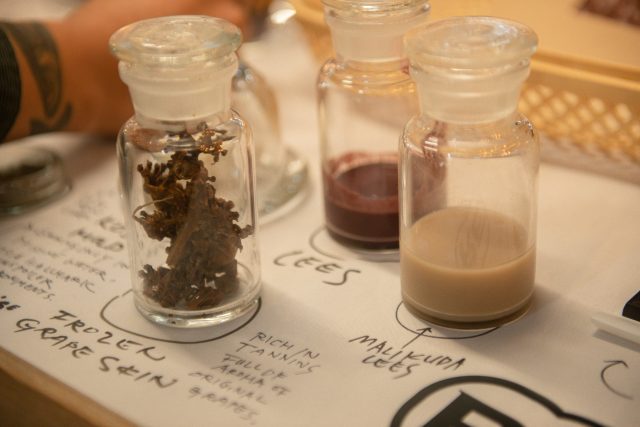
In 2021, Lin used leftover grape skins from the fair’s experimental wines to ferment and produce piquette, a centuries-old European tradition in which water is added to leftover pomace and fermented again into a low-alcohol drink. Historically, it was a light wine for workers.
Sweet tooth
Wilma Ku thought it was delicious, but with an entrepreneurial mind, she did not stop there.
“If pomace still had enough character to make a drink,” she wondered, “what else could it become?”
The answer, in Ku’s hands, began with chocolate.
Ku receives Weightstone’s pomace frozen, then freeze-dries it — one kilogram reduces to around 300 grams of powder, yielding roughly 30 small squares of chocolate. It is uneconomical, but it preserves the character of the pomace. The alcohol volatilises, leaving concentrated fruit and tannin in the chocolate.
It was a success, and it unleashed her imagination.
From lees to luxury
After tasting Lin’s piquette in 2021, Ku put herself forward to collaborate with Buvons Nature. That marked the beginning of the Rewine project, which aims to upcycle the leftovers from the fair’s experimental wine projects.
Partner Content

Since then, Rewine has brought together a rotating group of Taiwanese artisans each year, including cheesemakers, butchers, bakers and coffee producers. All work with what winemakers leave behind and ask what it might become.
“The idea was simple,” says Ku. “Lees carry live yeast and complex flavour. Grape skins bring colour, tannin and varietal character. Both are useful and effectively free.”
Learning through failure
The learning curve, however, has been steep.
Early attempts at piquette, while delicious and intriguing to wine professionals, failed commercially. Consumers expected something made from leftovers to be cheap. It was far from it.
The setback only fuelled them. In 2023, the team attempted another piquette in collaboration with Zou Zhou Yuan, a leading Indigenous coffee producer in Alishan, Taiwan’s famous coffee-growing area. Wine lees were added to the coffee beans during post-processing to create additional flavour, much like the millet coffee at Bulau Bulau. Since the aim is to waste nothing, the team also kept the coffee fruit — the leftover from the bean — for yet another piquette.
It failed. The coffee fruit should be fermented immediately after harvest, when it still carries floral aromas. Frozen and processed later, when the wine pomace arrived, the final product lacked aroma and was overly acidic. It was never commercialised, and became their last attempt at piquette.
In 2024, Rewine expanded to over ten products through a growing network of collaborators, ranging from salami to cheese, fermented tofu and bread. Many worked in principle but proved difficult to scale. Bread required more lees than a small winery could realistically supply, while other production costs were simply too high to justify continuation.
Embracing unpredictability
These failures matter. They are what separates Rewine from greenwashing. Circular economy principles are easy to endorse. But making them work is harder, especially at small scale, with irregular supply, in categories where consumers have fixed price expectations.
Chocolate remains the most successful product, one of the few able to absorb the high cost of freeze-dried lees and pomace while remaining commercially viable.
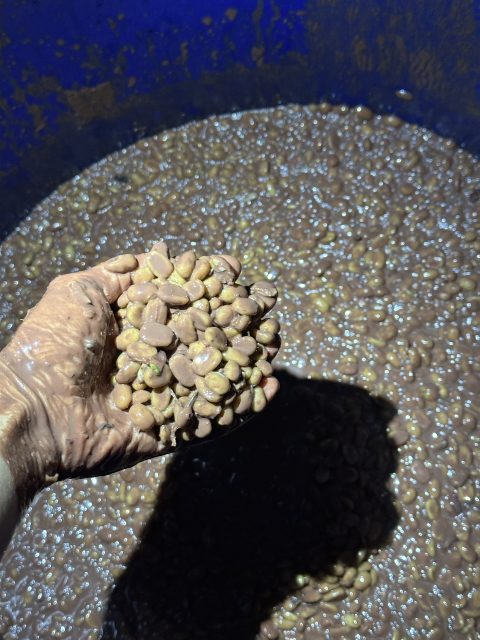
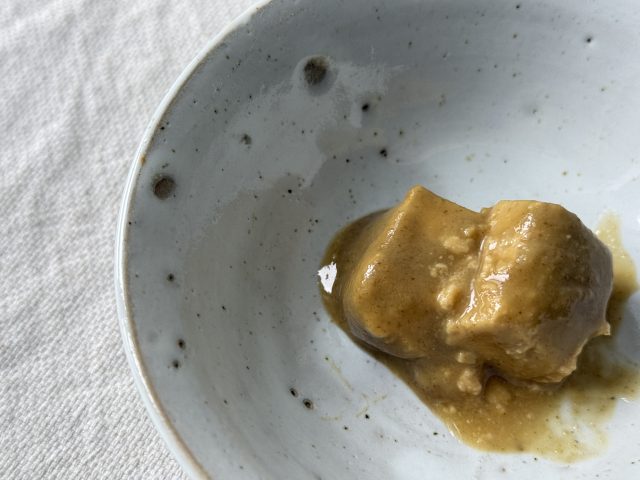
A more unexpected success is fermented tofu, a traditional Taiwanese staple with a texture similar to pâté. In Rewine’s version, wine lees partially replace the traditional grain-based starter culture. Each batch takes around 45 days to produce, with only small quantities made — typically 48 jars at a time, priced at around £10 per jar. They consistently sell out. Salami made with lees has also found a niche, maintaining small but steady demand.
Success lies in products where the by-product genuinely enhances, and where the category can bear prices that reflect real production costs.
For Ku, the significance of Rewine goes beyond product development.
“It’s about embracing unpredictability,” she says, “and recognising that food is alive.”
Imagining the future
Unlike most food production, which prioritises control and sterilisation, Rewine allows natural processes to unfold, outcomes not always predictable, not always successful, and not always commercially viable. “Rewine sits somewhere in between,” admits Ku, exploring what waste reduction might look like in practice, even when it does not always lead to results.
The experimentation continues. Future directions include sourdough bread made with wine lees and potentially soy sauce fermentation, though that presents significant technical challenges. More broadly, any fermentation-based product is a candidate.
For a small island with a budding wine industry just two decades old, the question was never whether to waste less. It was what imagination could do with what remained — and the advantage of deciding that before the habits had time to form.
Related news
US spirits producers target Tokyo and Taiwan
Asahi rolls out Dry Crystal in Hong Kong and Taiwan
Double Dutch: ‘Taiwan’s tonic comeback is the perfect moment to reimagine the G&T’


