



Treasure island: Can Singapore’s fine wine market weather the downturn?
One of Asia’s foremost fine wine hubs, Singapore, boomed during the pandemic, but how is it coping in the current downturn? Amelie Maurice-Jones reports.
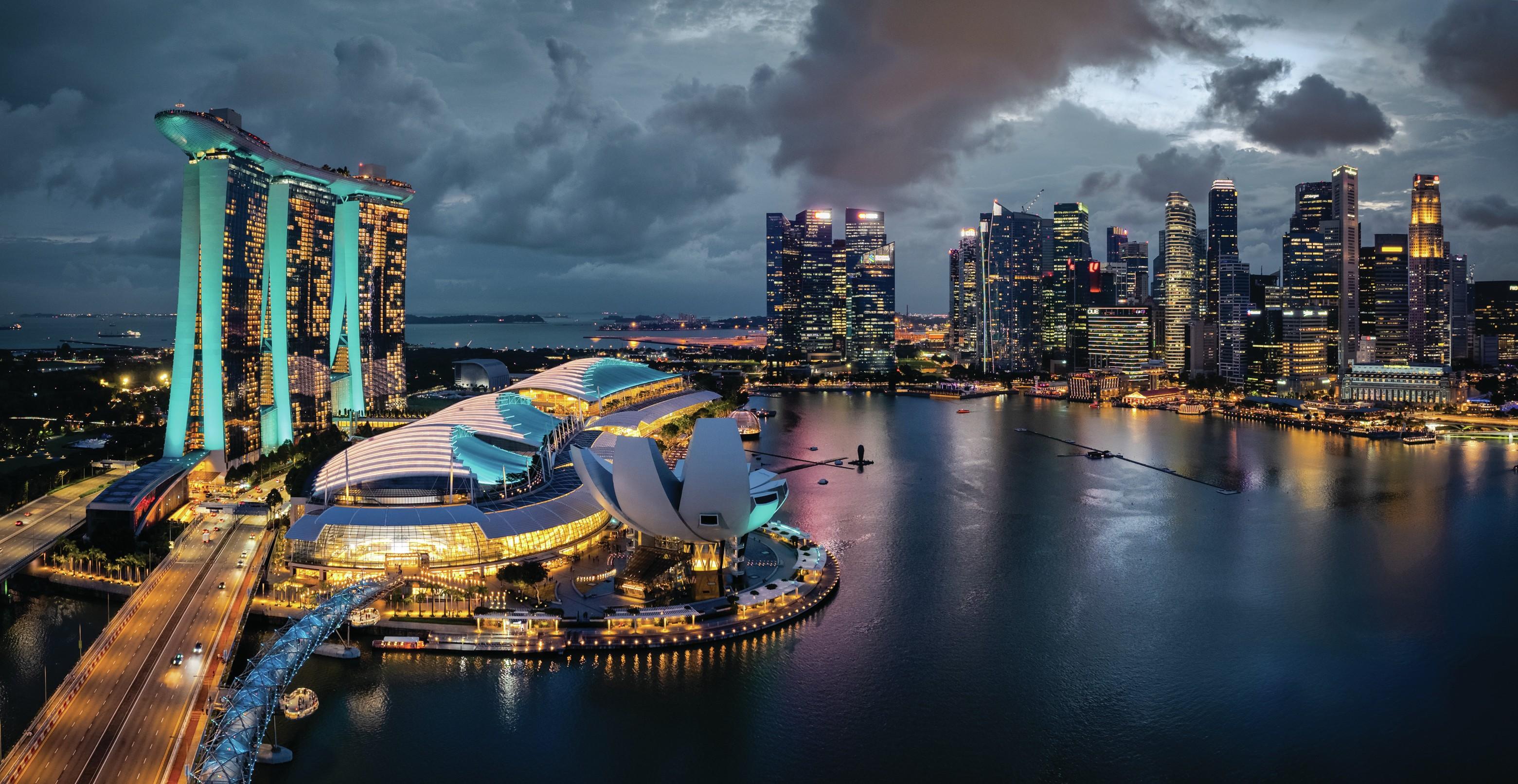
On a chilly winter’s day in January, Soo Hoo Khoon Peng turned 50. Like many before him, the Singaporean businessman opted to toast the occasion by uncorking a bottle of wine. But, like maybe literally no-one before him, the bottle in question was a 127-year-old Romanée-Conti, purchased 12 months earlier for (rumour has it) €100,000. Later that month, one of America’s oldest wine retailers, Acker Wines, officially launched its fine wine merchant arm in Singapore.
If these headlines are anything to go by, Singapore’s fine wine market is in rude health. During the Covid-19 pandemic, sales surged, with house-bound oenophiles snapping up bottles in just a few clicks. And the premium wine segment (S$70-plus per bottle) has stayed strong, accounting for 23% of the market in 2023, and climbing by 11.3% in the first half of 2024, according to Wine Importers Singapore. But, with Singapore’s economic growth expected to slow during 2026, and people in general drinking less wine, is it all it’s cracked up to be?
For Acker, the answer is yes. The company, which is headquartered in Delaware, already has sales hubs in Hong Kong, Japan, South Korea, mainland China and London. Expanding into Singapore felt like a “natural evolution”, for Acker Asia CEO Andrew Bigbee. The retailer has already held three fine wine auctions in Singapore to date, with a fourth and fifth scheduled for 2026. The new business will provide private clients and retailer collectors with a curated selection of rare vintages and regional specialities, bolstered by more than US$20 million in stock. “These initiatives reflect a deliberate, long-term commitment to the market, rather than a short-term expansion play,” adds Bigbee.
“The market is defined by a sophisticated collector base that values provenance, condition and institutional expertise,” he continues, with collectors tending to “engage deeply, build cellars over time and seek access to expertise and rare opportunities”. Over the past decade, he’s watched Singapore evolve from a transactional market into a “true collecting centre”, with an uptick in sophisticated private cellars and professional warehouses, as well as “more informed and more selective” collectors, boosting the overall state of the market.
“In 2026, we are seeing a flight to quality,” contends Julian Poh, founder and CEO of fine wine merchant Bordeaux Liquid Gold. The “froth has settled” from the post-pandemic boom, and the market is more stabilised today, he says. While mid-range retailers battle inflation and cost-of-living increases, the ultra-premium segment “remains resilient”, with collectors now seeking “specific producers, provenance and rarity” outside the Bordeaux strongholds. “It’s a buyer’s market, but only for the very best wines,” Poh says.
‘The Monaco of Asia’
Poh’s moniker to sum up Singapore is “the Monaco of Asia”. What he means is that, unlike Hong Kong, where bottles are largely re-sold to China, “wines that land here often get opened here”. And there’s a diverse mix of people opening them. Singapore had a population of 6.11m people as of June 2025, with non-residents accounting for nearly 30% of the total.
Overall, Poh paints a warming picture, saying that “you have traditional Chinese collectors dining with European ex-pats and younger tech entrepreneurs at the same table”. The demographic of buyers is skewing younger, to a digitally-native, adventurous crowd. “This diversity allows us to sell a wider range of styles, from classic Bordeaux to cult Californian,” Poh explains. And, when this mish-mash of wine lovers meets, it tends to be in one of the city’s suave bars or fine dining spots, 42 of which held Michelin stars in 2025.
Among these is 67 Pall Mall Singapore. One of the offshoots of the iconic London private members’ club, located in the penthouse of Shaw Centre, the Singapore branch officially opened its doors in 2022. So what are people drinking there? Head sommelier Shirley Tan says that all the classics – Bordeaux, Burgundy, Champagne and the Rhône – continue to shine, despite rising price tags, with Napa Valley standing out for New World collectors.
She’s seen strong momentum for certain producers, including Pierre-Yves Colin-Morey, alongside benchmark estates such as Château Montrose, and internationally recognised names like Silver Oak. “We’re also seeing more curiosity around emerging and alternative fine wine regions, such as China, Hokkaido, South Africa and Sicily, as well as producers working with indigenous varieties and distinctive terroirs,” Tan continues. Furthermore, “a growing number of drinkers are actively looking for wines with character – something rare, unexpected or undiscovered.”
Lesley Liu, head sommelier at the three-Michelin-starred Odette, says diners are opting for a mixture of “classic favourites and curious newcomings”, with bottles above S$70 making up a strong slice of sales. Outside the French benchmarks – with the top tier of the list anchored by Burgundy domaines, first growth Bordeaux and rare vintage Champagnes – interest in Tuscan classics and Amarone is growing, as well as in Asian producers from Japan, China and Thailand. This reflects an increasingly adventurous drinker.
“Wine education is growing quickly in Singapore, with more tastings, masterclasses, wine bars and clubs helping people build confidence and curiosity,” explains Liu, who is a two-time champion of Sopexa’s Best Sommelier in French Wines (Singapore) competition. This is helped by the fact that the WSET programme is supported by the Singapore government’s SkillsFuture initiative. “The long-term outlook for fine wine in Singapore still feels very positive, but it’s really the premium segment that continues to grow faster,” Liu explains.
The future Liu imagines is a bright one. Still, she acknowledges the challenges of the present, especially in the on-trade, with 2,431 food and beverage outlets closing down in the first 10 months of 2025 due to tough competition, high costs and labour shortages. “Rising costs and more cautious dining habits are shaping how restaurants curate lists and how guests decide when to drink out versus at home,” she says. Fine wine retailing also encounters unique obstacles.
Linda Chan, executive director of fine wine importer and distributor Grand Vin Pte, cites high operating and storage costs, as well as heavy wine duty and taxes versus comparative free duty markets like Hong Kong. Additionally, with the reopening of borders post-Covid and a weakening economy, “demand has softened”. While consumers are still willing to splurge, often they’re now jetting to neighbouring countries to do so, where costs are lower.

For Poh, Singapore’s tax structure is the biggest hurdle. “The fixed duty rate based on alcohol content, plus the 9% GST [Goods & Services Tax], creates a high floor price, which makes entry-level fine wine expensive compared to Hong Kong’s zero-tax regime,” he says. Added to this, “maintaining cold chain integrity in our tropical climate is expensive”.
Strategic location
Still, Singapore has its selling points. “Its strategic location offers an advantage as a central location for Southeast Asian distribution, and our wine tax and duties are lower compared to neighbouring countries,” Chan points out. “A bottle of first growth Bordeaux in Singapore can cost significantly more in a market like Malaysia or Indonesia, due to their higher import taxes.” Thanks to Singapore’s stable politics, transparent regulation and efficient supply chain structures, Chan believes the island is well-positioned as a financial hub, further encouraging fine wine trading and consumption.
These well-oiled logistics also mean that, if you want to start selling wine, it’s pretty easy. “There’s very little barrier to somebody who decides they want to import wine from their home town in Hungary or for someone who wants to set up as a fine wine trader,” says Richard Hemming MW, a Singapore-based wine writer and educator. “You can do it almost instantly.”

Bearing all this in mind, could Singapore ever become Asia’s leading fine wine hub? It’s “more measured” than Hong Kong, “less headline-driven” than China and boasts cellars broader and more global than those in Japan and South Korea, Bigbee reasons. Retailers agree that Singapore, for sure, takes the crown as Southeast Asia’s leading market. But overall, Hong Kong is still the continent’s top dog.
“Unless Singapore decides to abolish Goods & Services Tax, similar to how Hong Kong abolished their alcohol tax for wines in 2008, we won’t see that surge,” reckons Timothy Goh, sales director of Vinum Fine Wines Singapore. Poh agrees, saying: “To overtake Hong Kong, we would need a revisit of the tax policies to encourage more bonded warehousing and trading activity.” But where Singapore wins hands down is “stability, trust and lifestyle”. Poh is optimistic for the future of the country, which celebrated its 60th birthday as an independent nation last year. “As more ultra-high-net-worth individuals set up family offices here, the centre of gravity for luxury consumption is naturally shifting to Singapore,” he says.
Future trends
So what does the future hold? When asked if Singapore’s fine wine market is set for growth, Hemming’s answer isn’t entirely reassuring: “I don’t think it’s going to shrink,” he says. He insists that there is, and will continue to be, a “dedicated set of fine wine consumers that are still spending and drinking”. Envisioning Acker’s future in Singapore, Bigbee expects growth to be driven less by volume, and more by depth and maturity. “Existing collectors will continue to refine and expand their cellars and, as those collections age, secondary market activity will naturally increase,” he forecasts.

The fine wine goliath also anticipates a broader definition of what constitutes a collectible wine. “While Burgundy and Bordeaux will remain foundational, interest in Champagne, Rhône, Italy, California and rare spirits is already expanding,” he adds. “Longer term, generational transfer will become an important driver, reinforcing the need for trusted partners with experience handling important collections.”
No longer fuelled by the fires of the pandemic, Singapore’s fine wine market is now charged by a steadier, yet gentler, flame. While high taxes and slowed demand limit explosive growth, there’s a dedicated fanbase of fine wine fanatics who refuse to skimp on quality. “Too many great bottles are never opened,” said Soo Hoo Khoon Peng after uncorking that €100,000 Romanée-Conti in January. He added: “This isn’t about status; it’s about learning and human connection.” And that sums up Singapore’s fine wine market: a maturing ecosystem built on stability, real relationships and genuine appreciation for what’s in the bottle.
Related news
Fine wine market stabilised during H1 as US buyers 're-engaged'
Star power: 'Celebrity ambassadors ensure we remain part of the conversation'
Sober raves, booze-free beer: why South Koreans are shunning alcohol


