



Spanish showcase: Barcelona Wine Week 2026 in review
The sixth edition of Barcelona Wine Week was a joyous celebration of Spain’s hugely diverse wine scene – with rising numbers of international buyers attending.
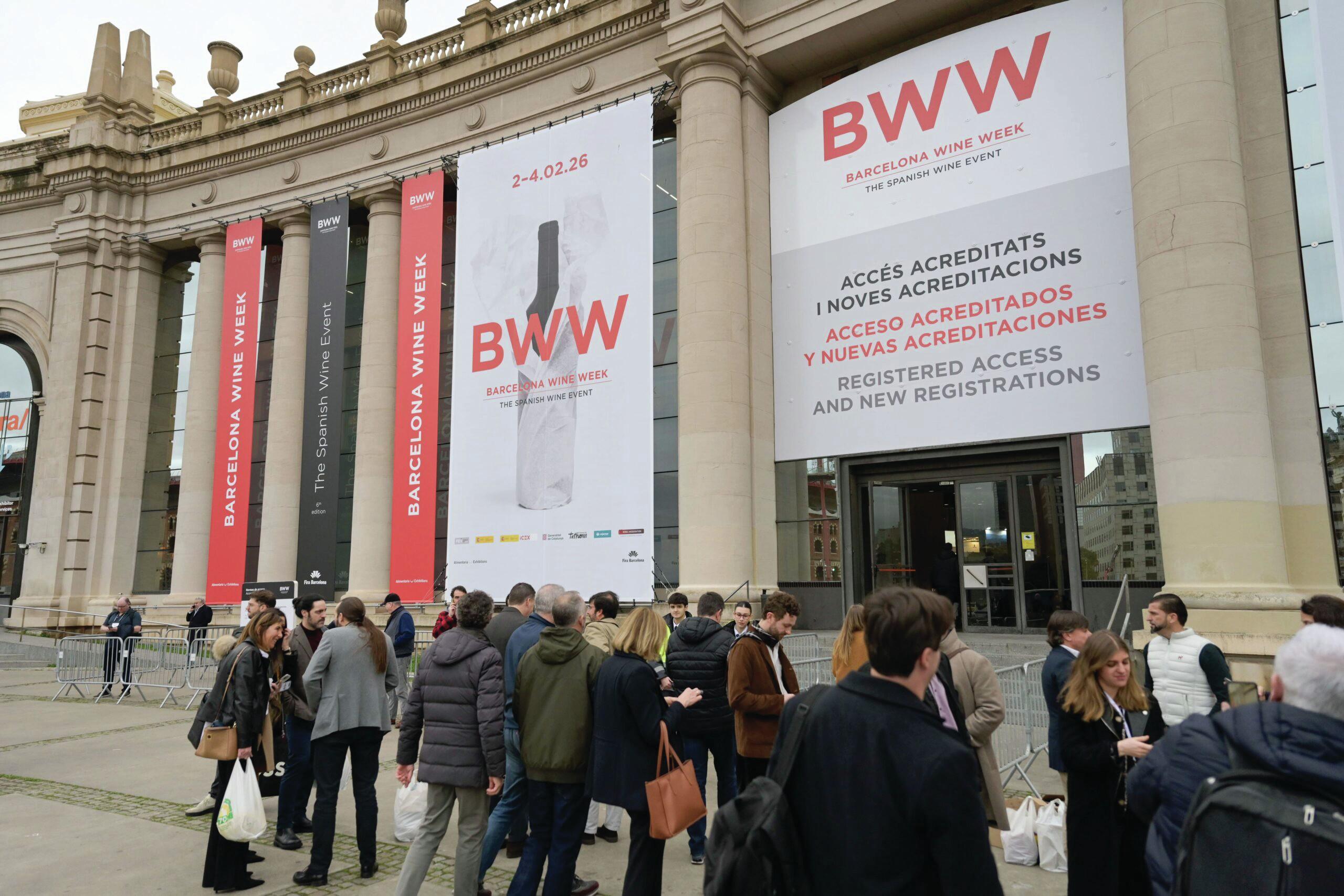
SUNLIGHT STREAMED into the halls of Fira de Barcelona from 2–4 February as Barcelona Wine Week (BWW) closed its sixth edition on a high. Defined by commercial momentum and international reach, the 2026 fair cemented the event’s reputation as an arena for championing the quality and diversity of Spanish wine. Furthermore, the estimated impact of the show on the wider Barcelona economy is estimated to be around 17 million.
This year, BWW welcomed a total of 25,953 visitors from more than 70 countries, and hosted 1,350 wineries, representing 90 Denominations of Origin and quality seals. Nearly three-quarters (73%) of exhibitors participated under a DO, while the remaining 27% showed up under their own brands. The line-up ranged from major players to small, family-run estates – a cross-section that reflected both the breadth of Spain’s wine scene and its significant export potential.
“The main objective was to have a Spanish quality wine fair, and we have reached that goal, with one-third of the total number of Spanish wineries exhibiting,” said José Luis Benítez, director general of the Spanish Wine Federation and a key member of BWW’s organising committee. While the fair’s scale is impressive, Luis Benítez emphasised that perception matters more than numbers. “What is more important to us is a good image for our wines, and this fair is contributing to that.”
Defining theme
International growth was a defining theme of the 2026 edition. The number of overseas buyers rose by 25% compared with last year, with 962 professionals attending through a programme organised in collaboration with the Ministry of Agriculture, Fisheries and Food (MAPA) and ICEX Spain Export and Investments. Key markets included the US, Mercosur countries – particularly Brazil – as well as Germany, China, the Netherlands, India and Indonesia. In total, 13,700 business meetings took place over the three days, underscoring the fair’s mission to drive trade and open new export channels. “These numbers confirm the great international leap of the fair to promote the export of Spanish wine and show the world the richness and uniqueness of our wine-growing territories,” said BWW president Javier Pagés. He added that the large number of business meetings held between exhibitors and buyers demonstrated “the great interest of international markets in our wineries”.
Physically, the fair reflected this sense of expansion. The exhibition space grew by 9% to 10,800 square metres, incorporating a self-guided tasting area, dedicated networking zones and a speakers’ corner focused on emerging trends, reinforcing the fair’s forward-focused outlook. Beyond the commercial bustle of the exhibition floor, BWW 2026 delivered an ambitious and tightly curated programme of tastings, conferences and masterclasses. In total, 138 speakers, including critics, oenologists, Masters of Wine and international commentators, took part.
Eight Masters of Wine, among them Lenka Sedláková MW, Almudena Alberca MW and Jonas Tofterup MW, shared the stage with leading producers such as Willy Pérez, Oriol Lliberia and Richard Sanz, offering perspectives that ranged from sustainability to technical viticulture and shifting global demand. Several standout sessions included a posthumous tribute to Victoria Ibáñez, vice-president of the Catalan Association of Sommeliers, and journalist Ramon Francàs’ revisitation of Sherry’s enduring misconceptions in ‘12+1 Myths about Sherry’. Jancis Robinson MW OBE guided attendees through a discussion on tradition and innovation, examining how Spain’s historic regions are balancing heritage with modern expression.
Emerging categories were equally prominent. The expanding low and no alcohol segment drew significant attention, with the seminar ‘Present and Future of No/low Wines: The Spanish Case’ reaching full capacity. Through tastings and technical analysis, speakers explored regulatory frameworks, production methods and market opportunities. “It was totally overbooked,” said Luis Benítez. “When you go to the booths of the different wineries, you’re seeing more and more diversity and new products, with lower alcohol, and light reds and whites.” Innovation was also central to conversations around Cava.
Producers were keen to reposition Spain’s flagship sparkling wine beyond celebratory moments and into everyday gastronomy. At ‘The Versatility of Cava through the Best of Spanish Gastronomy’, chef Camila Ferraro and sommelier Robert Tetas of Seville’s Sobretablas demonstrated this shift in practice, pairing Cavas de Guarda Superior with a refined tasting menu that underscored the category’s ageing potential and food pairing credentials.
The fair’s forward-focused message was echoed at its official inauguration, where Spain’s Minister of Agriculture, Fisheries and Food, Luis Planas, outlined a renewed foreign trade strategy focused on high-growth emerging markets. India, the Mercosur bloc and Indonesia were highlighted as priority destinations for Spanish agri-food exports, with wine positioned as a key product. For Luis Benítez, Latin America in particular represents a natural extension of Spain’s export strategy. He called it Spain’s “most natural market in terms of production and growth”, pointing to expanding middle classes and strong cultural ties as drivers of long-term opportunity.
Reflection on legacy
BWW 2026 was also a reflection on legacy. A focus on Spanish wine dynasties brought together producers such as Familia Torres, Vega Sicilia, Gramona, Bodegas Artadi and Bodegas José Pariente to discuss generational succession and how new leadership is shaping contemporary approaches in both vineyard and cellar. Beyond the halls of Fira de Barcelona, the city was drawn into BWW’s festivities. Through the BWW Likes the City initiative, tastings, pairings and special menus spilled into restaurants, wine bars and cultural venues across Barcelona, reinforcing the connection between Spanish wine, gastronomy and urban culture.
Looking ahead, the message from organisers was clear. Spanish wine’s future does not lie in increasing production, but in being recognised for what it already achieves. “It’s not a question of growing in volume; it’s a question of growing in recognition, and that will help us to grow in price and then in value,” said Luis Benítez. “You have wine, and maybe it’s cheaper than Bordeaux, but don’t say that. Just believe in yourself.” BWW 2026 was a bold reaffirmation of this mission to communicate the exceptionality of Spanish wine.
Related news
Freemark Abbey opens up the library
Pinot Noir in Cyprus: Château Punin’s ambitious experiment
Rare opportunity beckons as established Rioja brands go under the hammer


