



Provence reinforces its leadership as global rosé category evolves
Earlier this month, db sat down with leaders from Vins de Provence to explore how the region is strengthening category understanding, extending rosé’s appeal beyond summer, and investing further in wine tourism.
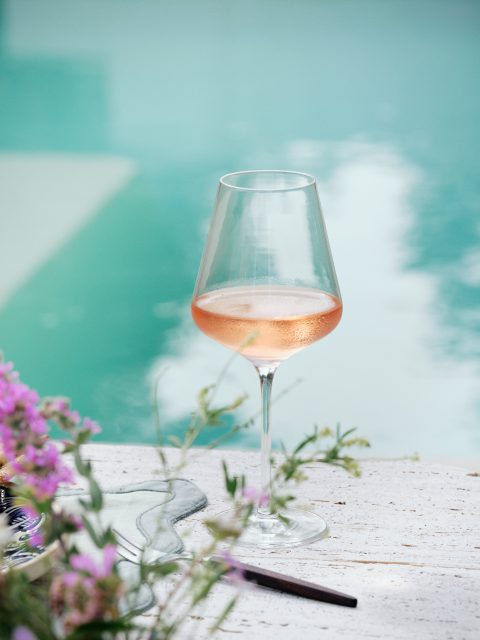
This month (March 26) db sat down with representatives from Vins de Provence to discuss the state of the category, where a clear message emerged: Provence may still define rosé globally, but communicating that leadership is becoming more complex.
At the heart of the issue is imitation. As pale, dry rosé has surged in popularity worldwide, producers from other regions have moved quickly to replicate the aesthetic — something Provence is keen to challenge.
“We are copied, especially on the colour,” said Brice Eymard, managing director of the CIVP. “But we have to explain that we are much more than that.”
More than a colour
While Provence remains the benchmark for many consumers, Eymard and his colleagues stressed that the region risks being reduced to a visual cue rather than a marker of quality.
“We are not only a pale rosé,” Eymard said, pointing to the “balance between aromas and freshness” and the “lot of work in the vineyard” required to achieve the style.
Jeany Cronk of Maison Mirabeau echoed this, noting that while Provence pioneered the category, others are now attempting to replicate its success. “We really developed this kind of wine… and now a lot of people want to make something that looks like it,” she said.
This rise in “Provence-style” wines has, in turn, created a new challenge at the point of sale.
Confusion in the aisle
According to Eymard, consumer understanding of rosé remains limited, with many shoppers relying on colour alone when making purchasing decisions.
“The confusion in the aisle is real,” he said. “Sometimes consumers think it’s Provence, but it’s not.”
Unlike red and white wines, which are often segmented by region or style, rosé is frequently grouped together on shelves, making it harder for consumers to distinguish between origins. As a result, Provence producers are placing greater emphasis on trade education to communicate what sets their wines apart.
“We have to explain that there are differences in rosé,” Eymard added.
That effort extends to reinforcing the role of terroir, grape selection and production methods — with producers keen to highlight that rosé in Provence is not an afterthought, but a category considered from vineyard to bottle.
A push into fine wine
Alongside defending its core identity, Provence is also looking to broaden perceptions of rosé, particularly in the on-trade.
“We have wines which can fit very well in high-end restaurants,” said Cronk, pointing to styles that are more structured, age-worthy and suited to food pairing.
Producers are increasingly highlighting the diversity within the category, from fuller-bodied expressions to more experimental cuvées, in a bid to position rosé as a gastronomic option rather than a purely seasonal drink.
“We focus on the diversity of our rosé,” added Eymard, noting that wines can range from the familiar pale and dry style to more complex, “gastronomic” and aged examples.
Beyond summer drinking
That shift in positioning is also helping to extend rosé’s appeal beyond the summer months — particularly in markets such as the UK.
“We’ve had a good winter season in terms of sales,” said Cronk. “People had preconceived ideas… but that’s changing.”
She added that the UK market appears more open to year-round consumption than France, where rosé is still more closely associated with spring and summer.
Tourism and experience
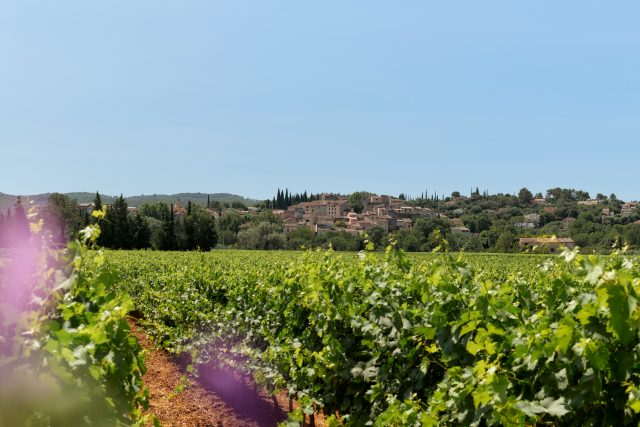
Beyond the glass, Provence is also investing in wine tourism as a long-term growth driver.
“Wine tourism is one of the strategic goals,” said Eymard.
The region has recently launched a new tourism-focused website designed to help visitors discover wineries, events and experiences, reflecting a broader shift towards experience-led engagement.
“It’s all about experience now,” said Cronk. “If you live a really nice experience, you will remember the winery.”
With a significant proportion of producers already offering visitor activities, the aim is to convert general tourists — many of whom visit Provence for its climate and scenery — into wine consumers.
Sustainability as a benchmark
Sustainability also remains central to the region’s strategy, with producers framing environmental credentials as part of their broader claim to leadership.
“If we say we are the best, we have to be the best also in sustainability,” said Eymard.
Many producers are already engaged in organic or high environmental value (HVE) certification, alongside initiatives focused on soil health and biodiversity.
Related news
Why electrolytes have become wine's newest additive
Bordeaux marks milestones with commemorative bottles
#WeekInPictures: the Queen visits Plumpton as craft beer and rum move into new territory


