



‘Meeting of minds’: inside the Amorim/Cotarella partnership
Rather than being a conventional consultant winemaker arrangement, Riccardo Cotarella’s work with Amorim Family Estates in Portugal is described as an “oenological collaboration”, aimed at refinement rather than reinvention – and conducted with “wisdom and a smile”. Richard Woodard finds out more.
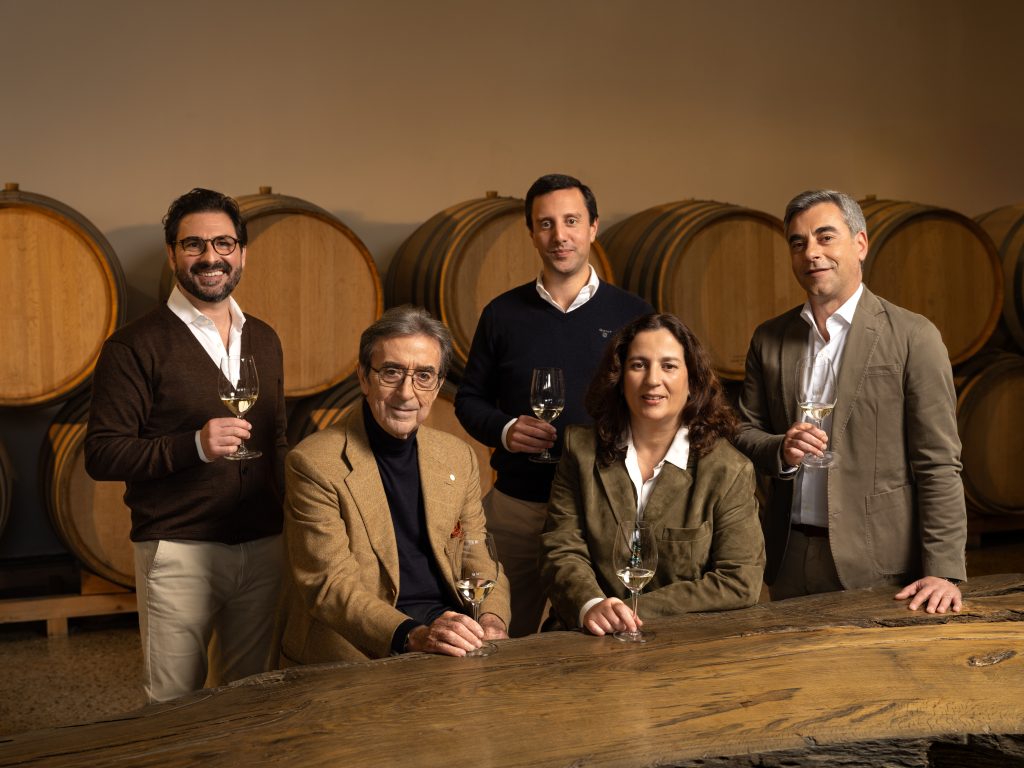
At first glance, the choice of Riccardo Cotarella to work across the Amorim Family Estates collection of properties in Portugal with Luísa Amorim may appear surprising. After all, Cotarella has been closely associated with the ascent of Italy as a fine wine force in recent decades, and he has never worked in Portugal before. But dig a little deeper and some common characteristics emerge.
“Portugal shares with Italy an extraordinary wealth of native grape varieties and a strong regional identity, allowing for a very natural oenological dialogue,” says Cotarella, while Luísa Amorim explains that the collaboration was born of “a desire to deepen the dialogue between two of the world’s great wine countries, Portugal and Italy, because we both have ancient viticulture and an immense complexity of native grapes”.
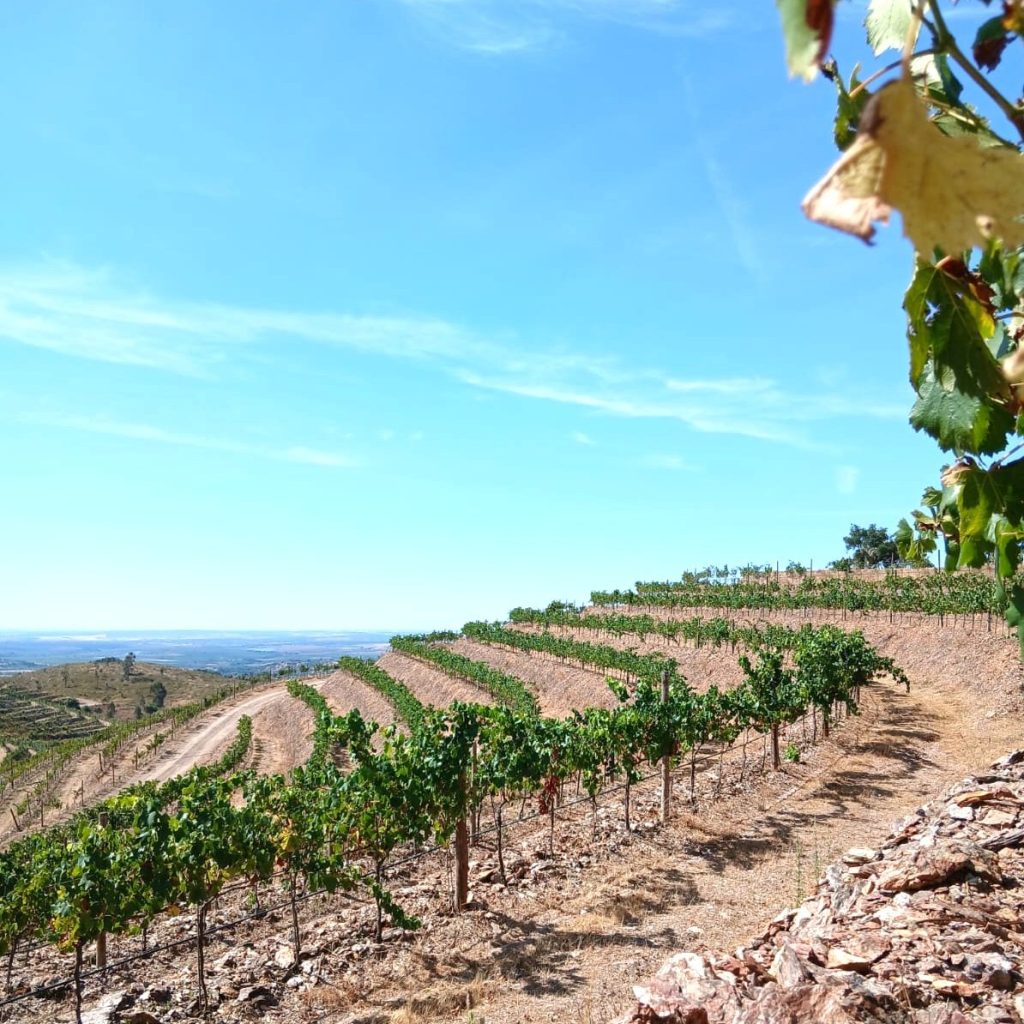
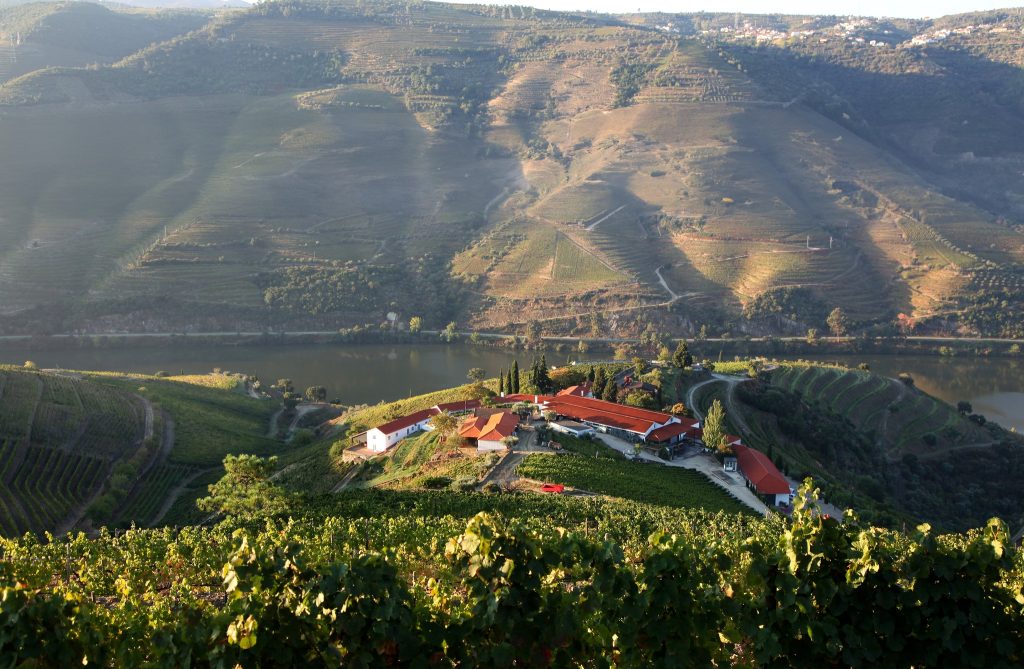
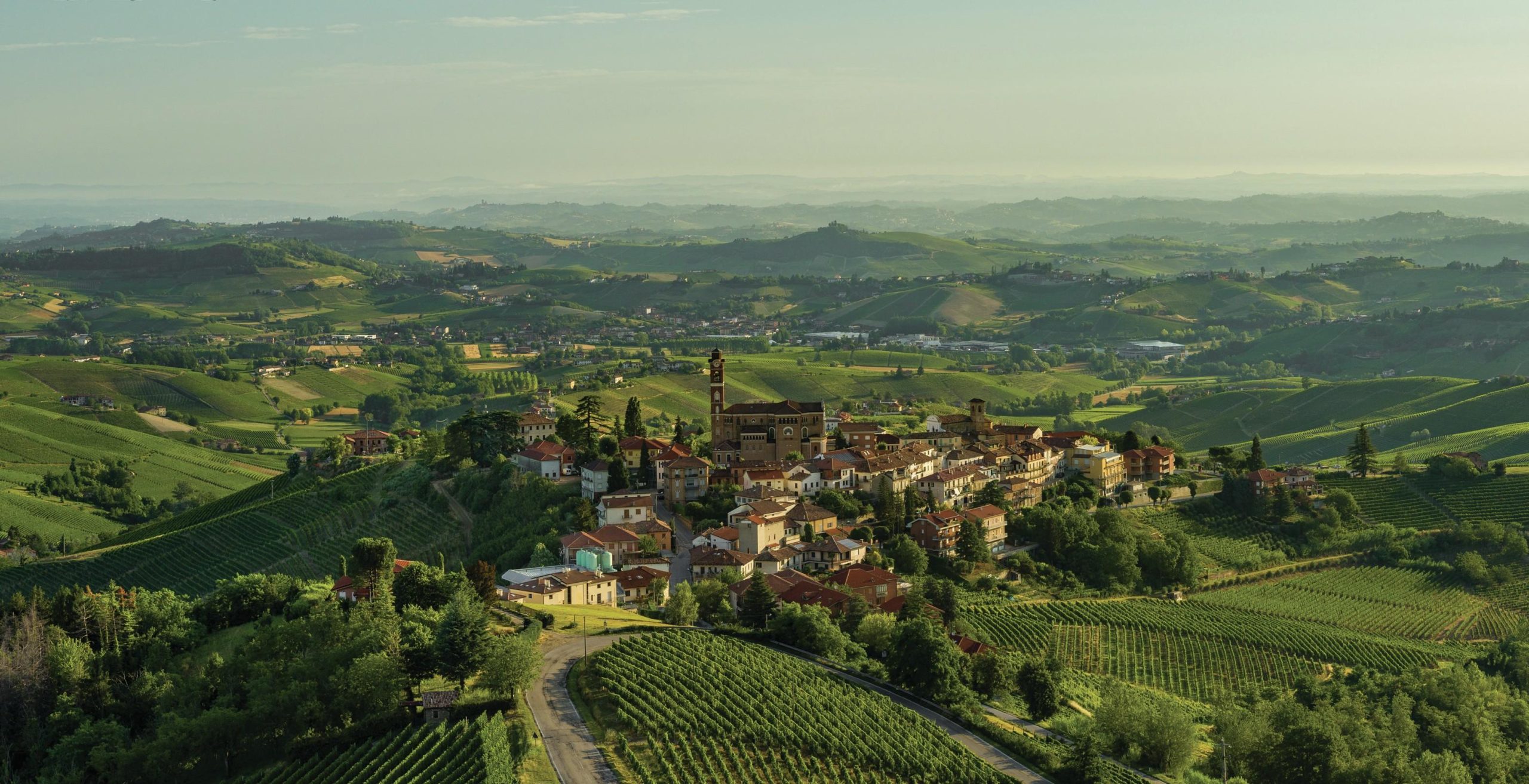
More specifically, Cotarella detects some echoes of his homeland among the three Amorim properties: thus Quinta Nova de Nossa Senhora do Carmo in the Douro brings power and energy, in “an ideal mix between the strength of Sicily and the rocky verticality of Valtellina”, he says. Taboadella in the Dão, meanwhile, has elegance and balance, “reminiscent of some elegant interpretations of Chianti Classico or the reds of Alto Piemonte”. And Herdade Aldeia de Cima, Luísa Amorim’s personal project in the Alentejo, promises breadth and smoothness, “reminiscent of the warmer areas of southern Tuscany or elegant Puglia”.
Not that Cotarella is seeking to impose an Italian template on the wines. “The collaboration arose from a meeting of minds and immediate dialogue with the Amorim family, particularly with Luísa Amorim,” he explains. “I found an approach to wine very close to my own: genuine respect for the territory, a strong sense of identity and a desire to promote native grape varieties.”
Cotarella only accepted the job after visiting the vineyards, tasting the wines and working with the estates’ respective winemakers – António Bastos and Eduardo Leite in the Douro, Rodrigo Costa in the Dão and António Cavalheiro in the Alentejo – a process which he says “confirmed to me that this was an extraordinary opportunity, one that deserved an ambitious project. What prompted me to accept this oenological collaboration was precisely the chance to accompany an already solid business towards a further level of excellence, without distorting its voice but, on the contrary, strengthening it”.
Luísa Amorim agrees. “In practical terms, the impact is about refinement, rather than reinvention: even greater precision in how we read each site and each vintage, more clarity in texture and balance, and a continual elevation of each terroir’s highest expression, without compromising the identity that defines our wines,” she explains.
“Importantly, this is not a conventional consultant arrangement. Riccardo always affirms that, for him, it is an oenological collaboration: an ongoing exchange of knowledge and perspective, working alongside our senior resident winemakers and viticulture teams, who remain at the heart of each estate’s day-to-day decisions and identity.”
So what will Cotarella bring to the project? “I will make two fundamental contributions,” he says. “Technical precision, from agronomic management to cellar choices, working methodically and consistently; [and] stylistic experience, focused on elegance, purity of fruit and the overall harmony of the wines, respecting the style of individual wineries, but concentrating on an international vision useful for positioning wines with a clear identity, traceability and recognisability, while remaining competitive. The goal is not to change the style, but to bring it to its maximum expression: balanced, defined wines that are faithful to the territory.”
For Luísa Amorim, the partnership has its roots in the long-standing relationship between the two families. “I have known Riccardo as both a respected international voice and, importantly, later as a friend,” she says. “There was a sense of trust from the beginning: in rigour, in values and in the idea that the most meaningful work in wine is done with humility in front of the vineyard, always with a smile and room for freedom.
Partner Content

“Riccardo brings advice, wisdom and sensitivity, with an extraordinary attention to minerality and, especially, to phenolic ripeness, micro-vinification and varietal purity. Beyond the perspective he brings from working professionally with iconic estates internationally, he has tasted, and still tastes, so many wines across the globe that it becomes easier to stay faithful to origin and culture.”
What will remain consistent is the central philosophy that underpins all three “mountain viticulture” estates: a focus on native grapes, and a parcel-driven approach exploring nano- and micro-plots – described by Luísa Amorim as “mosaic viticulture”. That encompasses what she calls the “intensity and structure” of Quinta Nova de Nossa Senhora do Carmo in the Douro, with 41 individual parcels and seven hectares of centenarian vines, yielding wines such as Mirabilis Branco, which Amorim hails as “one of the early Douro whites shaped by a Burgundy-inspired profile, [and] now widely recognised among Portugal’s finest white wines”.
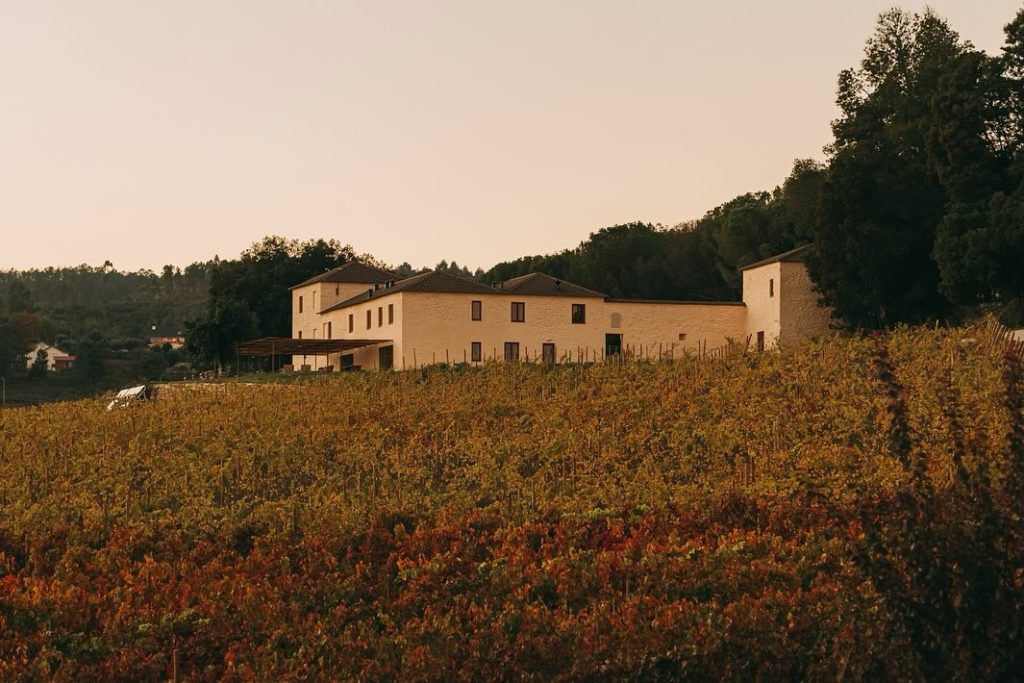
In the Dão, Taboadella’s granitic soils give “tension” and “precision”, with a focus on monovarietal wines including Encruzado, Touriga Nacional, Jaen and Alfrocheiro. And Herdade Aldeia de Cima continues the mountain focus, with the first patamares in the Alentejo, a strong Atlantic influence and, again, native grapes to the fore.
It’s clear from both parties that this is a long-term project. Will there be new wines? “Yes,” says Luísa Amorim, “but it is still a secret. For now, our priority has been to go deeper rather than broader: to continue exploring the potential of our existing mosaic of indigenous varieties and micro-parcels, and to refine how each terroir speaks.
“When we consider new plantings, it is always purposeful, linked to long-term resilience and to the precise matching of variety, exposure and soil. Any new wines would follow the same principle: they would only be released when they genuinely add a distinct, terroir-driven expression to the portfolio.”
And how will they judge the effectiveness of the collaboration? “Success is measured over time and through coherence,” says Luísa Amorim. “We always say: ‘We are going to make great wines together.’ It is also important to understand that Riccardo is very enthusiastic to know Portugal, our terroirs and native grapes. I have to admit that, in the beginning, the way we naturally do blending – which is an art – can sound confusing to an Italian.”
Cotarella ticks off three criteria for judging future success, starting with quality of wines, which encompasses “clear progress in finesse, balance, longevity and stylistic consistency”. Then there is production: “healthier vineyards, more sustainable processes and a more efficient and modern winery”. Lastly – and crucially – market recognition, which he measures by “greater presence in restaurants, attention from enthusiasts, growth in foreign markets, while maintaining authenticity and territorial identity”.
Cotarella adds: “If, in five years’ time, the wines are able to convey their origins even more clearly and are even more recognisable for their style and elegance, then the project will have achieved its goal.”
Luísa Amorim has the last word. “Success is also human,” she says. “This collaboration is an encounter between geographies, generations and teams. If it strengthens our internal culture of learning and reinforces Portugal’s role on the world wine map, then it will have achieved something truly meaningful. It is a great pleasure to be part of this collaboration. We all work with wisdom and a smile.
Related news
Is Canadian fizz nearing its 'Nirvana' moment?
Louis Roederer enters Burgundy with Domaine Pierre Damoy acquisition


