



Hundreds protest Damascus alcohol ban in Syria
Hundreds of protestors rallied in the streets of Damascus on Sunday (22 March), to protest a recently announced government decree that will restrict the sale and consumption of alcohol.
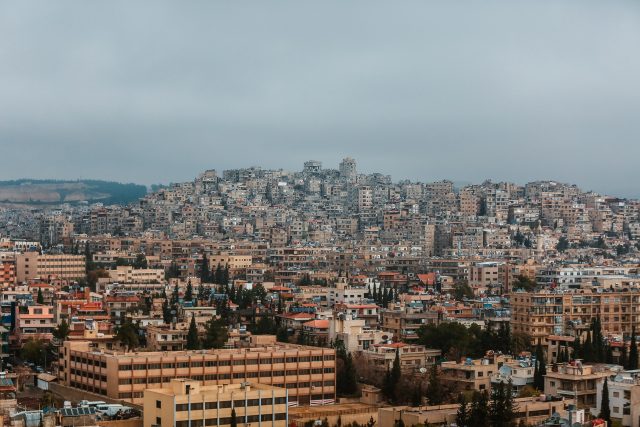
On Sunday (22 March), swathes of protests took to the streets of Syria’s capital, Damascus, in backlash against the government’s controversial decision to limit alcohol sales and consumption.
Last week, the government issued a decree banning alcoholic beverages throughout the capital city, aside from in select Christian areas. The government says the aim of the ban is to “eliminate practices that violate public morals”, but critics argue that it threatens long-held civic liberties.
Over the weekend, hundreds of residents from a range of religious groups rallied in Christian neighbourhood Bab Touma to rally against the ban, according to AP.
‘We have come here to defend an idea’
Surrounded by heavily armed security forces, protestors chanted defiant slogans like “Syrians are united!” and waved signs that implored the government to protect both personal freedoms and religious minorities.
“This is not about whether we want to drink alcohol, this is about personal freedom,” Isa Qazah, a 45-year-old sculptor from the area who joined the demonstration along the medieval stone lanes near Damascus’ Old City, told AP. “We have come here to defend an idea.”
Bar owners have been given three months to comply with the order.
Social changes
The decision was made as the interim government of president Ahmed al-Sharaa faces mounting pressure from hard-liners to implement values that are more conservative.
Partner Content



Many restaurants had already changed the way they served alcohol or stopped doing so completely, after rebels led by al-Sharaa, who is a former al Qaeda commander, ousted Bashar al-Assad in December 2024, after 13 years of civil war.
Since overthrowing al-Assaad 15 months ago, al-Sharaa has sought to assure Syrians that their rights and freedoms would be protected, and vowed to protect religious pluralism.
Religious concerns
But several recent announcements, including a ban on women working in the public sector wearing makeup, and mandatory full-body swimsuits on public beaches last year, have piqued worries that this could be changing.
Additionally, many religious and ethnic groups remain on edge, with Sectarian attacks by progovernment Sunni fighters killing hundreds of Alawites and Druze over the past year.
Protestors on Sunday said that they worried the latest alcohol ban could worsen tensions, as the decree only allows for alcohol sales in predominately Christian neighbourhoods. Some said that in singling out Christians, authorities are framing them as responsible for what the decree describes as “violations of public morals.” Although Islamic law prohibits the consumption of alcohol, Damascus is full of secular Muslims.
Government response
“How are our neighbourhoods violating public etiquette? The division this creates is unfair and irresponsible,” said Fawaz Bahauddin Khawja, a Christian lawyer at the rally. “This is the real face of Damascus. The only flag we raise is the Syrian flag.”
As criticism built ahead of the protest, Damascus authorities issued a statement late Saturday apologizing to the city’s Christian population “for any misunderstanding or misinterpretation of the decision.” It also clarified that hotels will be spared the booze restrictions.
“This decision does not interfere with citizens’ personal freedoms,” the statement read. “The regulation of alcohol sales exists in all countries, with differences in how it’s applied and enforced.”
Related news
China is rebuilding its on-trade around a new kind of drinker
Drinks giants club together to sue Indian state
Vegg White foams at the bit as it launches in new territories


