



MA Silva backs pairing wine and cork stoppers with science
Portuguese bottle cork closure manufacturer MA Silva conducted a study with the University of Aveiro to assess the impact of various closure systems on red wine.
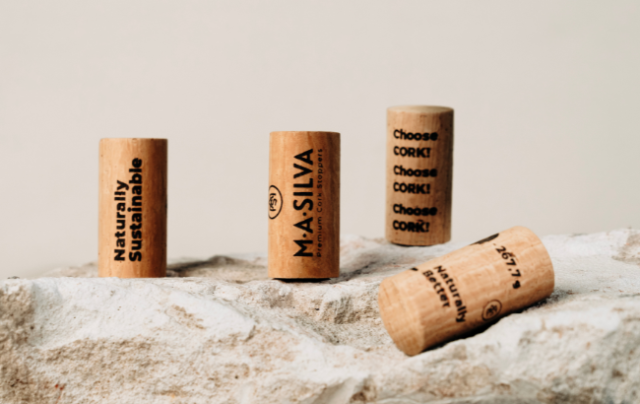
According to MA Silva, the selection of wine closure systems has become critically important due to their profound impact on the chemical and sensory evolution of wine, even over short storage periods.
In collaboration with the University of Aveiro, the Portuguese manufacturer conducted a comprehensive study to assess the effects of various closure systems on the development of red wine during short- and medium-term storage, specifically from five to 35 months. By employing a rigorous methodology and diverse chemical and sensory indicators, the study provided insights for aligning closures with specific wine styles and consumption timeframes.
MA Silva asserts that the sensory characteristics of wine are vital for consumer acceptance. These attributes originate in the vineyard, are shaped during the winemaking process, and further evolve during bottle storage. Factors such as bottle position, type of closure, temperature, and storage duration significantly affect the oxygen transfer rate (OTR), thereby influencing the transformations that occur after bottling.
Recognising the crucial role of oxygen permeability in stoppers, the researchers rigorously examined the impact of different closure types on red wines from Burgenland, Austria, and Douro, Portugal. These wines were stored for five and 35 months and sealed with natural cork, various micro-agglomerated cork stoppers, and screw caps with tin liners.
To achieve a comprehensive understanding, the team employed an extensive array of analytical methods, including the accurate identification of volatile compounds using comprehensive gas chromatography. Phenolic profiles were precisely determined using ultra-high-performance liquid chromatography, and trained panels conducted thorough sensory evaluations. Additional assessments included measuring chromatic parameters, sulphur dioxide levels, acidity, pH, and OTRs using chemiluminescence.
Findings
Consistent with expectations, the comparison of Douro red wines revealed significant oxidation in wines sealed with Natural Cork 1 when contrasted with Micro-agglomerated A (p < 0.05), although orthonasal differences (aromas detected through smelling the wine) proved statistically insignificant. Cluster analysis of volatile composition and combined data confirmed the distinct effects based on closure type.
In the Burgenland wine experiment, which included Natural Cork 2, Micro-agglomerated A and E, and screw caps, retronasal analysis (aromas detected after swilling the wine around the mouth) demonstrated significant differences between screw caps and Micro E (p < 0.05), highlighting that wines sealed with screw caps exhibited ‘the most distinctive volatile’ profiles. The detection of early changes in volatile composition was notably sensitive to the different closures.
According to the study, screw caps were found to induce a more reductive environment, characterised by an increased presence of sulphur compounds and diminished antioxidant activity.
Conversely, natural cork promoted mild oxidative reactions that led to the following: Strecker degradation of amino acids, the formation of nor isoprenoids (enhancing varietal character), the development of floral and fruity esters and acetates, and the production of dioxanes, which serve as ageing markers associated with favourable sensory traits. These transformations became especially pronounced with prolonged storage.
In summary, the study conducted by MA Silva and the University of Aveiro established that closure types exert a significant influence on the chemical and sensory development of wine. The conclusion was made using advanced chromatographic techniques and comprehensive data integration, facilitating predictive modelling.
According to the study, natural cork not only favoured the formation of aromatic compounds and ageing characteristics but also underscored how crucial the pairing of wine and closure is in dictating the wine’s sensory profile over time.
Additional information is available on the MA Silva website. The complete study was published on MDPI.
Related news
Pop the cork on Prosecco glory: enter The Prosecco Masters 2026


