



How LCB delivers Christmas in time
Each year, the lead-up to Christmas presents a challenge to drinks logistics. For London City Bond (LCB), December sees a peak of up to 23,000 individual orders in just one week.
Although there are a few significant peaks for drinks deliveries during the year, such as Valentine’s Day and Mother’s Day, none compare to the period leading up to Christmas. In the past, the busiest season for LCB was more spread out, with customers stocking up well in advance of when they actually needed products. In fact, the peak season for drinks and spirits logistics could start as early as September.
However, in recent years, the festive peak season has become noticeably shorter, now concentrated into just a few weeks in December. LCB attributes this change to tighter budgetary controls, as customers aim to maximise their credit terms with suppliers.
“The challenge for LCB is how to bring stock in at the beginning of the month and, at the same time, land it in customer accounts so it’s available for sale at the beginning of the month,” explains David Hogg, sales director at LCB.
Hiring skilled staff is just the beginning for the company’s bonded warehouses, which hold 780,000 live products at any time, totalling 11 million cases in storage in the UK.
“While it may seem an easy answer to simply employ temporary labour, it’s not quite as simple as that,” Hogg continues. “Picking the right stock and presenting it accurately is not something that can be picked up with one day’s training – and neither is being able to drive some of the mechanical equipment that operates within our warehouse. Many of these are highly sophisticated trucks, including very narrow-aisle trucks that are wire-guided to allow picking at multiple levels in the air, so adequate training is needed in advance.”
To meet the demands of the festive peak, LCB relies on its loyal, long-serving staff to address the challenges. When necessary, these dedicated employees are always willing to work extra hours to ensure that customers can depend on the company’s services during the critical time of year.
Hogg added: “While we value our permanent staff, we also utilise temporary labour when appropriate. This can be very effective for tasks such as handling rework and gift packaging requests. Additionally, using temporary workers allows experienced staff to focus on the more complex picking and checking tasks.”
On the road
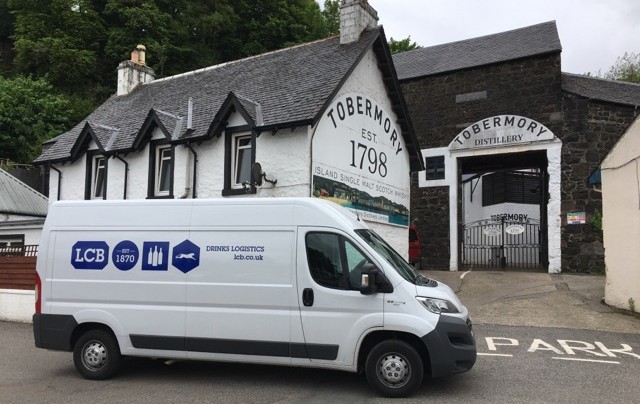
Transporting goods and ensuring a sufficient number of vehicles is a significant challenge. More than 300 delivery vehicles make up LCB’s convoy, under the guidance of experienced transport teams. Located at strategic hubs across the country, they are skilled in preparing for and executing increased delivery demands.
By analysing past data, these teams can reasonably predict when demand peaks are likely to occur, particularly on specific days of the week. They plan accordingly, either by securing additional vehicles in advance or by utilising route-planning tools to maximise load capacity. This can involve arranging second, or even third, runs when necessary.
Certain aspects of the peak season are beyond LCB’s control. For instance, Hogg notes that deliveries to supermarkets can pose significant challenges, as supermarkets are also operating at full capacity. “Arriving on time does not always guarantee timely unloading; however, the teams often have to manage these situations while striving to meet our customers’ needs,” he explains.
To ensure customer satisfaction during peak seasons, LCB heavily relies on its systems, including warehouse management, distribution and route planning, invoicing, Electronic Data Interchange/Application Programming Interface (EDI/API) integration, and customer online account access. According to Hogg, 98% of all orders are received electronically in one way or another, making it essential to manage all systems effectively, even during peak demand. He also emphasises that even minor interruptions to LCB’s services are taken seriously and that robust backup plans are in place to address them.
LCB’s ability to provide exceptional service to its customers is not a coincidence; it stems from 155 years of commitment. Dating back to 1870, LCB draws on its experience and has developed into the leading tax warehousing company in the UK, continuously working hard even throughout the festive season.
Hogg concludes: “We always remain open during Christmas and New Year and provide a full service, but come the early days of January, we can finally breathe a sigh of relief that the madness is over for another 12 months.”
Related news
The Wine Society posts best-ever Christmas with £35m in festive sales
Virgin Wines' growth strategy bears fruit with 'encouraging' Christmas results


