



Go your own way: Bodegas Roda and La Horra (Part I)
‘Landscape and vintage’ is the mantra for Bodegas Roda’s Rioja and Ribera del Duero wines – but this zeitgeist-friendly ethos wasn’t always the obvious path to follow, as Richard Woodard discovers during a visit to both regions.
In many ways, Bodegas Roda – both in its Rioja operations and in its Ribera del Duero venture, La Horra – could be said to epitomise the modernising movement in Spain: the primacy of vineyard over winery, wines that favour restraint over heft, a ‘serious’ and textural white wine.
But this wasn’t always the obvious way to go. Roda was established in 1987, in the aftershock of Robert Parker’s deification of the 1982 Bordeaux vintage, when it began to seem that successful fine wines needed to have more of everything: more fruit, more extraction, more oak, more alcohol.
“We were born in that time, but we never took it to the extreme,” says Victor Charcán, Bodegas Roda sales director. During the late 1980s, shifting the focus to the land meant swimming against the regional tide, with many Rioja vineyards still reeling from what Pedro Ballesteros Torres MW has dubbed “the sad years” of the 1950s to the 1970s: high yields and herbicides. “The winemaker would see the grapes when they arrived at the winery,” says Charcán. “But for us, it was definitely vineyards – we couldn’t understand why without that.”
The vision of Roda founders Carmen Daurella and Mario Rotllant – the billionaires who made their fortune via the bottling and distribution business now known as Coca-Cola Europacific Partners – was of a small-production, high-quality Rioja venture. They put together 40 hectares of virgin vineyard land, then enlisted the expertise of Agustín Santolaya and Isidro Palacios (now respectively Roda’s MD and technical director of viticulture).
Bad news: far from being prime vineyard land, Santolaya and Palacios told them, that 40ha would be better used for growing wheat. A false start, but soon overcome. “Our first move was buying the best vineyards and paying more – right vineyards, right soils, bush vines, older than 30 years old,” explains Charcán. “And, little by little, we gained the confidence of the growers and started to buy from them.”
The grapes for Roda’s quintet of wines – Sela, Roda, Roda I, Cirsion and Roda I Blanco – are sourced from a 10km–15km radius around Roda’s base in Haro, with some Graciano from high ground nearer Logroño and Garnacha from the other side of the River Ebro.
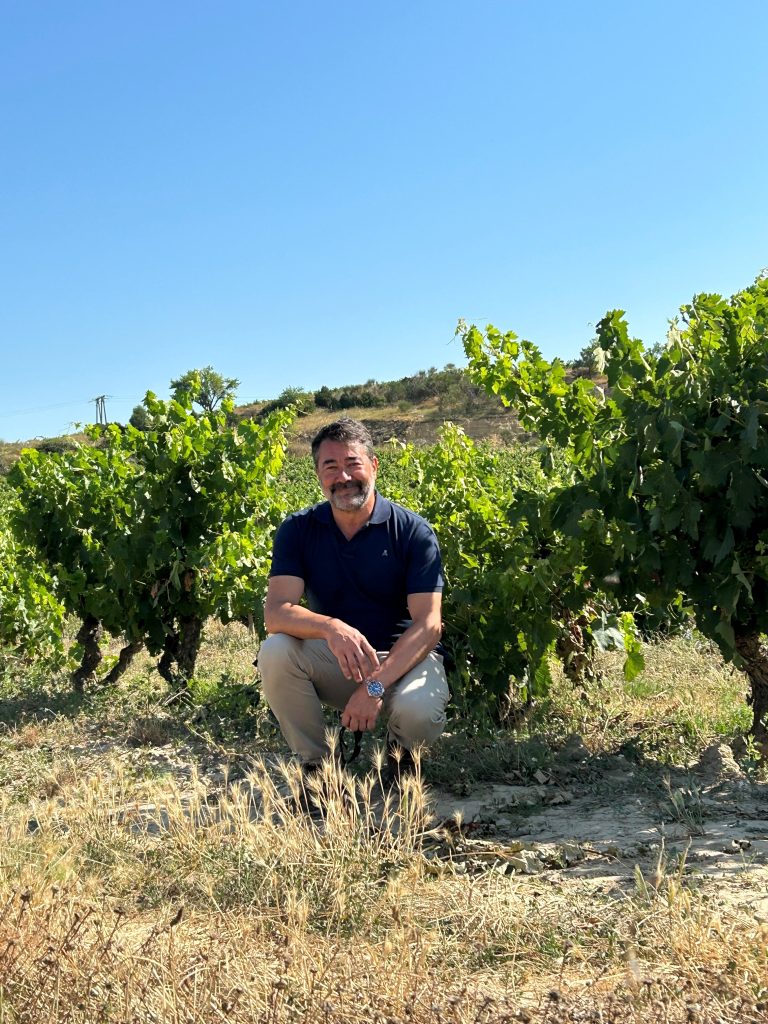
Walking through Roda’s Perdigón vineyard at Briñas, on an elevated position close to Haro, it’s the perfect spot to appreciate the intricate climatic influences that shape this part of the region. “Hot air sweeps up the valley from the Mediterranean – we feel that influence,” says Charcán, shielding his eyes as he looks southeast. “We also feel a certain continental influence, especially in this part of Rioja – but we also feel the Atlantic.”
Factor in the impact of climate change and the picture becomes even more complex. Traditionally, warmer ‘Mediterranean’ vintages were the highest-rated here, partly because of their relative rarity. “But today, if you get the right producer in an ‘Atlantic’ year, it can be glorious,” says Charcán, highlighting the example of 2013. “In the old days, you wanted a vineyard with southern exposure. Now you want northern exposure.”
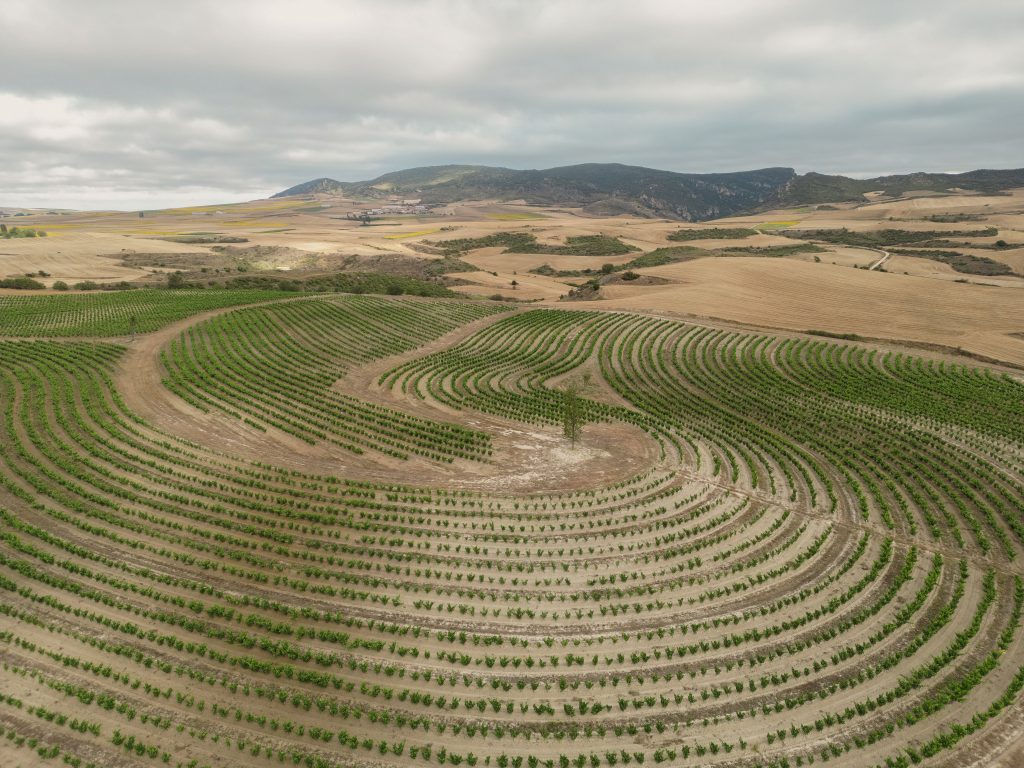
The gradual elevation of average temperatures has sparked a quest for higher altitudes, more Graciano, ways of achieving a lower pH. Close to the foothills of the Obarenes mountains northwest of Haro, Roda’s Cellorigo vineyard, planted in 2020 and its highest at 660m, is very much in this vein: it uses the ‘key line’ system, its vines sinuously rippling along the land’s contours in an effort to prevent erosion and maximise water retention.
Cellorigo’s location also enables it to benefit from the Cierzo, a northerly wind that Charcán likens to the Rhône’s Mistral. “It’s a healing wind,” he says. “It’s cold, and it has a healing effect after rain. It blew in 2007, when we thought we were going to lose the harvest because of the late rains, but then the Cierzo came up. That was a miracle.”
Partner Content


Also faintly miraculous is the apparent precocity of Cellorigo. The quality (tasted blind) in 2024, only four years after planting, was “spectacular”, according to Charcán. “Age is a quality factor, but there are some other factors that may make the age less relevant. If you have the right spot, look after the vineyard and find the right genetic material – you can find quality at a younger age.”
Genetic material is a bit of an obsession at Roda. Concerns about the lack of genetic diversity in modern plantings of Tempranillo prompted a clonal research programme that identified more than 400 different mutations of the variety, and the creation of a gene bank to inform the planting of future vineyards. Following a similar exercise in Ribera del Duero (more on that later), a third strand of the research is now focusing on Viura.
Just as Tempranillo is the heart and soul of Roda’s (and La Horra’s) red wines, so Viura is the focal point of Roda I Blanco (alongside Garnacha Blanca and Malvasía). “Viura can be amazing when you have old bush vines,” says Charcán. “Its ability to interact with oak and to age is fantastic.” Most of the fruit is sourced from cabezadas – vineyards planted in the upper part of the slope, where the soil is more eroded, suitable for higher-yielding varieties.
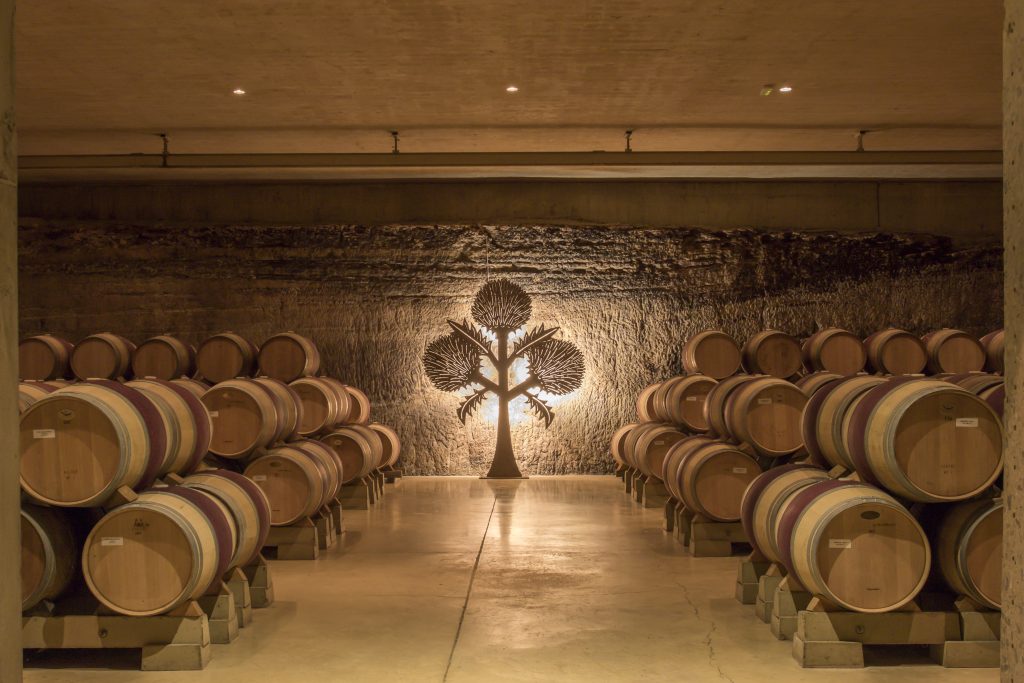
Roda I Blanco is the newest addition to the Roda family, but it shares a common approach with its red siblings, spending 18 months in bocoyes – large, 500-litre barrels – and 18 months in bottle before release. There’s no American oak here, only French, sourced from an array of coopers: Saury, Demptos, Vicard, Mercier, Berthomeau and more. “We would hate for our style to be dictated by a cooper,” says Charcán, adding that the winery asks coopers to source staves from different forests to increase diversity and blending options.
That’s key because – despite the Roda mantra of bottling ‘landscape and vintage’ – these wines are not pure expressions of place in the manner of Viñedos Singulares. Instead, they are blends that aim to convey the different flavour profiles of Tempranillo grown in this part of Rioja: red fruit to the fore in Roda, black fruit in Roda I, the blend flexed with different amounts of Graciano and Garnacha (always very much in the minority) to suit the vintage. “In warmer years like 2022, you might say that Roda is ‘dark red’, playing with words,” says Charcán. “We used more Graciano and Garnacha in 2022.”
Cirsion is a case apart. Its genesis was a pre-harvest visit in 1966 by Santolaya and Palacios to a small vineyard in Villalba, northwest of Haro, where they found certain vines were producing grapes with particularly silky tannins. When this happened again in 1997, they made a small batch of the wine, selecting individual vines, paving the way for Cirsion’s first vintage in 1998.
Rather than throwing plenty of new oak at its top wine, the team again chose to tread a different path – making Cirsion perhaps the archetype of Roda’s counter-intuitive approach to Rioja. “They decided to shorten the ageing,” says Charcán. “The goal with oak ageing is to polymerise the tannins, but here you had that in the vineyard. Going against Rioja traditions, they decided to age it for nine months … It doesn’t even hit the crianza category, but it’s the highest in price.”
Next week: From Tempranillo to Tinta del País – visiting La Horra’s new winery in Ribera del Duero
The wines of Bodegas Roda and La Horra are represented in the UK by Mentzendorff
Related news
Copa Jerez to test UK chefs and sommeliers’ pairing prowess


