



Are sparkling wine producers worried about the rise of no- and low- fizz?
With no and low-alcohol sparkling wine on the up, Louis Thomas looks at whether this might leave some traditional fizz producers feeling washed-up.

“Alcohol is alcohol. When we go to alcohol, it’s because we don’t want to drink without alcohol. If you don’t want to pray, don’t go to church.” That’s what Pierre-Emmanuel Taittinger said when asked by The Telegraph whether the Champagne house that bears his surname would ever release a non-alcoholic sparkling wine.
However, while Taittinger is pretty clear on his opinions of a glass of fizz without alcohol, certain relatives of his have other ideas. Maggie Frerejean-Taittinger, her husband Rodolphe Frerejean-Taittinger and their friend Constance Jablonski founded non-alcoholic organic sparkling wine brand French Bloom in 2021.
Offering de-alcoholised sparkling wine, including one, La Cuvée 2022, which retails at luxury store Harrods for £109, the company is keen to prove that premium bubbles can come without an ABV, and with no compromise on the price tag.
At the beginning of this year the drinks business examined the growing potential of the non-alcoholic sparkling category, and much has happened since then to reinforce that notion. In October it was announced that Moët Hennessy, the wine and spirits division of luxury giant LVMH, had acquired a minority stake in French Bloom (the size and value of which have not been disclosed). A spokesperson for Moët Hennessy explains why, in addition to its strong Champagne offering, which includes the likes of Dom Pérignon, Krug and Moët & Chandon, it has decided to add a nonalcoholic sparkling wine to its portfolio: “Moderation and interest in sophisticated non-alcoholic alternatives are now part of a structural change in consumption behaviour, well beyond a mere passing trend. Observing the growing demand for non-alcoholic alternatives among our consumers, the emergence of ‘flexidrinkers’ is similar to that of ‘flexitarians’ who limit their meat consumption.”
Much has been made of younger generations going sober, but it appears to be a trend across the board, with data from Drinkaware suggesting that, between 2011 and 2022, the proportion of adults in England drinking at least once a week declined from 54% to 48%. There is also a clear gender divide too – as of 2022, 55% of men drank at least once a week, compared to 42% of women.
Asked whether Moët Hennessy is open to investing in other non-alcoholic drinks brands, the spokesperson says: “Excellence and a spirit of conquest are at the heart of our approach. We remain open to all projects driven by the same values. For now, our priority is the development of French Bloom.”
Sober celebration: no/low sparkling producers are also taking the lifestyle route
Blooming market
French Bloom is not the only brand trying to offer a sparkling wine product aimed at those who either don’t drink at all, or are looking to cut down.
One new arrival on the market is Society De La Rassi, which has just launched a de-alcoholised single-varietal sparkling Chardonnay, made from Spanish-grown grapes.
Founder Steve Jackson explains that, after he went sober, he “missed that experience of popping open a bottle to enjoy with friends”, but realised that “it wasn’t the experience of alcohol that I was drawn to; rather it was the sense of connection”. The wine’s suggested retail price of US$70 (around £54) might seem ambitious for a wine which has had its alcohol removed, but Jackson argues that the value of a bottle goes far beyond the cost of the grapes inside, explaining: “It’s the value that we place on a guest, on our friends, on the people we care about. I used to cherish the opportunity to give a friend a special bottle of wine for their most important life moments. And I don’t think this should be any different for people who are drinking mindfully or going sober.
“The value of wine is more than the alcohol content,” adds Jackson. “It’s the meaning behind it, the craftsmanship, the experience.”
Asked to react to news of Moët Hennessy’s minority investment in French Bloom, Society De La Rassi marketing director Wesley Davis reveals that the business harbours a similar ambition. “Aligning with a major player that understands the intersection of wine and lifestyle has been a part of our roadmap since day one,” Davis says.
Enviable position
The question is whether interest from “major players” might come from a place of fear.
“I suppose that, if the consumer only has £12 to spend on a bottle of fizz, we would be considered as a rival, but we are also making our own way in an expanding sector of the market,” says Will Willis, commercial director of alcohol-free wine brand Zeno.
“We would like to think that Zeno is offering a credible alternative to any sparkling wines around £10–£12, should the consumer be wanting to manage their consumption of alcohol. Decaffeinated coffee vs caffeinated coffee; low-fat vs full-fat foods. The consumer should have a choice,” argues Willis.
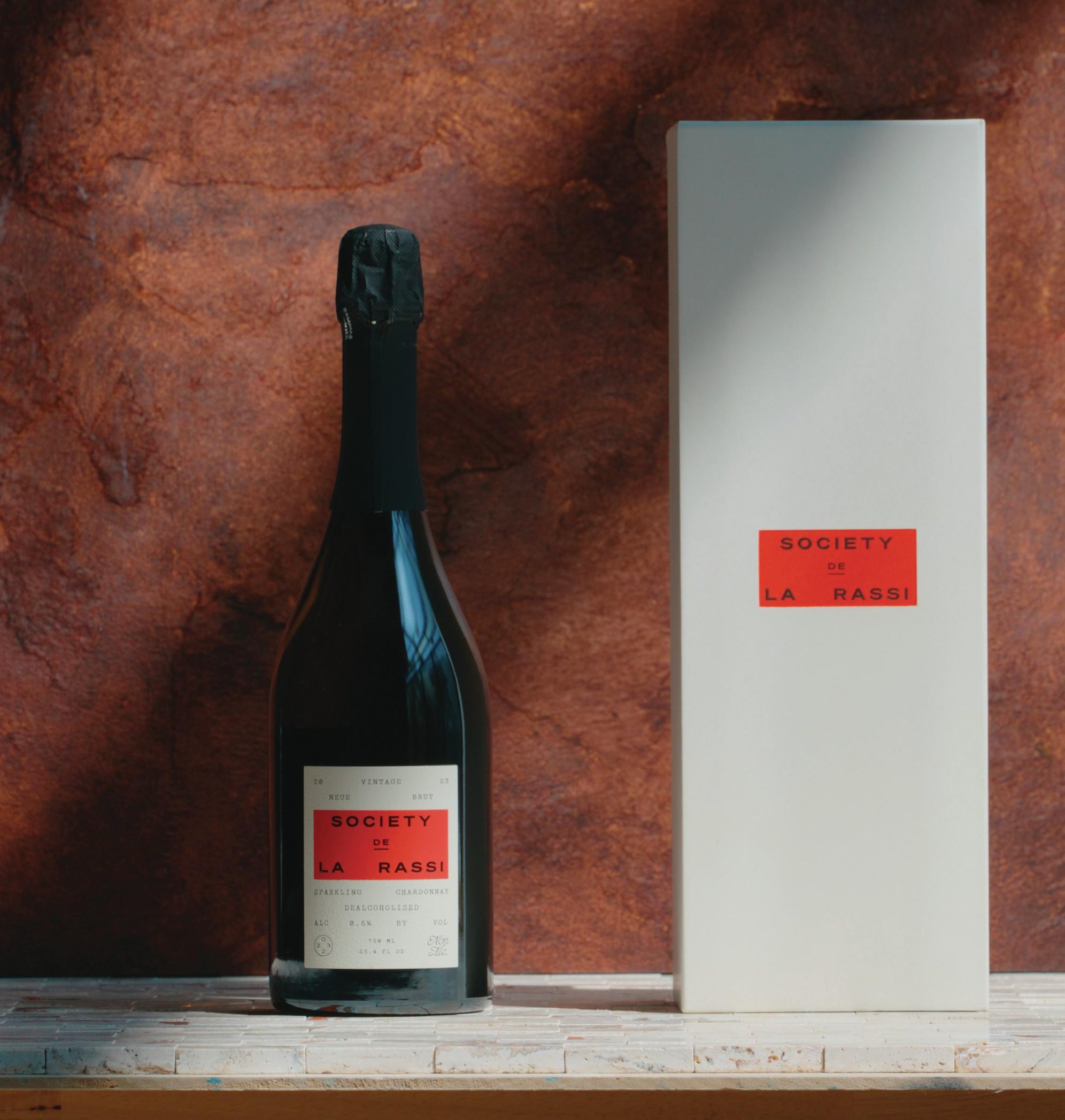
Aiming high: Society de la Rassi would like to align with a major drinks player
Zeno founder David Hodgson suggests that non-alcoholic alternatives are complementary to the sparkling wine category. “Rather than be of concern to other sparkling producers, we are more interested in collaborating with them as we encourage ‘zebra’ or ‘flexi’ drinking, the exciting emerging consumer category,” he says.
Paul Beavis, CEO of Wild Idol, which produces alcohol-free sparkling white and rosé wines (now also in magnum formats), echoes this positive sentiment, suggesting that the brand is not a threat, but is instead “complementary to the sparkling category and very much a positive addition”.
He claims: “Our approach benefits event operators too, enabling better margins on non-alcoholic offerings while also maintaining existing partnerships with alcoholic brands.”
Wave of invesmnet
It might be assumed that a notable decrease in the number of regular drinkers would give the drinks industry as a whole cause for concern, but it appears that there is no opportunity quite like an impending crisis.
Moët Hennessy is just the latest of the big wine players to take a gamble on non-alcoholic sparkling wine. Henkell Freixenet, the titan of the sparkling wine world, is no stranger to the world of low and no, having launched its own 0.0% ABV Mionetto Aperitivo to complement its portfolio of sekt, crémant, Cava and Prosecco. “As global market leader for sparkling wine, Henkell Freixenet does not perceive the trend of noand low-alcohol as a threat, but sees the opportunities this rising category offers,” argues CEO Dr Andreas Brokemper.
“Recognising the trend of sparkling wines and spirits in the alcohol-free segment, the focus is not on the alcohol, but on the occasion. No- and low-alcohol products are not just consumed as alternatives to traditional alcohol beverages; they create entirely new consumption occasions and expand the range of drinking experiences, whether for special occasions, such as the increasingly popular ‘Dry January’, or all year round for personal lifestyle reasons.
“Globally, no-alcohol sparkling wine consumption volume increased by 7.1% year-on-year, still on a small scale, but growing. As of year to date September, our non-alcoholic products increased in volume by 25%, with Mionetto Alcohol Free being a strong growth driver (already more than double the previous year’s sales), and Freixenet is the number one internationally-distributed no-alcohol sparkling wine brand worldwide,” he adds. “Alongside Germany, the Eastern European countries are the most dynamic markets in the non-alcoholic sector.”
It isn’t just non-alcoholic brands that Henkell Freixenet has invested in, but the technology that makes these drinks possible too.
“Our alcohol-free sparkling wines are de-alcoholised using our gentle vacuum process. We have our own state-of-the-art de-alcoholisation plant for this purpose. The flavour and fine bouquet come very close to the alcoholic original,” Dr Brokemper explains.
As to whether he thinks that alcoholic sparkling wine stands to lose out more than still wines to the rise of non-alcoholic alternatives, Dr Brokemper is defiant.
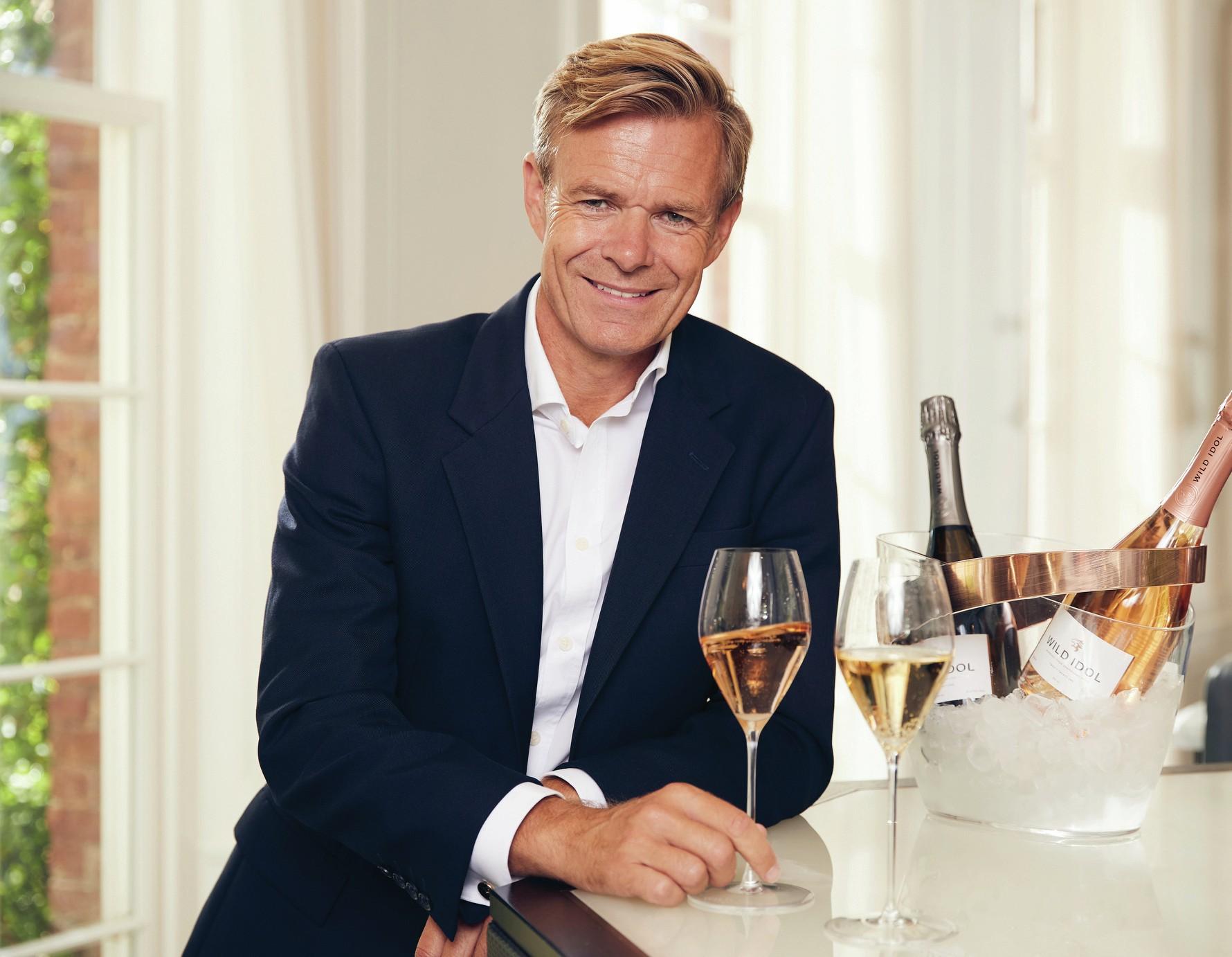
Zero threat: Wild Idol’s Paul Beavis insists no/low is a positive addition to the market
“We see non-alcoholic sparkling clearly as a complement to classic sparkling wines,” he says. “And what a great possibility to be able to offer both experiences.”
Dr Brokemper also points to sparkling wine being more “associated with occasions and celebrations” than still wines, the kind of occasions which involve larger gatherings. Still wines tend to be more for “in-home” consumption.
According to IWSR data, as of this year, 30% of the UK adult population consumes sparkling wine at least once a month – an increase from 25% in 2019, suggesting that a small but notable shift towards sparkling wine becoming a more ‘everyday’ drink may be occurring.
Some producers suggest that it is precisely this distinction between when people drink still wine versus sparkling that means they are not unduly worried. Elena Branda, marketing manager at Perlino, which produces Moscato d’Asti, Prosecco and other spumante wines, says: “I do not think we have to worry too much. The sparkling wine category continues to be appreciated, especially in convivial occasions, like aperitivo hour, dinners and celebrations. Of course, we are seeing an increase in the demand for lowand no-alcohol, but we remain firm on the point that sparkling wine cannot be replaced.”
Stylistic reasons
Branda also suggests that those seeking a lower-alcohol sparkling wine do not need to resort to one which has had its alcohol removed, but rather wines which are made that way for stylistic reasons, such as Asti DOCG, which has an ABV of around 7%. Bisol 1542, part of Gruppo Lunelli, unveiled its I Gondolieri Prosecco Superiore di Valdobbiadene 2023 at this year ’s Vinitaly. At 10.5% ABV, it is far from being designated as lowalcohol, but it marks an intriguing stylistic shift. Company president Gianluca Bisol claims that it was not produced to appeal to those wishing to cut down on alcohol, saying: “Reaching 10.5% was not our first target. Our first was to produce a Prosecco without added sugar.”
“After careful selection of the bunches of grapes, harvested in suitable areas when analyses show a good balance between sugars and acidity, the grapes are destemmed and gently pressed,” he continues. “This produces a must that is stored in refrigerated tanks to prevent alcoholic fermentation from starting. After the addition of carbon dioxide, the product is filtered and bottled.
“The main challenge with this kind of product is to maintain the freshness and aroma of the grapes of origin with no alcohol content,” Bottega suggests. “We can also consider the difficulty in conveying value to the consumer as a great non-alcoholic alternative to wine. Although they offer the same consumption ritual as [alcoholic] sparkling wines, we are trying to broaden the consumption occasions: eg. at breakfast as an alternative to fruit juice.”
Classified as brut, it is at the bottom limit for permitted alcohol content in the DOCG. Despite its relative dryness, at 11g/litre residual sugar, and its low alcohol, Bisol 1542 sought “maximum sugar in the grapes” and a “line of acidity”. One factor that made this possible was the cartizze (sandstone and moraine) content of the soils, rather than the use of advanced technology.
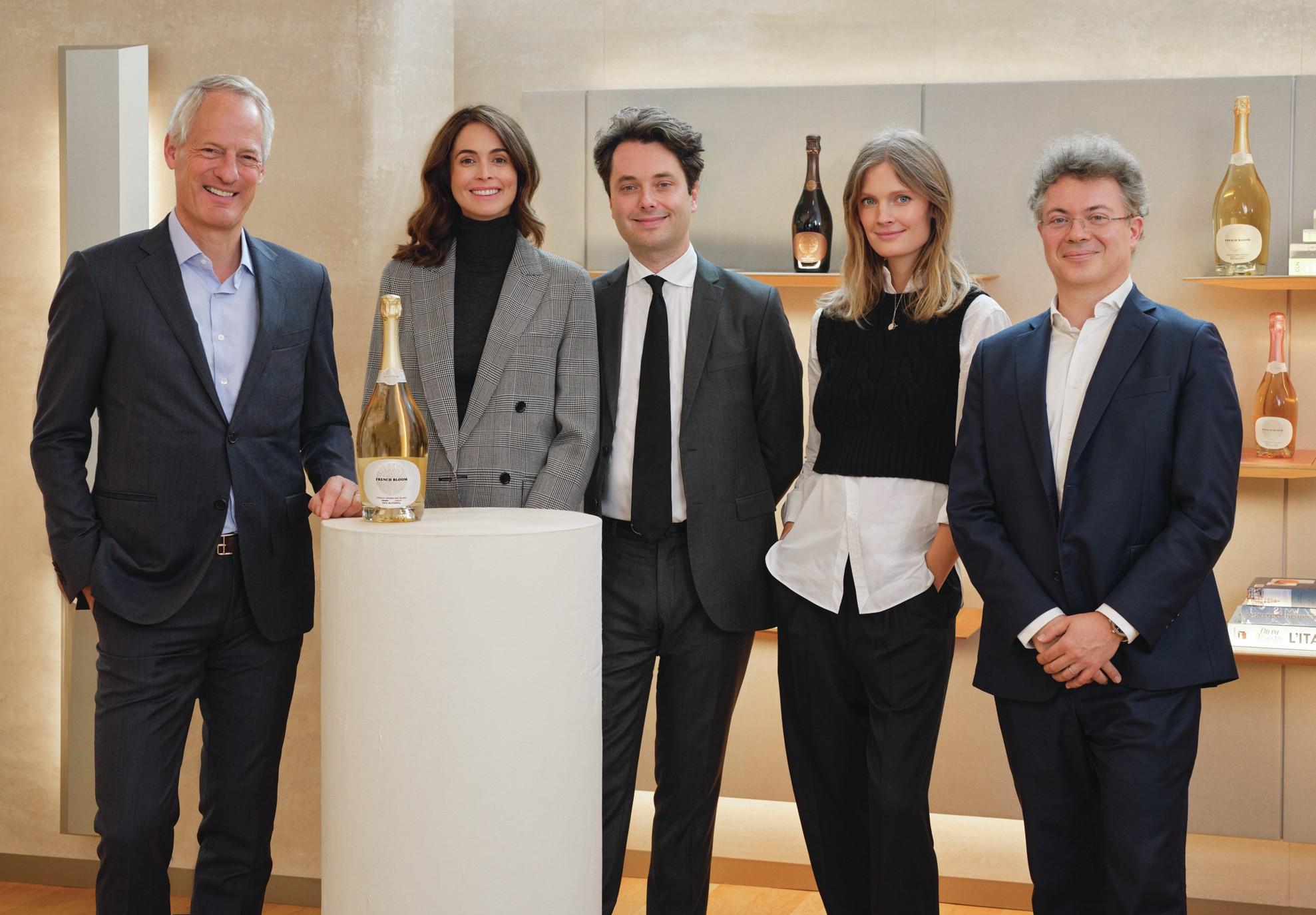
Bold move: Moët Hennessy invested in French Bloom three years after its launch
“You can pick the grapes 10-12 days later when they are grown on cartizze without them losing acidity,” Bisol explains. “Cartizze is for Glera what Montrachet is for Chardonnay.”
At present, I Gondolieri is, according to Bisol 1542, the brut with the lowest alcohol in the appellation, but it might not be long before other Prosecco players follow suit. Bisol notes that “people look for healthier wines” and, given that 1g of alcohol is roughly equivalent to 7kcal, a reduction in ABV may well be something that consumers are after.
There are some Prosecco brands which have taken the plunge and developed fully non-alcoholic alternatives, although they cannot be designated as Prosecco.
Della Vite, founded by actor Cara Delevingne and her sisters Chloe and Poppy, launched Della Vite Zero, a nonalcoholic sparkling rosé, in the UK this summer. The product might be described as stylistically similar to Della Vite’s Prosecco, although it is made from southern French Grenache which has been vinified and then de-alcoholised. The £14.99 price tag is moderate, particularly given that it retails at luxury department store Selfridges, but when it is compared to one of the UK’s bestselling non-alcoholic wines, Nozeco (£3.50 per bottle at Sainsbury’s), it starts to seem punchier.
No alcohol duty
Perhaps, at the lower end of the price scale, non-alcoholic sparkling will make a dent in sales, particularly when one considers that removing alcohol also means not having to pay alcohol duty, putting these wines at a price point which can undercut those with higher ABVs. However, at the more premium end of the market, it seems to be a different story. Julien Lonneux, CEO of Vranken Pommery UK, reveals that, although the Champagne house has invested in English vineyards through its Pinglestone Estate project in Hampshire, something which might have seemed inconceivable two decades ago, it has no plans to produce a nonalcoholic sparkling wine.
“It is not our speciality,” explains Lonneux. “We are traditional method sparkling wine specialists and we will continue to seek opportunities within this category.”
Asked whether he feels that Champagne Pommery and its fellow producers should be worried, Lonneux suggests that it might be the opposite.
“I don’t think sparkling wine producers should be afraid, but I don’t think it’s a short-term trend either,” he says. “There’s a real trend for better eating and living, which obviously will continue to push the non-alcoholic or low-alcohol categories. However, for the Champagne category and other premium sparkling wines, it is also a blessing as it means consumers are hopefully more likely to enjoy more qualitative wines with a philosophy to ‘drink less, but better ’.”
The previously mentioned Drinkaware data concerning the decline in weekly drinking might be considered as supportive of this – after all, most people don’t pop open a bottle of Champagne every week.
For now, at least, the rise of premium non-alcoholic sparkling wine brands is on the industry’s radar, but it is not considered hostile…yet. Moët Hennessy clearly sees French Bloom as a product that can and should sit side-by-side with the rest of its portfolio and, as previously mentioned, it suggests that there is potential for further growth. However, the French wine and spirits giant has not expressed any intent to invest in the brand at the expense of the rest of its portfolio. At the less expensive end, even more affordable non-alcoholic brands still have a long way to go before the trend becomes worrisome.
The industry should absolutely expect to see the appearance of more non-alcoholic sparkling wine brands at both ends of the pricing spectrum, but they are in addition to the alcoholic ones which already exist, not instead of them. Sometimes consumers do just want alcohol, just as sometimes even the most agnostic of us may pray.
Kylie helps 0% grow
- Kylie Minogue’s best-selling wine range has expanded to include an alcohol-free sparkling rosé.
- Alex Lynch, senior brand manager for Benchmark Drinks, which handles Kylie Minogue’s wines, says: “The alcohol-free wine market is currently valued at £200 million globally. The UK, the largest global market, accounts for £61.4m. However, this represents just 0.8% of the UK’s overall £7.9 billion wine market, highlighting significant growth potential.”
- “While the low and no-alcohol beer sector has a 5% market share, the low and no alcohol wine segment lags behind,” the spokesperson continues. “Even the most developed markets for alcohol-free wine are only at 1/5 of their potential size.”
- “Zero-alcohol sparkling wine is the fastest-growing category in the wine sector, with a 17% year-on-year growth, which Kylie 0% sparkling rosé has single-handedly contributed to half of the entire category’s growth,” they claim.
Why Bottega created a non-alcoholic fizz
- Sandro Bottega, managing director of Prosecco giant Bottega SpA, says: “In 2020 we launched Bottega Zero, a must-based drink available in a white and rosé version. The aim was to meet the needs of those who, for health or religious reasons, do not consume alcoholic beverages. They also appeal to those who appreciate wine, but take a cautious approach to alcohol consumption.
- “After careful selection of the bunches of grapes, harvested in suitable areas when analyses show a good balance between sugars and acidity, the grapes are destemmed and gently pressed,” he continues. “This produces a must that is stored in refrigerated tanks to prevent alcoholic fermentation from starting. After the addition of carbon dioxide, the product is filtered and bottled.
- “The main challenge with this kind of product is to maintain the freshness and aroma of the grapes of origin with no alcohol content,” Bottega suggests. “We can also consider the difficulty in conveying value to the consumer as a great non-alcoholic alternative to wine. Although they offer the same consumption ritual as [alcoholic] sparkling wines, we are trying to broaden the consumption occasions: eg. at breakfast as an alternative to fruit juice.”
- Classified as brut, it is at the bottom limit for permitted alcohol content in the DOCG. Despite its relative dryness, at 11g/litre residual sugar, and its low alcohol, Bisol 1542 sought “maximum sugar in the grapes” and a “line of acidity”. One factor that made this possible was the cartizze (sandstone and moraine) content of the soils, rather than the use of advanced technology.
Cava producer remains confident
Marta Vidal, CEO of Vallformosa, says: “Our vision is to help people unite and inspire them to gather around with friends and family so they can enjoy themselves more. How? With amazing options for their daily life. We live in an ultra-connected world that sometimes makes us feel that we are in contact with everyone we love and want to, but at the same time it happens to be the opposite. Go outside, meet people, have fun in an improvised dinner, lunch, aperitif. We are not concerned but excited about it. We are tirelessly working to make our dream happen. What we’ve learned is that over the years, more and more people are including no and low alternatives to their social life. It doesn’t mean that they do not want to drink alcohol. It’ just that they switch from no to low and to a regular sparkling wine depending on the moment. They even combine them.”
“And what we’ve done is to adapt our brands and portfolio and messages to this trend. Another key is the quality of the liquid, because they can try you once, but to make them try you twice it’s a matter of having a prior nice experience. We can assure you that our products are on top of the best options,” she continues. “So, to conclude. We are facing big opportunities in the rise of the no-and-low sparkling wines, and we are not embracing but already offering the world a lot of options, more than 10 products with different brands.”
Garda DOC looks to native varieties
Carlo Alberto Panont, director of the Consorzio Garda DOC, says: “We are talking about slightly sparkling wines, or rather ‘vivaci’ in Italian, therefore with a pressure around 1 atmosphere. This is a complex regulatory issue since this classification category is halfway between the still wine category with less than 1 atm of overpressure and the sparkling wine category from 1 to max 2.5 atm of overpressure. From the point of view of low effervescence, it is therefore more of a corporate direction choice, and we are observing the market with interest, without prejudice. As a denomination, we are working on varietal typologies with low alcohol content both in terms of norm and organoleptic quality. We believe that our native vines have a good expressive capacity also in this direction.”
Related news


