



How Champagne mastered the art of the collaboration
Creative collaborations are the lifeblood of Champagne marketing, enabling brands to find new audiences and enhance their lifestyle appeal. Lucy Shaw considers the best – and asks what separates a genuine partnership from a cynical cash-in.
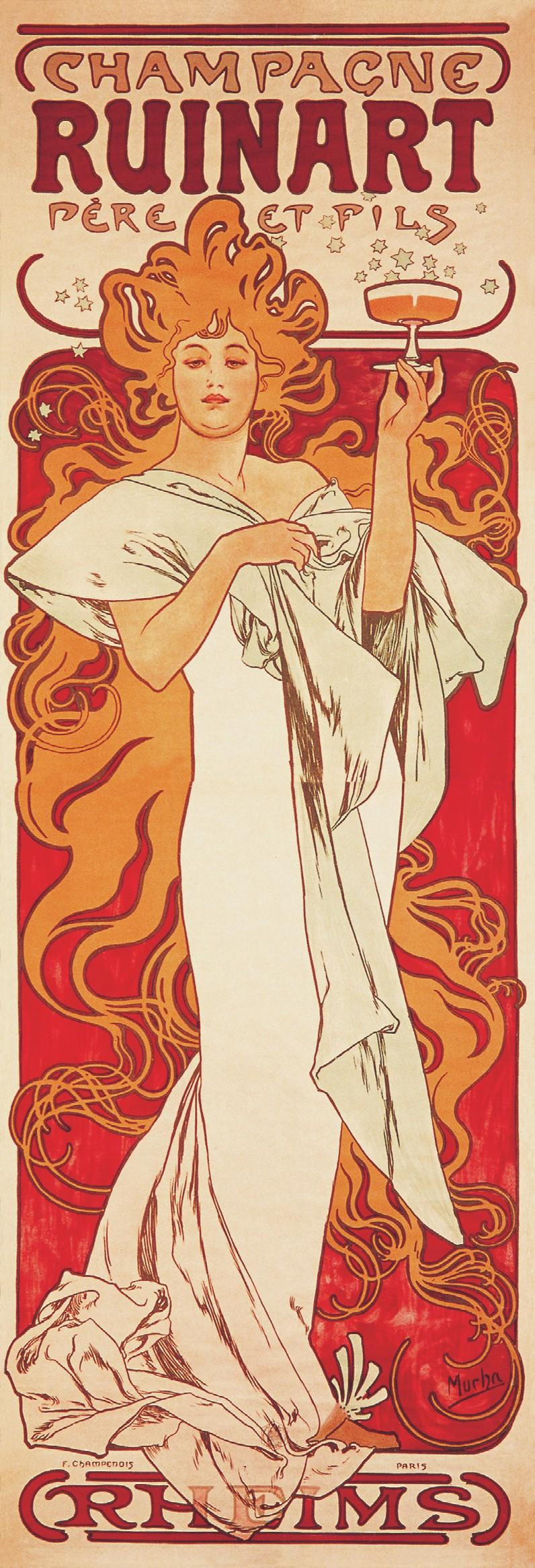
IT SEEMS apt that Ruinart, Champagne’s oldest house, was the first to commission an artist to design a poster advertising the fizz, starting a trend for creative collaborations in the region. In 1895, André Ruinart asked up-and-coming Czech artist Alphonse Mucha to create an advert for Ruinart in his signature Art Nouveau style.
Mucha had been a relative unknown until New Year’s Day that year, when a life-sized poster he’d created for actress Sarah Bernhardt’s new play Gismonda was plastered all over Paris, causing such a stir that people started cutting them down from hoardings with razors, or bribing the bill stickers for copies.
Having observed the frenzy over the Gismonda poster, Ruinart hoped lightning would strike twice with Mucha’s Champagne advert, which depicts a woman with billowing auburn hair and flowing robes holding a Champagne coupe aloft like a trophy (see page 73). Mucha’s poster hit the mark and led to commissions from Moët & Chandon, while Ruinart continues to collaborate with contemporary artists to this day, partnering with 35 art fairs globally.
“Art enables us to connect with a cultured audience and create a meaningful dialogue with them,” says Fabien Vallerian, Ruinart’s art and culture director. “As long as the approach is authentic and the message feels relevant, bringing fresh ideas from another creative field is a good way to keep your brand alive.”
Veuve Clicquot has long been ahead of the curve in this regard. The egg yolk yellow used on its labels and packaging since 1877 is so synonymous with the brand that it practically owns the colour, while its daring packaging designs create a buzz and become collectors’ items.
“Veuve has been doing interesting things for years with everything from polo to yachts. Its secondary packaging and limited editions have been stunning – the other brands are playing catch-up,” says Kevin Shaw, founder of drinks branding and packaging design agency Stranger & Stranger.
In 2021, Clicquot commissioned Japanese artist Yayoi Kusama to create a label and gift box for La Grande Dame 2012 using her signature polka dot motif, along with 100 flower sculptures that wrap around magnums of the wine. Attracting global attention and selling out quickly, Kusama’s involvement helped to give La Grande Dame more prominence within the prestige cuvée category.
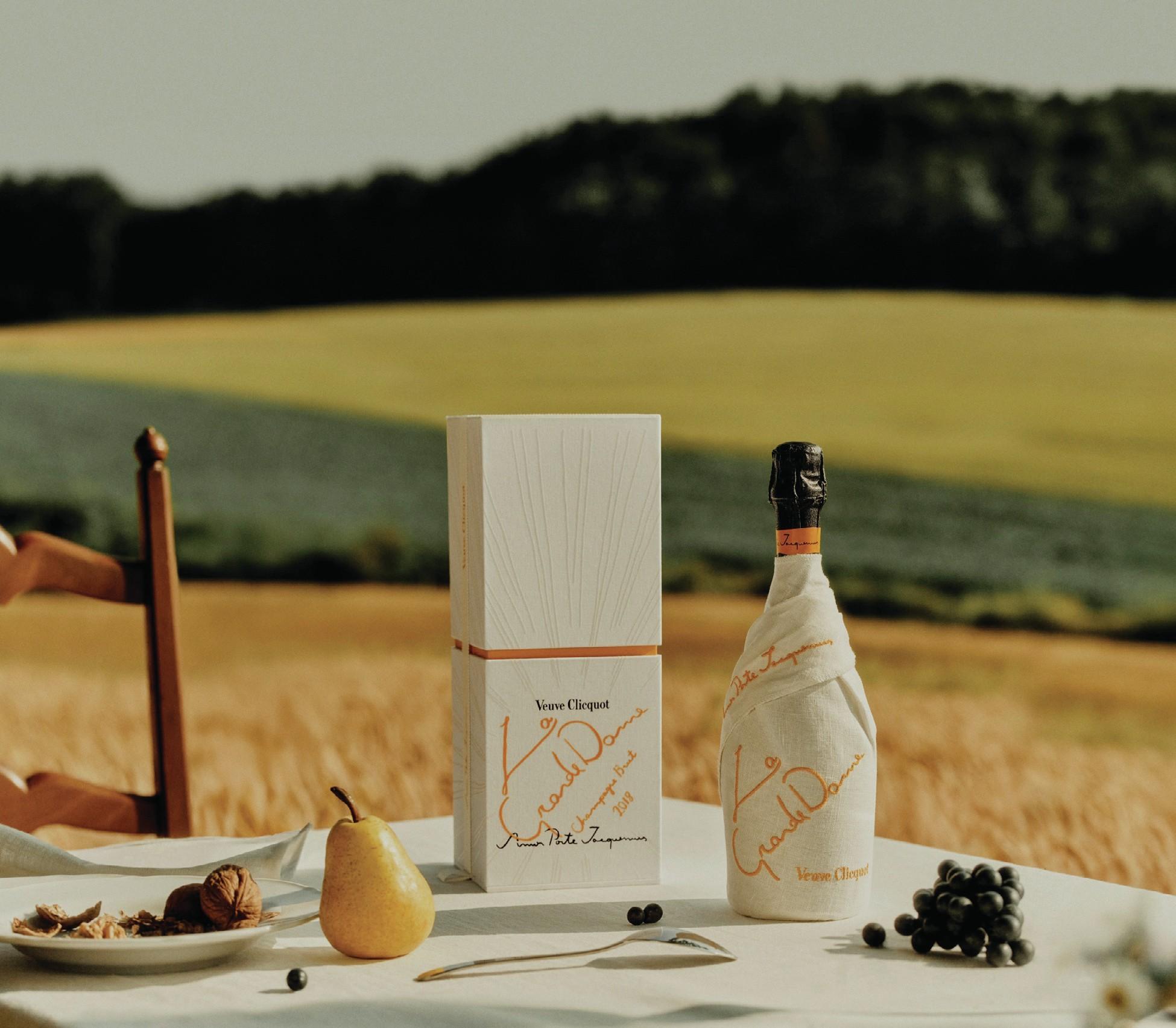
Keen to bridge the gap between couture and Champagne, Clicquot recently joined forces with one of the fashion world’s hottest designers, Simon Porte Jacquemus, on a bespoke release for La Grande Dame 2018 that saw the bottle wrapped in white linen. The limited edition launched during New York Fashion Week, putting it on the radar of front-row power players. “Through such collaborations we are expanding our reach from Champagne lovers to a wider lifestyle audience,” a spokesperson told db.
Relentless innovation
In today’s fickle market, brands need to be innovating relentlessly and launching unexpected limited editions if they want to remain relevant. “Champagne brands are waking up to the fact that heritage doesn’t automatically equal relevant,” says Tom Khan-Lavin, CEO of drinks marketing agency YesMore. “Pivoting to high fashion hits the sweet spot, as it’s aspirational but still accessible. By borrowing from the streetwear playbook with limited-edition drops and highly visual collaborations, they turn a bottle of fizz into a lifestyle accessory for the Instagram grid.”
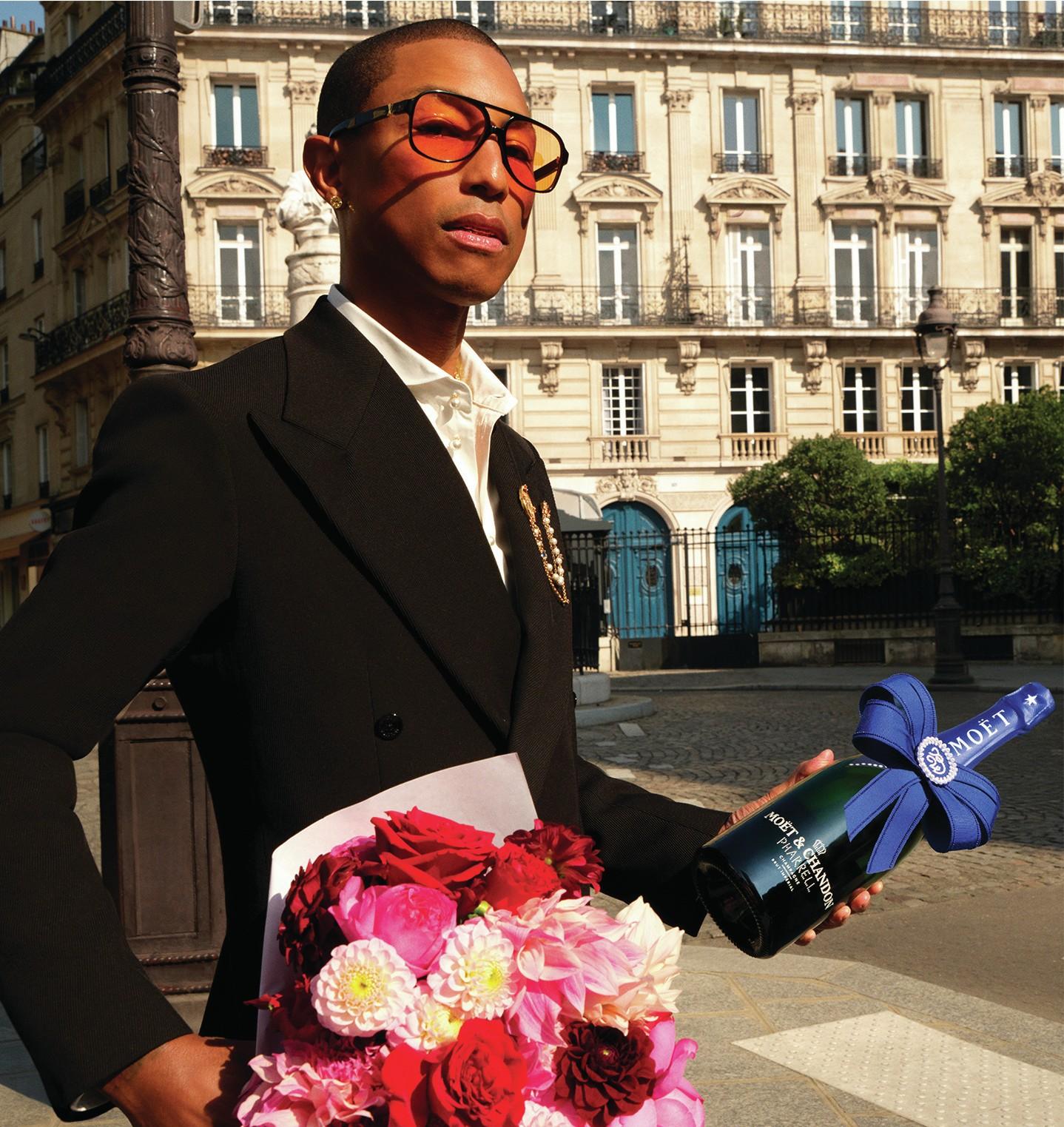
Luxury goods giant LVMH capitalised on its connection with music maestro Pharrell Williams, who was appointed men’s creative director for Louis Vuitton in 2023, by getting him to design a range of limited-edition bottles for Moët & Chandon last year, including the Bow Capsule Collection and 30 jewel-encrusted jeroboams priced at €30,000 a pop.
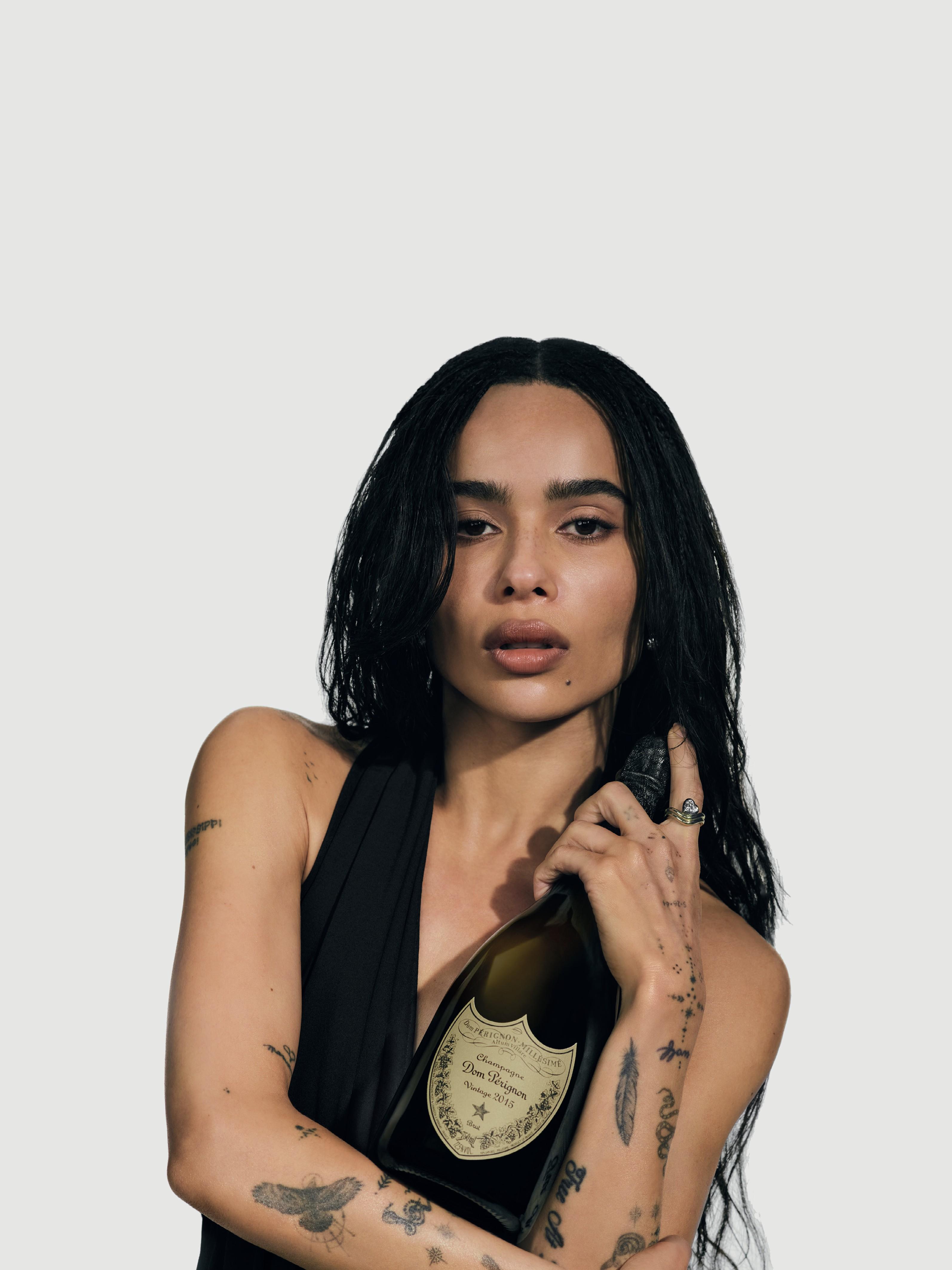
Taking things up a notch, last May Dom Pérignon launched its most ambitious creative campaign to date, collaborating with seven iconic figures from across the music, art, food and film worlds, including actor Zoë Kravitz, singer Iggy Pop and artist Takashi Murakami, to promote four new vintage releases.
To mark the launch, the brand brought its magnificent seven together at an event at Tate Modern in London that featured an original poem by Tilda Swinton, a menu by three-Michelin-star chef Clare Smyth, and music from Anderson .Paak. Managing director Jacques Giraco says the creatives were chosen for their “bold artistic vision” and ability to reinvent themselves. “It’s critically important for the Champagne industry to continue to push boundaries through multidisciplinary initiatives,” he says. “This approach elevates Champagne beyond being merely a drink to becoming a cultural catalyst.” These hook-ups are marketing gold, injecting heritage brands with valuable street cred. By partnering with cultural influencers like Williams and Kravitz, they instantly inherit their fiercely loyal fanbase, who will hype them on social media.
Striking designs
Piper-Heidsieck was early to the fashion party, collaborating with French designer Jean Paul Gaultier in 1999 on a limited-edition bottle encased in a red vinyl corset tied with black laces. The house has gone on to release striking limited editions with shoe designer Christian Louboutin and fashion duo Viktor & Rolf to much fanfare. “The Gaultier collaboration was a first in its field and has opened the door for others,” says Stéphane Decaux, CEO of Piper-Heidsieck. “These boundary- pushing partnerships are rooted in a shared passion for audacity, and elevate Champagne into a cultural experience.”
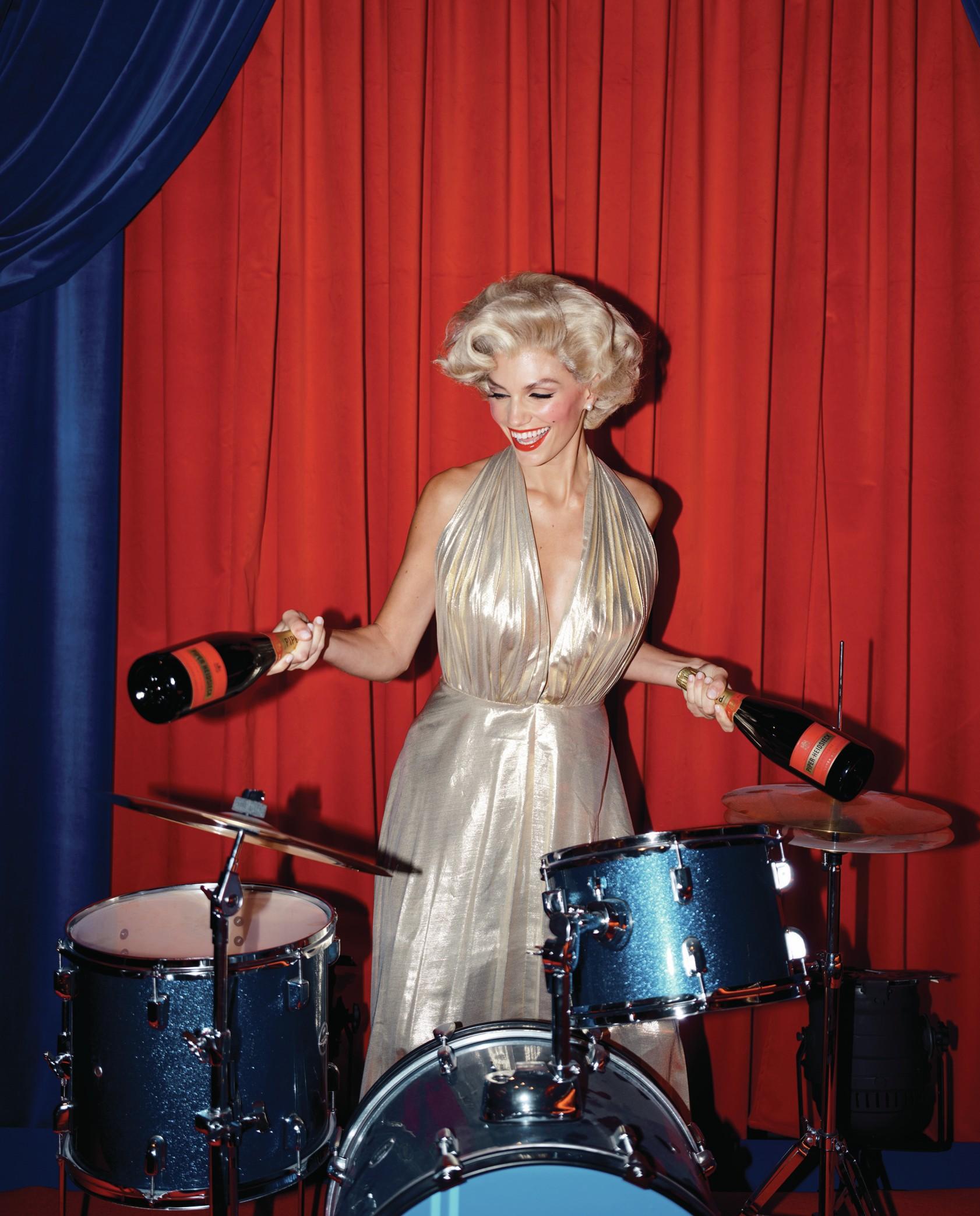
Extending its reach beyond fashion, with Marilyn Monroe having once declared Piper as her favourite fizz, the house will be marking her centenary this year with a series of magnums and jeroboams featuring a diamond-dusted portrait of Monroe screen-printed on linen by British-American artist Russell Young.
“Marilyn embodies the same joy, boldness and creative spirit that defines our maison,” says Decaux, who reveals that the house marks Monroe’s birthday every year. Capitalising on the cachet of an enduring cultural icon is a clever move that adds instant glamour and that all-important sprinkling of Hollywood stardust.
Champagne, sport and culture
Other Champagne brands have chosen to make the most of their associations with great Britons, from Pol Roger naming its prestige cuvée after loyal fan Sir Winston Churchill, who reportedly drank 42,000 bottles of the fizz during his lifetime, to Bollinger’s longstanding relationship with the James Bond franchise.
“The alliance began in 1979 with the film Moonraker, marking the start of a long-lasting friendship between two families, although Bollinger was first mentioned in Ian Fleming’s novel Diamonds Are Forever in 1956,” says Champagne Bollinger UK director Victoria Carfantan, who adds that 007-related limited editions generate “a significant amount of excitement globally, offering collectors a rare opportunity to own a piece of cinematic and Champagne history”.
Cementing its Bond association even further, last year Bollinger became official Champagne partner of 007’s car of choice, Aston Martin, in a collaboration that will see the luxury power brands host VIP experiences around the world.
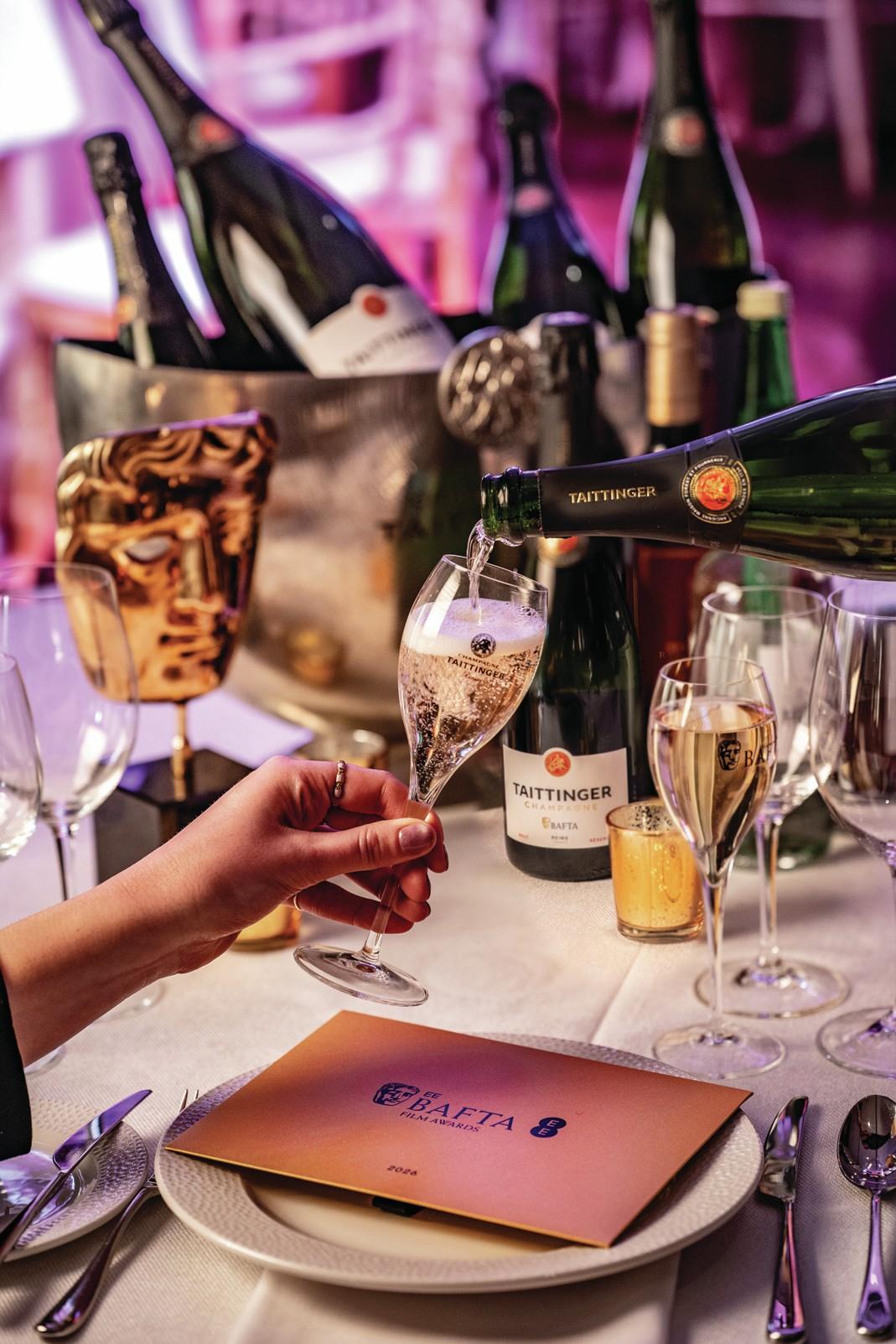
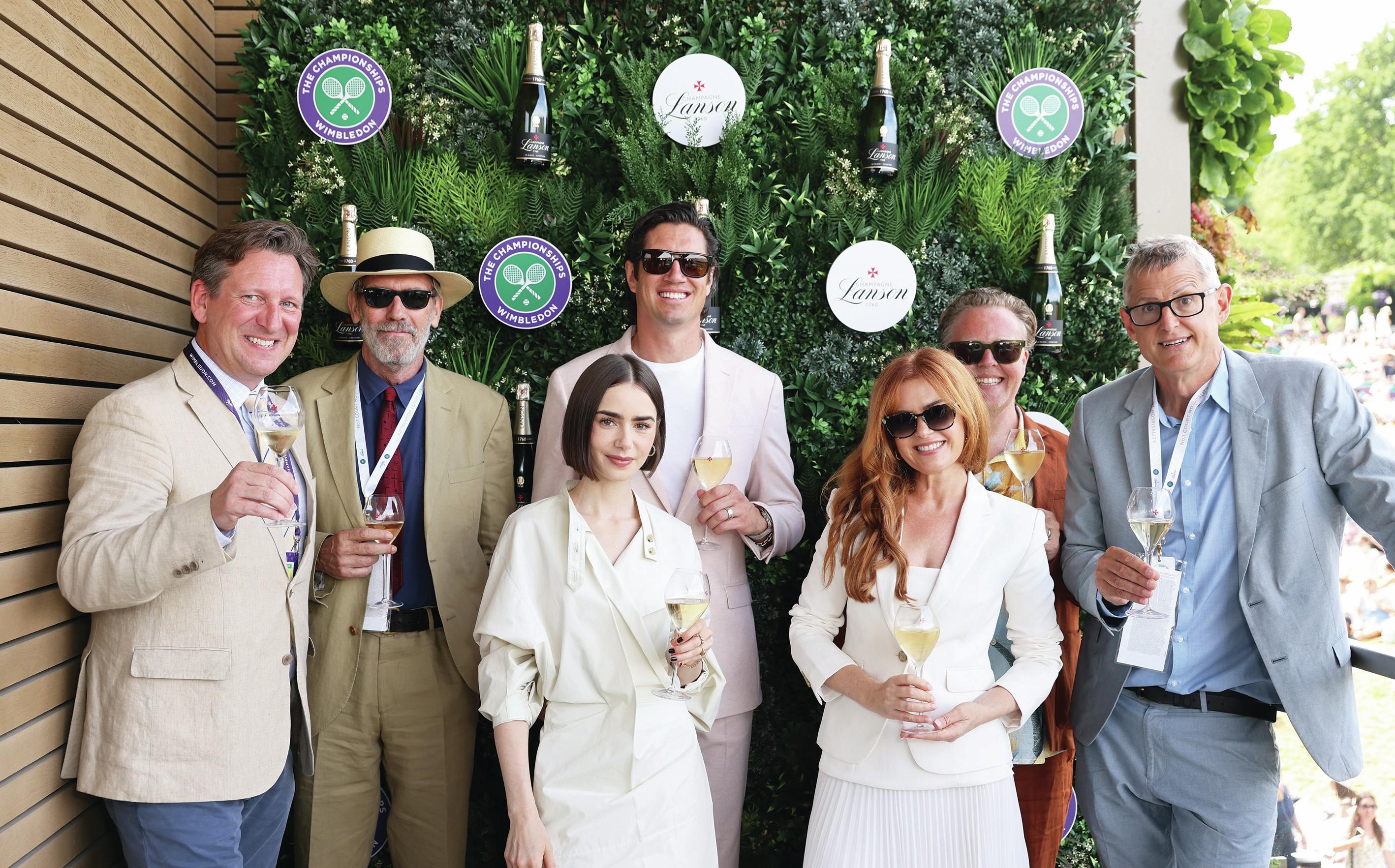
Champagne has enjoyed a long and fruitful relationship with big-ticket events, from Lanson’s sponsorship of Wimbledon and Bollinger’s association with Ascot to Taittinger’s 24-year partnership with the BAFTAs. With Moët having been a fixture of Formula 1 celebrations since 1950, last February the Champagne house replaced Italian fizz Ferrari as the sport’s official sparkling wine sponsor in a 10-year deal agreed by brand owner LVMH and reported to be worth £750 million, making it one of the most lucrative in the history of sports sponsorship. This isn’t Moët’s only sporting union – tennis ace Roger Federer has been a brand ambassador for the fizz since 2012.
Meanwhile, Lanson has been Wimbledon’s official Champagne supplier since 2001. Robert Rand, managing director of Champagne Lanson UK, says the relationship is “built on shared values rather than short-term gain”. To keep things fresh, each year Lanson collaborates with cutting-edge chefs such as Jun Tanaka of The Ninth in Fitzrovia, who created the latest menu for the Lanson Suite at Wimbledon.
In addition to its longstanding relationship with the BAFTAs, Taittinger has been the official Champagne of the FIFA World Cup for over a decade. To mark the 2026 tournament, the house will be releasing a limited-edition black bottle which, according to president Vitalie Taittinger, is “brought to life” by holographic gradients in the colours of the host countries: red for Canada, green for Mexico and blue for the US.
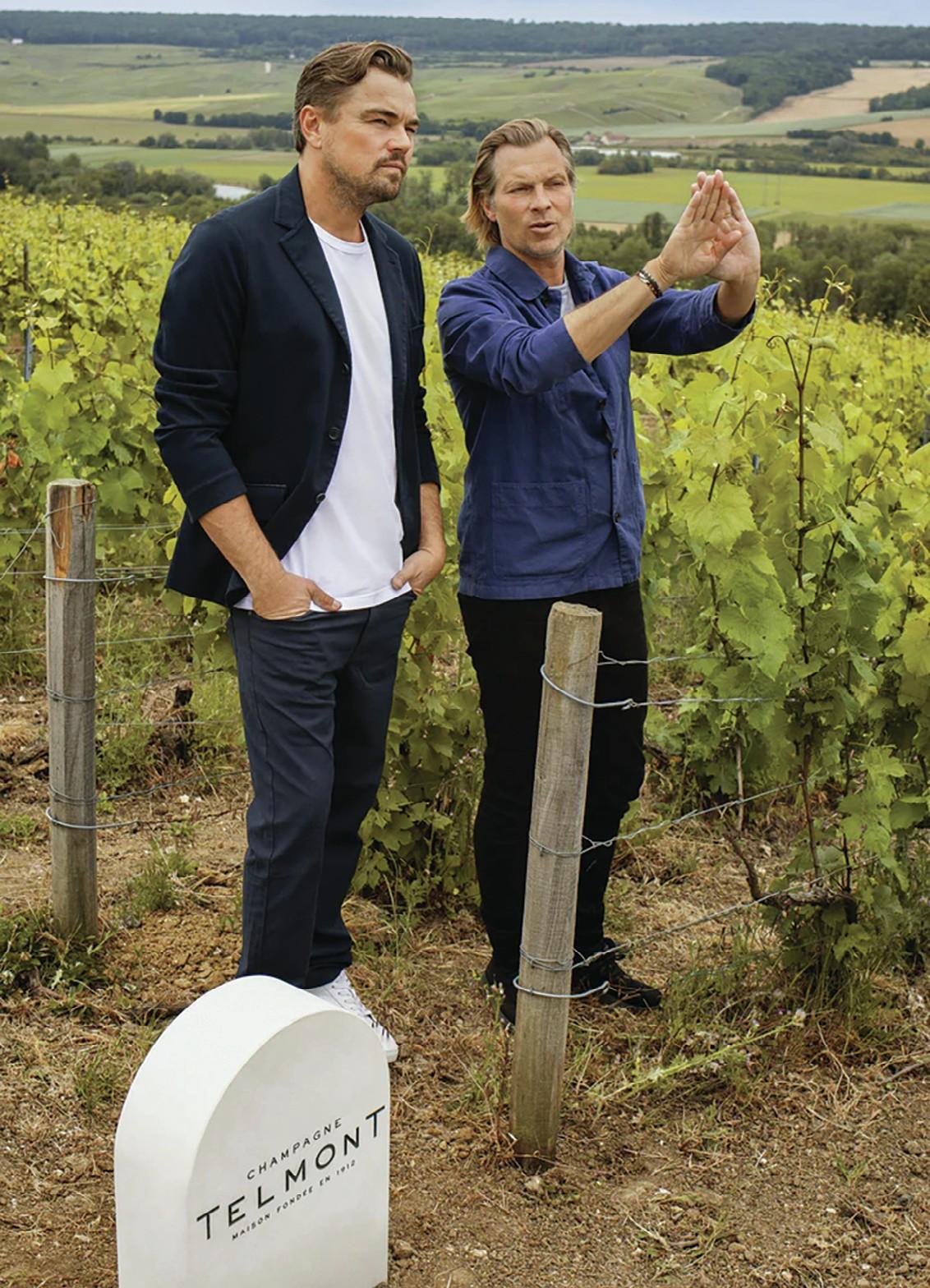
Eco credentials: Leonardo DiCaprio and Ludovic du Plessis of De Telmont
Skin in the game
A clutch of Hollywood stars have taken their love of Champagne to new heights by having skin in the game. Having helped to put Provence rosé on the global map with his hugely popular brand Miraval, in 2020 Brad Pitt joined forces with Pierre Perrin and Rodolphe Péters to launch the first rosé-only Champagne house, Fleur de Miraval, priced on release at £290 a bottle.
Aiming to raise the profile of rosé Champagne, the wine is made from a blend of 75% old-vine Chardonnay from Le Mesnil-sur-Oger and 25% Pinot Noir. “The objective was never volume, but singularity and terroir expression,” explains Perrin. “Rosé Champagne has often been associated with expressive fruit and immediate pleasure. Our intention is to show that rosé can also be structured, precise and capable of long ageing.”
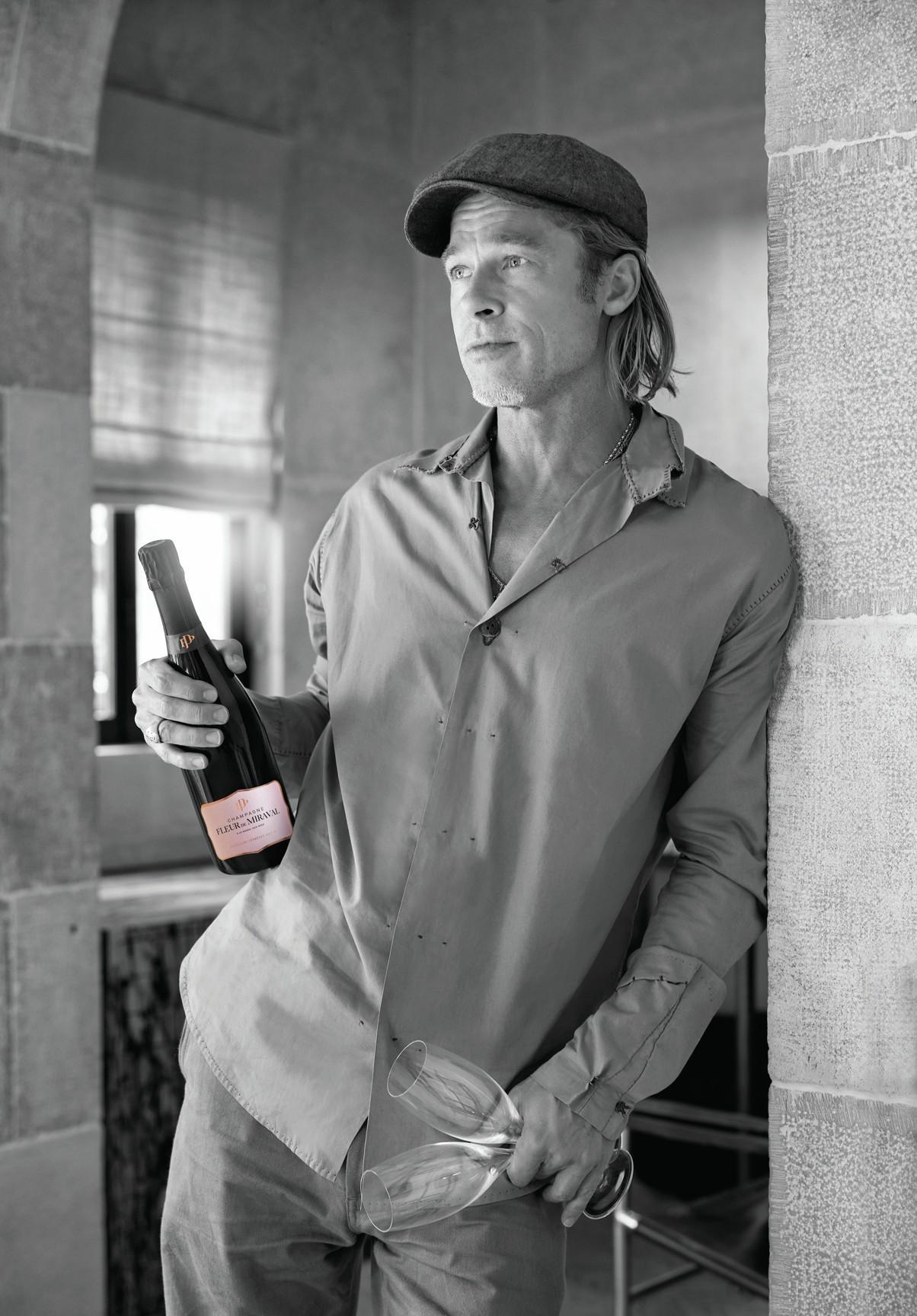
Far from a fleeting association, Perrin says that Pitt is in it for the long haul and plays an active role in tastings, discussions and brand development. “Brad is genuinely involved in the project. He visits when possible and is attentive to the identity and positioning of Fleur de Miraval,” Perrin says. Using his star power to his advantage, Pitt’s pink fizz was the official Champagne of the Academy Awards for three years in a row, which did wonders for its profile. “Being served at the Oscars provided exceptional international visibility and introduced Fleur de Miraval to a very influential audience. However, visibility only has meaning if it’s supported by authenticity,” Perrin points out.
Not to be outdone, fellow Hollywood actor-turned-climate activist Leonardo DiCaprio has his own Champagne project, having acquired an equity stake in Champagne Telmont in 2022. With Telmont committed to regenerative organic viticulture and using renewable energy and lightweight glass, the shared values between DiCaprio and the house make him the dream investor.
“Leonardo and I have known each other for many years and share a deep commitment to sustainability,” Telmont’s president, Ludovic du Plessis, tells db. “When Rémy Cointreau bought the house, Leo decided to invest because he believed in the project and our goal to become net zero by 2050.” Du Plessis describes DiCaprio as an “engaged” investor who visits the vineyards and spends time with the team. His impact on raising awareness of the Telmont brand and sustainable practices in Champagne can’t be underestimated. “Leonardo’s involvement has been extremely beneficial, not only in terms of visibility, but in giving traction to a larger movement,” says du Plessis. “His credibility in environmental advocacy reinforces the authenticity of Telmont’s commitments, and his involvement helps to bring sustainability and organic farming in Champagne to the wider public.”
Blazing a trail
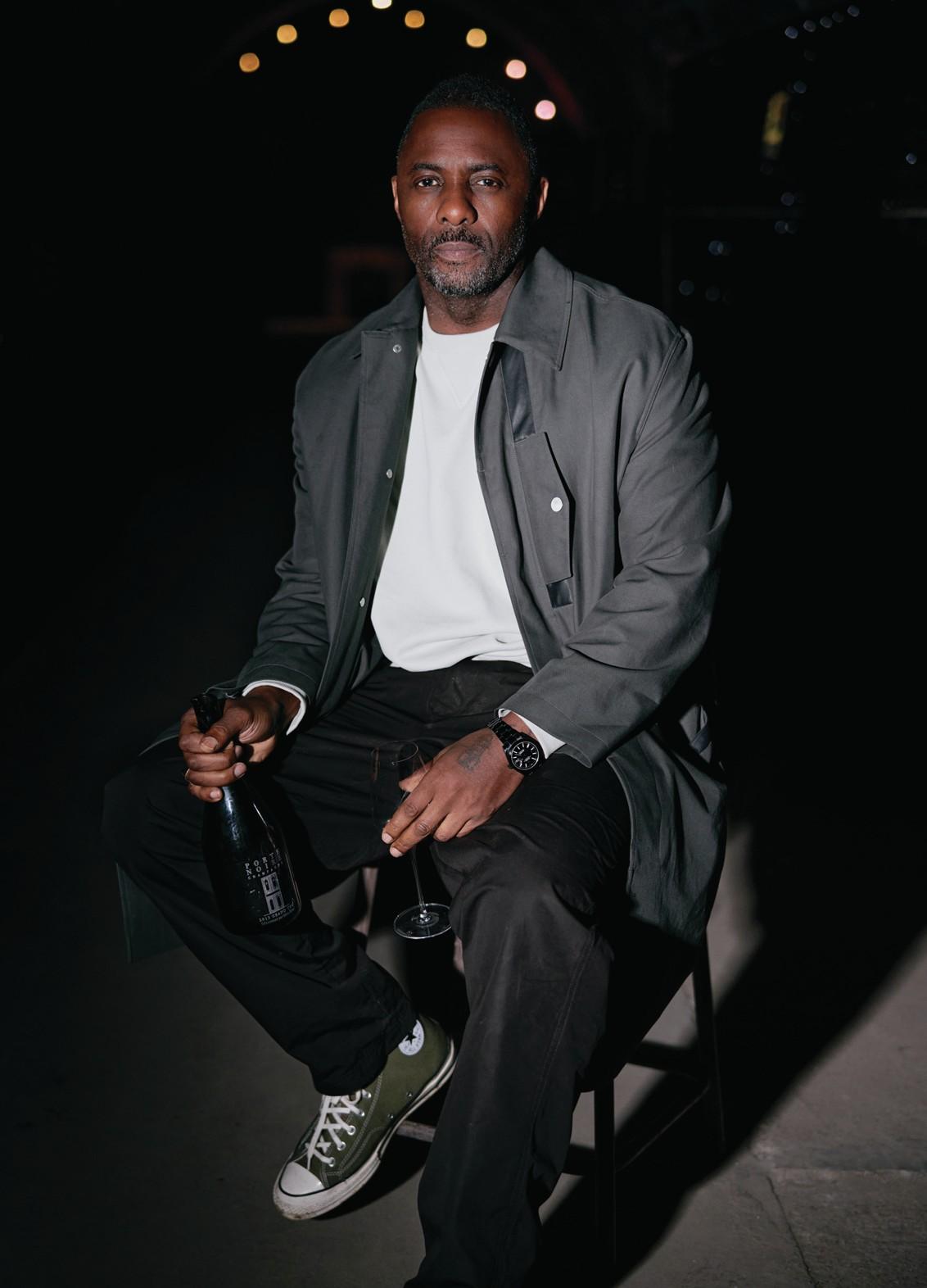
In the UK, actor Idris Elba is blazing a trail with his Porte Noire Champagne brand, created in collaboration with French entrepreneur and founder of Connaught Cellars David Farber. Launched in 2020, the brand, made by Champagne Sanger in Avize, focuses on blanc de blancs Champagne.
The pair met through a mutual friend and ended up spending a long weekend in Champagne together visiting various houses, which sparked Elba’s dream to create his own brand. Like Pitt and DiCaprio, Elba takes a hands-on approach. “Idris designs some of the labels and is actively involved in the marketing, brand positioning and brand building of Porte Noire,” says Farber. Their next release will be a small run of grand cru Pinot Noir that’s currently ageing in the Sanger cellars. With competition for wine spend at an all-time high, Farber believes projects like these that appeal to a younger generation are vital. “Trends move fast now,” he says. “Champagne can have this dusty image of being a drink for older generations, so having a brand with a fun and unpretentious image is what Porte Noire stands for.”
For Khan-Lavin of YesMore, A-list collaborations are a way of helping Champagne to reaffirm its status as the Rolls-Royce of sparkling wines. “Champagne has sat comfortably on the sparkling wine throne for decades, but with the likes of English sparkling snapping at their heels, the Champenois need to remind consumers who the crème de la crème actually is,” he says. “By aligning themselves with Hollywood royalty and high fashion, Champagne houses are fast-tracking cultural connection. It’s a highly effective strategy relying on multi-million-pound partnerships that emerging English sparkling brands can’t afford to match.”
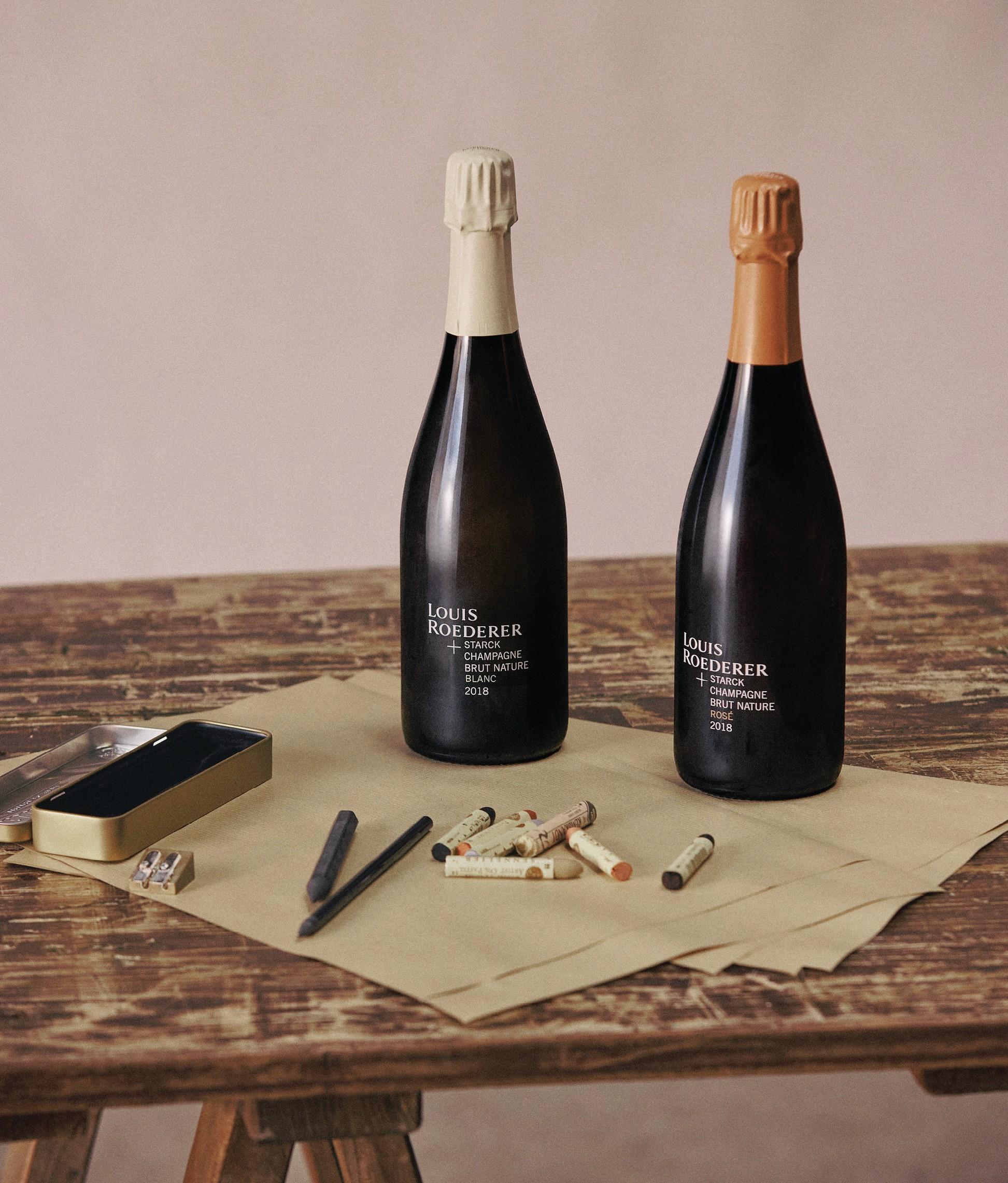
While some of these partnerships are ‘one and done’ scenarios, others are long-lasting, such as Louis Roederer’s collaboration with French designer Philippe Starck on a brut nature from Cumières. Created as a response to climate change, the project is still going strong after 20 years, with the fifth cuvée in the collection – the 2018 vintage – having recently been released. After being approached by numerous Champagne houses, Starck agreed to the project when Roederer’s CEO, Frédéric Rouzaud, assured him that he could have an input into what was inside the bottle, as well as the design.
“There are two ways of looking at collaborations. One is approaching them with the intention of broadening visibility and desirability. The other is using the arts as a form of inspiration and a means of pushing innovation. Louis Roederer is in the latter camp,” says brand manager Alexandra Tilling. Shorthand for luxury, celebrations and the finer things in life, Champagne brands seeking artists with cultural cachet to collaborate with won’t find it a hard sell.
The fizz remains streets ahead of the rest of the wine world in terms of its ability to tap into the zeitgeist and create highly desirable limited editions. “Champagne is a wine that acts like a spirit, so it’s not surprising that we’re starting to see the kind of special editions and collaborations that spirits brands have been doing so well for years,” says Shaw of Stranger & Stranger. But brands need to proceed with caution, as consumers are becoming increasingly good at spotting which partnerships are fickle money grabs, and which are based on authenticity and long-term commitment.
“Consumers have brilliant bullshit detectors these days. They know the difference between a celebrity cashing a hefty cheque to hold a bottle, and a genuine partnership where the talent has actual skin in the game,” says Khan-Lavin. “What DiCaprio is doing with Telmont and Brad Pitt with Fleur de Miraval is smart because it’s rooted in shared values like sustainability and craftsmanship, which moves things from a transactional PR stunt to a credible, long-term brand story.”
For Champagne brands hoping to make a splash with high-profile partnerships of their own, Khan-Lavin offers these words of warning: “A collaboration has to make sense beyond the initial press release. If the only thing connecting a luxury Champagne brand and a famous face is a massive invoice, the campaign will soon fall flat,” he says. “The magic happens when the partnership feels unexpected, but entirely natural.”
Read more
Related news
Generic marketing for Champagne courts controversy


