



Green agenda: what to know before converting to organic
Thinking of converting to organic? Amelie Maurice-Jones has asked producers across the globe what they wish they’d known before starting out.
Take the overground train to Dalston in East London on a Thursday night, make a beeline for any candle-lit bar, push through a swamp of mullets, denim jorts and pink lemonade vapes, and you will likely bear witness to a chalkboard scrawled with a crash course in organic wine.
Spanning skin-contact orange to spritzy pét nat, au naturel wine, produced without synthetic chemicals or artificial fertilisers, is hot right now. IWSR data shows organic wine sales have risen in most markets over the past five years – by a CAGR of 14% in Australia, 2% in Canada and 1% in the UK. Voyage outside those natty city-centre wine bars into vineyards and you’ll find waves of winemakers sporting organic credentials in a bid to champion sustainability and keep up with climbing demand.
As with every revolution, there are cynics. They are not quiet about it, bemoaning unpredictable vineyard yields, inconsistent taste profiles, disease susceptibility and confusing certification procedures. Despite this, more and more producers around the globe are continuing to convert.
One in four of Austria’s vineyards is now certified organic, with France and Italy boasting 21% organic vineyards in 2025. At db, we’ve asked winemakers around the world why they chose to dedicate themselves to the church of organic viticulture, how they’ve surmounted the associated challenges and, for the aspiring organic winemaker, where to begin.
Natural protection
Let’s start in Chile, a country particularly suited to organic wine production thanks to its unique geography providing natural protection for vineyards. The Andes Mountains, the Pacific Ocean, the Atacama Desert and southern glaciers act as barriers against pests and diseases, including phylloxera, reducing the need for chemical interventions. In addition, Chile’s diverse range of climates and soils provides ideal conditions for producing distinctive wines that reflect their terroir.
Cono Sur, founded in 1993 in the Colchagua Valley, has used sustainable practices in Chile for more than 30 years. In 2003, the winery scored its first organic certification, followed by its Wines of Chile Sustainable certification in 2013 and B Corp in 2021. Organic winemaking, according to the winery’s viticultural and winemaking team (who jointly responded to db), must come from the heart. “Successful conversion is not simply about changing practices, but about embracing a different production mindset,” they say. In this way, being such a young winery has been advantageous for Cono Sur, which has dared to do things differently through integrating organics into its practice from day one.
But it hasn’t always been easy: there are plenty of things the team wish they’d known from the outset. Firstly, they would have liked to have had a deeper understanding of the entire organic conversion process, plus greater knowledge of certification requirements and traceability systems. As well as this, a greater grasp on the fertility of the vineyard sites would have helped, alongside the specific conditions of the vineyard – from climate to soil characteristics and the monitoring of pests and diseases.
Despite this, Cono Sur has learnt a lot along the way, ultimately spurred by the belief that healthier, balanced vineyards lead to a more authentic expression of terroir. “Throughout the transition process, motivation came from the conviction that organic farming creates a more sustainable and responsible production model, benefitting the environment, vineyard workers and future generations,” the team say.
Despite hurdles, making tangible progress drove them to keep going. “Seeing positive results in the vineyard validated the effort invested in the transition and built confidence in the process.” Elsewhere in Chile, the 100% organic and biodynamic winery Emiliana, which also claims to have the world’s largest organic vineyard, operates with the philosophy of creating high-quality wines while respecting people and the environment. Its 57 Rocas Cabernet Sauvignon 2021 recently took home a Gold medal in db’s Global Cabernet Sauvignon Masters, marking the winery as a leading light in the category.
What’s the top tip from Sebastián Tramón, the producer’s sustainability manager? “Start today.” But, he urges, you should begin with a well-performing vineyard block before you expand into more challenging areas. The key is just to keep at it: “Perseverance is essential,” he stresses. “It is important to have the conviction that you are doing what is best for both the vineyard and the environment.”
No man is an island, no vine is a vineyard, and thus the most vital aspect for any organic winemaker is to form a like-minded community. “Collaboration is invaluable,” counsels Tramón. “Seek guidance from growers, winemakers and organisations that have already gone through the process. Learning from others’ experiences can help you avoid common pitfalls and build confidence along the way.”
Government buy-in
In the US, where the organic wine market is expected to hit US$38.89 billion by 2028 (source: The Insight Partners), supportive government regulations and financial assistance programmes help drive the growth of organic grape cultivation. Initiatives such as the Organic Certification Cost-Share Program reduce certification costs, while conservation programmes provide growers with funding for natural protective features including windbreaks, shelterbelts, filter strips and pollinator habitats that support organic farming practices.
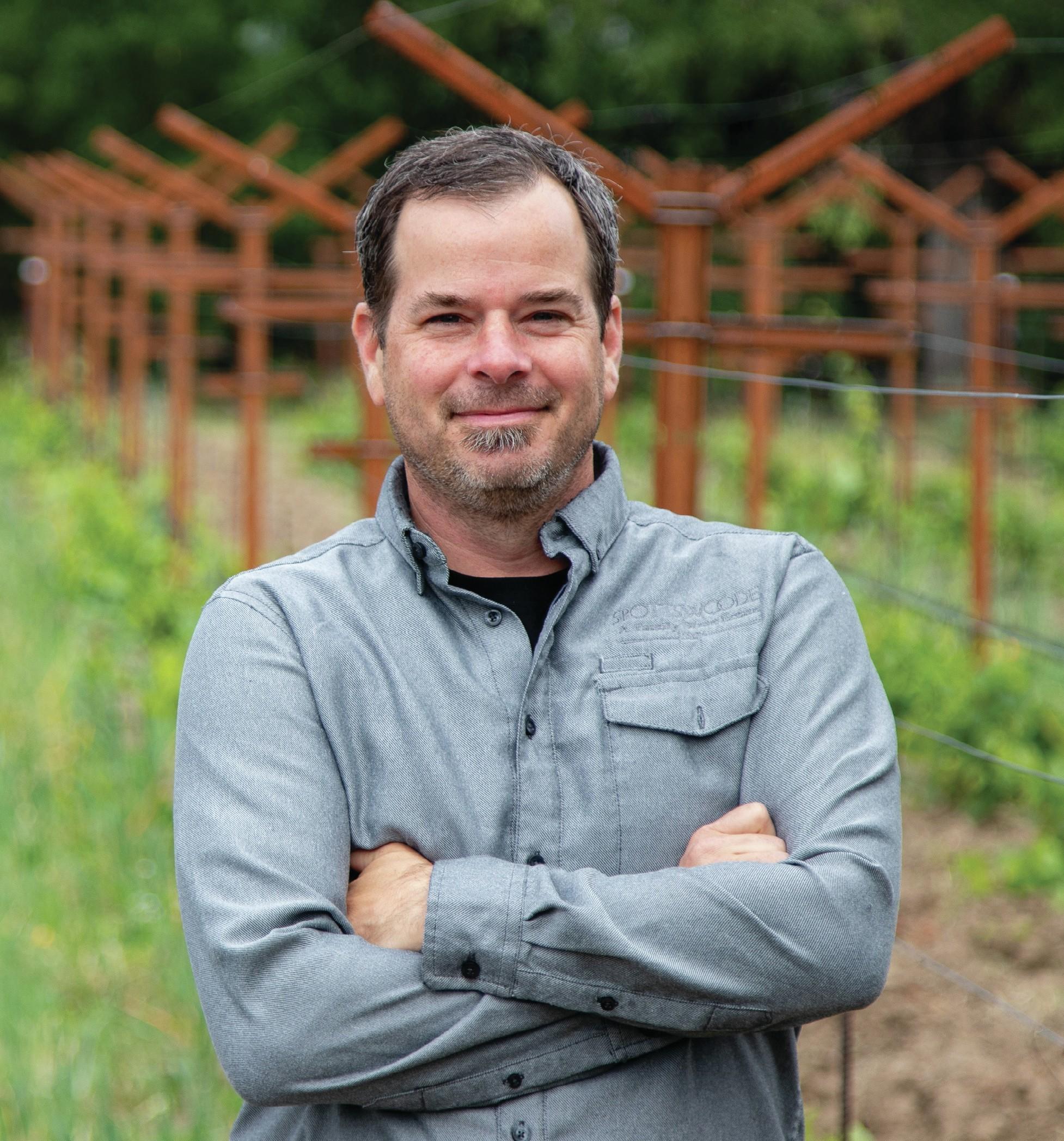
Spottswoode Estate, a family-owned vineyard in Napa Valley, was one of the region’s earliest certified vineyards – gaining organic certification in 1992. Under the leadership of second-generation president Beth Novak, the winery also became one of Napa Valley’s first certified biodynamic vineyards, as well as achieving Regenerative Organic Certified (ROC) in 2022, B Corp certification, and earning additional recognition through Napa Green and International Wineries for Climate Action. According to Spottswoode, when transitioning to organic winemaking, you don’t have to do everything alone, but you also don’t have to do everything at once. “Many growers become excited about the possibilities and immediatelywant to change every aspect of their farming programme,” says Aron Weinkauf, Spottswoode’s winemaker and vineyard manager.
Often, they want to reduce tillage, modify irrigation practices, introduce animals, eliminate synthetic inputs, redesign nutrient programmes, adopt regenerative practices, or dry-farm all at the same time. “That can quickly become overwhelming,”Weinkauf warns. It’s better, he says, to focus on one or two major changes first and “build confidence and momentum before moving on to the next challenge.”
Once momentum is under way, adaptability is the next skill to adopt. “One of the biggest lessons I’ve learned is that organic farming isn’t about seeing how little water, fertiliser or intervention you can use,” Weinkauf explains. “Especially in the early years, it’s easy to get caught up in the idea that organic farming means pushing every aspect of the system to the limit. The reality is that you still have to respond to the conditions in front of you. “
During drought years, heat events or other challenging vintages, vines still need support. You don’t want to overwater or rely on applications of synthetic fertilisers, but you also don’t want to create unnecessary stress simply because you’re trying to adhere to a narrow idea of organic farming.” The biggest shift, he argues, is realising that you’re not simply farming grape vines.
“Organic farming is about soil health, microbes, plants, animals and the relationships between all of them. The goal isn’t simply to reduce inputs. The goal is to create a healthier, more resilient system where natural cycles increasingly support the needs of the vines.”
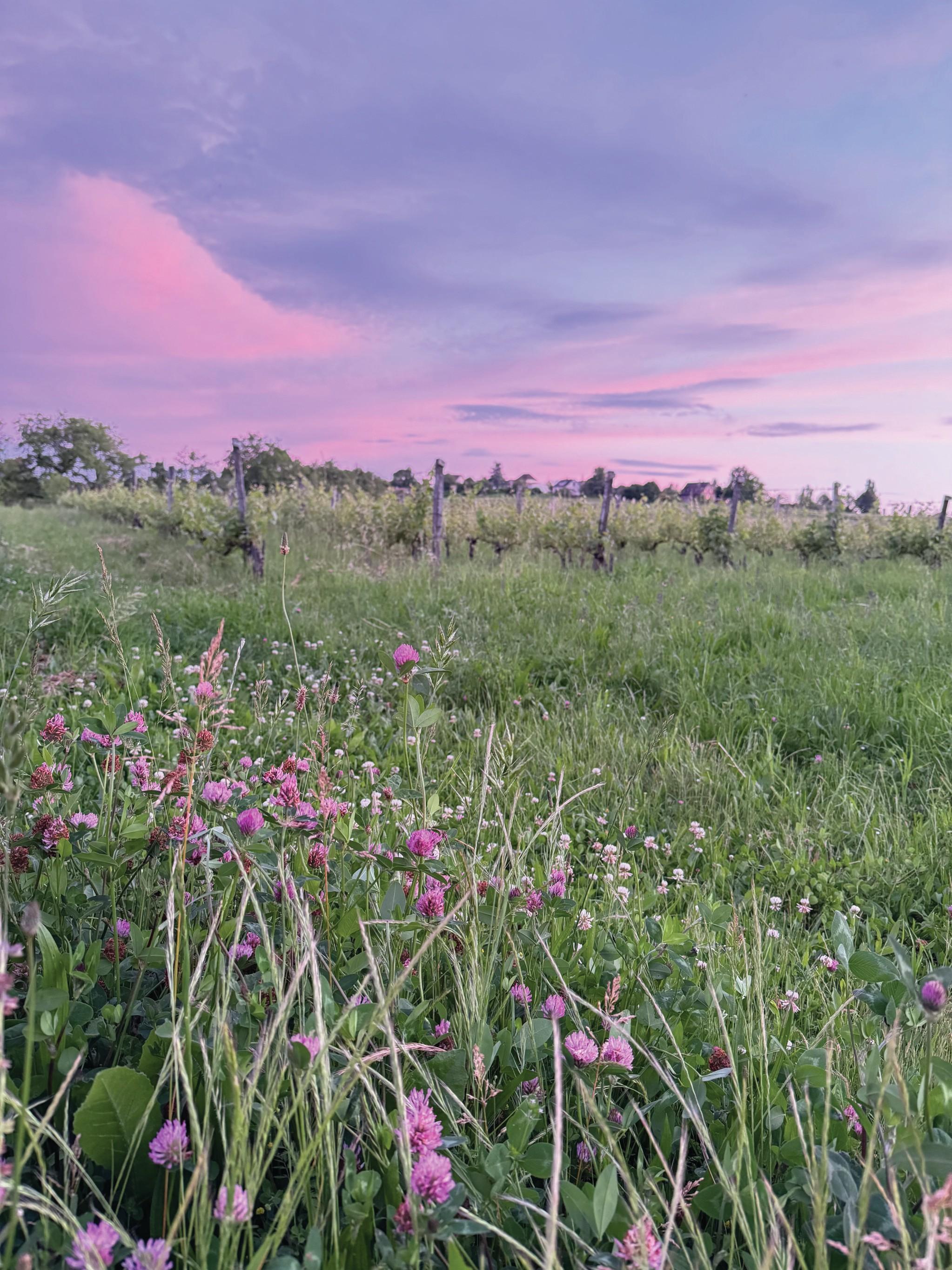
However, Barbara Gross, operations director at Cooper Mountain Vineyards in Oregon’s Willamette Valley, turns biblical when she instructs: “Don’t be afraid.” Gross explains why paying such close attention to your environment is a blessing. “Organic farming isn’t about doing less – it’s about understanding more. When you focus on soil health and vineyard balance, the vines are often better-equipped to handle the challenges nature presents. The more attention you give to the health and balance of your vineyard ecosystem, the more resilient and self-sustaining it becomes.” But, she adds, every vineyard is different. There is no universal road map. Soil type, climate, weed pressure, disease pressure and overall vineyard health all influence the transition process.
“Our best advice is to develop a deep understanding of your site and the specific challenges it presents,” she says. Not saddled by strict, centuries-old appellation laws, New World regions such as California and Chile are widely seen as pioneers in sustainable winemaking. But Bordeaux is showing that, while there’s no universal road map, the Old World can do it too.
Challenging tradition
More than 75% of Bordeaux vineyards are certified under an environmental initiative, and the area under organic cultivation has grown substantially. Winemakers are challenging tradition, adopting practices such as biodiversity conservation, reduced chemical use, improved water and soil management, and lowered carbon emissions. They are also testing new grape varieties and vineyard techniques to improve resilience to climate change, including the development of disease-resistant grapes that could significantly reduce pesticide use.
One such producer is Château Pré La Lande, an organic and biodynamic vineyard situated in Pineuilh, overlooking the Dordogne Valley in the Sainte-Foy Côtes de Bordeaux appellation. Owned by Michel and Angelita Baucé, the estate focuses on natural, low-sulphite wines, utilising manual harvests, wild yeasts and ageing in amphorae. Michel Baucé’s two cents? “Be sure that the land is suitable for this practice, meaning an area that is not too humid and rootstocks that are not too vigorous.” But, after that, it’s all about equipment. According to Baucé, your kit should include soil cultivation tools, mechanical weeding tools and a high-performance sprayer. Don’t make his mistake of “not having a perfect and properly adjusted sprayer”. Also: “Never miss a treatment.
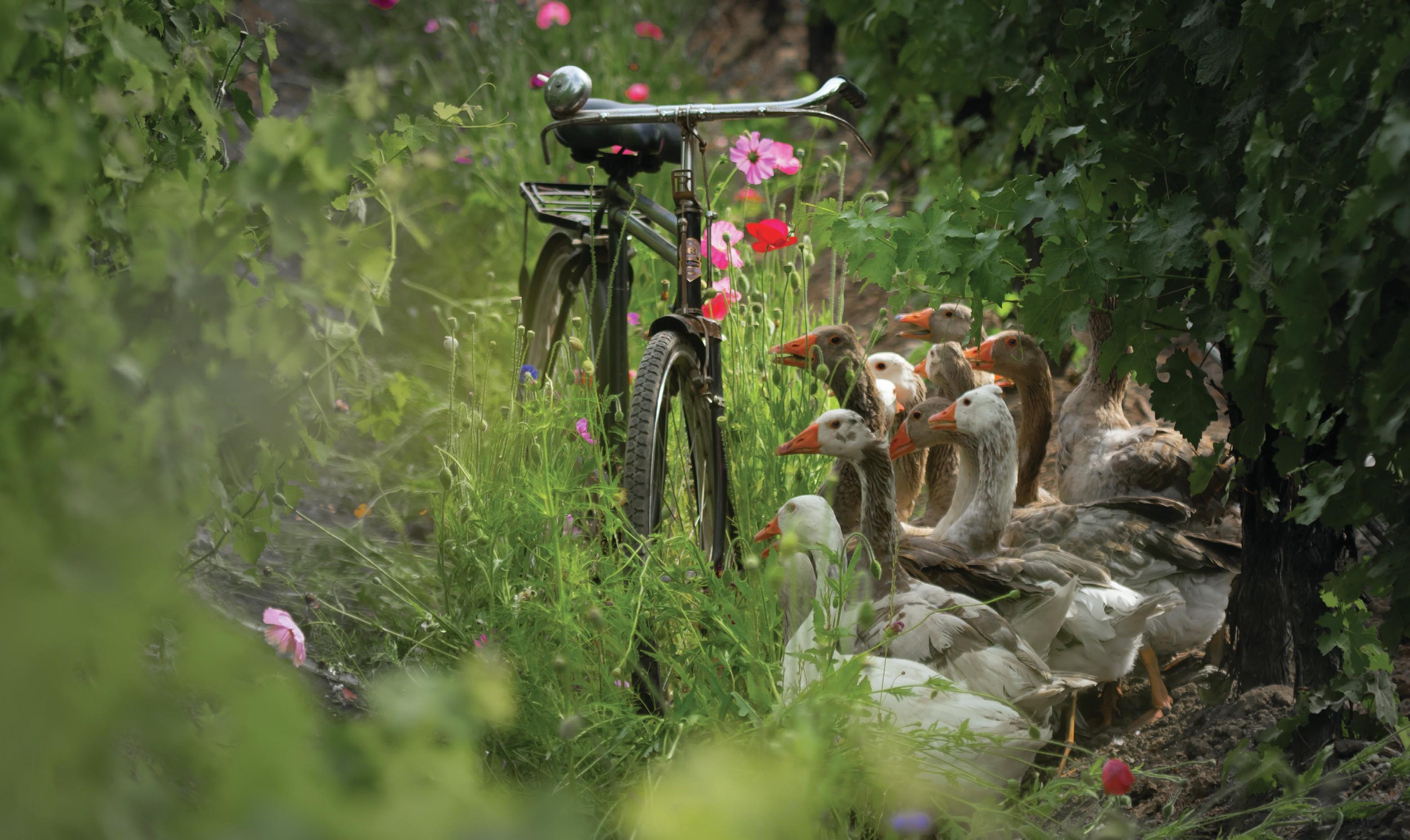
It’s better to apply one too many than to regret not having done so.” More instructions: thou shalt not idolise any products as “miraculous”, and: “The only truly effective protection remains copper and sulphur.” And, finally, thou shalt “prioritise disease control over weed control or soil cultivation” – with the probability of a partial or total crop loss very high. Despite it all, Baucé considers organic farming to be the “only viable and sustainable method of cultivation”. He adds: “I did it 19 years ago and I absolutely don’t regret it”.
Travel an hour from Bordeaux and you’ll reach Château Feely – a certified organic and biodynamic vineyard estate just outside the village of Saussignac in the Dordogne region. The winery boasts seven hectares of vineyards, and has been farmed organically by Sean and Caro Feely for more than 20 years.
Caro Feely’s main lessons are to listen to your vines, and to beware conservationist conmen: “It’s all about soil health, not about the latest fancy additive,” she advises. “Native plants or cover crops between rows is absolutely critical, especially with climate change and extreme weather conditions. “Some organic growers still think ploughing over everything to remove weeds is a good idea, but that is definitely not recommended.” Appearances, too, can be deceptive: “Don’t be swayed by what looks neat in a traditional ‘weed-free vineyard’ sense,” Feely says. “Wait to do the first mow or roller after the seeds have set, so you won’t have to do it again almost immediately. It may look a bit hairy for a few weeks, but those plants are providing benefits including insulation, moisture retention, holding the soil together in a downpour, aerating the soil, nitrogen fixing.”
Even if you follow her guidebook to a T, Feely is bleakly honest when she umbrellas the three years of converting to organic with the title: “The valley of despair.” Yikes. “Your vines have been on a diet of fast food (chemical fertiliser) and drugs (systemic pesticides), and they need time to recover, to build their health and disease resistance,” she warns. “For those three years, you are working organically, but can’t say you are organic on your label, but it is necessary to allow this time for the pesticides to work their way out of the soil.” Anyone who’s tried to bite back from a few too many McDonald’s will no doubt understand.
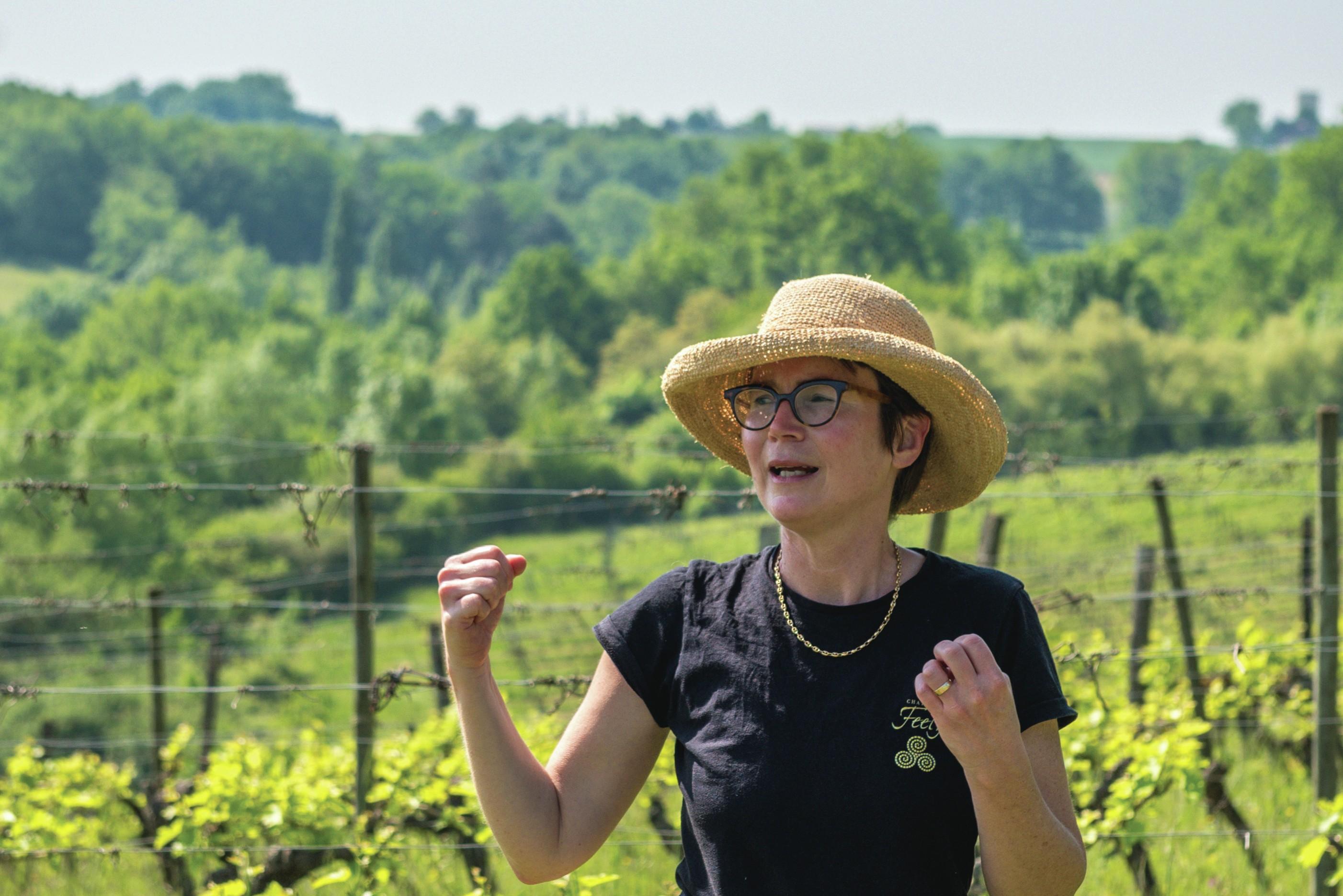
“Bringing the vines back to health is achieved by them eating healthy food from healthy soil, built with nitrogen-fixing green manures and natural farming – and by encouraging biodiversity in the rows, between the rows and on the borders with hedgerows, tree groves and wild areas,” Feely explains. But, in the same way that you won’t shift the pounds after just one gym session, similarly, when it comes to vine growing: “It’s a long game.” Still, through the valley of despair, she encourages growers to keep pushing. “It’s tough, but so worth it,” Feely promises.
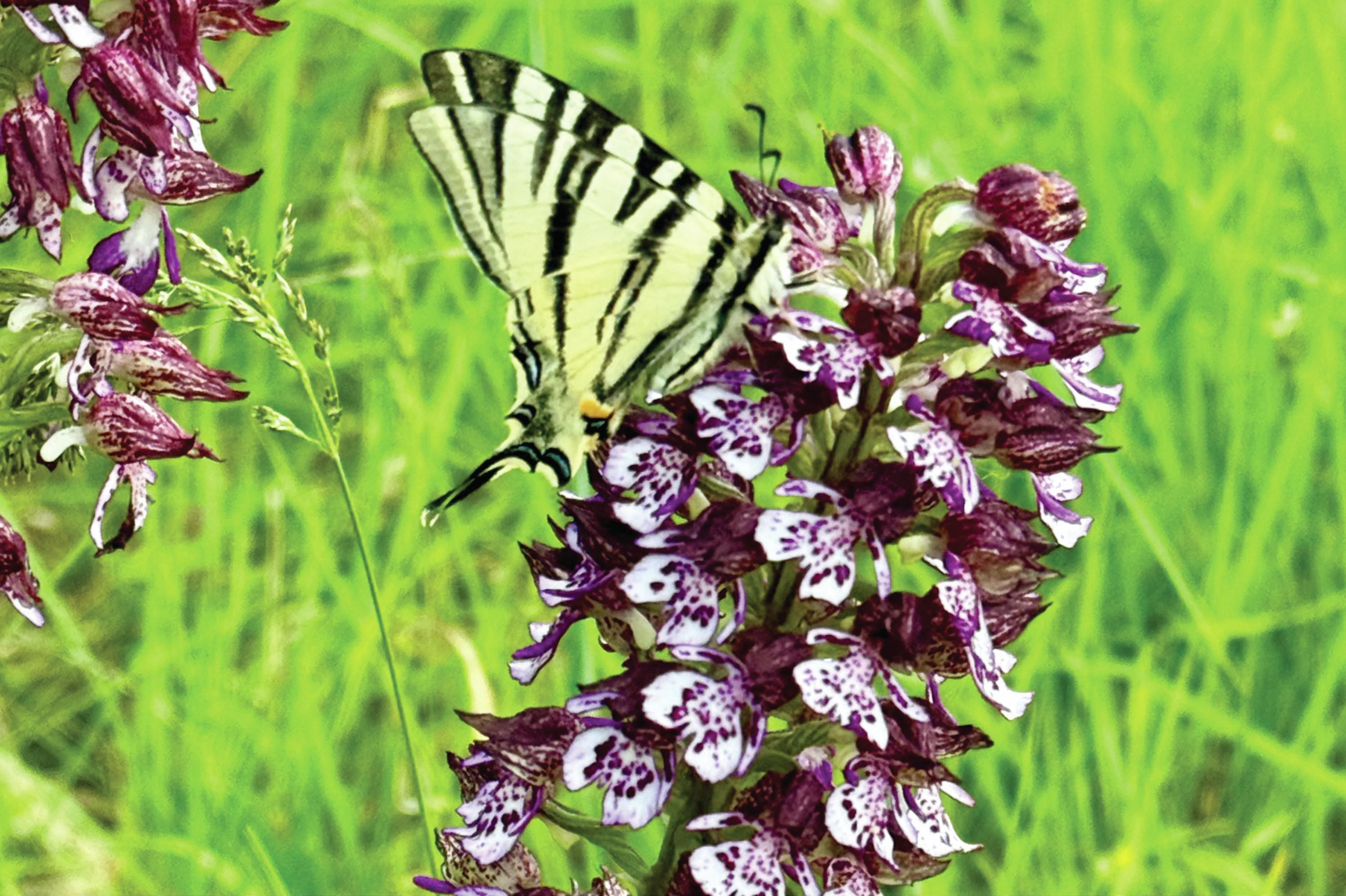
After darkness comes light. “There is deep joy in a living vineyard – hearing insects, butterflies, birds, seeing wild orchids and happy vines. The impact on our health and on the wine quality is undeniable too.”
Weather extremes
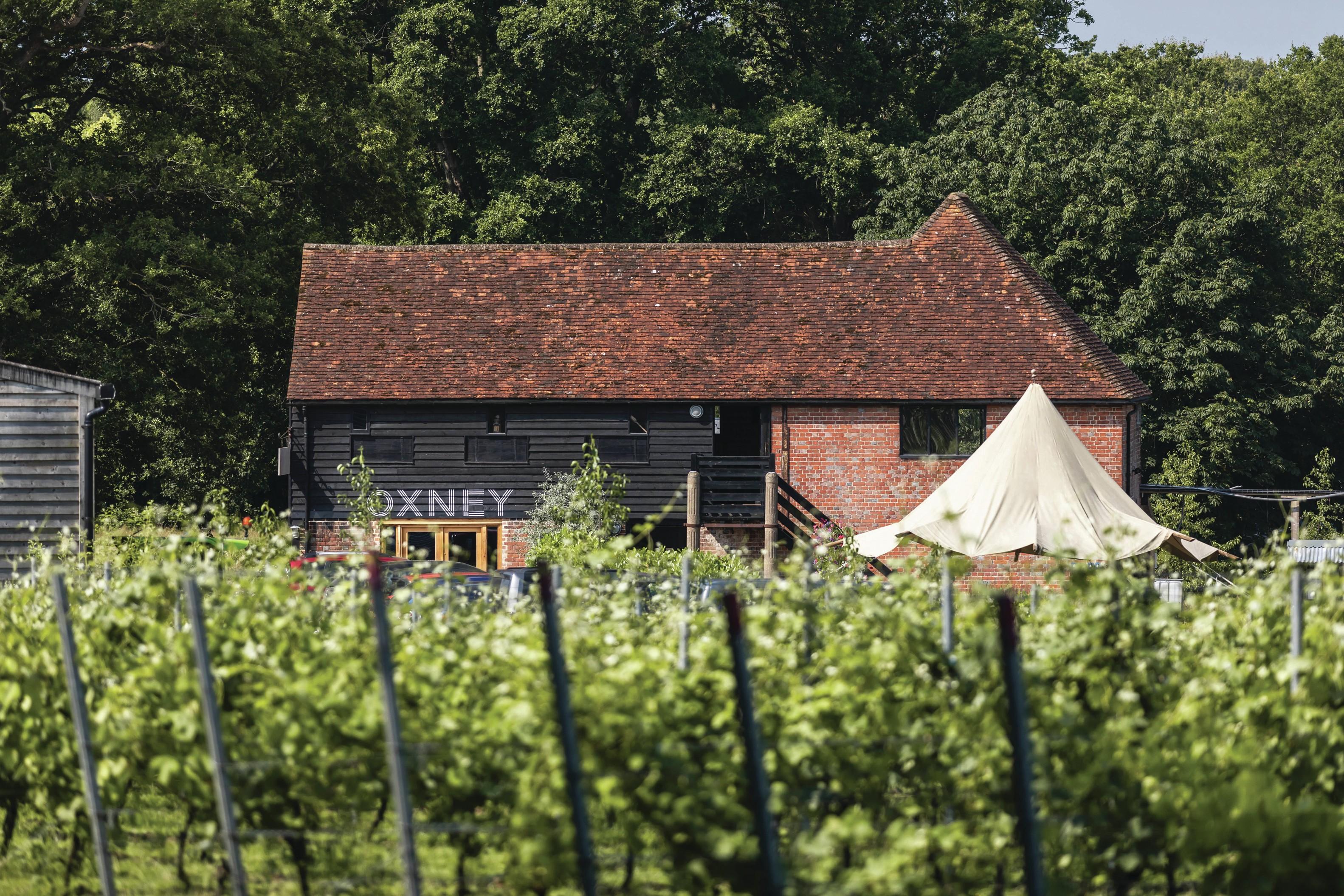
Over in England, a rising number of winemakers are pivoting to organic, hoping that a reduction in chemical interventions will help mitigate weather extremes. “I would not have a vineyard if I could not be organic,” attests Kristin Syltevik, owner of Oxney Estate in Rye, East Sussex. Like Feely, she’s moved by the bewitching buzz of birds, hares, bees, moths and butterflies that colour her vineyard. But, unlike their French counterparts, no bee, moth or winemaker in England can escape the violent see-sawing of British weather, as proven by June’s whiplash of pressure-cooker heat and thunderstorms. “Spreadsheets are great, but the weather can throw a curveball,” Syltevik warns English winemakers, “so be cautious and keep your cost base low.”
Tom Dewhurst of Winklestone Vineyard in East Sussex thinks the best way to deal with the British weather is to accept it’s out of your control. It’s a rehashing of theologian Reinhold Niebuhr’s famous Serenity Prayer, which asks for “serenity to accept the things I cannot change [and] the courage to change the things I can”. The Ashdown Forest property has found that maintaining airflow across the vineyard is key to keeping fruit clean and the canopy disease-free. Aside from that, managing scale has been essential. While this advice doesn’t apply to the drinks titans pumping out millions of bottles a year, it’s a useful point of note for England’s emerging crop of boutique vineyards.
Keeping vine numbers low has allowed Winklestone to net a larger yield from fewer vines. Added to this, choosing the right grape variety is crucial. Yield and disease resistance must be central concerns. “We choose to grow Bacchus precisely for these reasons,” explains Dewhurst. “It is a high-yielding variety that has mild disease resistance and ripens early. These characteristics make organic viticulture much easier in years that have low growing days and high levels of rainfall.”
And, while you can’t stop the storm from coming, there’s no harm in preparing for it. “The climate will always throw you a curve ball within your management plan,” says Gary Smith, MDCV UK CEO and WineGB director, as a piece of preparatory advice. “Financially you will need to be aware that the initial investment will be higher, but as with us it is very achievable to bring this down over the years to a level that is more competitive than conventional farming.”
Watch your wallet
Whether you’re making wine in the plush pastures of the British Isles, the right bank of Bordeaux or in the shadow of Chile’s snow-tipped Andes, there’s one thing everyone agrees on: when going organic, watch your wallet. The Cono Sur team urges a clear financial strategy from the outset, which includes identifying available subsidies, incentives and sustainability support programmes that can help offset transition costs. Diversifying revenue streams through activities such as wine tourism, commercial composting or complementary certifications can also provide greater financial resilience.
“Include in your cost price calculations that yields compared to conventional methods will be 30% lower and that cultivation costs will increase by approximately 20% to 30%,” advises Baucé, back in Bordeaux. On top of this, one must factor in that the risk of partial or total crop loss is “very high, especially with climate change”. Losing all your grapes is a scary thought indeed. But winemaking – even the non-organic kind – is never without risk. “Fear of losing a crop is a natural part of farming,” Barbara Gross points out. “Every grower experiences it. The challenge is not allowing that fear to drive your decisions.”
“Do not fear,” “accept what you can’t control” and “beware of outward appearances” are proverbs one might expect to find in Stoic texts or the Buddhist Suttas. That organic winemakers are today repeating such ancient wisdom is testament to the longevity of their practice – built on patience, trust in the process and genuine respect for the environment.
Like a sage prophesying what’s to come, Gross declares: “The future generations who farm your land – and the people who drink your wines – will thank you. In the end, organic farming isn’t about what you take away – it’s about what you build. Healthier soils. Healthier vines. Better wines. Healthier people. And a healthier future for the next generation.”


