



The Pinot Noir built on ‘trust rather than control’
Famously demanding Pinot Noir requires care from its winemakers, but at Weingut Christoph Edelbauer it is restraint, not intervention, that achieved its Gold medal at The Global Pinot Noir Masters 2026.
Pinot Noir has, among wine lovers, a very special place. It inspires some of the highest prices for red wines and is unique among grape varieties in that pro-Pinot propaganda has not only been made into a film, but an Oscar-winner at that.
Yet it also has a reputation for being difficult. Patricia Stefanowicz, in her coverage of The Global Pinot Noir Masters 2025, paraphrased Henry Wadsworth Longfellow’s nursery rhyme to describe the grape, with the verse ending:
‘When she was good,
She was very good indeed,
But when she was bad she was horrid.’
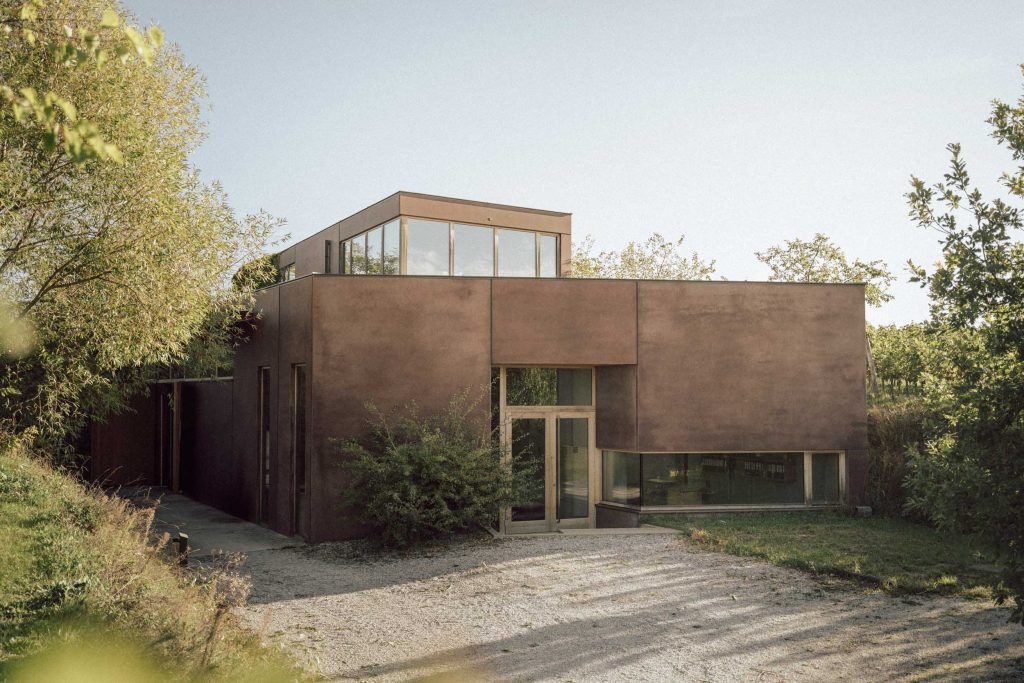
At Weingut Christoph Edelbauer in the Kamptal in Niederösterreich, Pinot Noir’s duality is on full display. It is at the very heart of the winery’s production, an emotional and philosophical statement rather than a commercial necessity. And yet Edelbauer himself understands that it demands more of the winemaker.
“Pinot Noir reveals every decision,” he says, “and forgives none. That is its fascination” From the vineyard to the cellar, he knows that every choice will make its mark on the wine.
That is why he has adopted an approach founded on clarity, tension and restraint. Rather than focus on what he can add or how he can manipulate the wine, it is a process emphasising precision through keeping the wine’s purity.
“I work with trust rather than control,” he summarises.
Langenlois terroir
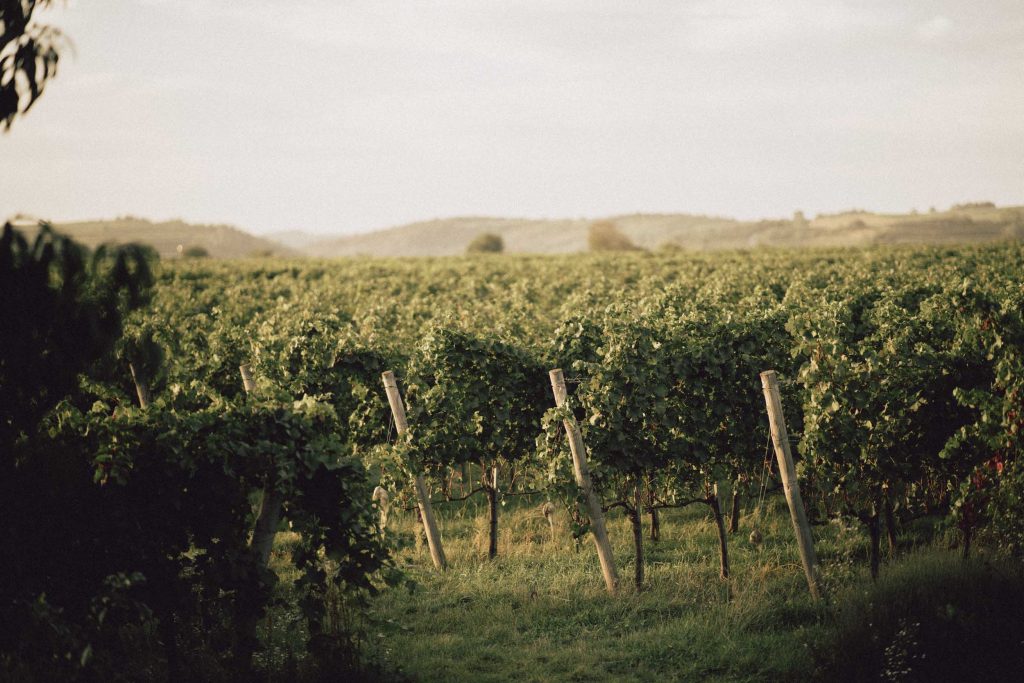
Kamptal is a particularly dynamic region, where a number of climatic conditions and soil types meet. Across its 14 hectares of vineyards, the winery has a range of sites and influences. Transmitting that complexity in the wine is therefore key to production at Weingut Christoph Edelbauer.
The climate is continental and still shows the influence of the Pannonian Basin, which channels warm air between the Alpine foothills and the Carpathian mountains. Yet the Waldviertel, forested hills to the north, has a strong cooling influence to add.
A to-and-fro between those influences is ideal for crafting wines with clarity. Warmer days encourage full physiological ripeness, but the cool nights add aromatic definition and freshness.
Moreover, the region’s geological diversity lends itself to fine winemaking. It means that making wines with a sense of place is a logical position, and so each vineyard is harvested and vinified separately to maintain site expression.
“Terroir here is not an abstract idea. It is a conscious approach to winemaking,” explains Edelbauer.
The soils range from schist in Steinhaus to loess in Neuberg to veins of limestone running through the vineyards. The overall effect is structure and persistence as opposed to power; the terroir is allowed to shine through rather than concealed.
Organic convictions
Although organic viticulture is now a common subject in winemaking circles, Weingut Christoph Edelbauer’s commitment to organics is important to understanding its Pinot Noir. It is a commitment that affirms the winemaking philosophy.
The estate has been certified organic since 2012. In that, it is impressive: its journey began a few years before momentum for organic wine reached consumers.
The thread, however, extends further. Edelbauer’s father worked at the University of Natural Resources and Life Sciences, Vienna, examining conventional plant nutrition. Though the family had, for generations prior, grown grapes, Edelbauer’s father instead leased the land as he pursued academia.
A keen interest in and understanding of viticulture was therefore instilled in Edelbauer from a young age. It also meant organic principles were approached from a position of scientific rigour.
That has informed the estate’s approach to this day. Organic viticulture became, for Edelbauer, a specific project. He wanted to demonstrate that it could work precisely, consistently and economically.
The mindset presents a tension – scientific precision vs. intuitive observation – but its reward is a sensitive approach that trusts the terroir rather than exhausting it.
Communicating the approach
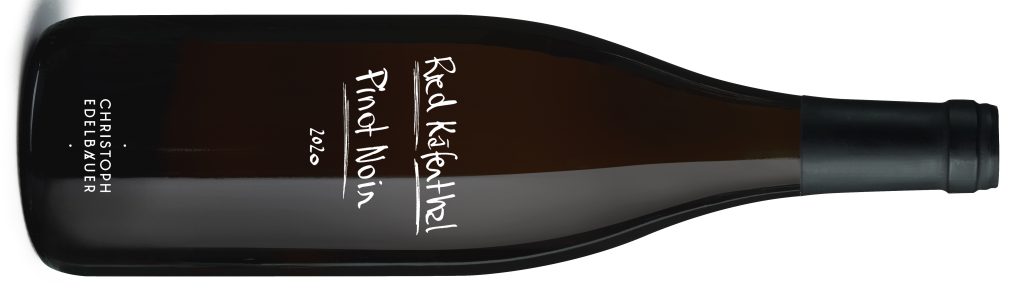
“The label does not speak for the wine,” Edelbauer says. “It listens.” Indeed, the minimalist approach carries through to branding and labelling.
Each cuvée provokes a distinct emotion from Edelbauer, and so he pens an idea in response to each of them. It is not a tasting note or an explanation of winemaking; this is the thought or feeling that emerges from the wine itself.
For Weingut Christoph Edelbauer Pinot Noir Ried Käferthal, for instance, he wrote: ‘Between precision and devotion. Tension that remains.’
Each of these lines is then placed as part of the label, inviting the reader to respond to the wine on a similarly emotional level.
Many wine lovers consider the label far less important than the liquid, but in this case it is a perfect distillation of the wine’s own story.
These are wines led by listening and by trusting the natural resources: variety, viticulture and terroir. In its Pinot Noir and beyond, Weingut Christoph Edelbauer proves how a careful, respectful approach can yield far better results than flashy, manipulative winemaking.
Weingut Christoph Edelbauer Pinot Noir Ried Käferthal won a Gold medal at The Global Pinot Noir Masters 2026. Patricia Stefanowicz MW offers her tasting note for the wine below.
Weingut Christoph Edelbauer Ried Käferthal Pinot Noir 2020
- Producer: Weingut Christoph Edelbauer
- Region: Niederösterreich
- Country: Austria
- Grape variety: 100% Pinot Noir
- ABV: 13%
- Approx. retail price: £59
Located in Langenlois, in the middle of the Kamptal Valley, is this lovely family winery. This vineyard, Ried Käferthal, is underpinned by gföhler gneiss rock interspersed with loess, giving the wines great minerality. Medium to deep ruby-coloured, this wine has elegant cranberry and strawberry fruit with cedar wood undertones. Crisp acidity and linen-textured tannins support the palate flavours. Very intense and long with generous spiciness, this wine will match air-fried marinated duck breasts served with Camargue red rice.
Related news
10 things to look for when drinking rosé wine


