



The ‘Med Way of Life’ to bring sunshine to London Wine Fair
Ahead of the classification’s masterclasses at London Wine Fair this month, db explores why the UK trade is embracing IGP Méditerranée’s ‘Med Way of Life’
When you look at a map of IGP Méditerranée, the first thing to hit you is the size. It stretches from the Alpine Italian border in the east to the lagoons of the Camargue in the west, and extends from the Mediterranean northwards to Vienne, not far from Lyon. Parts of Corsica are even included.
At first glance, it is a lot to take in. That is one reason why the classification is making it easy for the UK wine trade to understand its production. A cavalcade of IGP Méditerranée producers are exhibiting at London Wine Fair on 18–20 May, where Anne McHale MW will also present two separate masterclasses: one on white wines and one on rosés. There is, frankly, more to cover than three days could ever allow.
Yet its abundance is no barrier to its success. IGP Méditerranée should not be considered in the same granular terms as a tiny, highly specific appellation. Instead, it is a grander project, a celebration of the culture and traditions of southeast France. The slogan says it all: IGP Méditerranée is about ‘The Med Way of Life’.
What does that mean? Instead of leading with regulations on grape varieties and yields per hectare – the useful, but admittedly dry, tools of our trade – the starting point is a collection of cultures and lifestyles directly united by IGP Méditerranée’s warm Mediterranean climate.
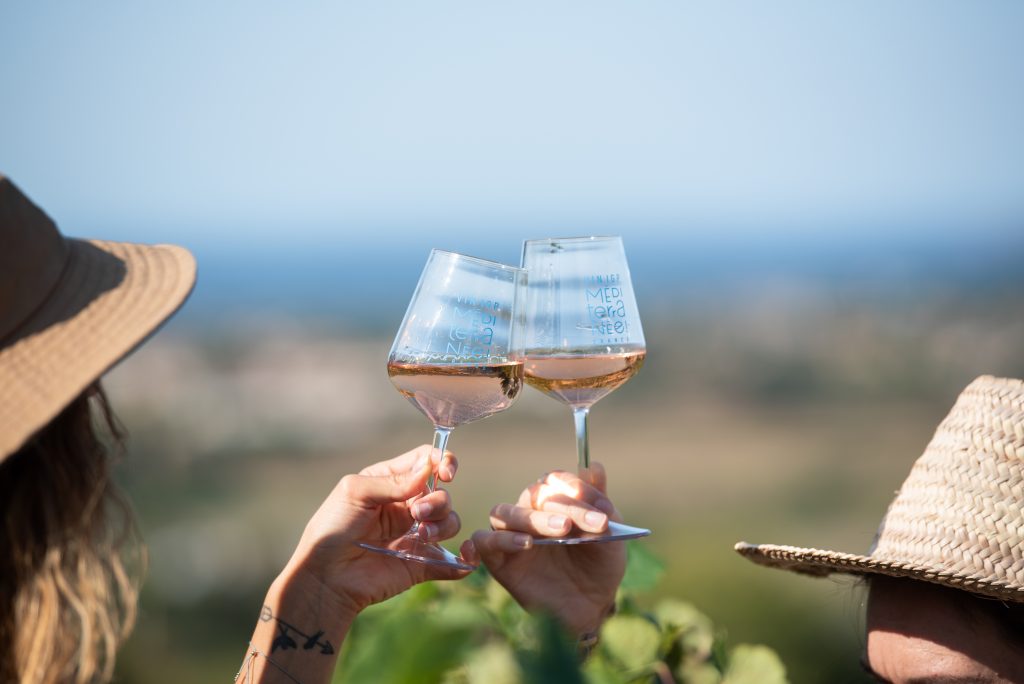
The wines are made for that lifestyle. They are easy-drinking, approachable and unpretentious. They are for sharing around the table and bringing to a friendly gathering. They are for the sort of long, light evenings that see grandparents putting the world to rights over a chilled glass while children dart around a garden well past their bedtime.
This is, in part, thanks to the southeast of France’s reputation for hospitality. Though the lifestyle is the cultural inheritance of locals, it has been exported around the world as the region – particularly tourist hotspots such as Nice and Avignon – welcomed global visitors into the fold.
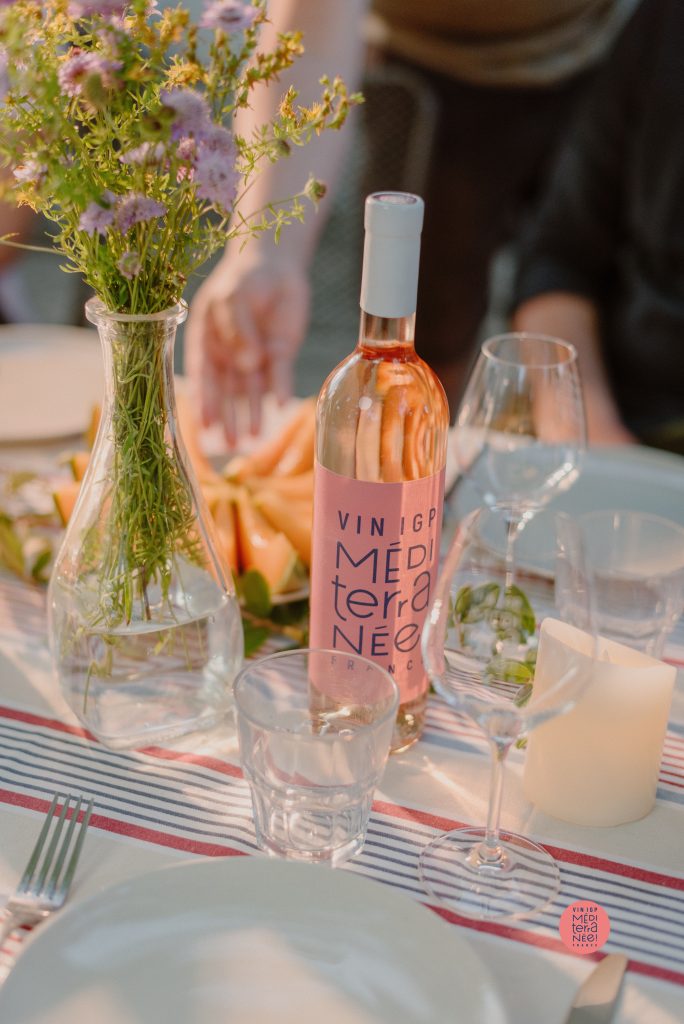
The lifestyle also reflects French gastronomy. Dishes such as ratatouille, tapenade and bouillabaisse hail from the region, as do ingredients such as picodon goat’s cheese and a range of local olives. To match, not to mention celebrate, such cuisine, IGP Méditerranée defines itself by that ‘Med Way of Life’, rather than by narrow prescription.
Roger Ravoire, president of Intervins Sud-Est, summarises it best: “Each bottle reflects our commitment, a story, a sense of place and a creativity that we aim to make accessible to everyone.”
Dynamic and versatile
In fact, that story is open to the world precisely because IGP Méditerranée is not narrowly defined. The region is supremely versatile, powered by a dynamic network of cooperatives, estates and négociants.
Some motifs recur – in particular, the combination of sunshine-ripened fruit flavours and fresh acidity that marks them out as food-friendly wines – but there is no archetype of IGP Méditerranée wine.
 Given the region’s large footprint, its wines can vary appreciably. It currently accounts for 11,500 hectares of vineyards across 10 départements (approximately equivalent to English counties), spanning from coast to mountains. From these, IGP Méditerranée produces around 700,000 hectolitres of wine per year; substantial production, but nowhere near exhausting the region’s potential.
Rosé wines account for the majority of production – around 65% of the total. Naturally, they are a firm favourite on sunny days; after all, the region receives 2,500 hours of sunshine each year.
But they are sufficiently diverse that they can prove versatile. That is partly due to the variety of terroirs. Inland sites, away from cooling breezes off the Mediterranean, will tend towards riper, more robust flavours. Those from the coast, on the other hand, might be noticeably more fresh and mineral. The former might accompany heartier fish dishes in the autumn; the latter would match delicate spring vegetables. In short, the rosés are no one trick pony.
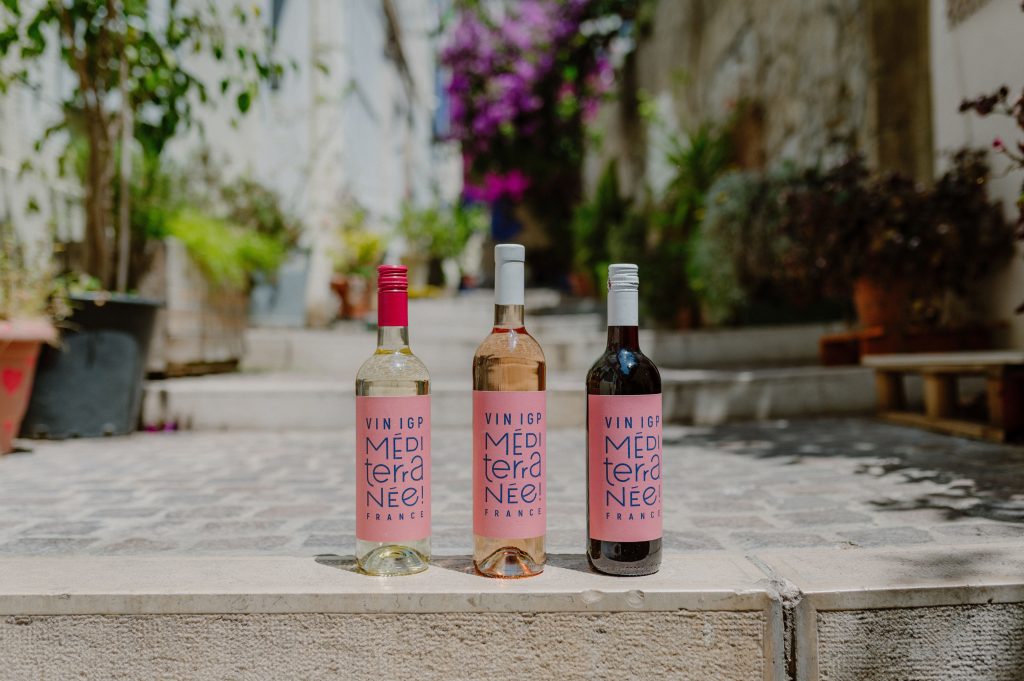
Then you have both whites and reds that further expand the region’s potential. The white wines, accounting for 20% of production, run from lean coastal cuvées to richer expressions that make the most of southern France’s native varieties, while the reds range from quaffable, chillable options to rich, structured wines that drink equally well in summer and in winter.
For each of the categories, IGP Méditerranée benefits hugely from its scope – in geography, in tradition and in its ambition. Those diverse terroirs apply equally across the region’s wine styles, but they also have informed the vineyard stock. With such a geographic span, the IGP encompasses a huge range of grape varieties; indeed, more than 100 are grown across its vineyards. Even among the most commonly found – Grenache, Syrah and Merlot for reds and rosés, Chardonnay, Viognier and Vermentino for whites – there is significant variation. Given that blends are the norm, the possibilities are practically endless.
Without the strictures of a PDO, producers have proven themselves up to that challenge. Diversity is seen as the region’s strength, even as a calling card. While the wines all show the unmistakable character of the region, there is no single way to drink IGP Méditerranée wines.
Ready for market
With such diversity on show, IGP Méditerranée is already on a strong trajectory in its export markets, as London Wine Fair is set to discover. During the period January to August 2025, exports of IGP Méditerranée wines of all colours totalled 15,667 hectolitres, representing a 20% increase compared to the same period in 2024.
The UK is one market seeing strong growth. In the 2025 calendar year, exports to the UK increased by 12% compared to 2024, led largely by red and rosé (which make up 93% of exports to the UK).
Currently, the wines are not widely represented in the market. Although many might assume that French wines, being right on the UK’s doorstep, have reached saturation, there is still plenty of room for growth for IGP Méditerranée. Among the general public, the region has flown under the radar and so offers both excitement and value.
Now seems to be the moment for it to step into the limelight. The current popularity of rosé among UK consumers is generating plenty of interest, on which IGP Méditerranée can capitalise. The south of France, from Provence in the east to Languedoc in the west, has so far led the conversation around pink wines in the UK; IGP Méditerranée is vital to that winemaking stretch, even if it is not yet a household name.
Although the rosé boom may encompass a host of IGP and PDO wines, the Mediterranean coast shares core touchstones that create an overall brand: after work aperitifs, terrace culture and easygoing socialising. Anyone who has visited Marseille, the heart of IGP Méditerranée, will understand that the IGP embraces that vision. Anyone who has tasted its wines will understand that they slot perfectly into that way of life.
The Mediterranean climate lends itself to making pale, dry and refreshing rosé, with generations of technical know-how meaning the quality is assured. Moreover, the large production area has geared it towards significant volume that provides a consistent, easy-to-drink taste of sun-soaked southern France through the whole year.
For off-trade sellers the reliable, keenly priced bottles (or, indeed, innovative alternative packaging) can entice consumers to move from large US or Australian brands to French producers. For the on-trade, IGP Méditerranée wines invite the region’s culture of sharing and are perfect by-the-glass pours.
Fundamentally, UK buyers are finding that IGP Méditerranée offers a crucial selling point: accessibility. Ready to drink with or without food, available in a range of styles and at a price that encourages just one more glass, IGP Méditerranée wines are an easy choice for the consumer to make.
While the region has creativity and diversity in abundance, it also offers the reassurance of consistent quality at a good price – equally essential for the wine buyer and the consumer.
“We are finding great commercial success with a growing number of IGP Méd wines in our portfolio,” explains Tom Ashworth, CEO at wine merchant Yapp Brothers.
“These are predominantly crisp, refreshing, ‘bon marché’ whites and rosés that offer restaurants and pubs exciting by-the-glass options with grape varieties such as Grenache, Caladoc, Picpoul and Bourboulenc. Not to be overlooked, however, are some serious reds, such as Domaine Richeaume Columelle, that show the heights that can be achieved within the IGP.”
Making the case
Many in the UK trade will already know the wines well, but this year’s London Wine Fair will be the perfect opportunity to discover IGP Méditerranée anew, or to have that first encounter.
The wines will be on display at their own stand (B35), with a number of producers showing their different cuvées. For anyone unconvinced of the IGP’s diversity, it will be a one-stop-shop to prove the creativity behind the wines.
For those looking for in-depth study, the fair will also host two masterclasses led by Anne McHale MW. On Monday, 18 May at 4.30pm, she will explore some of the region’s benchmark rosés, while on 19 May at 10.30am she will explore a selection of IGP Méditerranée whites from both internationally renowned producers and under-the-radar artisans.
These sessions, running in the fair’s walk-up theatre, will offer a detailed tasting tour, perfect for buyers looking to augment their range with southern French wines.
For the UK trade, it is the ideal opportunity to see first-hand why IGP Méditerranée is in such an exciting period of growth. Regardless of whether you can attend London Wine Fair, however, the trajectory is clear: drinkers are increasingly paying attention to these wines, and buyers should not miss the chance to bring ‘The Med Way of Life’ to the UK.
Related news
English investor buys historic Château Vignelaure
Wales bids for world’s first natural wine appellation
How service crop management could save vineyards in dry years


