



World Atlas of Wine returns with ninth edition
The landmark wine reference first published in 1971 will appear in a newly revised ninth edition. Hugh Johnson and Jancis Robinson MW again collaborate with maps editor Julia Harding MW on the latest version of a book widely regarded as a cornerstone of wine literature.
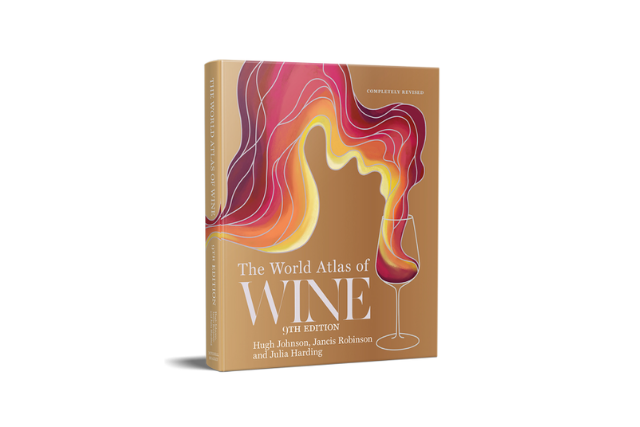
Few wine books acquire the status of a classic. Since its first appearance in 1971, The World Atlas of Wine has done exactly that, building a reputation as one of the most authoritative guides to the geography of wine.
More than five million copies of the book have been sold worldwide, according to the publisher. The forthcoming ninth edition seeks to bring readers up to date with developments across the global wine landscape since the previous edition appeared in 2019.
The volume contains eighteen entirely new maps and a full revision of every existing one. The text has also been rewritten to address topics currently occupying wine growers and drinkers, including the influence of climate change on vineyard location and the sustainability initiatives being explored across the wine world.
The book also examines the emergence of wine growing in far northern parts of Europe, a development linked to warming conditions as reported by the authors.
A collaboration of established authorities
The atlas continues to be produced by two of the most familiar names in wine writing. Hugh Johnson, author of numerous bestselling titles including The World Atlas of Wine, Wine Companion, the annual Pocket Wine Book and The Story of Wine, first entered the field with his book Wine in 1966.
His career in wine publishing spans more than six decades. Johnson was appointed chevalier of the Ordre National du Mérite by president Jacques Chirac in 2004 and received an OBE in 2007 for services to winemaking and horticulture, according to biographical information provided with the book.
Jancis Robinson MW serves as co-author and has worked on the atlas since its fifth edition. Robinson qualified as a master of wine in 1984 and was the first person outside the wine trade to do so. She writes weekly for the Financial Times and acts as editor in chief of JancisRobinson.com, which is described as an award-winning wine website.
Partner Content


Her other works include The Oxford Companion to Wine and Wine Grapes. Robinson received an OBE in 2003 and honours including France’s officier du Mérite Agricole and the German VDP’s highest award in 2016, according to the publisher. She also holds six James Beard Awards, alongside lifetime achievement awards from the International Wine and Spirit Competition in 2018 and the Institute of Masters of Wine in 2024.
Maps editor Julia Harding MW has been Robinson’s senior editor at JancisRobinson.com for more than twenty years. Harding co-authored Wine Grapes in 2012 and served as lead editor of the fifth edition of The Oxford Companion to Wine. She has edited the maps for The World Atlas of Wine since the seventh edition and has received accolades, including Wines of Portugal Personality of 2022 and the 67 Pall Mall Global Wine Communicator award for long-form writing 2025.
A reference long valued by the trade
Praise for the atlas has been consistent across decades. Victoria Moore of the Telegraph described the work as “simply superb work… buy it if you like wine at all.”
Andrew Jefford of Decanter wrote that it is “the most useful single volume on wine ever published… If I owned only one wine book, it would be this one.” Eric Asimov of the New York Times called it “the single most important reference book on the shelf of any wine student”.
Recognition from the drinks industry has also followed. As reported by the drinks business in January 2020, the eighth edition won the 2019 André Simon Award for best drinks book at a ceremony held at the Goring Hotel in London.
Drinks assessor Dan Jago said at the time: “One of the key criteria for the André Simon book awards is ‘Will I still be referring to it in ten years’ time?’ With The World Atlas of Wine, I am certain that the answer is yes.”
Jago added that the eighth edition built upon decades of development since the first version appeared, describing it as widely recognised by the trade and critics as an essential reference work.
Mapping a changing wine world
The ninth edition arrives at a time when the geography of wine is evolving rapidly. According to the publisher, the updated maps and revised commentary aim to reflect those changes with particular attention given to climate-driven shifts in vineyard locations and the sustainability efforts gaining ground across the sector.
Related news
UK drinks company to be liquidated after selling wine 'off the books'
Viña VIK puts wine at the centre of the table with new gastronomic book


