



New laws for Georgian vineyards spark corruption fears
Under new laws, Georgian winemakers will have to seek state approval before setting up commercial vineyards from May. The regulations are intended to boost vineyard quality, but winemakers warn they’ll penalise small businesses, and worry the risk of corruption runs high.
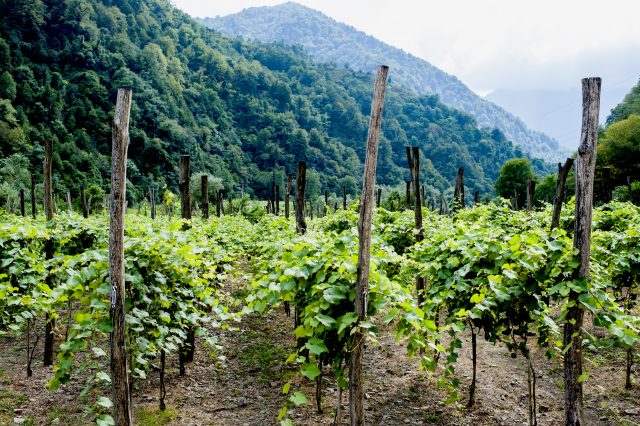
Under the new regulations, individuals or companies looking to plant commercial vineyards will have to acquire a state licence from the National Wine Agency of Georgia. Existing vineyards are not impacted by the amended Law on Vine legislation, with the rules only applying to vineyards planted after 1 May 2026.
The agency’s chairman, Levan Mekhuzla, said the regulations aim to raise vineyard quality, and preserve the long-term sustainability of Georgia’s wine industry – which is considered, by many, to be the ‘birthplace’ of wine.
“We are leaving the vine to the next generation, so the vineyard should be designed for long-term investment,” he said. “The farmer must maintain agrotechnical characteristics, varietal purity, and vineyard cultivation technology; the soil and the place where we grow the vineyard are crucial, because it is the place of origin that determines the quality of the wine”.
Corruption concerns
Elsewhere in Europe, similar regulatory systems already exist, Mekhuzla continued. “The quality of Georgian wine and its success in international markets depend on the quality of the vineyard,” he added.
But the move has come under fire from trade bodies and winemakers alike.
NGO “Transparency International-Georgia” has warned that the new law will increase corruption risks, with the National Wine Agency set to take on greater power as it steps up from its role as a supervisory body, to a market access regulator. Additionally, it warned of the added dangers of the arbitrary harassment of small cellars.
“Today, Georgia’s high-quality wine, which has earned the country its reputation, is largely produced by small cellars, and under these circumstances, regulations that burden these small wineries and complicate their competition with large industrial wineries would be illogical and harmful,” the NGO said. “Furthermore, this increases the risk that the regulatory body will use these obligations as a tool for selective control and harassment of small producers.”
Under fire
Additionally, they added that the law imposed restrictions on an entrepreneur’s “fundamental right” to buy and sell a product, through a permit founded on “vague objectives”.
They begged the question, “When the Agency assumes functions incompatible with international practice and all decisions are entrusted to a minister’s unilateral decree, what anti-corruption mechanism protects us from these non-transparent procedures being used for selective control and harassment of market participants?”
The new legislation only applies to commercial growers, so home-vintners can continue to plant vines for personal use without being sanctioned by the government.
However, without a state licence, neither wines nor grapes will be able to be sold.
Partner Content
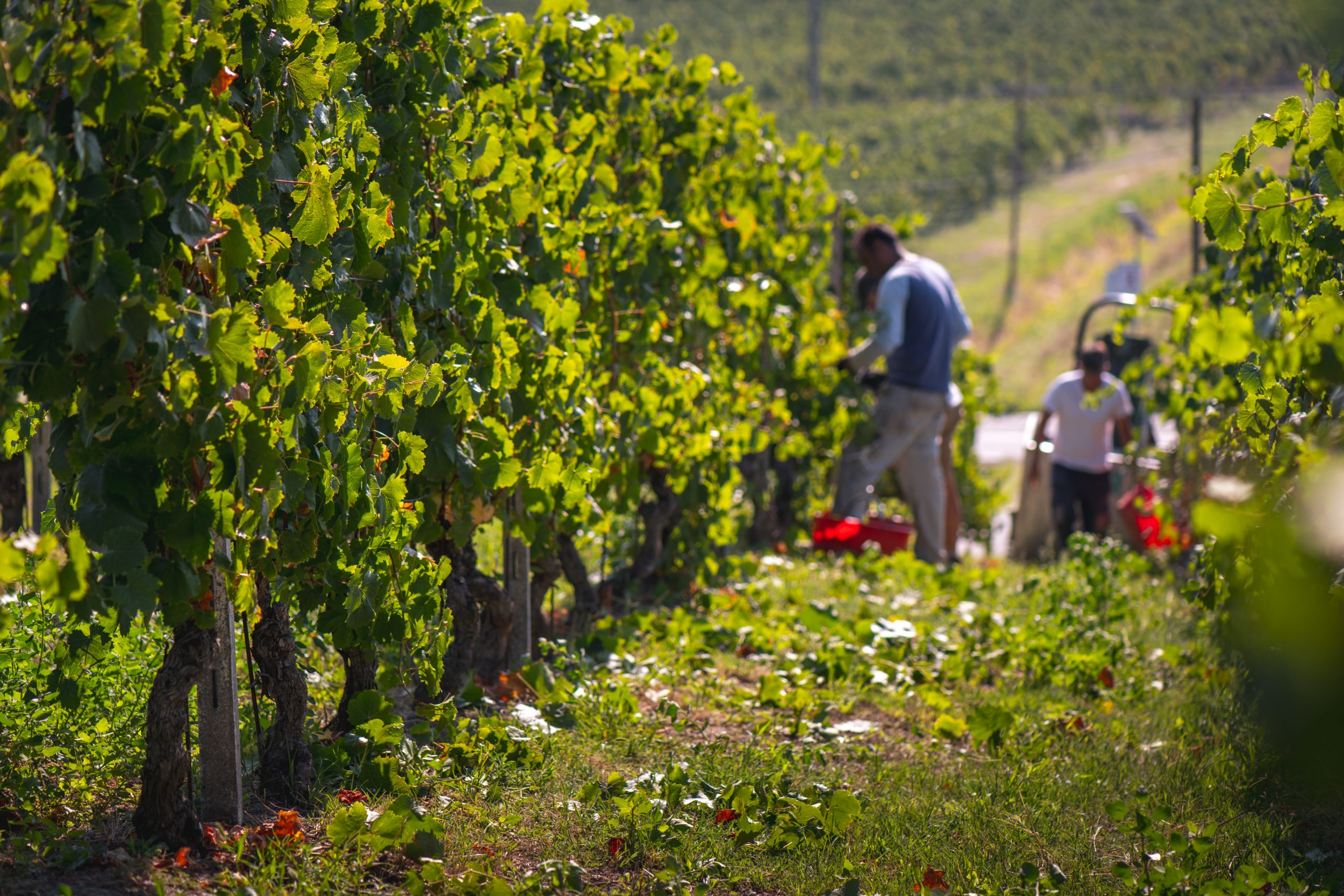



Winemaker response
Georgia’s most famous wine region is the inland plain of Kakheti, where winemaking is not merely a culture but a true “way of life”, as Georgij Gvardzelašvili, owner of the winery of the same name, told Ekho.Kavkaza.
He didn’t need any permits when he first started planting vines, and today, his estate covers around 5,000 hectares of land, where he cultivates rare grape varieties and exports his products to nine countries.
Gvardzelašvili gave a comprehensive list of the sector’s woes, including uncertified seedlings being used, errors in variety selection, and disease-ravaged vineyards.
If Georgia is to match the winemaking standard of countries like France or Italy, these kinds of regulation changes are inevitable, and beneficial for everyone, he pointed out.
Following on from France
Still, the producer worries that the new law will create bureaucratic challenges for small businesses. Additionally, he urges the state – who will gain extra powers in addition to quality control – to support local farmers, as their decision to issue or decline permits could be make or break for certain farms.
Representatives of the Agency said that the new system “will help everyone to comply with agrotechnical standards, certify wine varieties and choose the right geographical locations for all producers”, in order to boost the quality of each variety.
Deputy minister for agriculture Zurab Ezugbaja said: “In France, much stricter measures are adopted, which are laid down by law”, providing for the removal of excess vines with percentage limits that producers must stick to, establishing cultivation quotas for each territory.
Small-scale farmers face trials
Another winegrower, Aleko Sardanašvili, works in the village of Khvančkara. He produces several varieties of high-quality wine from just one hectare of land.
He said that effective production could not be launched without agreements with the state, which grants subsidies and exemptions if a clear procedure is followed, reported AsiaNews.
However, he also noted that “a closed circle is forming among the major producers, whilst small-scale farmers face many difficulties”.
Aleko criticised the imposition of a state permit, because “every agricultural entrepreneur has the right to sell the produce of their land according to their needs, without too many restrictions, provided that production is organised according to reasonable criteria”.
On February 18 2026, amendments to the ‘On Vine and Wine’ law were adopted at the first reading, then subsequently at the second reading.
Related news
Copa Jerez to test UK chefs and sommeliers’ pairing prowess


