



‘Liquid, liquid, liquid’: Elixir Distillers’ flavour focus
After selling The Whisky Exchange to Pernod Ricard, Elixir Distillers founders Sukhinder and Rajbir Singh have swapped retail for distillation, buying the Tormore plant on Speyside and building another distillery, Portintruan, on Islay. It hasn’t all been plain sailing, as Richard Woodard discovers, but the emphasis on flavour creation has endured.
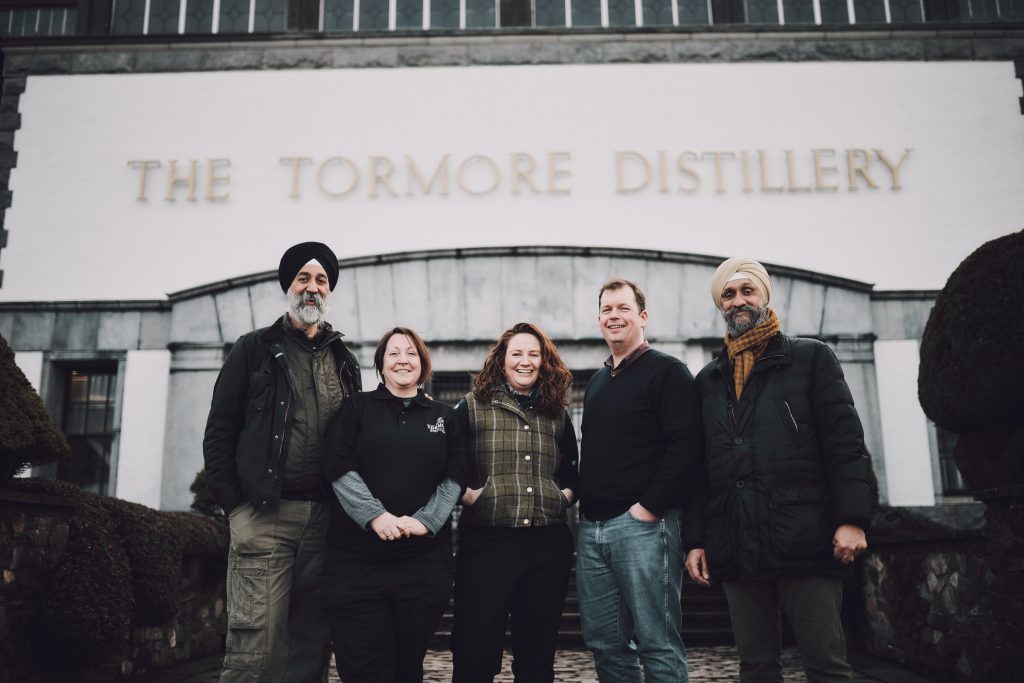
When brothers Sukhinder and Rajbir Singh sold The Whisky Exchange to Pernod Ricard in late 2021 for an undisclosed sum rumoured to be up to £429 million, early retirement could have been on the cards, with Sukhinder acknowledging that some in the drinks industry thought he might end up “on the beach”. Instead, the brothers have bought one distillery, are building another, and their Elixir Distillers business continues to span independent bottling and brand creation.
Anyone who knows Sukhinder will tell you that the beach option was always a long shot, but there’s also a sense of unfinished business with a world he has been involved in for most of his life. After selling The Whisky Exchange, he says, “the industry I fell in love with had changed. Too many products, too many brands, too much marketing – rather than liquid, liquid, liquid.”
A focus on flavour creation is a thread that runs through all of Elixir Distillers’ current endeavours, from the Tormore distillery on Speyside (acquired from Pernod in 2022), to the long-delayed Portintruan project on Islay and the independently bottled products released by Elixir Distillers under various brand names, including Single Malts of Scotland, Elements of Islay, Port Askaig, Black Tot – and the newly launched Elixir Trails series.
Focus on flavour
Let’s take them one at a time. Sukhinder says he was “over the moon” when the opportunity to acquire Tormore arose, giving the company a Speyside plant to complement the new build on Islay. “It ticked all the boxes,” he adds. “It produced a style of whisky I liked. Was it perfect? Probably not, but we knew how we could change it going forward.”
Tormore is something of a paradox: a big distillery, with four pairs of stills and a production capacity of 5m litres of pure alcohol per year, and an eye-catching one, its grandiose façade overlooking the River Spey unmissable as you drive northeast into Speyside on the A95. But, since it was built at the start of the post-war whisky boom at the end of the 1950s, its spirit has vanished into blends – first Long John, latterly Ballantine’s – with single malt bottlings rare.
That presented the Elixir team with a challenge. “We could have rushed and released bottlings and said: ‘We’ve bought a distillery; we’ve got lots of stock,’” explains Sukhinder. “But we wanted to get to know the distillery; we wanted to get to know the stock.” Because Tormore was a blending malt, there was lots of liquid in older second-, third- or fourth-fill casks – fine for a blend, but not ideal for bottling as a single malt.
Core range
For that reason, apart from a few one-off releases, it’s taken more than three years for the beginnings of a core Tormore range to emerge. A 12-year-old expression – blend complete, currently marrying – is due for release in late May or June, matured in a mix of ex-Bourbon, cream Sherry and toasted new oak, playing up Tormore’s fruity spirit style. It will be joined by the no-age-statement (NAS) Tormore Timeless, plus a Sherry cask-matured 16-year-old. Next year there’ll be an 18-year-old and a 21-year-old, plus annual limited releases.
But Tormore is still work in progress. Distillery manager Polly Logan explains that a forensic analysis of the production process has led to many changes, many of them harking back to the practices of the 1960s and 1970s: using a mix of distillers’ yeast and spent brewers’ yeast, looking at barley varieties (Laureate and Sassy are in, Diablo is out), slowing the distillation and tweaking cut points.
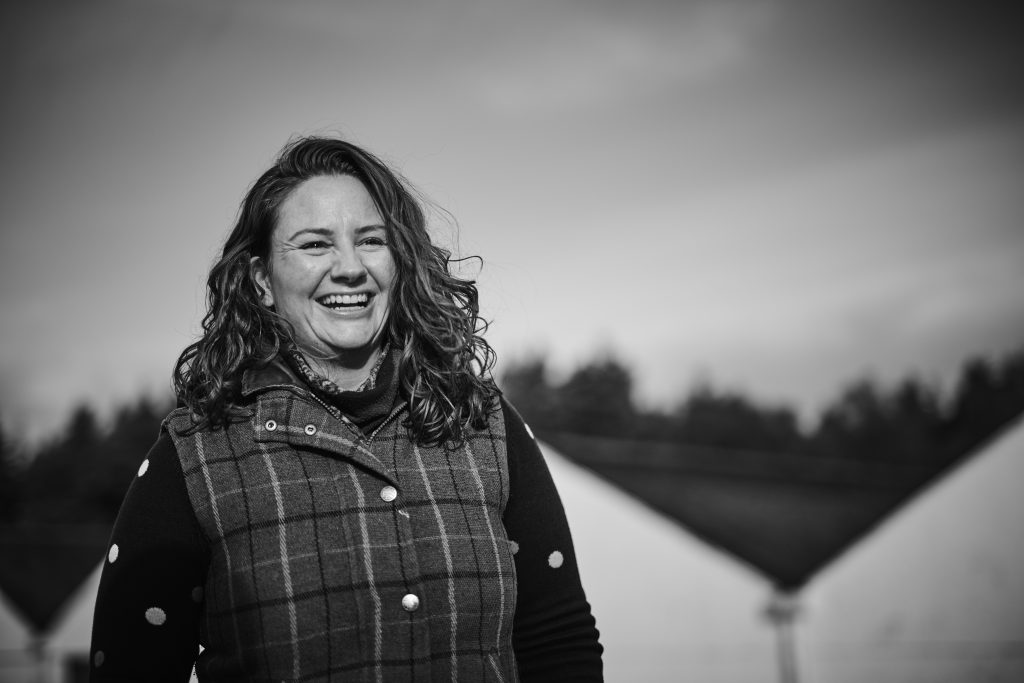
All are designed to accentuate Tormore’s elegant, fruit-forward character. “What we think is that in 10 years’ or 12 years’ time it will be just that bit richer,” says Sukhinder. The 16-year-old will eventually be fully matured in ex-Sherry wood (early releases will only be part-Sherry-matured), with an emphasis on the “clean” flavours brought by American oak.
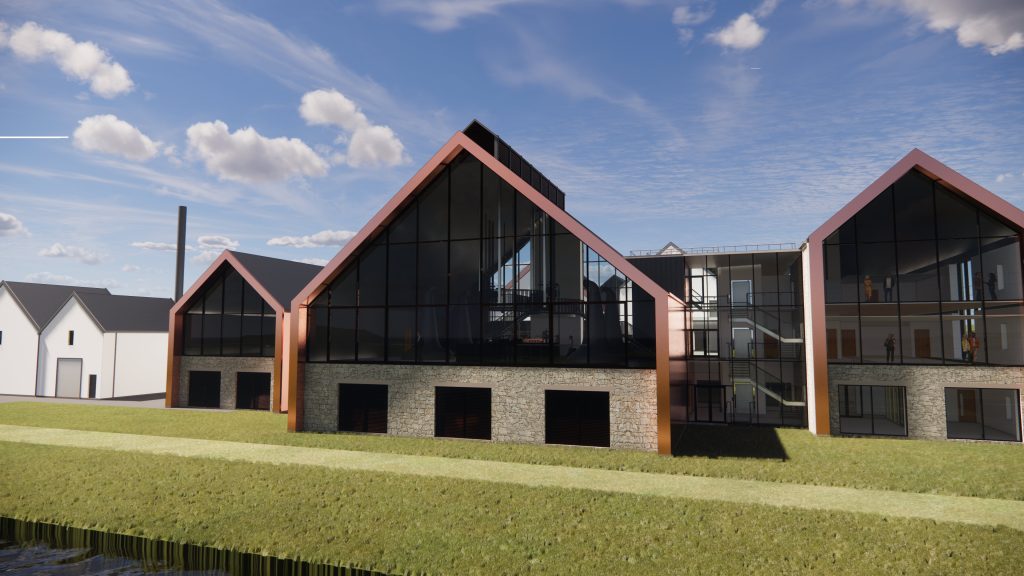
If patience is required when it comes to Tormore, the same is true in spades for Portintruan, the distillery project located on the south coast of Islay, between the town of Port Ellen and Laphroaig. At one point the aim was to start distilling in early 2024, but the complications of building on a Hebridean island, combined with construction firm ISG going into administration in September 2024, have seen deadlines slip and costs go “crazy”. With any luck, commissioning will start in the next few months, with formal distillation beginning towards the end of the year.
Partner Content

Vision
“My vision was to create a distillery for flavour creation,” says Sukhinder. That means eschewing the traditional Scotch template of a single spirit style in favour of multiple flavour streams in the same plant: lightly peated, traditional heavily peated, very fruity with long ferments, and a rich, oily spirit suited to Sherry cask maturation.
Portintruan will also aim to recapture some of the character of the older whiskies that Sukhinder loves, including what is claimed to be the largest floor malting operation in the industry (capacity of 750,000 litres of pure alcohol), direct-fired wash stills, cooling jackets on the lyne arms that can run hot or cold, depending on the desired spirit style. The distillery will also boast a “huge” visitor experience, including a restaurant and “the best whisky bar on the island”.
There’s a sense that Portintruan, along with the rebooted Tormore, represent the culmination of the Singhs’ decades of experience in the industry. Sukhinder, it’s clear, knows what he likes about today’s whisky world – and what he doesn’t.
That manifests itself in his attitude to the current vogue for Sherry cask maturation: “A lot of big brand stuff has gone down the Sherry route. All the whiskies are getting bigger, richer and heavier. It’s boring.” By contrast, he highlights an 11-year-old Linkwood, distilled in 2014 and bottled under Elixir’s Single Malts of Scotland banner – all ethereal fruit and finesse, with something of a nod in the direction of the character of Tormore 12, its distillate allowed to shine by maturation in ex-Bourbon wood.
Trenchant views
It’s also apparent in his trenchant views on English whisky: “There are a lot of whisky distilleries in England now. Do many of them excite me? No. England had the chance to be different, because they didn’t have the rules that Scotland has – but 80% of the distilleries are producting Scotch in reality.”
Nonetheless, there are exceptions, including Derbyshire’s White Peak Distillery, producer of the lightly peated Wire Works whisky. “What intrigued me was that they did something that related to where they were based,” says Sukhinder. White Peak sits about 20 miles north-east of brewing mecca Burton Upon Trent – so the distillery uses a mix of distillers’ and brewers’ yeasts as a nod to its local area.
A White Peak whisky features in Elixir Trails – a new project that aims to highlight lesser-known but outstanding spirits from around the world. Initial releases include a Whisky Trail series (White Peak, plus Thy in Denmark, Chichibu in Japan, and Westland in the US) and a Rum Trail (rums from Barbados, Jamaica, Belize, Australia and Fiji), with more to follow.
“There are so many distilleries today that I can’t keep up,” says Sukhinder. “So we looked at it, and we thought there are some really wonderful places out there, people who think like us … We’re going to do the hard work for the consumer.”
The aim is clear from the publicity material accompanying the launch. “These are the spirits I recommend to friends,” says Sukhinder. “It’s not about the status of certain distilleries, or what is a trendy, obscure place to talk about … To make it into this series, a whisky or rum has to be unique and special.”
There’s plenty of marketing spiel attached to the unveiling of Elixir Trails, from the funky label designs to the QR codes linking to brand stories, but once again here – as with the core philosophy espoused at Tormore and Portintruan – one aspect above all remains crucial: the liquid.
Related news
Rare Japanese whisky casks smash auction record to achieve £4.25 million
Experts to host wine and whisky fraud seminars in Singapore
#WeekInPictures: pies on Mount Street, whisky in Brighton and a Brits weekend in Manchester


