



Why Cult Wines CEO Tom Gearing is optimistic about fine wine’s future
In an exclusive interview with the drinks business this month, the CEO of Cult Wines Tom Gearing expresses his confidence in the future of the fine wine market, and how he intends to continue to make the sector more accessible for all generations.
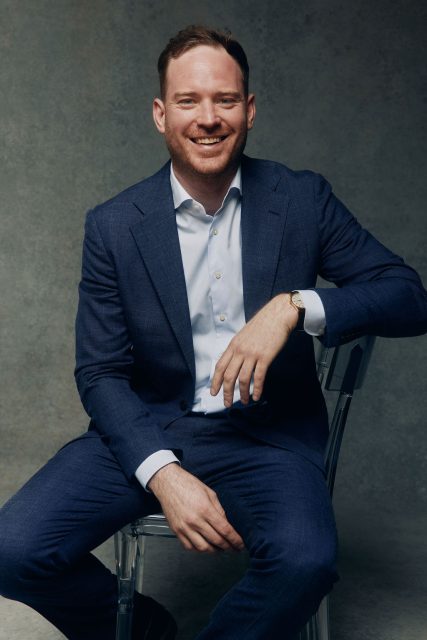
It’s been an exciting learning journey for Gearing, who was catapulted to fame in 2012 when he came runner-up on season eight of the BBC’s reality TV show The Apprentice – having been pipped at the post to convince billionaire Lord Alan Sugar to invest £250,000 in a nascent fine wine business.
Nevertheless, Gearing went on to become a major player in the world of fine wine trading, transforming Cult Wines, which he and his brother co-founded in 2007, into a business that has sold more than £500m of wine, with a global network of customers, a trading platform, and a drive to making buying and selling fine wine as seamless as possible.
Helped by its proprietary software, called Vintrade, the business can automatically manage portfolios from a web app, allowing clients to track their portfolio, as well as receive curated offers and buy and sell recommendations.
Alongside the tech, and the emergence of new markets for Cult Wines, Gearing begins the discussion by acknowledging the challenges for fine wine right now.
“It’s been really difficult for a few years for everyone, there have been very few bright spots in the wine industry over the past couple of years, with prices depreciating and a lack of liquidity in the market, making it difficult for people to sell within a reasonable time frame,” he recalls, before summing up, “There’s been a lot more sellers than buyers.”
This situation has persisted since late 2022, however, Gearing sees the start of a recovery.
“Since the end of August, there’s definitely been a noticeable uptick in demand, with more interest from buyers and an increase in transactions,” he says, adding that such a change has been apparent in all types of business.
This he can say with confidence due to the reach of Cult Wines, which not only serves private clients and wine investors, but also wholesalers, hotels and restaurants, as well as wine importers around the world, even other wine merchants.
One notable area of growth has been the demand from the US, says Gearing, which was quiet when anticipating tariffs on wine, but now they are set, providing “certainty”, he says, “people are starting to do business again”, while Mainland China is “starting to come back”.
He says, “I think we’ve seen a bit of a sea change in the last couple of months… Some leading indicators suggest that we have started to turn a corner, and it feels like the conditions are a lot better than they were, certainly compared to the end of 2024.”

And Gearing points out that Cult Wines is well-placed to take advantage of a return to growth, having spent the last few years “building our infrastructure and technology to really support the growth and scalability of the business.”
He explains, “Technology is central to how we scale and improve efficiency. The problem is that the wine industry has no off-the-shelf solutions for what we needed, so we built our own proprietary systems from the ground up, including full multi-channel selling”
He adds, “So, if we have a case of wine that belongs to a customer in our private reserves in the Coterie Vaults warehouse [which is the UK-based exclusive storage partner for Cult Wines] we have created a platform and a system that enables that case of wine, if they want to sell it, to be offered across multiple channels in a frictionless way simultaneously.”
This could mean offering the wine on CultX, the company’s digital fine wine marketplace, or, for example, on the Liv-ex platform, which means offering the case to its 600 trade members, as well as being made available to “investment clients” at Cult Wines, along with the company’s trade customers, with which it has API integration.
Speaking of the latter potential source of customers for a Cult Wines client, Gearing says, “We don’t have a bricks and mortar store, but we can partner with the best-in-class fine wine retail shops or platforms or e-commerce stores that already have a ready-made audience.”
Partner Content




As for the benefit for such operators, Gearing comments, “What we have is the breadth and depth of stock stored in our warehouse on behalf of private customers, which is pretty much unparalleled within the fine wine market, except for a few other players out there.”
He adds that the aim is to make sure that such investment-grade stock held by Cult Wines is “available to as many parts of the fine wine ecosystem as possible.”
This ecosystem is always expanding according to Gearing, who says, by way of example, that Cult Wines has just partnered with a UAE-based alcohol distribution company that provides a last-mile delivery service to customers in that region, which, he says, “leverages our stock position”.
He comments, “There is clearly an addressable market in the UAE that wants to have access to these types of wines, and that’s grown more now than it was two years ago because of the influx of wealthy people not just from the UK but from all over the world.”

Speaking specifically about the CultX trading platform, which has undergone tech updates since its launch, it has recently revealed its latest innovation, the ‘one minute cellar’ and ‘AI personalised wine recommendation’ services. Gearing says that it has been designed to give customers a way to buy, collect and exchange fine wines without high-selling commissions.
“If we have two people who want to trade with each other, and the wines are sitting in a warehouse, all we’re doing is effectively enabling those two individuals to agree on a price and for the money to exchange, and the wines are basically staying on the warehouse shelf until someone wants them delivered. That doesn’t really require us to charge someone 10% or 20%, because, if we build the infrastructure in technology, we shouldn’t really be charging a huge amount.
As for gauging what sort of price such exchanges should take place at, Gearing says that CultX customers can see transactional data, similar to the sort made available for trade customers of Liv-ex, which is strictly a b2b platform.
Speaking about such private clients, Gearing says, “They want data, they want transparency, they want control, they want lower selling commissions, and they want more liquidity,” before commenting on the final point, “which is why we’ve been driven to create this multi-channel selling tool.”
Summing up, he says, “Our driver here is to make things effortless… we are focused on all the things that need to be improved to reduce that effort, to make it more seamless, and enjoyable.”
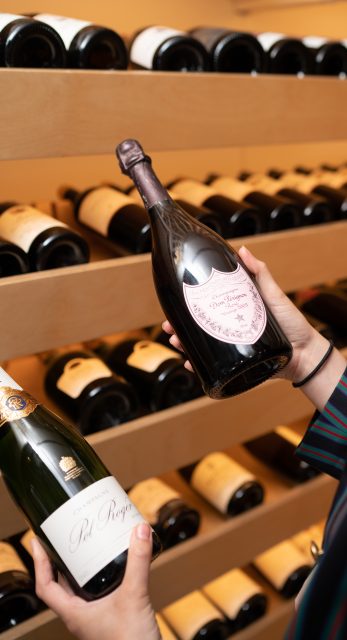
Finally, turning the topic of discussion to the future consumer of fine wine, Gearing is positive in his outlook, and that’s because he sees a younger customer coming into the market, and one with an open mind.
He says, “The number one age group for us in terms of number of customer transaction volume and bids that are placed, is Millennials, and the second largest is the generation, Gen X.”
Continuing, he records, “And the difference between the two is that the second group is slightly smaller, but they spend more, and I’m really encouraged by that.”
In short, he points out the biggest user base on CultX is under the age of 40, before noting that those in their 20s and 30s in particular “seem to be more willing to look at a wider spread of wines, more esoteric wines in the fine wine spectrum.”
In other words, the base of fine wine buyers is broadening, and so are their tastes.
Gearing’s job is to ensure they find it as easy as possible to find what they like, and sell it on, should they choose not to drink it.
Either way, he concludes by reminding db, whether you are purchasing fine wine as an investment, or for consumption, “your interests are aligned: you want to collect wines that you know are going to mature in the best way possible.”
Related news


