



Why amphora provenance matters
The characteristics of the clay used to produce amphorae for winemaking are as diverse as the many types of wood for barrels. The trade is only just beginning to chart and recognise this, reports Roger Morris.
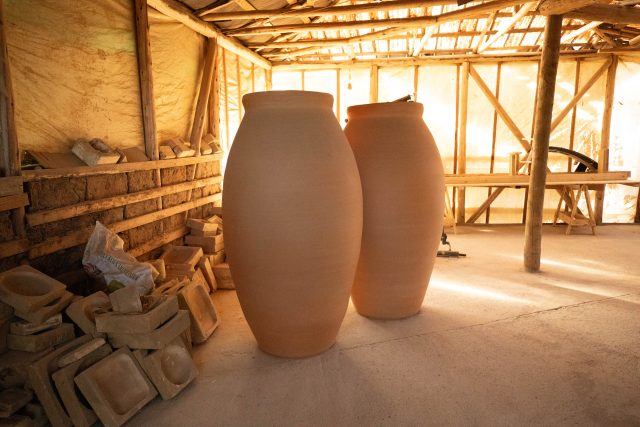
No matter what goes into the construction of a wooden wine barrel, it all begins with choosing the forest where the trees are grown. Before they are cut, dried and toasted, the staves and barrel heads were once trees, almost always oak, in the Allier or Limousin forests of France, or on the hillsides of Missouri or Pennsylvania in the US, or one of the ancient forests of Eastern Europe.
Each source of wood has its own distinctive characteristics, and each has its advocates among winemakers. As amphorae, qvevri, tinajas and related clay-based wine vessels have become more and more popular, winemakers are beginning to pay similar attention to clay quarries, the ‘terroirs’ that give birth to the material used for amphorae.
Abruzzo producer Sabatino Di Properzio of La Valentina gives a good summary of the selection process. “I choose to use amphorae for the vinification and ageing,” he says, “primarily considering the micro-oxygenation potential of this material. Unlike wood, it does not release tannins, allowing for a more ‘purist’ style.”
Terracotta, a common name for clay-based materials, also “significantly improves skin contact during fermentation”, he continues, “thanks both to the shape of the amphorae and to the consistent fermentation process it supports, maintaining a steady temperature below 24°C. Along with the natural components of this clay, salts and calcium carbonates provide permeability and porosity – qualities particularly important for terracotta vessels”.
For Chris Kajani, president and winemaker at Bouchaine Vineyards in Napa Valley, “steel gives you no oxygen exposure, while wooden barrels are more porous, although air exposure can be controlled. Amphorae are somewhere in the middle – more porous with a softness, broadness and minerality you don’t see in stainless”.
Can you taste the minerality in the wine? “Yes!” Kajani says enthusiastically. (Of course, some winemakers want clay that imparts no taste.)
Clay deposits
Just as not any tree will make good wine barrels, not every clay deposit will make good amphorae. Geologically, most clay deposits were formed from the degradation of stone over long periods of time by water, air or geothermal steam.
These clay deposits were then chemically characterised by the type of rock that formed the clay, with some being purer to the original stone, while others have considerable deposits of other minerals, particularly iron. Depending on their chemical make-up, clays will vary in their plasticity or ability to be worked into shapes, as well as their degree of porosity or ability to retain or transfer oxygen and water. Their fragility, too, is measurable – do they break or crack easily? Depending on their usage, clays may be coated with a protective layer, although that negates many of the reasons why winemakers love using amphorae.
Clays commonly classified as “earthenware clays” and “ball clays”, for example, are more likely to be used in wine vessels than is “kaolin,” which is more difficult to work and a more fragile type of clay used for making fine ceramics such as porcelain. “Stoneware clay”, once popular for farmhouse applications, is also easily worked and, when fired to high temperatures, produces a harder vessel with less porosity. Most commercial amphorae today are produced in Georgia, Italy, France and Spain. And, while there are many clay quarries outside Europe, until recently they were seldom used for amphorae.
Georgia rules
“There is a diversity in the production of clay and qvevri in Georgia,” says Tamta Kvelaidze, head of marketing and public relations for Wines of Georgia, “but, unfortunately, this has not been fully studied scientifically, as qvevri makers possess traditional, verbally transmitted knowledge passed down from their ancestors.”
Parenthetically, there have been few scientific comparisons of any of the world’s quarries that source clay for winemaking. However, there are three primary production regions, Kvelaidze says, each with distinctive characteristics – Vardisubani in the Kakheti region of eastern Georgia, and Tkemlovani and Satsibeli in the Imereti region of western Georgia – with some variation among quarries.
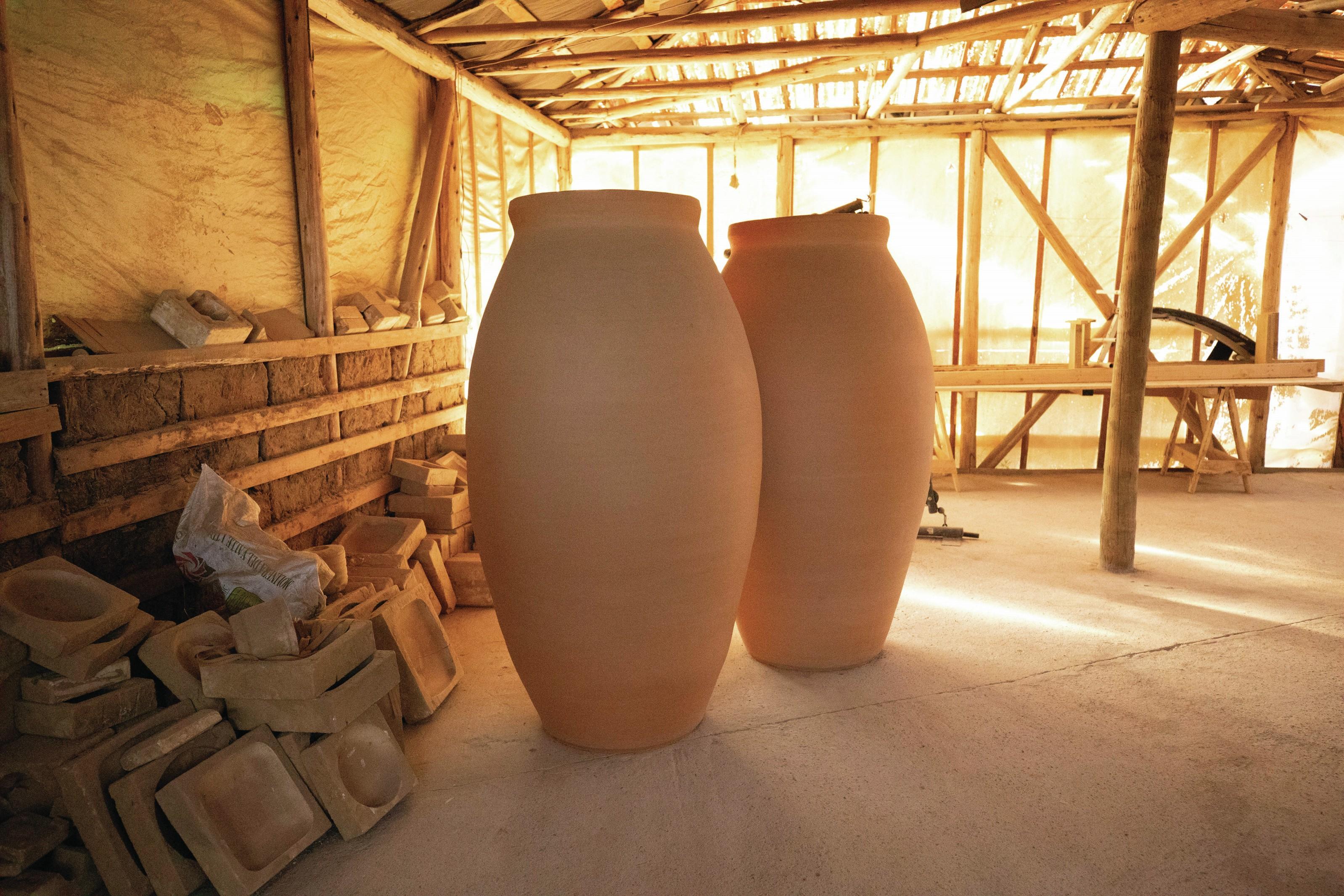
The likelihood of microbes settling on the inner walls of the qvevri or amphorae from the Vardisubani region is moderate, she says, “because the porosity is not very high. Interaction between the vessel’s minerals and the wine has been confirmed, and the types of minerals entering the wine indicate a possible enrichment with desirable elements”.
The clay mass of vessels from Tkemlovani, on the other hand, mainly consists of coarse particles, Kvelaidze says, and so there is greater possibility of leakage and microbial infection if the amphorae are not properly made. However, she says: “The types of minerals entering the wine show that beneficial ions such as calcium, magnesium or potassium are present… in very small amounts.”
Finally, Kvelaidze says: “Qvevris made from clay extracted from the Satsibeli deposit are characterised by high density and a limited number of large pores, resulting in a low probability of undesirable microbes settling.
However,” she concludes, “the clay mass consists of very fine particles, making it difficult to work with, as cracks and fissures form during the vessel-making process, which impairs the vessel’s consistency.”
It should be noted that one reason many Georgian amphorae are partially buried in the ground is so that the surrounding earth will help support the fragile walls of the pots.
Tuscan beauty
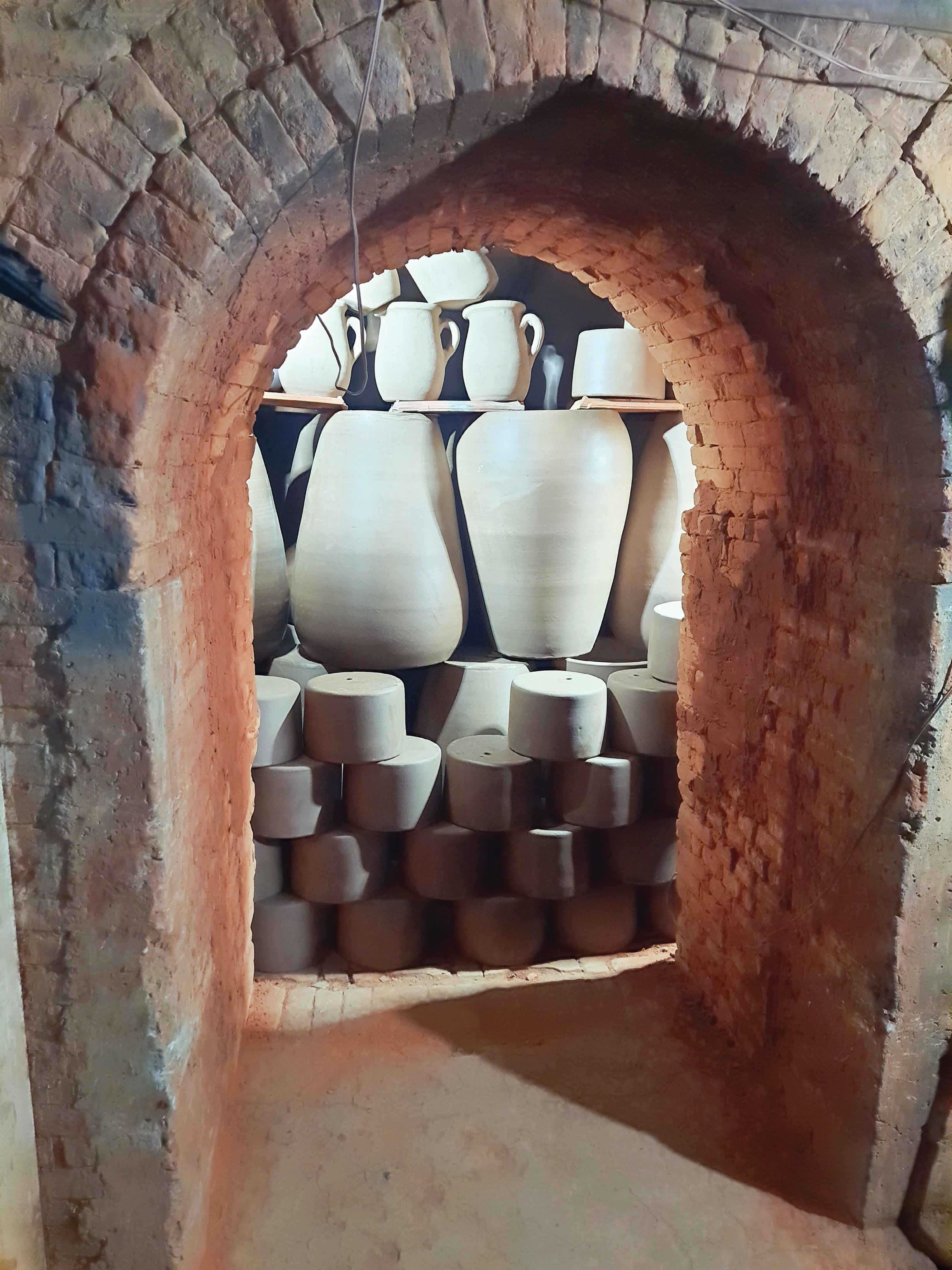
While Georgia clays have great historical lore, the quarries of Impruneta in the Tuscan countryside have also been used for centuries in the construction of amphorae for wine and olive oil.
Impruneta is located south of Florence, just outside the northern edges of the Chianti Classico zone. Three primary amphora producers are located here – Artenova and Manetti Gusmano & Figli in Impruneta, and Sirio Anfore in nearby Pieve. But wine vessels are not the only commercial products of Impruneta’s clay quarries.
“Terracotta artefacts have been produced in Impruneta for at least 800 years,” says Leonardo Parisi, owner of Artenova, “including the tiles for the Florence Cathedral – the Cattedrale di Santa Maria del Fiore – and many roofs of the historic centre.”
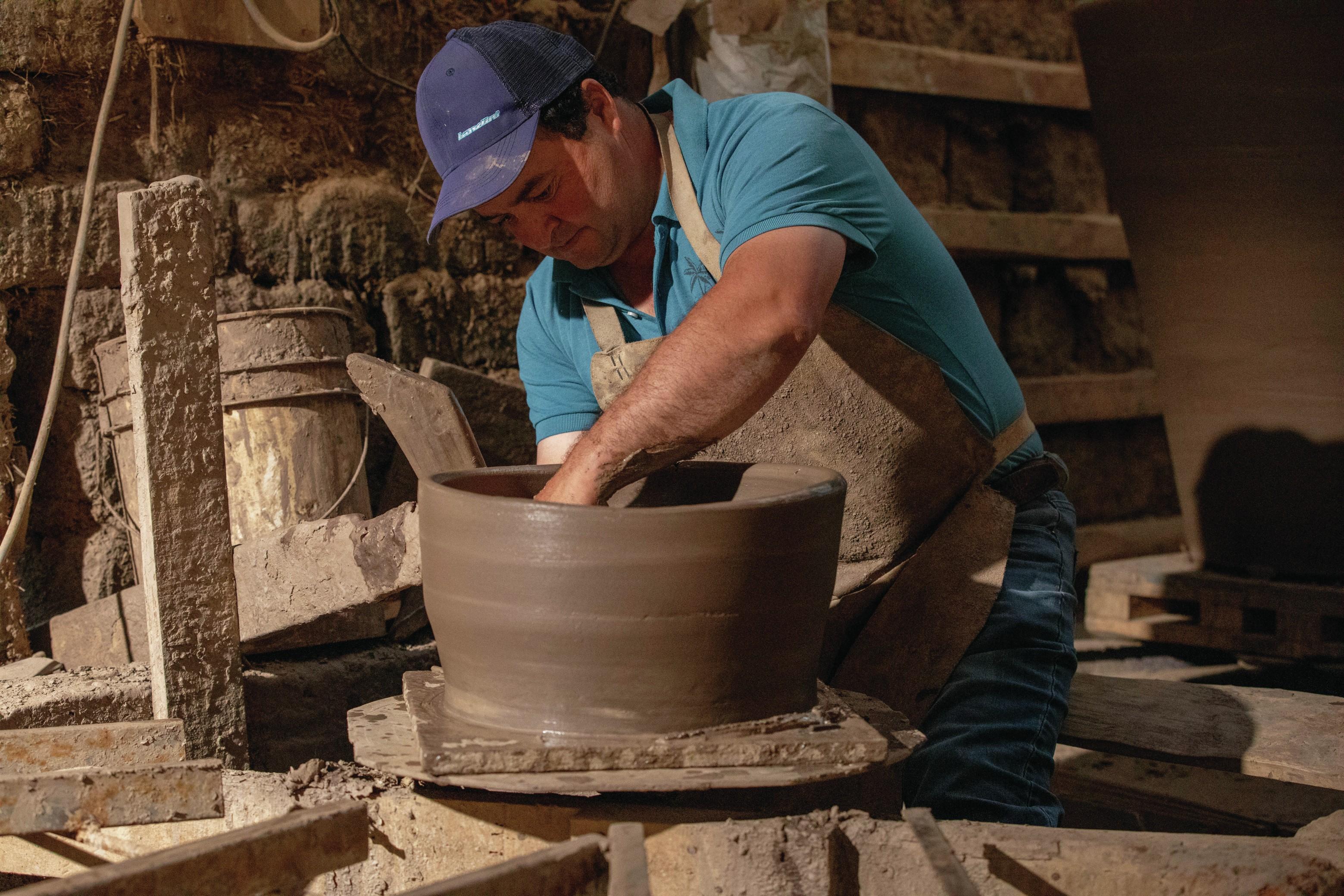
Impruneta clay is widely known for containing “galestro,” a porous grey stone or marl that is quite friable and often found in the top layers of soil in much of Tuscany, blended in with the limestone deposit. Impruneta clay has a high content of iron, copper, calcium and aluminum which, with galestro, makes terracotta of exceptional strength and frost resistance. For winemakers, galestro is an important part of the same terroir that nurtures the Sangiovese grape. This is especially true for Federico Manetti, a Chianti Classico winemaker whose family business, Manetti Gusmano & Figli, has for generations made a wide variety of clay architectural products, from floor tiles to amphorae, coming from grey clay dug from quarries located behind its headquarters.
However, the grey clay contains iron that, when heated to a high temperature in the presence of oxygen, reacts to form a reddish colour. “We buy the clay already dried and ground into small pieces,” says Artenova’s Parisi. “So we just have to mix it with water in old mixers that were used once for bread. The process is the same. But instead of flour, we use clay.”
Winemaker preference
A winemaker’s personal choice regarding the origin of their amphorae’s clay is as nuanced as their selection of, for example, yeast. Vin et Terre in Bordeaux tells db it sources its clay from Impruneta for its amphorae, while Tuscan winegrower Elena Casadei says she utilises both Georgian and Tuscan amphorae.
“Georgian clay for amphorae has a higher porosity and is rougher, so I use it for primary fermentation,” she says. “I use Tuscan vessels for orange wines and for the ageing of red wines. Because it has less porosity, it acts more like wood, but gives softer tannins.”
Paula Coumadrán of Susana Balbo in Argentina says the winery uses terracotta sourced from Sirio Anfore. “At our winery, amphorae have their place as a tool to create blending components with different textures and expressions, particularly with Torrontés,” she says.
Besides the Impruneta vessels, there is also a major amphora producer, Tava, located at Mori in Trentino. But, unlike single-source producers of clay in Impruneta and Georgia, Tava vessels are blends of clay taken from various quarries in Italy, Germany, France and England, using blending assistance from Trentino’s highly technical Cermanica Cecchetto firm.
Paolo Bouchard, business development manager at Bouchard Cooperages in the US, is a major distributor of Tava amphorae and also a major advocate, saying they have greater structural integrity than single-source clay vessels. “They are also very neutral to taste, and breathe at about the same rate as a neutral barrel,” Bouchard says.
Castilla-La Mancha
Like Tuscany’s Impruneta, the small city of Villarrobledo in Spain is another world-famous and historical producer of terracotta. Located in Castilla-La Mancha, midway between Madrid and Murcia near the Mediterranean coast, Villarrobledo today has only one primary producer of traditional tinaja wine vessels – fifth-generation potter Juan Padilla. Giusto Occhipinti of Sicilian winery Cos is a big fan of Padilla’s work.
“In 26 years of using terracotta amphorae, I’ve had the opportunity to compare experiences with several producers who use both Padilla’s and others’,” he says. “Padilla’s are the more interesting ones.”
He points out that Padilla blends together three clays from the local area. “The Albacete region in Spain has long been known for the quality of its clay,” Occhipinti says. “The breathability of the amphorae – especially those made by Padilla, due to the quality of his clays – allows us to have a wine that expresses the origin of its territory with greater precision.”
New world clay
Although the United States has long provided clay sources for many types of pottery, including shipping raw materials, especially kaolin, to Europe in centuries past for the making of porcelain and other fine dinnerware, commercial winemakers have until recently stuck to using barrels. It is not surprising then that today the US has only one well-regarded amphora producer, Novum Ceramics, with an owner who is a lifelong commercial potter, in addition to being a recent winegrower in Oregon, where his vessels are produced.
But while potter and winemaker Andrew Beckham is only too happy to show off his vineyard and winery – Beckham Estate Vineyard in the Willamette Valley – he sometimes becomes irascible if pressed to reveal where the quarry is located from which he sources his amphora clay.
“When people who come to the winery ask me where the clay comes from,” Beckham says, “I tell them I don’t know or that it’s a trade secret.”
He does reveal that he spent 15 years refining the Novum product, and that it went through seven iterations, initially with clay from the Sacramento delta and several other sources, before letting it slip that the final quarry or quarries are somewhere in Pennsylvania.
Yes, but where in Pennsylvania? “You’re not listening,” he replies testily. “It’s all about the whole process.”
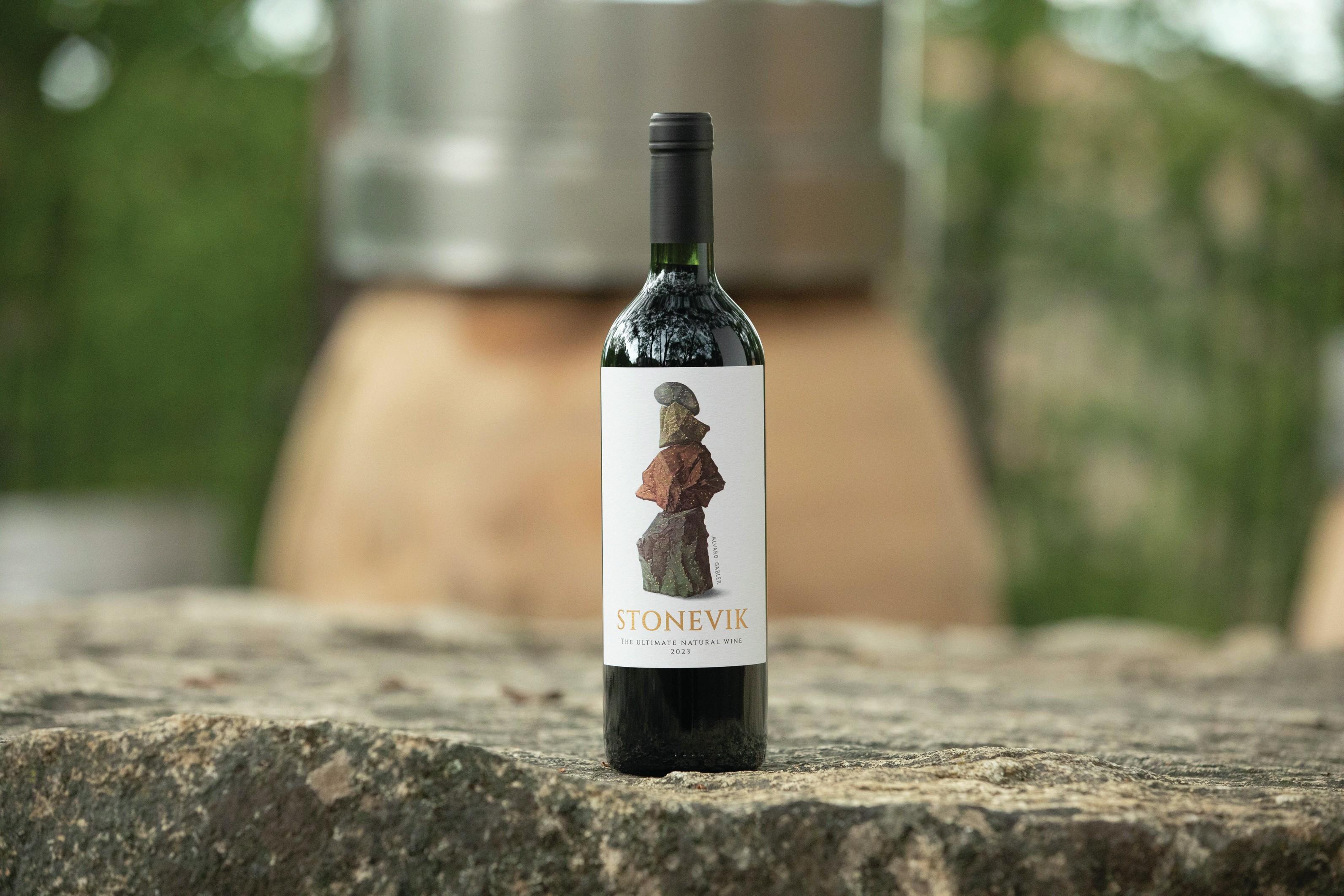
If Beckham is coy about the source of his clay, the owners of Vik winery in Chile’s Cachapoal Valley are anything but. Some of Vik’s highly-rated expressions are perhaps the world’s most terroir-driven wines, as clay for the amphorae they age in has been dug up from the same vineyard where the grapes are grown, and made into vessels by a local potter.
“The material is a combination of clay and kaolinite from our own Vik vineyards,” says marketing manager Andrea Garcia. “Two months were spent searching the vineyard for suitable clay, and the crafting of the vessels took five months. The 2018 Cabernet Franc from the Los Lazos vineyards was our first wine to age in amphorae. The clay pores in these vessels micro-oxygenate the wine, imparting minerality, flavours and a unique mouthfeel.”
Vik may not be the last well-financed modern winegrower to decide to have its amphorae, as well as its grapes, both come from the same terroir – its own clay forests.
Feats of clay: amphora wines
Below is a small, selected sampling of wines which are made totally or partly using amphorae during fermentation or ageing.
La Valentina Docheio Montepulciano d’Abruzzo (£41/$55). Entirely produced in terracotta, this organic wine from Abruzzo offers “a more purist style” of Montepulciano, though still with its trademark fruit and spice flavours.
Vik Stonevik Cachapoal Valley Red Wine (£141/$190). A red blend of Cabernet Franc, Cabernet Sauvignon and Carmenere, this velvety wine is aged in amphorae made from clay mined from Vik’s estate in Millahue, Cachapoal Valley in Chile. Graphite and forest floor flavours mingle with chocolatey notes and a savoury edge in this age-worthy wine.
Foradori Morei Teroldego Vigneti delle Dolomiti IGT (£29/$39). This natural and biodynamic wine undergoes fermentation and fining on its skins in amphorae for eight months, giving aromas of ripe plums and cherries, dried herbs and saffron, opening up into notes of oregano and pepper.
Tbilvino Qvevris Kakheti Saperavi (£20/$27). A portion of this wine, made from Georgia’s native Saperavi variety, has been aged in partially buried traditional qvevris, giving an “earthy complexity”.
Ramón Bilbao Limite Sur Rioja Garnacha (£15/$21). Fermented in concrete and partially aged in amphorae, as well as 600-litre barrels, it has notes of fresh red-berried fruit, blossom, pink pepper and herbs.
Ettore Germano Nascetta Langhe (£20/$28). The rare white Piemonte grape is macerated on its skins for eight days, then aged for eight to 10 months in clay amphorae for a delicate bouquet of lemon, white flowers, sage and thyme, with some minerality on the palate.
Related news
Amphora wine 2.0: The resurgent movement


