



Alentejo aims for global leadership in sustainable wine, but experts stress ‘urgent need’ for regulator
Portugal’s Alentejo region is doubling down on sustainability as its unique selling point, with leaders behind the Wines of Alentejo Sustainability Programme (WASP) aiming for global recognition. But as green claims multiply across the wine world, experts warn of confusion, greenwashing and the urgent need for international regulation to protect the integrity of sustainable certification. db reports.
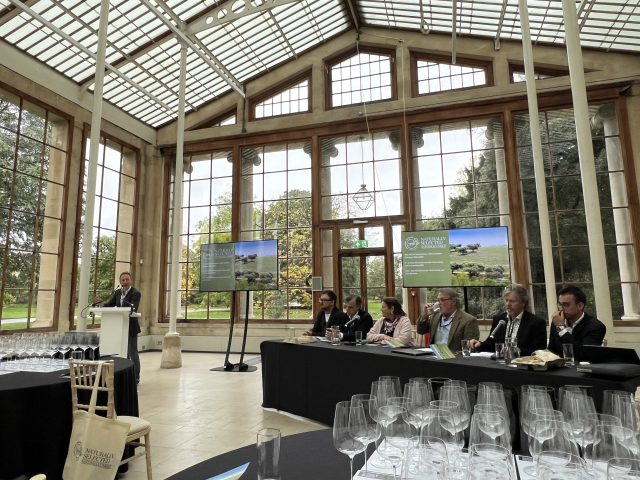
Sustainability experts and spokespeople for Portugal’s Alentejo wine region gathered to discuss sustainability at a conference at the Nash Conservatory, Kew Gardens on Monday 20 October, spotlighting the Wines of Alentejo Sustainability Programme (WASP).
Portugal’s Alentejo region is primarily defined by its region-wide Wines of Alentejo Sustainability Programme (WASP), a voluntary initiative that helps wineries minimise their environmental impact and improve social responsibility, under the leadership of João Barroso, sustainability coordinator at CVRA.
Speaking to the drinks business, Luís Sequeira, president of the Alentejo Regional Winegrowing Commission, said Alentajo’s focus on sustainability is “clearly a USP” for the region. He added: “We are focusing on and developing that. We have no doubt that in the next five years we’ll be in the champion’s league of wines: that’s our goal.”
But, he said, the Government “absolutely” has a role to play in promoting sustainability. “When we talk about the fact that sustainability should be protected, it has to be done on a national and international level,” he continued. “The Government is essential to the fact that we need to have a structure to make sure there is no greenwashing, that certifications have a value confirmed by regulators.”
‘We need investors to follow through’
“That’s something we would like very much to see. It’s true the European commission is working on that, it’s true we have the ESG that’s obviously an advancement, but sustainability is in urgent need of an international regulator,” he added.
In an opening talk, Sequeira reiterated sustainability’s lack of regulation, but assured he had “no doubt” it would come in the future. “It’s fundamental that the gatekeepers see this as an advantage,” he added, pointing out a “new and healthy” trend, where investors are requesting companies to produce sustainability reports.
“At Alentejo, we believe we are the forefront of sustainability. We strongly believe that is the future, but we need investors to follow through,” he added.
Getting buyers on board
Speaking on a panel at the event, chaired by the drinks business editor Patrick Schmitt MW, sustainability consultant Anne Jones said she is starting to see an increase in retailers seeking businesses with clear environmental credentials: “If you don’t have that you don’t even get to conversations about pricing,” she said. Retailers, and especially monopoly retailers, can recognise which credentials are “genuinely rigorous”, she added. While some consider this process an alignment of values, she believed other retailers would have to follow, “not from an ethical standpoint, but from a commercial one”.
Jones added that while she believed retailers had “enormous” interest in sustainably-accredited drinks, there is also a “lack of understanding and in some cases challenges in corporate structures”, with sustainability objectives often at odds with buying objectives.
Partner Content


But she hopes this will evolve: The Wine Society – and Patagonia in the non-drinks space – are examples of companies aligning their brand with sustainability. Jones believes consumers are happy to pay a premium for sustainable credentials, but said it’s up to regions and producers to drive value through championing sustainability.
Tackling corruption
Over the past decade, João Barroso told db he has seen a “huge evolution, but also huge corruption” in the concept of ‘sustainability’ and has also seen “companies taking advantage of these words to make a little more profit”. In every industry, including the wine industry, he has seen people “riding a wagon that doesn’t really exist”. For Barroso, the issue is partly that ‘sustainability’ is not clearly definable.
He explained: “What we see is a lot of disconnection between what the claims are and what the overall understanding of sustainability is, because sustainability’s an extremely complex subject, and that’s part of the problem – often concepts these days in modern society are taken in a very light way, and they’re not – everything in life is complex. Even a relationship between a man and a woman is a complex one.
“So when you look at wine regions and claims on sustainability, you understand that water, energy, waste and chemicals is not just the whole bouquet; the bouquet is far more complex.”
According to Jones, this complexity can lead to confusion. She said that while certifications give buyers a degree of confidence, as certifications increase in number, trust decreases, as it’s harder to know which ones are credible. Buyers need reassurance from the certification that it adds value, as consumers cannot tell which ones give value or don’t, Jones added.
To avoid greenwashing, businesses should be “honest, straightforward and transparent,” and only “talk about what you can prove,” advised Barroso, in conversation with db. He quoted Voltaire’s Candid: “The book ends by him saying ‘we need to nurture our garden’. So that’s what we’re doing in Alentejo, we’re trying to nurture our garden, while still keeping humble and learning from others”.
Cost-effective
For Sequeira, ignoring sustainability comes with consequences: “We’re all paying the cost, even if you don’t realise it,” he said. “Soon, there will be the moment that the user will be paying. and that’s the beauty of economics, and the same for sustainability. There is a cost for everything and there is a cost for life, and we are all paying it but if we manage to balance the interests, then we’ll make it happen faster and sooner.”
Speaking on the panel, professor Åke Thidell, Lund University, lecturer at the International Institute for Industrial Environmental Economic, said that while the wine sector, like every other industry, is under pressure to be sustainable, sustainability can actually be “profitable and cost saving”. He added: “We need to do it, and it pays”.
He later db that more wine producers, and environmental programmes like WASP, should look to team up with universities, who can offer academic insight and fresh perspectives on sustainability.
“Why not work with academia? Many other attributes outside the wine sector do it, so why not the wine sector?” he said, adding that it’s an opportunity that could be “far better explored and utilised.” He said: “We are contributing to society outside, it contributes to our research, and our research can be disseminated to actions that might have some good usage.”
Related news
Why a big bird could reignite California redwood trees feud
Hallgarten roundtable: is sustainability a prerequisite for marketing success?


